01
Content warningReal violent crimes; victims are named. Help: findahelpline.com. More
This page describes real violent crimes and names the victims. Victims come first; we leave out details that serve only sensationalism. Help: free helplines in your country at findahelpline.com; in an emergency call 112 (EU) or 911 (US).
Peter Sutcliffe
Peter William Sutcliffe, born 2 Jun 1946, Shipley or Bingley (West Yorkshire)
A lorry driver from Bradford, convicted of the murders of thirteen women between 1975 and 1980 in West Yorkshire and Manchester. Seven more women survived his attacks, and for these he was convicted of attempted murder. He struck women down at night with hammer blows to the head and then stabbed them with a knife or a sharpened screwdriver. The press called him the Yorkshire Ripper. During the hunt police interviewed him nine times and eliminated him each time, partly on the basis of hoax letters and a tape from a hoaxer in Sunderland. He was arrested by chance on 2 Jan 1981 during a check for stolen number plates in Sheffield and confessed to the murders. In May 1981 the jury rejected his defence that the voice of God had ordered him to kill. He died in custody in 2020.
- 13
- women murdered, convicted of all the murders● Fact
- 7
- attempted murders to which he pleaded guilty; 20 life sentences in total● Fact
- 9
- police interviews during the hunt from 1977 to 1980, eliminated from suspicion each time● Fact
- 2.5 m
- police hours the hunt cost● Fact
5Fact
7Disputed
1Theory
104 of 104claims have a source
79sources, 12 of them primary
02 / 16 / Timeline
From birth to the series The Long Shadow
Events: 73 / 1946–2023
- 01
Life
1946–67 - 02
Crimes
1969 - 03
Life
1974 - 04
Crimes
1975–77 - 05
Life
1977 - 06
Crimes
1977 - 07
Capture, trial, sentence and aftermath
1977 - 08
Crimes
1977–78 - 09
Capture, trial, sentence and aftermath
1978 - 10
Crimes
1978 - 11
Capture, trial, sentence and aftermath
1978–79 - 12
Crimes
1979 - 13
Capture, trial, sentence and aftermath
1979 - 14
Crimes
1979 - 15
Capture, trial, sentence and aftermath
1979–80 - 16
Crimes
1980 - 17
Capture, trial, sentence and aftermath
1980–84 - 6 Jan
Warning to the press
Capture, trial, sentence and aftermathThat the Solicitor General reminded editors of the presumption of innocence is reported only by The Times. [55]
- 18
Life
1994 - 19
Capture, trial, sentence and aftermath
1997–23 - 2022January
Ombudsman’s report
Capture, trial, sentence and aftermathPrisons and Probation Ombudsman Sue McAllister issued a report on his death. That he caught Covid-19 in hospital is stated only by the BBC. [34]
03 / 16 / Victims first
Named victims
Named victims: 13 / Survivors: 9
The list contains the thirteen murdered women for whose murders Sutcliffe was convicted in 1981. Dates and places follow the 2011 Court of Appeal judgment and the Byford Report. For seven victims the dates differ between sources by one day; we give the discrepancies for each victim. He killed six women in Leeds, three in Bradford, two in Manchester and one each in Huddersfield and Halifax. From April 1979 none of the victims was connected with prostitution. We give ages only where at least two sources agree; for Yvonne Pearson one source gives 21 instead of 22, for Jayne MacDonald The Times in 1982 gives 15 instead of 16. The seven women who survived attacks for which he was convicted, and two survivors of attacks that were not charged, are in the Survivors section.
Showing 12 of 13
- Wilma McCannPrince Philip Playing Fields, Chapeltown, Leeds, Leeds (West Yorkshire)30 Oct 1975age 28
- Emily Monica Jacksonfactory yard in Leeds, after he picked her up at the Gaiety pub, Leeds (West Yorkshire)20 Jan 1976age 42
- Irene Richardsonpark in Roundhay, Leeds, Leeds (West Yorkshire)6 Feb 1977 (the Byford Report gives 5 Feb)age 28
- Patricia Atkinsonher flat in Manningham, Bradford, Bradford (West Yorkshire)23 Apr 1977 (the Guardian and PA give 24 Apr)age 32
- Jayne Michelle MacDonaldopen ground in Chapeltown near her home, Leeds, Leeds (West Yorkshire)26 Jun 1977age 16
- Jean Bernadette Jordanderelict allotments, Chorlton-cum-Hardy, Manchester, Manchester (Greater Manchester)1 Oct 1977 (body found 10 Oct)age 21
- Yvonne Anne Pearsonwaste ground in Bradford, under an upturned sofa, Bradford (West Yorkshire)21 Jan 1978 (body found 26 Mar)age 22
- Helen Maria Rytkatimber yard in Huddersfield, Kirklees, Huddersfield (West Yorkshire)31 Jan 1978 (body found 3 Feb)age 18
- Vera Evelyn Millwardenclosure in the Brunswick area, Manchester, Manchester (Greater Manchester)16 May 1978 (Byford also gives the night to 17 May)age 40
- Josephine Anne WhitakerSavile Park, Halifax, Calderdale, Halifax (West Yorkshire)4 Apr 1979 (Byford also gives 5 Apr)age 19
- Barbara Janine Leachuniversity quarter of Bradford, Bradford (West Yorkshire)2 Sep 1979 (the Guardian and PA give 1 Sep)age 20
- Marguerite Wallsgrounds of a large house in Farsley, Leeds, Leeds (West Yorkshire)20 Aug 1980 (Byford also gives 21 Aug)age 47
By location
Bradford (West Yorkshire)3
Calderdale, Halifax (West Yorkshire)1
Kirklees, Huddersfield (West Yorkshire)1
Leeds (West Yorkshire)6
Manchester (Greater Manchester)2
Victim profile
12 and under0
13–171
18–246
25 and over6
Women and girls: 13 / Men and boys: 0 (of 13 named)
Survivors
- Anna Patricia Rogulskyjaged 36; on 5 Jul 1975 in an alley in Keighley he hit her on the head with a hammer and slashed her. He was disturbed. He was convicted of attempted murder for this attack
- Olive Smelton 15 Aug 1975 in an alley in Boothtown in Halifax he hit her with a hammer and slashed her back. She recognised a Yorkshire accent in the attacker, which police later set aside. Sources give her age differently. Convicted of attempted murder
- Marcella Claxtonaged 20; on 9 May 1976 in Roundhay in Leeds he attacked her with a hammer and inflicted eight lacerations on her head. She described the attacker accurately; police rejected her description. Convicted of attempted murder
- Maureen Elizabeth Longon 10 Jul 1977 in Bradford he fractured her skull with a hammer and stabbed her. She was found after six and a half hours. Sources give her age as 41 to 43. Convicted of attempted murder
- Marilyn Mooreaged 25; on 14 Dec 1977 he attacked her in Scott Hall Street in Leeds. She described the attacker accurately; the description of the car was wrong. Convicted of attempted murder
- Upadhya Anandavathy Bandaraa doctor from Singapore; on 24 Sep 1980 in Headingley in Leeds he hit her with a hammer and tried to strangle her with a rope. Sources give her age as 34 or 35. Convicted of attempted murder
- Theresa Simone Sykesaged 16; on 5 Nov 1980 on a footpath in Huddersfield he hit her twice on the back of the head. Her boyfriend disturbed him. Convicted of attempted murder
- Tracy Browneaged 14; on 27 Aug 1975 he attacked her on a lane near Silsden. In 2010 Mr Justice Mitting listed her among his attacks; Sutcliffe left her out of his statement. He was never charged with this attack
- Maureen “Mo” Leaaged 20; on 25 Oct 1980 he attacked her in Headingley in Leeds. Police treated her as a probable victim and the Byford Report names her in its redacted parts. He was never charged with this attack
Unconfirmed
The 1981 Byford Report considers it highly unlikely that the crimes he was convicted of were his only ones, and speaks of further attacks from 1969 to 1980; the published part of the report does not contain a list of them. In 2015 West Yorkshire Police examined claims of further attacks and in 2018 announced that there would be no new charges. As early as 1969 he hit a prostitute in Bradford with a stone in a sock; the victim did not want a prosecution. For years police counted the murder of Joan Harrison in Preston in November 1975 as part of the series because of the hoax letters; Sutcliffe did not admit it and according to Byford it was not his. The attack on Barbara Miller in March 1975 was included in a 1977 police circular; Sutcliffe did not admit it; that it was committed by another man is stated only by the Byford Report.
04 / 16 / Offender’s pattern
What recurred
Sutcliffe left no messages or signature. The letters and tape signed “Jack” were a hoax. His pattern consists of hammer attacks from behind, exposing and stabbing the victims, and choosing red-light districts, from 1979 anywhere. Each item states whether it is a documented fact, a disputed point or a theory.
Traits: 7
02
Exposure and stabbing
● Fact03
Luring into the car
● Fact04
Red-light districts, later anywhere
● Fact05
Return to the body
● Fact06
Sexual element
◐ Disputed07
The divine mission
○ TheoryHe claimed that in 1967 he heard the voice of God in a cemetery in Bingley ordering him to kill prostitutes. Three defence psychiatrists based a diagnosis of paranoid schizophrenia on this. The jury in 1981 and the appeal courts in 1982 and 2011 rejected this version. [1] [10] [16] [24]
In interviews he gave as the trigger a humiliation by Wilma McCann and later an urge to kill any woman. According to the Guardian in 2015, from 1989 he spoke of the voice having a devilish origin.
05 / 16 / Modus operandi
How the behaviour evolved
Phases: 3
1946-1975
Before the murders
Childhood in West Yorkshire, school until fifteen, work as a gravedigger. As early as 1969 he attacked a prostitute in Bradford and was detained with a hammer.
- 1946: born
- 1961: left school without qualifications
- 1969: attack with a stone in a sock in Bradford
- 1974: married Sonia Szurma
- July to August 1975: three hammer attacks, the women survived
1975-1980 / West Yorkshire and Manchester
Murders
In five years he killed thirteen women and seriously injured seven more. Police interviewed him nine times and eliminated him each time.
- 30 Oct 1975: first murder, Wilma McCann
- 1977: four murders, the five-pound note inquiry
- 1978 to 1979: letters and tape from Sunderland
- from April 1979: victims outside prostitution
- 17 Nov 1980: last murder, Jacqueline Hill
1981-2020
Capture, trial, sentence
Arrested by chance in Sheffield, he confessed and was convicted. He spent most of his sentence in Broadmoor psychiatric hospital.
- 2 Jan 1981: arrest in Sheffield
- 22 May 1981: 20 life sentences
- 1984 to 2016: Broadmoor
- 2010 to 2011: whole life order
- 13 Nov 2020: death from Covid-19
06 / 16 / Crime scenes
Where and in what order
Places: 7
map of crime scenes (points by date and place) / add from coordinates
- 01Bingley and surroundings, West Yorkshire1946-1974
- 02Clayton, Bradford, with his wife’s parents1974-1977
- 03Heaton, Bradford, own house1977-1981
- 04Remand and Wormwood Scrubs prison, London1981
- 05Parkhurst prison, Isle of Wight1981-1984
- 06Broadmoor psychiatric hospital1984-2016
- 07HMP Frankland, County Durham2016-2020
07 / 16 / Investigation
How he was caught
Steps: 9
01 / 1975-1976
Unlinked attacks
The attacks in Keighley and Halifax were investigated by separate teams and police included them in the series only in June 1978. The murders of McCann and Jackson were linked in February 1976. [4]
02 / 1977
Tyre tracks
After the Richardson murder police checked the owners of 53,000 cars with matching tyres. About 20,000 of them were never visited, Sutcliffe among them. The check ended after the attack on Long. [4] [8]
03 / 1977
The five-pound note
The new banknote from Jean Jordan’s handbag led to branches of the Midland Bank around Shipley and to checks on about 8,000 people; the number is given only by the Byford Report. Sutcliffe was interviewed twice; his wife and mother gave him an alibi. [4] [7]
04 / 1977-1980
Cars in the red-light districts
Police recorded 5.4 million sightings of cars in the red-light districts. Sutcliffe’s car appeared repeatedly in several cities, but the interviews produced nothing. [5] [8]
05 / 1978-1979
Letters and tape
Police accepted the letters and the tape from Sunderland as genuine, eliminated suspects on their basis and in October 1979 launched a million-pound campaign. Sutcliffe was eliminated on their basis, among other things because of his handwriting. [5] [6] [9]
06 / 1977-1980
Nine interviews
Sutcliffe was interviewed nine times. The investigators often did not know about the previous interviews, and the constables’ doubts of July 1979 were lost. [7] [8] [11] [41]
07 / November 1980
External team and tip-off
After the Hill murder an advisory team was added, which identified Bradford as the perpetrator’s likely home. The tip-off from Trevor Birdsall remained unprocessed. [3] [5] [8]
What went wrong
- Hoax letters and tapePolice used the letters and the tape from the hoaxer in Sunderland as an elimination criterion. Byford called this approach indefensible. Sutcliffe was eliminated at an interview on the basis of his handwriting.
- Overwhelmed card indexThe incident room in Leeds kept a paper card index. After the Whitaker murder tasks were no longer processed as they came in, and connections were lost.
- Interviews without contextThe investigators did not have the results of earlier interviews. They did not find the boots in the wardrobe. The local record did not mention his 1969 arrest with a hammer.
- Survivors overlookedPolice set aside the descriptions given by surviving women, among them Claxton, Smelt and Moore, because they did not fit the picture of the perpetrator or the letters.
- Lost tip-offTrevor Birdsall’s anonymous letter lay unprocessed with top priority until the arrest, and the report of his visit in person was lost.
- View of the victimsPolice were looking for a killer of prostitutes and divided the victims into “innocent” women and the others. In 2020 West Yorkshire Police apologised for this language.
Impact on forensics and law
- Byford’s recommendationsThe report recommended management of serial investigations across police forces, better training and the use of computers and forensic science in incident rooms. Whitelaw passed it to all police forces.
- Reform of investigationsThe Guardian and the BBC both state that the case led to a fundamental change in how investigations of serious crimes are run in Britain.
- Language about the victimsThe division of the victims by prostitution became an example of prejudice against women. In 2020 the police apologised for it, and journalists such as Joan Smith still criticise it today.
08 / 16 / People in the case
Witnesses, investigators, relatives
People: 22
Investigator
George Oldfield
Assistant Chief Constable of West Yorkshire, led the hunt from June 1977. He believed the letters and the tape from Sunderland. He was moved in 1981.
Investigator
Dennis Hoban
Detective Chief Superintendent, led the investigation into the murders of McCann and Jackson. Died on 15 Mar 1978 aged 52.
Investigator
Jim Hobson
Detective Chief Superintendent, temporarily led the hunt in place of Oldfield from 25 Nov 1980.
Chief Constable
Ronald Gregory
Chief Constable of West Yorkshire, backed the campaign with the tape. In 1981 he claimed the arrest had not been a matter of chance. He retired in 1983.
Investigator
Jack Ridgway
Detective Chief Superintendent of Greater Manchester Police, led the investigation into the murders of Jordan and Millward.
Constables
Andrew Laptew and Greenwood
At the interview on 29 Jul 1979 they had doubts about Sutcliffe, but their report led to no further action.
Accomplices: none. He committed all the crimes alone. The Byford Report examined the role of his friend Trevor Birdsall, who was with Sutcliffe on the night of the attack on Olive Smelt in 1975 and in 1969, and concluded that he was not an accomplice.
09 / 16 / Trial and sentence
From charge to death in prison
Proceedings: 9
January and February 1981 / Dewsbury
Charges and remand
On 5 Jan 1981 he was charged with the murder of Jacqueline Hill and the theft of number plates; on 12 Feb a further twelve murders and seven attempted murders were added. On 20 Feb he was committed for trial and the charge of stealing number plates was dropped. [56] [57] [58] [79]
Remand
May 1981 / Old Bailey
Main trial
Attorney General Havers wanted to accept a plea of guilty to manslaughter on the grounds of diminished responsibility; Mr Justice Boreham refused and let the jury decide. Sutcliffe pleaded guilty to seven attempted murders. After about six hours of deliberation the jury of six men and six women found him guilty of thirteen murders by a majority of 10 to 2. [1] [16] [44] [52] [69]
20 life sentences, minimum 30 years
24 May 1982 / Court of Appeal
First appeal
The defence presented new psychiatric evidence. The court headed by the Lord Chief Justice, Lord Lane, dismissed the appeal. [1] [59]
Dismissed
1981-1983 / Leeds and Bradford
Civil claims
Bereaved relatives and survivors sued him for damages. The courts awarded compensation to the mother of Jayne MacDonald, to Maureen Long and to Marilyn Moore. In 1983 a bankruptcy petition was filed against him. [65] [68] [73]
Damages
1984 / Broadmoor
Transfer to hospital
The Home Secretary ordered his transfer under the Mental Health Act to Broadmoor psychiatric hospital. For a long time he refused treatment. [76] [77] [1]
Broadmoor
16 Jul 2010 / High Court
Setting the minimum term
After the change in the law in 2003 the Secretary of State asked for a minimum term to be set. Mr Justice Mitting ruled that he would never be released. [1] [17]
Whole life order
14 Jan 2011 / Court of Appeal
Appeal against the whole life order
Defence counsel Fitzgerald argued that mental disorder should be a mitigating factor. The court headed by Lord Judge dismissed the appeal and on 9 Mar 2011 refused to certify an appeal to the Supreme Court. [1] [18] [19] [42]
Dismissed
2016 / Tribunal
Return to prison
The Mental Health Tribunal ruled that he no longer needed hospital treatment. In August 2016 he was transferred to HMP Frankland. [20] [21]
Frankland
2020-2021 / Durham
Inquest
Coroner Crispin Oliver conducted the inquest into his death from Covid-19 and in September 2021 concluded that it was due to natural causes. [12] [33]
Natural causes
Custody
After his conviction he was held in Wormwood Scrubs, from June 1981 in Parkhurst on the Isle of Wight, where in January 1983 a fellow prisoner slashed him with a glass. From 27 Mar 1984 he was in Broadmoor psychiatric hospital, where in 1997 he lost the sight of one eye after an attack with a pen. In August 2016 he returned to prison, to HMP Frankland in County Durham.
Death
On 27 Oct 2020 he was admitted to hospital with heart problems. On 4 Nov he tested positive for Covid-19; he had earlier refused protective arrangements in prison. He died on 13 Nov 2020 in the University Hospital of North Durham, aged 74. That he was infected in hospital is stated only by the BBC, citing the ombudsman’s 2022 report. The coroner concluded the inquest with a finding of natural causes.
Grave
None of the sources read gives the location of a grave or what happened to his remains.
Family
His former wife and the victims’ relatives are alive. We do not give their current place of residence or employment.
10 / 16 / Psychology and myths
What is documented and what is not
Items: 6 / each labelled Fact, Disputed or Theory
He killed only prostitutes
◐ DisputedJayne MacDonald and all the victims from April 1979 had nothing to do with prostitution, nor did several of the survivors. In 2020 the police apologised for dividing the victims into “innocent” women and the others. [1] [30] [32]
He was caught by police work
◐ DisputedIn June 1981 Chief Constable Gregory claimed that the arrest had not been a matter of chance. The Byford Report and the Home Secretary in the Commons stated that he should have been arrested much earlier, and he was caught during a routine check of number plates. [64] [8] [9]
He was completely insane
◐ DisputedThe defence psychiatrists and later the doctors at Broadmoor diagnosed him as a paranoid schizophrenic. The jury in 1981 and the appeal courts in 1982 and 2011 rejected his account of the voice of God and found him criminally responsible. [1] [24] [44]
The tape was from the killer
◐ DisputedPolice accepted the letters and the tape as genuine. Byford stated that there was no reason to do so. The author, John Humble, was identified by DNA only in 2005. [6] [27] [35]
He was interviewed five times
◐ DisputedThe Guardian obituary writes of at least five interviews. The Byford Report documents nine interviews as part of the hunt, twelve with other contacts with the police. [7] [10] [11]
Wilma McCann was the first victim
◐ DisputedShe was the first to be murdered. Before her, in 1975, he attacked at least three women, Rogulskyj, Smelt and Browne, and as early as 1969 a prostitute in Bradford. [1] [3] [31]
11 / 16 / Comparison
Related cases
1888 / United Kingdom
Jack the Ripper
5 canonical victims / Unidentified
In common
The press gave him a nickname after Jack the Ripper, and the hoax letters and tape were signed “Jack the Ripper”. Both series targeted mainly women in street prostitution.
Difference
Jack the Ripper was never identified. Sutcliffe was caught by chance, confessed and was convicted of thirteen murders.
1978-1990 / USSR
Andrei Chikatilo
52 proven victims / Executed 1994
In common
Both killed for years and attacked their victims in deserted places. Despite long manhunts, the police failed to catch them for years.
Difference
Sutcliffe killed women in the north of England from 1975 to 1980, received life sentences for 13 murders and died in 2020. Chikatilo killed children, girls and women in the USSR from 1978 to 1990, was convicted of 52 murders and executed in 1994.
12 / 16 / Books and films
Treatments of the case
The label is an editorial rating: Recommended means a balanced treatment with verifiable sources; With caution means the work gives the perpetrator a platform or opts for a simplified version.
Book / 1984Recommended
Somebody's Husband, Somebody's Son
Gordon Burn. A social portrait of Sutcliffe; the author spent three years in Bingley.
Book / 2003Recommended
Wicked Beyond Belief: The Hunt for the Yorkshire Ripper
Michael Bilton. A book about the hunt, the basis for the series The Long Shadow.
Essay / 1981Source
Mad or bad?
Michael Ignatieff in the London Review of Books, a contemporary reflection on the trial and psychiatry.
Documentary / 2019Recommended
The Yorkshire Ripper Files: A Very British Crime Story
Three-part BBC Four documentary directed by Liza Williams. The Guardian’s review stressed the botched hunt.
13 / 16 Photos and documents
Photos and documents11
Photos and documents from readers. We publish them after review; you see your own uploads straight away, marked Pending review.
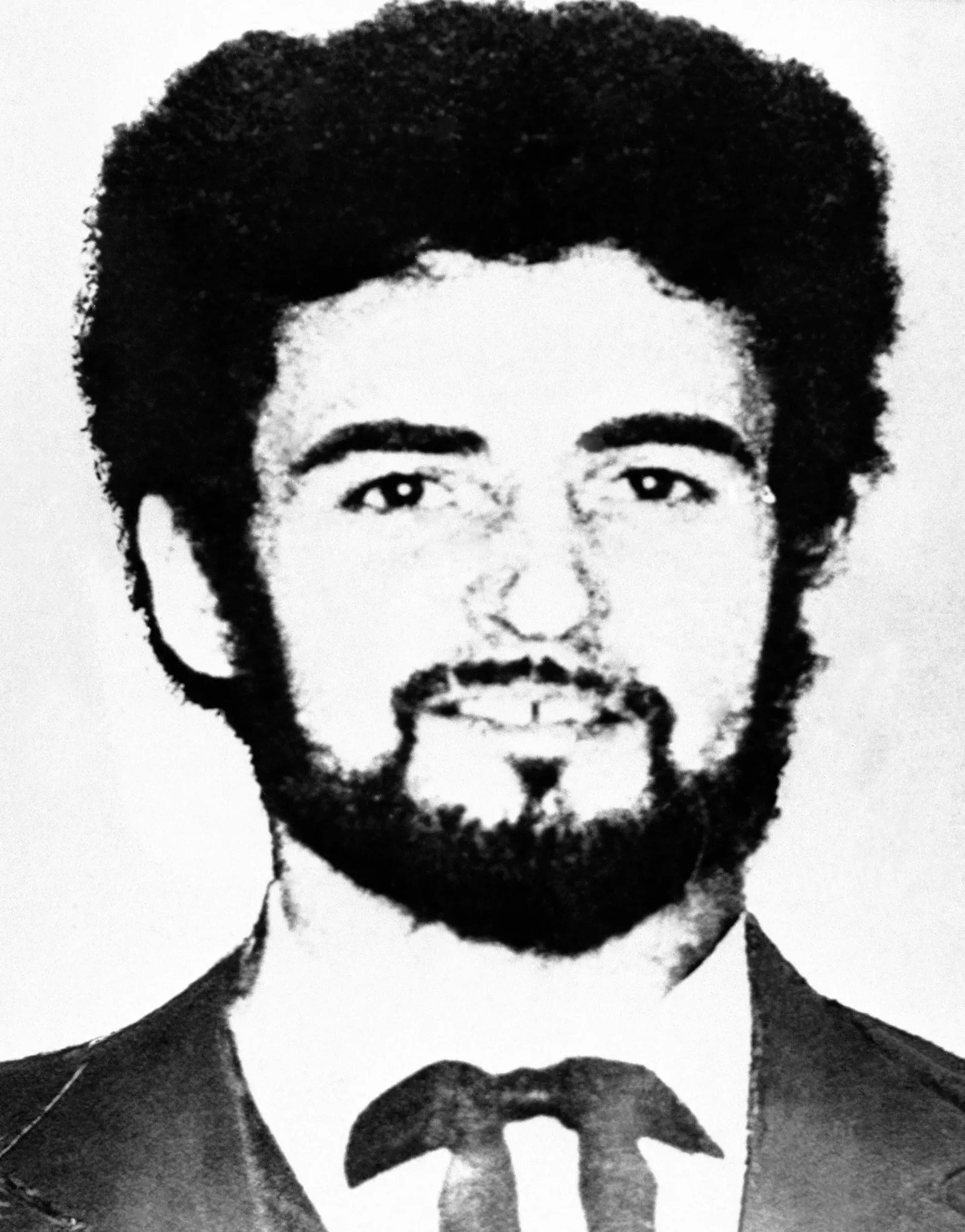
About this image
- Original title
- peter-sutcliffe-archivni-portret-1978.webp
- Author
- Associated Press, fotoarchiv
- Source
- wsls.com
- Licence
- © All rights reserved
- Changes
- resized, converted to AVIF and WebP, metadata removed
AP lists this black-and-white portrait of Peter Sutcliffe as a photograph from 1978.
Associated Press, fotoarchiv / © All rights reserved / wsls.com
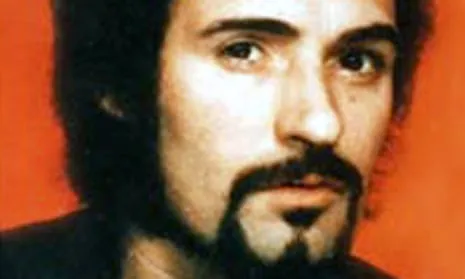
About this image
- Original title
- peter-sutcliffe-barevny-portret-rex.jpg
- Author
- Rex Features / The Guardian
- Source
- theguardian.com
- Licence
- © All rights reserved
- Changes
- resized, converted to AVIF and WebP, metadata removed
Colour archive portrait of Peter Sutcliffe against an orange background.
Rex Features / The Guardian / © All rights reserved / theguardian.com
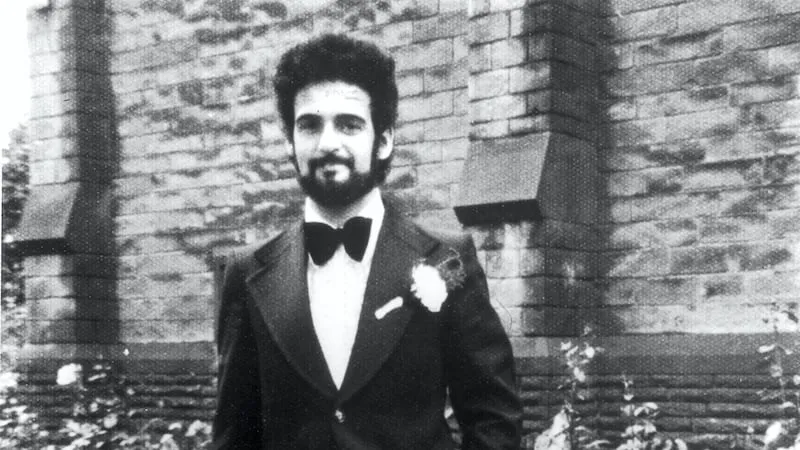
About this image
- Original title
- peter-sutcliffe-svatebni-portret-1974.jpg
- Author
- Getty Images / The National
- Source
- thenationalnews.com
- Licence
- © All rights reserved
- Changes
- resized, converted to AVIF and WebP, metadata removed
Peter Sutcliffe on his wedding day, 10 August 1974.
Getty Images / The National / © All rights reserved / thenationalnews.com
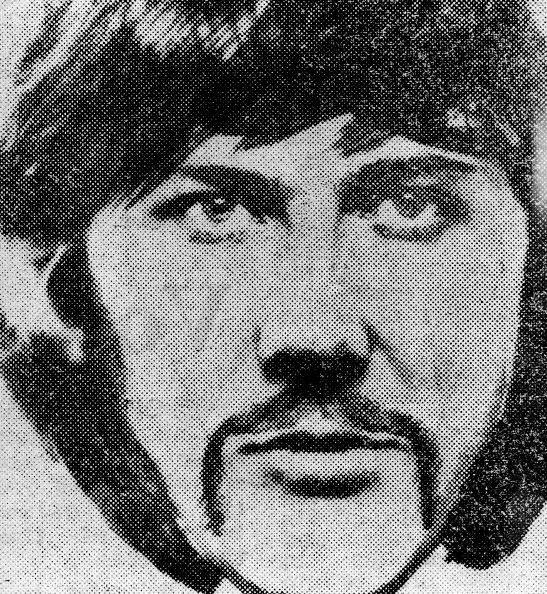
About this image
- Original title
- peter-sutcliffe-policejni-identikit-1979.jpg
- Author
- Policejní identikit, Keystone / Hulton Archive / Getty Images
- Source
- gettyimages.ie
- Licence
- © All rights reserved
- Changes
- resized, converted to AVIF and WebP, metadata removed
Police composite image issued during the search in 1979.
Policejní identikit, Keystone / Hulton Archive / Getty Images / © All rights reserved / gettyimages.ie
About this image
- Original title
- peter-sutcliffe-eskorta-dewsbury-odchod-1981.webp
- Author
- Associated Press, fotoarchiv
- Source
- wsls.com
- Licence
- © All rights reserved
- Changes
- resized, converted to AVIF and WebP, metadata removed
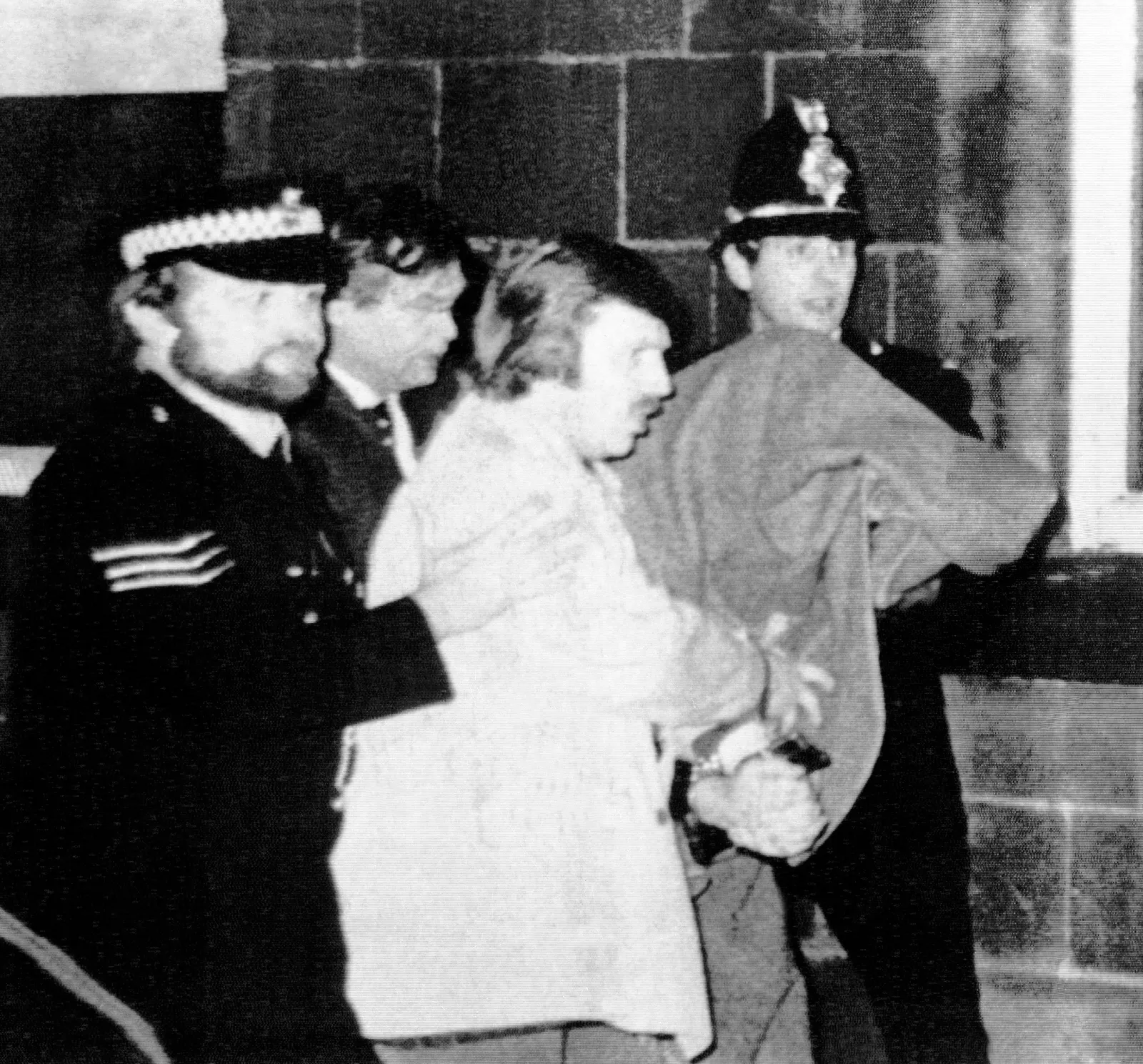
Police officers lead Peter Sutcliffe away from the court in Dewsbury, 5 January 1981.
Associated Press, fotoarchiv / © All rights reserved / wsls.com
About this image
- Original title
- peter-sutcliffe-eskorta-dewsbury-prichod-1981.jpg
- Author
- Jack Hickes / Hulton Archive / Getty Images přes The National
- Source
- thenationalnews.com
- Licence
- © All rights reserved
- Changes
- resized, converted to AVIF and WebP, metadata removed
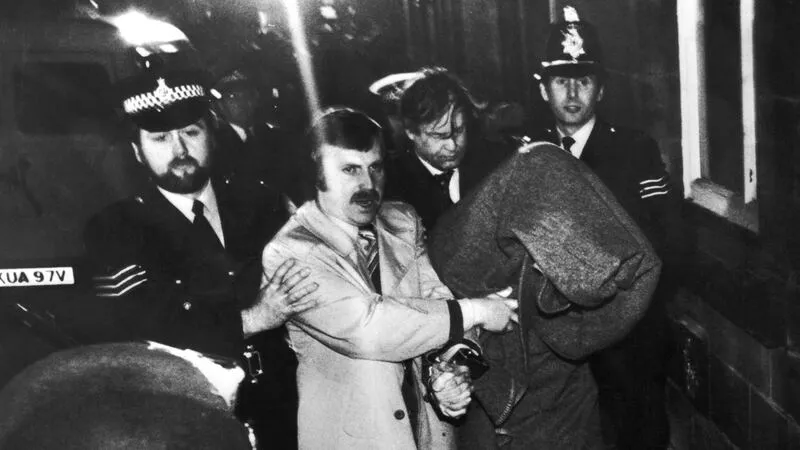
Peter Sutcliffe arriving at the court in Dewsbury on 6 January 1981.
Jack Hickes / Hulton Archive / Getty Images přes The National / © All rights reserved / thenationalnews.com
About this image
- Original title
- peter-sutcliffe-policejni-eskorta-1983.jpg
- Author
- Sky News / Getty Images
- Source
- news.sky.com
- Licence
- © All rights reserved
- Changes
- resized, converted to AVIF and WebP, metadata removed
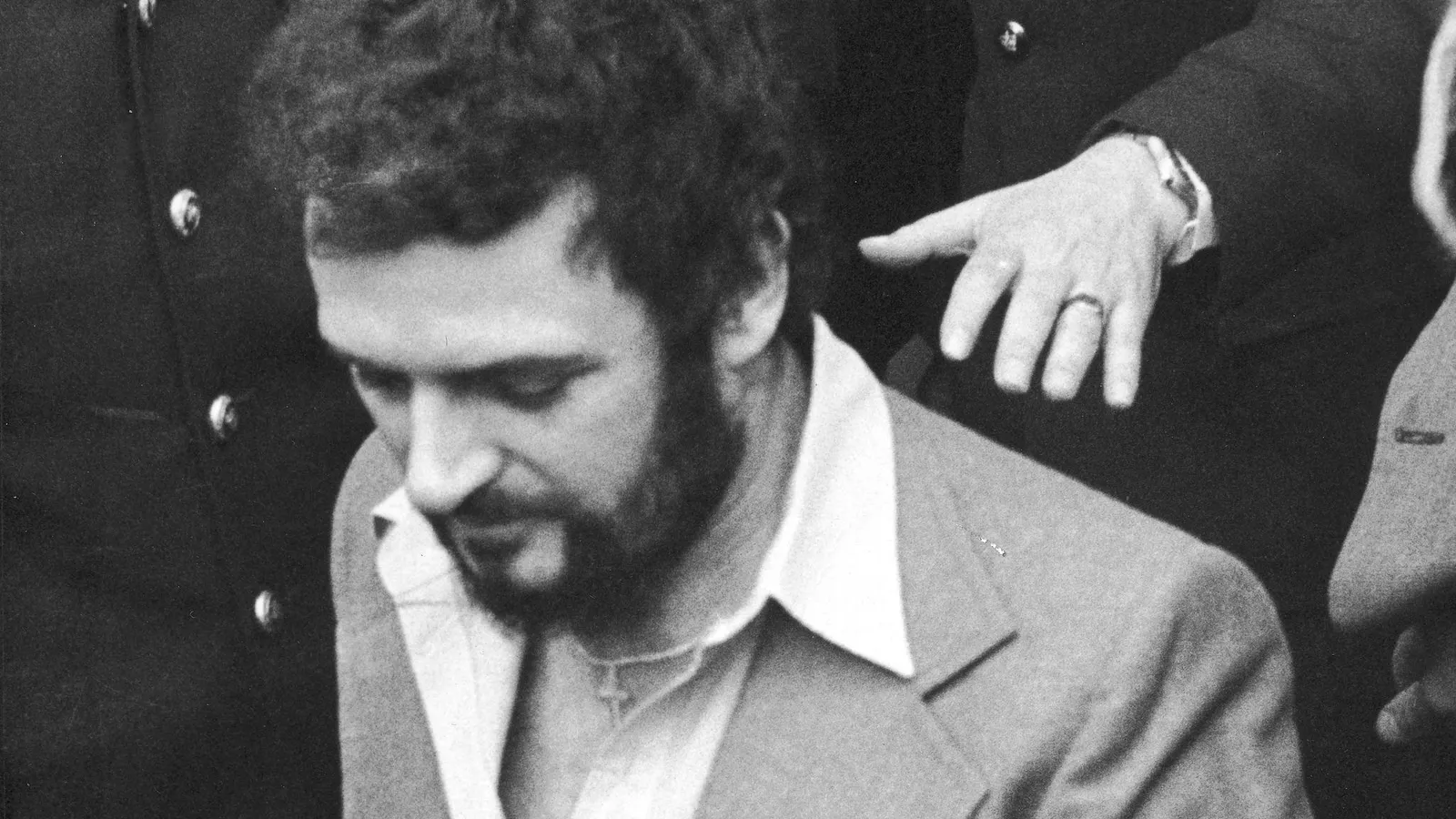
Peter Sutcliffe under police escort in an archive photograph from 1983.
Sky News / Getty Images / © All rights reserved / news.sky.com
About this image
- Original title
- peter-sutcliffe-soud-isle-of-wight-1983.jpg
- Author
- Mike Walker / Rex / Shutterstock přes The Guardian
- Source
- theguardian.com
- Licence
- © All rights reserved
- Changes
- resized, converted to AVIF and WebP, metadata removed
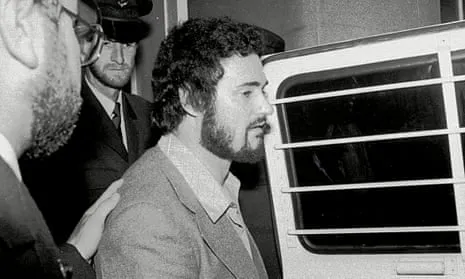
Peter Sutcliffe during a court hearing on the Isle of Wight in 1983.
Mike Walker / Rex / Shutterstock přes The Guardian / © All rights reserved / theguardian.com
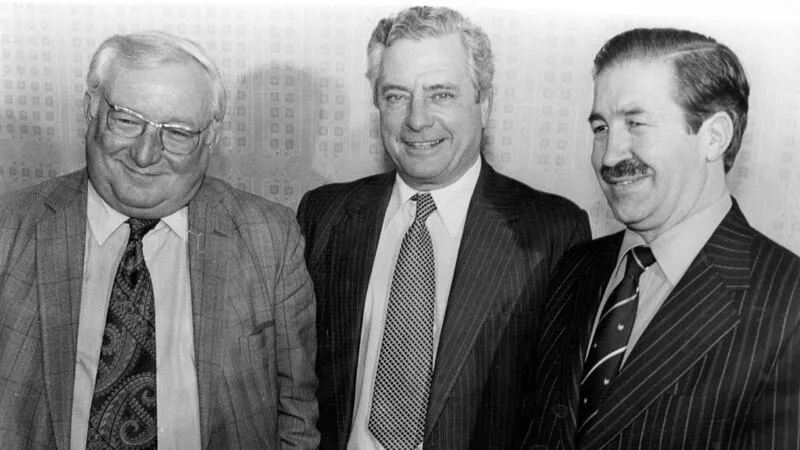
About this image
- Original title
- peter-sutcliffe-vysetrovaci-tym-1981.jpg
- Author
- Getty Images / The National
- Source
- thenationalnews.com
- Licence
- © All rights reserved
- Changes
- resized, converted to AVIF and WebP, metadata removed
Leading figures of the investigation team after the arrest of Peter Sutcliffe in January 1981.
Getty Images / The National / © All rights reserved / thenationalnews.com
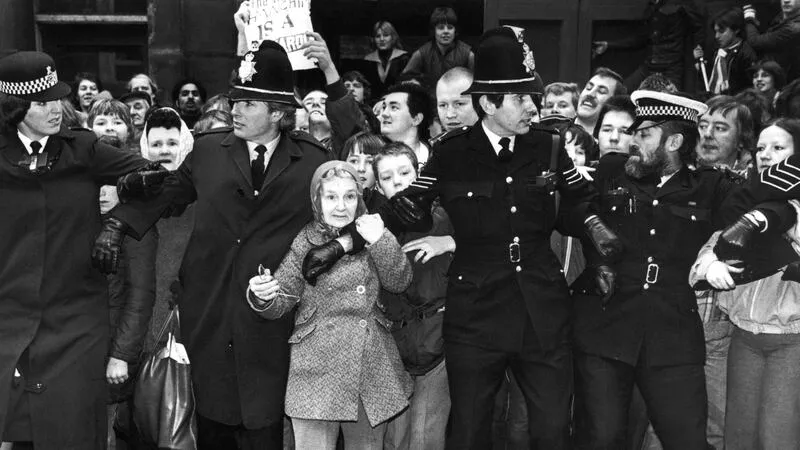
About this image
- Original title
- peter-sutcliffe-dav-pred-soudem-dewsbury.jpg
- Author
- Getty Images / The National
- Source
- thenationalnews.com
- Licence
- © All rights reserved
- Changes
- resized, converted to AVIF and WebP, metadata removed
Police officers and a crowd outside the court in Dewsbury after the arrest of Peter Sutcliffe.
Getty Images / The National / © All rights reserved / thenationalnews.com
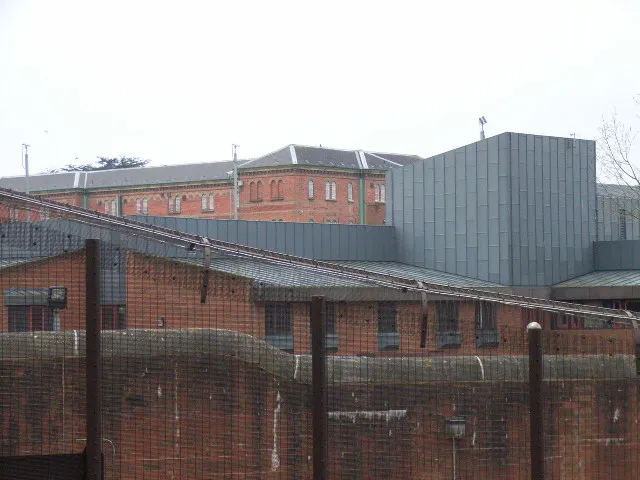
About this image
- Original title
- peter-sutcliffe-broadmoor-2006.jpg
- Author
- Andrew Smith
- Source
- geograph.org.uk
- Licence
- CC BY-SA 2.0
- Changes
- resized, converted to AVIF and WebP, metadata removed
Broadmoor Hospital in Crowthorne, where Peter Sutcliffe was held long-term.
Andrew Smith / CC BY-SA 2.0 / geograph.org.uk
14 / 16 / Open questions
What is still missing
- The true number of attacks: the Byford Report speaks of further possible crimes from 1969 to 1980; the list of them is missing from the published part. In 2018 police brought no new charges.
- Why he was not charged with the attack on Tracy Browne, of which the court was aware in 2010, nor with the attack on Mo Lea.
- Why no crimes are known between the 1969 incidents and the 1975 attacks, and why he did not attack for almost a year between May 1978 and April 1979.
- Why the report of Birdsall’s visit to the police was lost and why the constables’ doubts of July 1979 led nowhere.
- Differences between sources: place of birth (Shipley or Bingley), the dates of several murders by one day, the ages of Olive Smelt, Maureen Long and Upadhya Bandara, the number of attempted murders (7 convicted; the 2011 judgment elsewhere mentions eight).
- None of the sources read gives the location of a grave or what happened to his remains.
15 / 16 / Citations
Sources
A number in square brackets next to a claim refers to an item in this list. A claim without a number has no source assigned yet. Details may vary between sources; disputed and theoretical items are marked.
79Sources in total
- Primary12
- Secondary5
- Media62
Checked: 17 Nov 2026. Research in one round, 79 sources read: the Court of Appeal judgment of 14 Jan 2011 with Mr Justice Mitting’s summary of all the attacks, the Byford Report to the Home Secretary of 1981 (Parts I, II, III and V), Hansard 1982, 25 issues of The Times from 1981 to 1984 from archive.org, reporting by the Guardian, BBC, AP and PA, and the LBC/IRN radio archive. Details marked as fact have at least two sources; details from a single source are marked in the text or omitted; victims’ ages from the Guardian and PA count as one list and are supplemented by another source. Wikipedia and Murderpedia were not used. Code UK-1975-PS: Great Britain, year of the first murder (Wilma McCann, 30 Oct 1975), initials Peter Sutcliffe; the attacks of 1969 and summer 1975 were not murders. Unavailable: the 2010 High Court judgment (BAILII), the regional press Yorkshire Post and Sheffield Star, The Times of May 1981, the part of the Byford Report with the list of further possible attacks. Before publication verify the place of birth (Shipley or Bingley), the murder dates that differ by one day, the ages of Olive Smelt, Maureen Long and Upadhya Bandara, and the name of Constable Hydes.
- [1]The National Archives, Find Case Law (Court of Appeal, Criminal Division, 14 Jan 2011), Coonan (Formerly Sutcliffe), R v. caselaw.nationalarchives.gov.uk / cited 44×primary
- [2]Home Office (GOV.UK), Sir Lawrence Byford report into the police handling of the Yorkshire Ripper case. gov.uk / cited 1×primary
- [3]Home Office (Lawrence Byford, December 1981, published 2006), Report to the Right Honourable William Whitelaw ... on the Review of the Police Investigation of the Yorkshire Ripper Case, Part I - Introduction. assets.publishing.service.gov.uk / cited 5×primary
- [4]Home Office (Lawrence Byford, December 1981, published 2006), Part II - Chronological Sequence of Events. assets.publishing.service.gov.uk / cited 27×primary
- [5]Home Office (Lawrence Byford, December 1981, published 2006), Part II (paras 45 to 84, fig. 1 Location of Ripper attacks and fig. 2 Sequence of important events in the Ripper series). assets.publishing.service.gov.uk / cited 28×primary
- [6]Home Office (Lawrence Byford, December 1981, published 2006), (v.) The Letters and Tape Inquiry. assets.publishing.service.gov.uk / cited 4×primary
- [7]Home Office (Lawrence Byford, December 1981, published 2006), Letters and Tape Schedule; Sequence of Police Interviews with Sutcliffe. assets.publishing.service.gov.uk / cited 10×primary
- [8]Home Office (Lawrence Byford, December 1981, published 2006), Part V - Summary of Main Conclusions and Recommendations. assets.publishing.service.gov.uk / cited 12×primary
16 / 16 / Revision history
Revision history
Every edit to this page is logged. Corrections sent in by readers are applied only after the editors check them against sources.
- Published
- Updated
- Edits
- 1
- Page published