Skip to content
Content warningReal violent crimes; victims are named. Help: findahelpline.com. More

This page describes real violent crimes and names the victims. Victims come first; we leave out details that serve only sensationalism. Help: free helplines in your country at findahelpline.com; in an emergency call 112 (EU) or 911 (US).

Died 12 May 2018United Kingdom / 1978-1983Revision history

Dennis Nilsen

Dennis Andrew Nilsen, born 23 Nov 1945, Fraserburgh (Aberdeenshire, Scotland)

A former soldier, police officer and job centre clerk who, between 1978 and 1983, killed at least twelve young men and boys in two flats in north London. He met them in pubs and on the street, invited them home for drinks and food and then strangled them, drowning some while they were unconscious. He kept the bodies with him under the floorboards and in a cupboard; in Cricklewood he burned them in the garden, in Muswell Hill he flushed the remains down the toilet. He was caught because of the blocked drains of the house in Cranley Gardens and was arrested on 9 February 1983. He confessed to fifteen killings, but because most of the victims could not be identified, an Old Bailey jury in November 1983 found him guilty of six murders and two attempted murders. He died a prisoner in May 2018.

12
documented victims, eight of them known by name
● Fact
6 + 2
murders and attempted murders of which he was convicted in November 1983
● Fact
15
killings he confessed to after his arrest; some sources give 16
◐ Disputed
35
years he spent in prison until his death in 2018
● Fact
5Fact
7Disputed
1Theory
78 of 78claims have a source
66sources, 4 of them primary
Ratings and discussion →
How to read labels and source numbers
● Factestablished by a court, authority, witnesses or confession
◐ Disputedsources disagree
○ Theoryassumption, unverified
A number in square brackets [n] next to a claim opens a preview of the source. A claim without a number has no source assigned yet.
02 / 16 / Timeline

From birth to death in prison

Events: 51 / 1945–2022

  1. 01

    Life

    1945–74
    1945
    23 Nov

    Birth in Fraserburgh

    Life

    Dennis Andrew Nilsen was born in the fishing town of Fraserburgh in Aberdeenshire in north-east Scotland. [8] [54]

  2. 1948

    Parents’ divorce

    Life

    His mother Elizabeth Duthie Whyte and his father Olav Magnus Moksheim, a Norwegian soldier who took the name Nilsen, divorced. Dennis was the second of three children; his mother later remarried. [54] [55]

  3. 1961

    Joining the army

    Life

    He enlisted in the army and served as a cook. The Times writes that he was 15; the Irish Times and Police Professional give 16. [13] [17] [27] [31]

  4. Service abroad

    Life

    During his service he was posted to places including Germany, Norway, Aden in Yemen, Cyprus and the Shetland Islands. [27] [54]

  5. 1972

    End of military service

    Life

    He left the army after eleven years. [27] [54] [55]

  6. Probationary constable

    Life

    He joined the Metropolitan Police as a probationary constable and served at Willesden Green police station. [13] [17] [27]

  7. 1973
    December

    Leaving the police

    Life

    He resigned from the police at his own request. Police Professional and the i state that he served for about eight months. [17] [55]

  8. 1974

    Job centre clerk

    Life

    He joined the Manpower Services Commission as a civil servant and worked at a job centre. [1] [27] [55]

  9. 02

    Crimes

    1978–81
    1978
    30 Dec

    Murder of Stephen Holmes

    Crimes

    He strangled the fourteen-year-old schoolboy, whom he had met in a pub, with a tie the morning after a night together and drowned him in a bucket. He kept the body under the floorboards for about eight months, then burned it in the garden. The boy was identified only in 2006. [13] [14] [16] [17]

  10. 1979
    October

    Attack on Andrew Ho

    Crimes

    A young man reported to the police that Nilsen had tried to strangle him. Nilsen was questioned, but no charge followed because Ho did not press charges. [19] [51]

  11. 3 Dec

    Murder of Kenneth Ockenden

    Crimes

    He met the Canadian tourist in a pub and spent the day with him going round London. At home he strangled him with a headphone cord. Ockenden was the only victim whose disappearance made the newspapers before 1983. [19] [22] [27] [51]

  12. 1980
    May

    Murder of Martyn Duffey

    Crimes

    He invited the homeless sixteen-year-old boy to stay the night, strangled him and drowned him. He kept the body in a cupboard for two weeks, then under the floorboards. [19] [22] [27]

  13. summer

    Murder of Billy Sutherland

    Crimes

    The Scot William Sutherland went home with Nilsen from a pub and was strangled. The charge gives the period from 1 Jul to 30 Sep 1980. [19] [22] [63]

  14. 10 Nov

    Attack on Douglas Stewart

    Crimes

    Stewart woke with his legs tied and Nilsen strangling him with his own tie. He fought him off and called the police. Nilsen claimed that Stewart had attacked him, and the police dropped the matter. [22] [27] [31]

  15. 1981
    September

    Murder of Malcolm Barlow

    Crimes

    A homeless young epileptic from Sheffield. The day before, Nilsen had called an ambulance for him; Barlow came back to thank him and was strangled. It was the last murder at Melrose Avenue. [22] [27] [57]

  16. 03

    Life

    1981
    1981
    autumn

    Move to Muswell Hill

    Life

    He moved into an attic flat at 23 Cranley Gardens in Muswell Hill. The flat had no garden. [48] [49]

  17. 04

    Crimes

    1981–83
    1981
    November

    Attack on Paul Nobbs

    Crimes

    After a night in Nilsen’s flat, the nineteen-year-old student woke with a red mark on his neck. He did not go to the police. [22] [27] [51]

  18. 1982
    March

    Murder of John Howlett

    Crimes

    The first victim in Cranley Gardens. Howlett fought back; Nilsen strangled him with an upholstery strap and drowned him in the bath. He boiled and flushed away part of the body. [27] [48] [63]

  19. May

    Attack on Carl Stottor

    Crimes

    Nilsen strangled Stottor into unconsciousness and tried to drown him in the bath, then revived him and let him leave. The police did not act on the report. [51] [52]

  20. September

    Murder of Graham Allen

    Crimes

    He strangled Allen during a meal he had cooked for him. He was never charged with this murder. [27] [48] [64]

  21. 1983
    late January to early February

    Murder of Stephen Sinclair

    Crimes

    He met his last victim, a young man with no fixed home, in central London. The prosecution gave the period from 31 Jan to 3 Feb 1983. [23] [31] [51]

  22. 05

    Capture, trial and aftermath

    1983–22
    1983
    8 Feb

    Discovery in the drains

    Capture, trial and aftermath

    The tenants complained about the blocked drains. Dyno-Rod technician Michael Cattran found flesh and small bones in the drain shaft. [19] [31] [55] [64]

  23. 9 Feb

    Arrest

    Capture, trial and aftermath

    Pathologist David Bowen established that it was human tissue. DCI Peter Jay waited for Nilsen at the house and arrested him when he returned from work. Nilsen showed him remains in a wardrobe. [20] [31] [43] [48]

  24. 9 to 10 Feb

    Confession

    Capture, trial and aftermath

    On the way to Hornsey police station he said he had killed “15 or 16” people since 1978. The interviews lasted over 30 hours. [20] [27] [53]

  25. 11 Feb

    Charged with Sinclair’s murder

    Capture, trial and aftermath

    He was first charged with the murder of Stephen Sinclair, the only victim identified at the time. The date of the charge is given only by the New York Times. [44]

  26. February to April

    Remand hearings

    Capture, trial and aftermath

    Highgate Magistrates’ Court repeatedly extended his remand in custody. [23] [56]

  27. 12 May

    Further charges

    Capture, trial and aftermath

    At the sixteenth hearing in Highgate he was charged with four more murders and two attempted murders. Duffey, Sutherland and Barlow were named for the first time. [22] [51]

  28. 22 Jul

    Without a lawyer

    Capture, trial and aftermath

    Judge Farquharson allowed him to dismiss his lawyer and defend himself. At that time he was charged with five murders. [24]

  29. 2 Aug

    Bail refused

    Capture, trial and aftermath

    The High Court refused his application for bail. [25]

  30. 24 Oct

    Start of the trial

    Capture, trial and aftermath

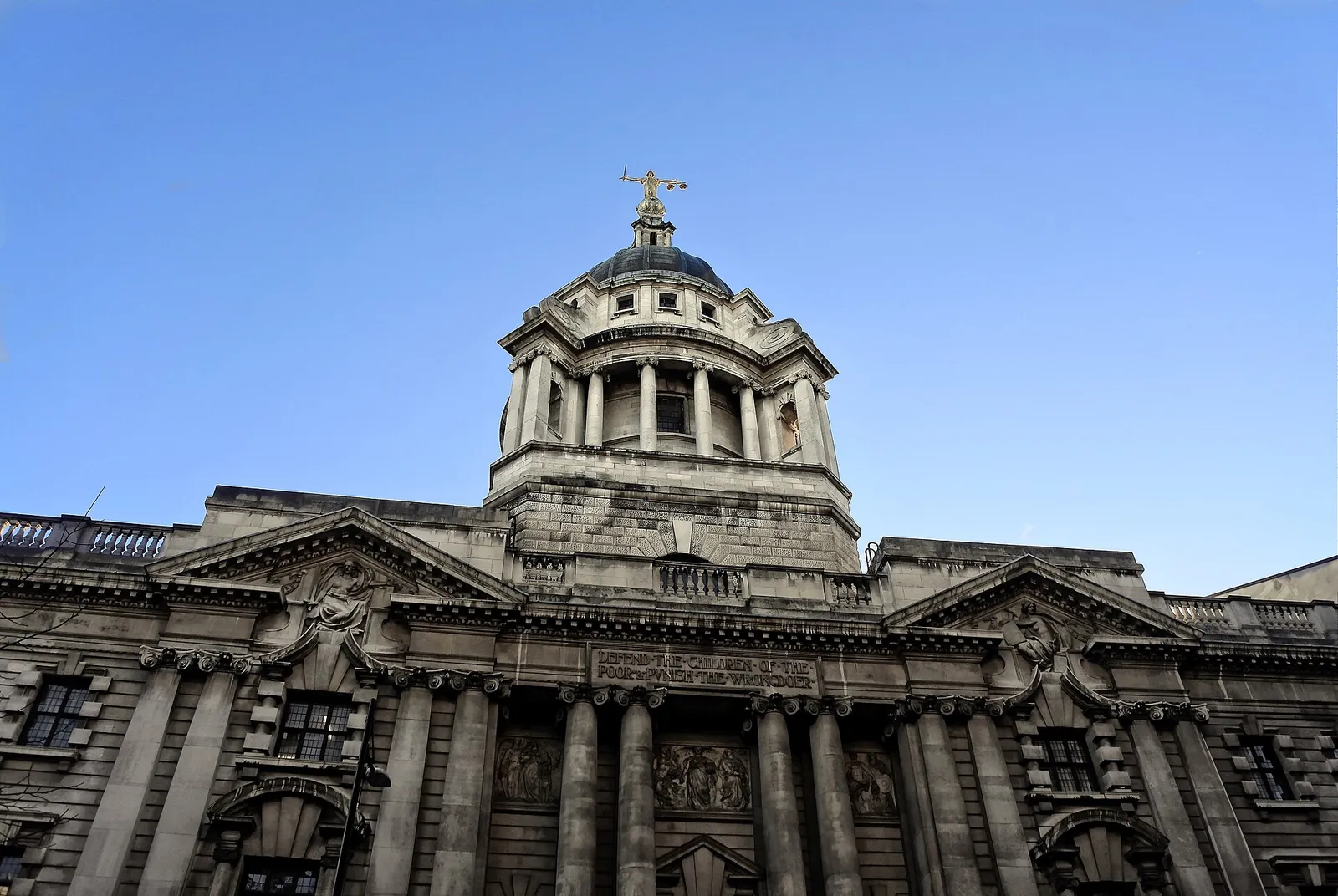
    The trial on six murders and two attempts began at the Old Bailey. Nilsen denied murder and sought a verdict of manslaughter on the grounds of diminished responsibility. The prosecution stated that he had confessed to fifteen killings. [19] [27] [32]

  31. 25 Oct

    DCI Jay’s evidence

    Capture, trial and aftermath

    Nilsen’s writings from remand were read out in court. The sentence “I have no tears for these victims” is quoted from them only by the Guardian. [43]

  32. late October

    Psychiatrists at odds

    Capture, trial and aftermath

    Defence psychiatrists James MacKeith and Patrick Gallwey described a severe personality disorder. The prosecution expert Paul Bowden found no disorder and said that Nilsen enjoyed killing. [19] [28] [29] [31]

  33. 4 Nov

    Verdict and sentence

    Capture, trial and aftermath

    The jury deliberated for over twelve hours and found him guilty on all eight counts, mostly by majority verdicts. Mr Justice Croom-Johnson sentenced him to life imprisonment with a recommended minimum of 25 years. [11] [19] [30] [31]

  34. 14 Dec

    Inquests in Hornsey

    Capture, trial and aftermath

    Coroner David Paul returned verdicts of unlawful killing for nine victims, four of them unidentified. Given only by The Times. [34]

  35. 21 Dec

    Attacked in prison

    Capture, trial and aftermath

    At Wormwood Scrubs his face was cut in a scuffle in the exercise yard. Given only by The Times. [35]

  36. 1985

    Killing for Company

    Capture, trial and aftermath

    Brian Masters published a book based on Nilsen’s notes from remand. [11] [57] [62]

  37. 1992
    September

    Interview at Albany prison

    Capture, trial and aftermath

    Psychologist Paul Britton and a Central Television crew filmed an interview with Nilsen on the Isle of Wight. [37] [38] [45]

  38. 1993
    26 Jan

    Interview broadcast

    Capture, trial and aftermath

    Home Secretary Kenneth Clarke tried to have the broadcast banned by the courts. The Court of Appeal ruled against him and ITV broadcast the programme Murder in Mind. [37] [39] [45]

  39. 1994
    December

    Whole life tariff

    Capture, trial and aftermath

    The Times wrote that Nilsen was among twenty prisoners whom the Home Secretary would tell that they would never be released. According to the PPO, the whole life tariff was imposed by the Lord Chief Justice. [10] [41]

  40. 2001
    27 Nov

    Transfer to Full Sutton

    Capture, trial and aftermath

    According to the PPO he was moved to HMP Full Sutton near York. At the inquest it was stated that this happened in 2003. [9] [10]

  41. 2003
    19 Dec

    Dispute over the autobiography

    Capture, trial and aftermath

    The High Court dismissed his claim against the withholding of the manuscript of his autobiography. In 2004 the Court of Appeal upheld the judgment. [11] [12]

  42. 2006
    January

    Identification of the first victim

    Capture, trial and aftermath

    The police reopened the disappearance of Stephen Holmes. Nilsen recognised the boy in a photograph and the family was informed. [4] [13] [16]

  43. November

    Letter to the Evening Standard

    Capture, trial and aftermath

    In a letter Nilsen described the first murder and called Holmes “the first of 12 homicide victims”. [14] [15] [16]

  44. 6 Dec

    CPS will not prosecute

    Capture, trial and aftermath

    The Crown Prosecution Service accepted that there was enough evidence, but that a prosecution was not in the public interest. [4]

  45. 2018
    10 May

    Collapse in prison

    Capture, trial and aftermath

    In severe pain, he was taken to hospital in York and underwent surgery for a ruptured abdominal aortic aneurysm. [9] [10] [56]

  46. 12 May

    Death

    Capture, trial and aftermath

    He died in the intensive care unit of the hospital in York, aged 72. [1] [8] [10]

  47. 2019
    October

    Inquest into his death

    Capture, trial and aftermath

    Coroner Paul Marks in Hull recorded a natural death. The ombudsman criticised the delay of the ambulance. [3] [9]

  48. 2020
    14 to 16 Sep

    The series Des

    Capture, trial and aftermath

    ITV broadcast the three-part drama with David Tennant as Nilsen and Daniel Mays as Peter Jay. [5] [6] [58]

  49. 2021
    21 Jan

    Autobiography published

    Capture, trial and aftermath

    The book History of a Drowning Boy, compiled by Mark Austin from Nilsen’s writings, was published. [46] [60]

  50. 18 Aug

    Netflix documentary

    Capture, trial and aftermath

    Netflix released the documentary Memories of a Murderer: The Nilsen Tapes, built on Nilsen’s recordings. [61] [62]

  51. 2022
    24 Jan

    The Nilsen Files

    Capture, trial and aftermath

    BBC Two began broadcasting a three-part documentary about the police failures and the victims. [7] [52] [55]

03 / 16 / Victims first

Named victims

Named victims: 12 / Survivors: 5

The list contains twelve documented victims: eight known by name and four unidentified. He was convicted of six murders, those of Ockenden, Duffey, Sutherland, Barlow, Howlett and Sinclair. He himself claimed twelve victims in a letter in 2006, and STV, the Irish Times and the Camden New Journal give the same number. He recognised Stephen Holmes only in 2006 and the CPS did not prosecute him; Graham Allen was not on the indictment. He killed the four unidentified victims at Melrose Avenue between Ockenden and Barlow; their descriptions and exact dates do not have two sources. Ages differ between sources: Ockenden 23 or 26, Sutherland 26 or 27, Sinclair 20 or 21; we give the prevailing figure. For Barlow (23 or 24) and Allen (27 or 28) we give no age. The spelling of names varies (Ockendon, Martin Duffey, Allan).

Showing 12 of 12
  • Stephen Dean Holmes
    flat at 195 Melrose Avenue, Cricklewood; body burned in the garden, Brent (Cricklewood), London
    30 Dec 1978 (confessed, identified 2006, not prosecuted)
    age 14
  • Kenneth James Ockenden
    flat at 195 Melrose Avenue, Cricklewood, Brent (Cricklewood), London
    3 Dec 1979 (convicted murder)
    age 23
  • Martyn Brandon Duffey
    flat at 195 Melrose Avenue, Cricklewood, Brent (Cricklewood), London
    between 13 and 19 May 1980 (convicted murder)
    age 16
  • William David Sutherland
    flat at 195 Melrose Avenue, Cricklewood, Brent (Cricklewood), London
    summer 1980, between 1 Jul and 30 Sep 1980 (convicted murder)
    age 26
  • Malcolm Barlow
    flat at 195 Melrose Avenue, Cricklewood, Brent (Cricklewood), London
    September 1981, between 16 and 20 Sep 1981 (convicted murder)
    age unknown
  • John Peter Howlett
    attic flat at 23 Cranley Gardens, Muswell Hill, Haringey (Muswell Hill), London
    March 1982 (convicted murder)
    age 23
  • Archibald Graham Allen
    attic flat at 23 Cranley Gardens, Muswell Hill, Haringey (Muswell Hill), London
    September 1982 (confessed, not charged)
    age unknown
  • Stephen Neil Sinclair
    attic flat at 23 Cranley Gardens, Muswell Hill, Haringey (Muswell Hill), London
    between 31 Jan and 3 Feb 1983 according to the prosecution (convicted murder)
    age 20
  • Unidentified Nilsen victim (1)
    flat at 195 Melrose Avenue, Cricklewood; body burned in the garden, Brent (Cricklewood), London
    December 1979 to September 1981 (confessed, identity unknown, not charged)
    age unknown
  • Unidentified Nilsen victim (2)
    flat at 195 Melrose Avenue, Cricklewood; body burned in the garden, Brent (Cricklewood), London
    December 1979 to September 1981 (confessed, identity unknown, not charged)
    age unknown
  • Unidentified Nilsen victim (3)
    flat at 195 Melrose Avenue, Cricklewood; body burned in the garden, Brent (Cricklewood), London
    December 1979 to September 1981 (confessed, identity unknown, not charged)
    age unknown
  • Unidentified Nilsen victim (4)
    flat at 195 Melrose Avenue, Cricklewood; body burned in the garden, Brent (Cricklewood), London
    December 1979 to September 1981 (confessed, identity unknown, not charged)
    age unknown

By location

Brent (Cricklewood), London9
Haringey (Muswell Hill), London3

Victim profile

12 and under0
13–172
18–243
25 and over1
Women and girls: 0 / Men and boys: 12 (of 12 named)

Survivors

  • Andrew Ho
    in October 1979 he reported to the police that Nilsen had tried to strangle him at Melrose Avenue. Nilsen was questioned and released because Ho did not press charges. The attack was not on the indictment
  • Douglas Stewart
    aged 29, a Scot from Caithness; on 10 Nov 1980 at Melrose Avenue he woke with his legs tied and Nilsen strangling him with his own tie. He fought him off and called the police, who dropped the matter. Nilsen was convicted of this attempt
  • Paul Nobbs
    aged 19, a student; in November 1981 he woke in Cranley Gardens with a red mark on his neck. He did not go to the police for fear of his homosexuality being exposed. Nilsen was convicted of this attempt
  • Carl Stottor
    in May 1982 Nilsen strangled him into unconsciousness in Cranley Gardens and tried to drown him in the bath, then revived him and let him go. The police brushed off his report. He testified at the trial; his case was not on the indictment
  • Other attacks
    Nilsen admitted to about seven attempts; he could not name some of those attacked

Unconfirmed

After his arrest in February 1983 Nilsen confessed to fifteen, according to some sources sixteen, killings. In 1983 the prosecution also presented his confessions to murders he was not charged with, among them the murder of a youth in December 1978, later identified as Stephen Holmes. In December 1983 the coroner in Hornsey returned verdicts of unlawful killing for nine victims (given only by The Times). In 2006 Nilsen himself wrote of twelve victims; no source explains the difference from the earlier confession. Descriptions of further unidentified victims are given only by Refinery29, citing the Evening Standard (a young Scot, an English skinhead and a boy from Belfast).

04 / 16 / Offender’s pattern

What recurred

Nilsen left no messages or signatures. His signature is the invitation home, strangulation, drowning, living with the dead bodies and the destruction of the remains, which in the end gave him away. Each item states whether it is a documented fact, a disputed point or a theory.

Traits: 7

01

An invitation from the pub

● Fact

He met young men in pubs and bars, mostly in central London, and invited them home for drinks and food. The prosecution stressed that they were mainly people with no fixed address whom nobody was looking for. [1] [9] [27]

Later sources question the claim that they were only homeless people, see Myths.

02

Strangulation with a tie

● Fact

He strangled his victims mostly with a tie, Ockenden with a headphone cord and Howlett with an upholstery strap. [19] [27] [64]

The statement that he started with about fifteen ties and had one left is quoted only by The Times.

03

Drowning while unconscious

● Fact

He drowned some victims after strangling them: Holmes in a bucket, Howlett in the bath. He tried to drown Carl Stottor in the bath, then revived him. [13] [14] [27] [52]

04

The dead as company

● Fact

He washed and dressed the bodies and kept them for days to months under the floorboards, in a cupboard or in bed. The sources repeat his explanation that he wanted their company. [1] [9] [13]

05

Fire and toilet

● Fact

At Melrose Avenue he burned the dismembered bodies on bonfires in the garden. The attic flat in Cranley Gardens had no garden, so he flushed flesh and small bones down the toilet and boiled the heads. That is what blocked the drains of the house. [9] [14] [31] [48]

06

Necrophilia

◐ Disputed

STV, Gulf News and Crime+Investigation report sexual acts with the bodies. Nilsen told the police that he had no intercourse with any victim before or after death, and according to The Times the prosecution psychiatrist Paul Bowden found no support for it. [9] [14] [20] [27] [29]

Sources differ; the claim is not clearly documented.

07

The ones he let go

○ Theory

He let several men go after an attack, among them Nobbs and Stottor. The prosecution saw this as proof of self-control, the defence as a disintegration of personality. Nilsen himself spoke of a state he called a “killing trance”. [27] [31] [51]

The expression “killing trance” is given only by Crime+Investigation.

05 / 16 / Modus operandi

How the behaviour evolved

Phases: 3

1945-1978

Before the murders

Childhood in a Scottish harbour town, eleven years in the army, a short time with the police and then the job centre. From 1975 he lived in Cricklewood, where he was left alone after his partner moved out.

  • 1945: born in Fraserburgh
  • 1948: parents’ divorce
  • 1961 to 1972: army cook
  • 1972 to 1973: probationary police constable
  • from 1974: job centre clerk
1978-1983 / Cricklewood, Muswell Hill

Murders

In four years he killed at least twelve men, nine at Melrose Avenue and three in Cranley Gardens. Several others survived; three attacks were reported to the police.

  • 30 Dec 1978: murder of Stephen Holmes
  • 1979 to 1981: murders at Melrose Avenue, bodies burned in the garden
  • autumn 1981: move to Cranley Gardens
  • 1982 to 1983: three murders in Cranley Gardens
  • 1979 to 1982: attacks on Ho, Stewart, Nobbs and Stottor
From 8 Feb 1983

Capture, trial, prison

The blocked drains led to his arrest. He confessed at once; the trial dealt mainly with his state of mind. He spent the rest of his life in prison.

  • 9 Feb 1983: arrest
  • 4 Nov 1983: guilty of 6 murders and 2 attempts
  • 2006: identification of Holmes, CPS does not prosecute
  • 12 May 2018: death in hospital in York
06 / 16 / Crime scenes

Where and in what order

Places: 6

  1. 01Fraserburgh, Aberdeenshire1945-1961
  2. 02Army (Germany, Aden, Cyprus, Shetland)1961-1972
  3. 03Willesden Green, London (police)1972-1973
  4. 04195 Melrose Avenue, Cricklewood1978-1981
  5. 0523 Cranley Gardens, Muswell Hill1981-1983
  6. 06HMP Full Sutton near York2001-2018
07 / 16 / Investigation

How he was caught

Steps: 7

01 / 1979

A missing tourist

The disappearance of Kenneth Ockenden was the only one to make the newspapers, and the police searched for him. The trail did not lead to Nilsen. [22] [51]

02 / 1979-1982

Three reports

Andrew Ho, Douglas Stewart and Carl Stottor reported attacks. Ho did not press charges, the police dropped Stewart’s case as a lovers’ quarrel and brushed off Stottor’s report. [19] [21] [27] [51] [52]

03 / 8 Feb 1983

Blocked drains

A Dyno-Rod technician found flesh and bones in the drain shaft of the house in Cranley Gardens. By morning the shaft had been cleared, but bones remained in the pipe. [19] [55] [64]

04 / 9 Feb 1983

Pathologist and arrest

Pathologist David Bowen identified human tissue. DCI Peter Jay waited for Nilsen at the house and arrested him when he returned from work. [20] [43] [48]

05 / 9 to 10 Feb 1983

Confession

On the way to Hornsey police station he said he had killed 15 or 16 people since 1978. The interviews lasted over 30 hours. [20] [27] [53]

06 / 1983

Search for names

The police identified Sinclair at once and named Duffey, Sutherland and Barlow in May 1983. Most of the Melrose Avenue victims could not be identified. [22] [44] [51]

07 / 2005-2006

Holmes cold case

The Metropolitan Police reopened the disappearance of Stephen Holmes. Nilsen recognised him in a photograph. The CPS accepted that there was enough evidence, but a prosecution was not in the public interest. [4] [13] [51]

What went wrong

  • Reports not followed up
    Three men reported attacks and nothing was done. The police dropped Stewart’s 1980 case as a lovers’ quarrel.
  • Prejudices of the time
    The director of the BBC documentary, Michael Ogden, and Crime+Investigation attribute the failure to homophobia. Paul Nobbs did not report the attack partly because he was 19 and the age of consent for homosexual acts was then 21.
  • Destroyed remains
    The remains from Melrose Avenue were later destroyed, so the 2006 identification of Holmes could not be confirmed from bones and teeth.

Impact on forensics and law

  • Psychiatry in the dock
    The trial opened a debate on diminished responsibility under the Homicide Act 1957 and on the mandatory life sentence for murder.
  • Prisoners and the media
    The dispute over the 1993 interview and the judgments of 2003 and 2004 concerned whether a prisoner may publish material about his crimes. The courts upheld the ban on sending such a text out for publication.
08 / 16 / People in the case

Witnesses, investigators, relatives

People: 18

Investigator
DCI Peter Jay
Head of CID in Hornsey. He led the investigation and arrested Nilsen. He died in February 2018, aged 79.
Investigator
DS Chris Healey
Member of the investigation team; he visited Nilsen’s mother in Aberdeenshire.
Pathologist
David Bowen
He established that the tissue from the drains was human and examined the flat.
Judge
Sir David Croom-Johnson
He presided over the 1983 trial at the Old Bailey.
Prosecutor
Allan Green
He led the prosecution at the Old Bailey.
Defence lawyer
Ivan Lawrence
Nilsen’s defence counsel at the trial, also a Member of Parliament.

Accomplices: none. He committed all the crimes alone.

09 / 16 / Trial and sentence

From remand to death in prison

Proceedings: 7

February to August 1983 / Highgate, High Court

Remand and preparation

Highgate Magistrates’ Court repeatedly extended his remand, and on 12 May 1983 further charges were added. In July Nilsen dismissed his lawyer, bail was refused in August and the court granted him legal aid. [22] [23] [24] [25] [26]

Remand
24 Oct to 4 Nov 1983 / Old Bailey

Main trial

Charges of six murders and two attempted murders. Nilsen denied murder and sought a verdict of manslaughter on the grounds of diminished responsibility. The jury of eight men and four women deliberated for 12 hours and 26 minutes and found him guilty on all counts, mostly by majority verdicts. [11] [19] [27] [30] [31]

Life sentence, minimum 25 years
14 Dec 1983 / Hornsey

Inquests

Coroner David Paul returned verdicts of unlawful killing for nine victims, four of them unidentified. Given only by The Times. [34]

Unlawful killing
1993 / High Court, Court of Appeal

Dispute over the interview

The Home Office tried to ban the broadcast of an interview that Central Television had filmed at Albany prison. The Court of Appeal allowed the broadcast. [37] [38] [39] [45]

Broadcast 26 Jan 1993
2003 and 2004 / High Court, Court of Appeal

Autobiography manuscript

Nilsen sued the prison over the withholding of his manuscript. The High Court dismissed the claim in December 2003 and the Court of Appeal upheld the judgment in November 2004. [11] [12]

Dismissed
6 Dec 2006 / CPS

Murder of Stephen Holmes

The Crown Prosecution Service accepted that the evidence from the confession and the match of place, time and description was sufficient, but that a prosecution was not in the public interest. Given only by the BBC. [4]

Not prosecuted
October 2019 / Hull

Inquest into his death

Coroner Paul Marks recorded a natural death. The Prisons and Probation Ombudsman criticised the delay of the ambulance. [3] [9] [10]

Natural causes

Prison

He spent his remand in Brixton, then was held at Wormwood Scrubs, Albany on the Isle of Wight and Whitemoor. From 2001 according to the PPO, from 2003 according to the inquest, he was at Full Sutton prison near York. Throughout he was a Category A prisoner.

Death

On 10 May 2018 he collapsed in severe pain and underwent surgery in hospital in York. He died on 12 May 2018 of a pulmonary embolism and haemorrhage after surgery for a ruptured abdominal aortic aneurysm, aged 72. The Prison Service initially announced that he had died in prison.

Funeral

The funeral took place on 7 Jun 2018, given only by the ombudsman’s report. No source states where his remains were laid to rest.

10 / 16 / Psychology and myths

What is documented and what is not

Items: 6 / each labelled Fact, Disputed or Theory

He killed in Muswell Hill

◐ Disputed

Many reports from 2018 write about murders in his house in Muswell Hill. But he committed most of the murders at Melrose Avenue in Cricklewood, only three in Muswell Hill. [1] [3] [9] [17] [27] [31]

He died in his cell

◐ Disputed

The Prison Service announced his death at Full Sutton prison. The inquest and the ombudsman’s report showed that he died in hospital in York after surgery. [1] [2] [8] [10] [56]

Britain’s worst murderer

◐ Disputed

In 1983 The Times put him on a par with Bruce Lee with fifteen victims; since the Shipman case he is often named as second. But the figure of fifteen rests only on his confession. [9] [17] [27] [36]

Only homeless men and rent boys

◐ Disputed

The prosecution described the victims as people with no fixed address. Director Michael Ogden showed that the families of Duffey and Sutherland had searched for them for years and that Sinclair had people close to him. Holmes was a schoolboy with a family. [13] [27] [51]

Sinclair was an Australian tourist

◐ Disputed

That is how detective Chris Healey described him in a 2020 interview. Other sources give a young man from Perth in Scotland. [27] [51] [53]

He was exposed by chance

◐ Disputed

Only partly. According to The Times, all the tenants of the house, including Nilsen, complained about the blocked drains. [31] [54]

11 / 16 / Comparison

Related cases

1972-1978 / USA

John Wayne Gacy

33 victims / Executed 1994
In common

Both killed young men and boys whom they lured to their homes, and hid the bodies right where they lived.

Difference

Gacy was convicted of 33 murders in the USA and executed. Nilsen was convicted of six murders, most victims could not be identified, and he died in prison.

1888 / United Kingdom

Jack the Ripper

5 canonical victims / Unidentified
In common

Both series took place in London and the victims were people on the margins of society.

Difference

Jack the Ripper was never identified. Nilsen confessed to the murders himself after his arrest.

12 / 16 / Books and films

Treatments of the case

The label is an editorial rating: Recommended means a balanced treatment with verifiable sources; With caution means the work gives the perpetrator a platform or opts for a simplified version.

Book / 1985Recommended
Killing for Company
Brian Masters. A book based on Nilsen’s notes from remand, the basis for the series Des.
TV documentary / 1993Source
Murder in Mind
Central Television, ITV. An excerpt from the interview at Albany prison, broadcast after a court dispute with the Home Office.
Series / 2020Recommended
Des
ITV, three episodes, directed by Lewis Arnold. David Tennant as Nilsen, Daniel Mays as Peter Jay.
Book / 2021With caution
History of a Drowning Boy
Posthumously published autobiography, compiled by Mark Austin. The perpetrator’s own account.
13 / 16 Photos and documents

Photos and documents10

Photos and documents from readers. We publish them after review; you see your own uploads straight away, marked Pending review.

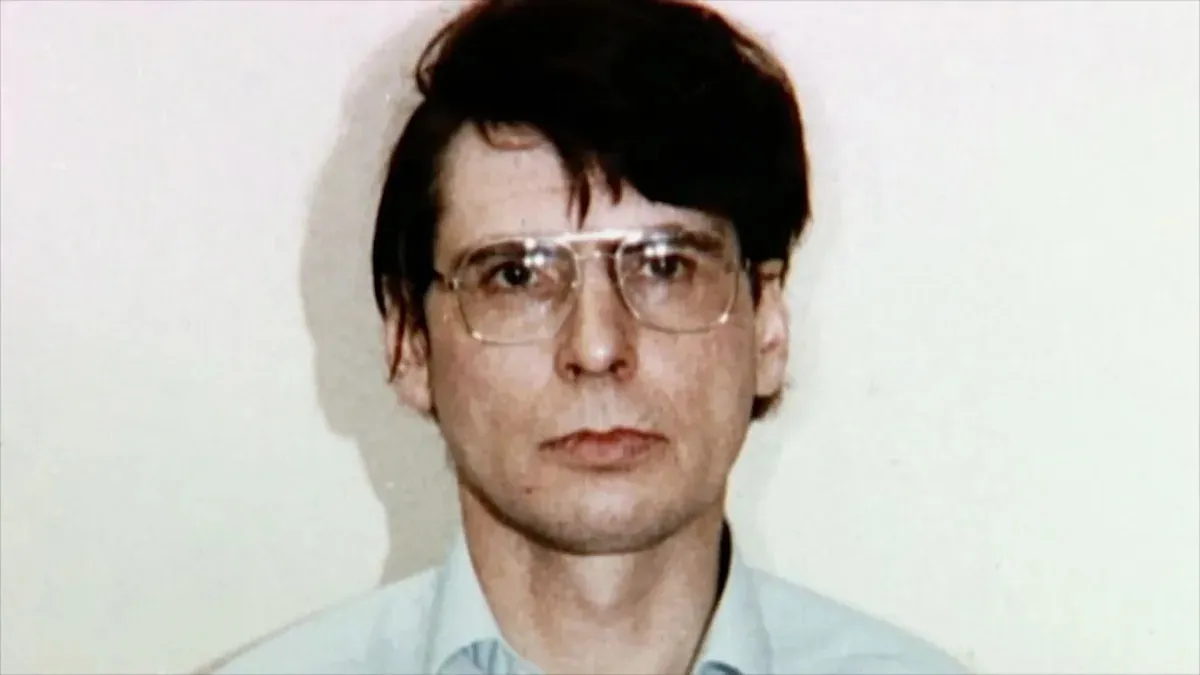
Dennis Nilsen in a light blue shirt, with dark hair and large glasses.
Colour portrait of Dennis Nilsen in glasses, reproduced in an article about the documentary The Real Des.
Full Sutton Prison dle zdrojového záznamu / Digital Spy / Yahoo / © All rights reserved / yahoo.com
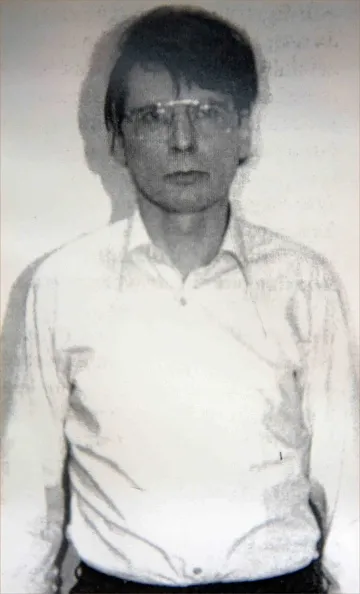
Dennis Nilsen in a white shirt and glasses stands facing the camera.
Period portrait of Dennis Nilsen in a white shirt.
Universal History Archive / Universal Images Group via Getty Images / © All rights reserved / gettyimages.ie
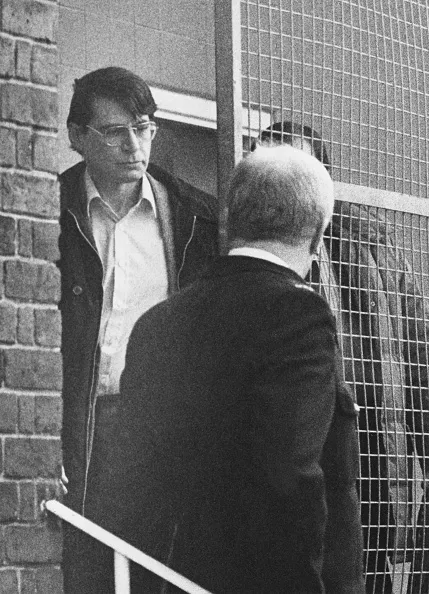
Dennis Nilsen in a dark jacket among people at the exit of a building.
Dennis Nilsen leaving Highgate Magistrates’ Court in London, 18 February 1983.
Bride Lane Library / Popperfoto via Getty Images / © All rights reserved / gettyimages.be
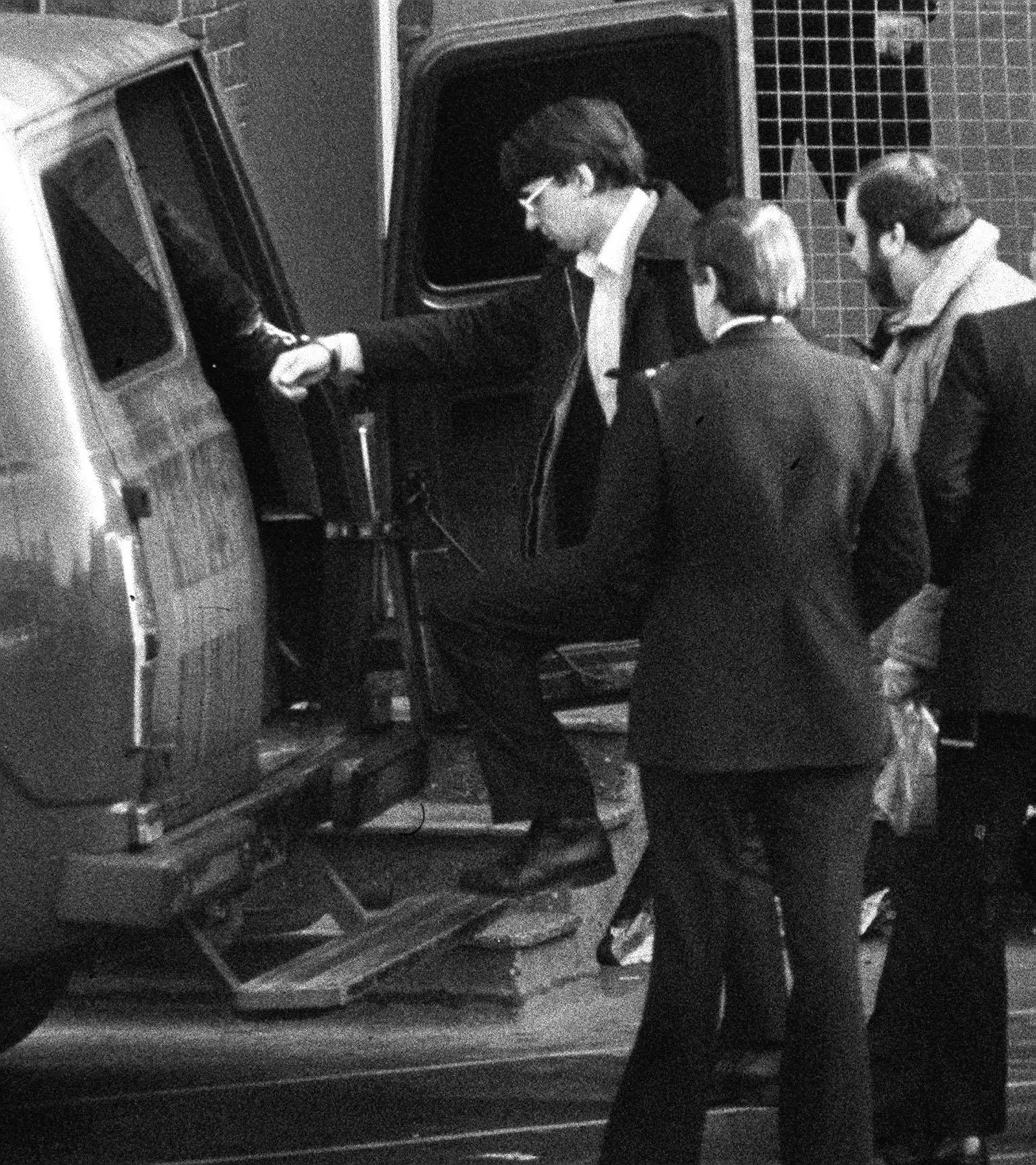
Dennis Nilsen holds on to the edge of the vehicle door, with members of the escort standing around him.
Dennis Nilsen gets into a police vehicle after a hearing at the court in Highgate.
PA Images via Getty Images / Bustle / © All rights reserved / bustle.com
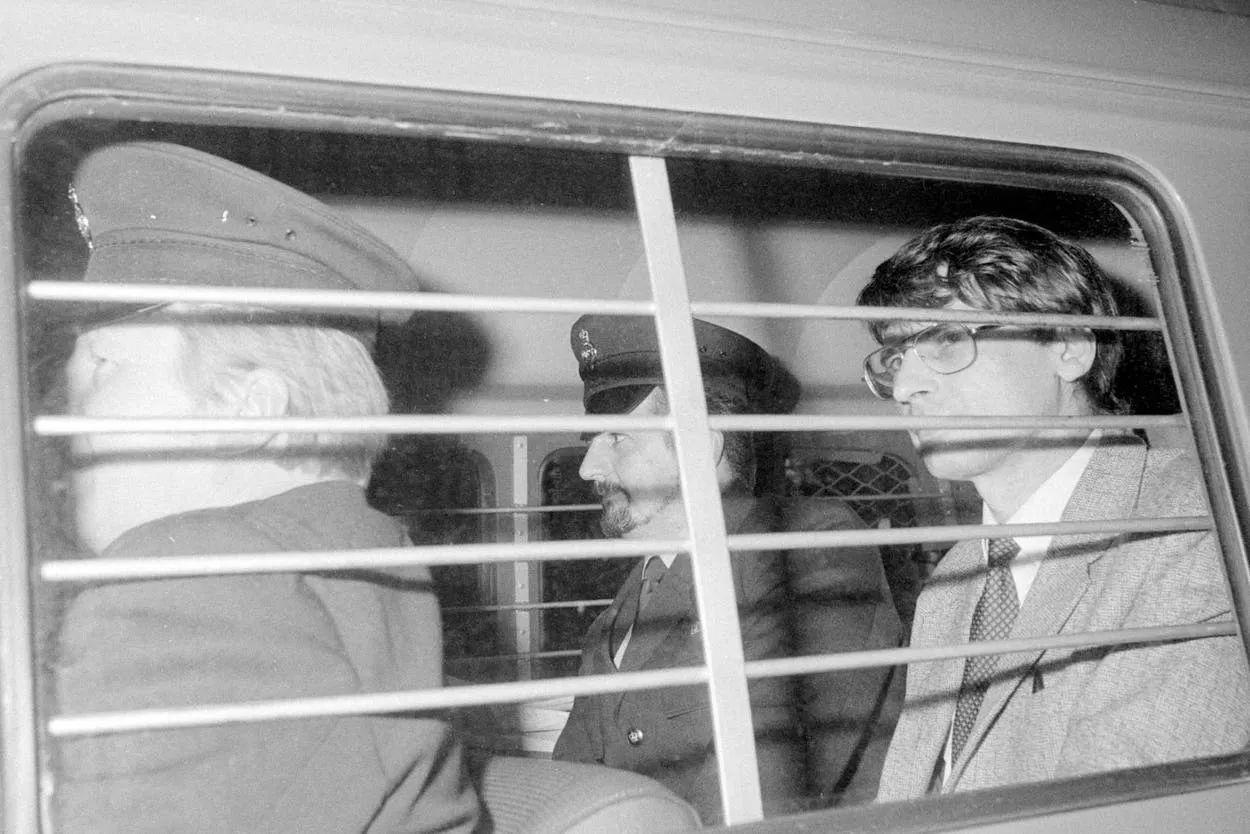
Dennis Nilsen sits on the right behind a barred vehicle window, next to a uniformed man.
Dennis Nilsen with a member of the escort after the verdict, 4 November 1983.
PA / The Independent / © All rights reserved / independent.co.uk
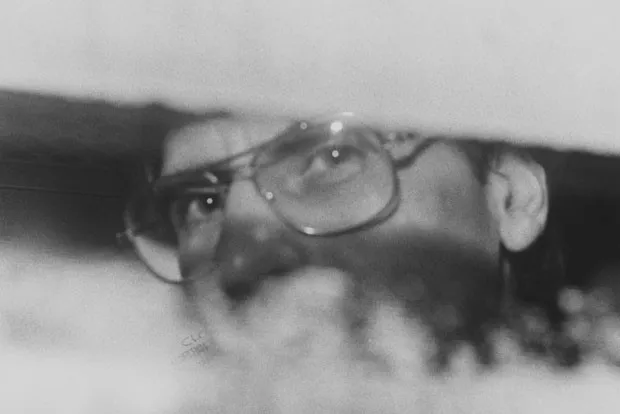
Black-and-white close-up of Nilsen's eyes and glasses, partly obscured by the edges of an opening in the vehicle.
Dennis Nilsen shortly after his arrest in 1983, archive reproduction from Radio Times.
Radio Times, autor fotografie neuveden / © All rights reserved / radiotimes.com
View looking up at the façade and dome of the Old Bailey court in London.
The Old Bailey in London, where the trial of Dennis Nilsen took place in 1983.
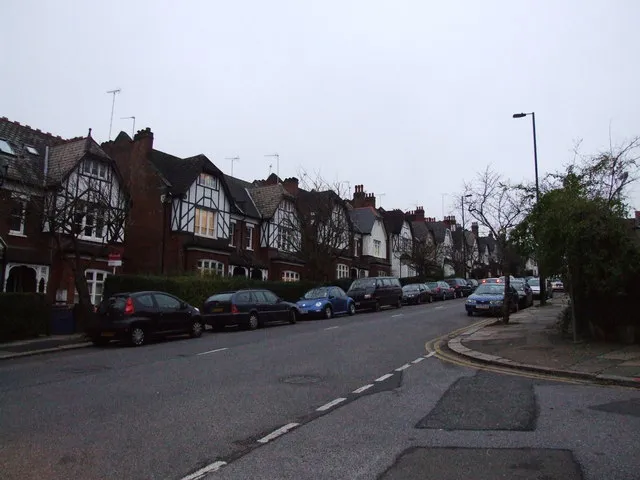
London street with a row of brick houses and parked cars.
Cranley Gardens in Muswell Hill, a more recent view of the street linked to the case.
Chris Whippet / CC BY-SA 2.0 / geograph.org.uk
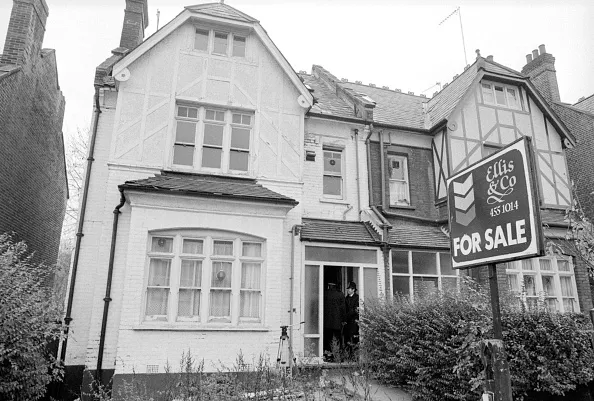
Black-and-white view of a Victorian house with a bay window and an estate agent's sign.
Period photograph of the house in Cranley Gardens where Dennis Nilsen lived.
PA Images via Getty Images / © All rights reserved / gettyimages.be
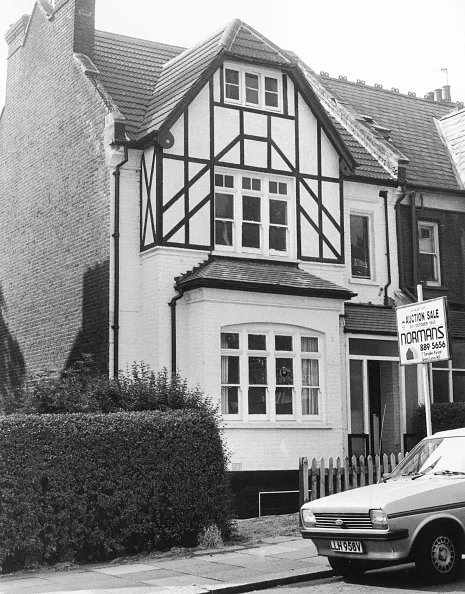
Black-and-white photograph of a house with a gabled front and a hedge.
The house in Cranley Gardens in September 1985, a different view from the 1983 police news coverage.
Keystone / Hulton Archive / Getty Images / © All rights reserved / gettyimages.be
14 / 16 / Open questions

What is still missing

  • The true number of victims: after his arrest he confessed to 15 or 16 killings, in 2006 he wrote of twelve. How many of the confessions were true has not been established.
  • The identity of the four documented victims from Melrose Avenue and of any others he confessed to.
  • The exact date of Sinclair’s death: the prosecution gave 31 Jan to 3 Feb 1983, later texts 26 Jan 1983.
  • Who imposed the whole life tariff and when: according to the PPO the Lord Chief Justice, according to The Times of December 1994 it was to be announced by the Home Secretary. No primary document could be found.
  • The date of the transfer to Full Sutton: 27 Nov 2001 according to the PPO, 2003 according to the inquest.
  • Discrepancies between sources: the year of the move to Cranley Gardens (1981 or 1982), his age on joining the army (15 or 16), the length of his police service, the ages of the victims.
  • Why the police did not link the reports by Ho, Stewart and Stottor. The transcript of the 1983 trial was not available during the research.

You can help

Add a source, a photo or a correction. We check every submission and credit your nickname on approved ones.

Send a tipCase discussion
15 / 16 / Citations

Sources

A number in square brackets next to a claim refers to an item in this list. A claim without a number has no source assigned yet. Details may vary between sources; disputed and theoretical items are marked.

66Sources in total
  • Primary4
  • Secondary6
  • Media56
Checked: 17 Nov 2026. Research in one round, 66 sources read, including 21 issues of The Times from 1983 to 1994, two court judgments and the report of the Prisons and Probation Ombudsman. Information marked as fact has at least two sources; information from a single source is marked in the text or left out. The English Wikipedia, Murdermap and PrideNZ served only as a guide and are not among the sources. Code UK-1978-DN: Great Britain, year of the first murder (Stephen Holmes, 30 Dec 1978), initials of Dennis Nilsen. The victim count of 12, per the decision of 17 Nov 2026, means documented victims, not convicted murders. Not available: the trial transcript, the Press and Journal, the Yorkshire Post, the 2006 CPS page. Before publication, check the verdicts of the 1983 inquests, the dates of the murders of the unidentified victims and evidence of the whole life tariff.
16 / 16 / Revision history

Revision history

Every edit to this page is logged. Corrections sent in by readers are applied only after the editors check them against sources.

Published
Updated
Edits
1
  1. Page published
    OverviewEditors

Share this page

https://www.killeratlas.com/en/killers/dennis-nilsen/profile

How to cite

Killer Atlas. Dennis Nilsen (1978-1983): case profile [online]. https://www.killeratlas.com/en/killers/dennis-nilsen/profile [accessed 15 Nov 2026]. Checked 15 Nov 2026.