01
Content warningReal violent crimes; victims are named. Help: findahelpline.com. More
This page describes real violent crimes and names the victims. Victims come first; we leave out details that serve only sensationalism. Help: free helplines in your country at findahelpline.com; in an emergency call 112 (EU) or 911 (US).
Ian Brady & Myra Hindley
Ian Brady, born Ian Stewart, born 2 Jan 1938, Glasgow / Myra Hindley, born 23 Jul 1942, Manchester
Stock clerk Ian Brady and typist Myra Hindley met at the Manchester firm Millwards. Between July 1963 and October 1965 they abducted and murdered five children and teenagers aged 10 to 17. Hindley lured the victims into the car; they killed three of them on Saddleworth Moor and two in the house in Hattersley. They were caught when Hindley’s brother-in-law David Smith reported a murder he had witnessed. In May 1966 they received life sentences, Brady for three murders, Hindley for two and for being an accessory. They admitted two further murders only in the 1980s and were not prosecuted for them. Keith Bennett’s body was never found. Hindley died in custody in 2002, Brady in 2017.
- 5
- children and teenagers aged 10 to 17 murdered between 12 Jul 1963 and 6 Oct 1965● Fact
- 3
- murders at the 1966 trial: Brady 3, Hindley 2 and accessory; they admitted the remaining 2 only later and were not prosecuted● Fact
- 1
- body still not found: twelve-year-old Keith Bennett; the last search ended in 2022● Fact
- 36
- years Hindley spent in prison, longer than any other woman in Britain● Fact
5Fact
6Disputed
2Theory
80 of 80claims have a source
55sources, 9 of them primary
02 / 15 / Timeline
From birth to the deaths of both in custody
Events: 52 / 1938–2022
- 01
Life
1938–61 - 02
Crimes
1963–64196312 JulMurder of Pauline Reade
CrimesThe sixteen-year-old girl disappeared in the evening in Gorton on her way to a disco. Hindley knew her; she was a schoolmate of her sister Maureen. They drove her to Saddleworth Moor, where Brady killed her. They admitted this only between 1985 and 1987. [11] [17] [18] [33] [43]
- 03
Life
19641964SeptemberThe house in Hattersley
LifeHindley moved with her grandmother and Brady into the new council house at 16 Wardle Brook Avenue in Hattersley. The month of the move is given only by Crime+Investigation. [43]
- 04
Crimes
1964–65196426 DecMurder of Lesley Ann Downey
CrimesThey took the ten-year-old girl from a fair in Ancoats to the house in Hattersley. They undressed her, photographed her and recorded her on tape, then strangled her. They buried the body on the moor. Each of the pair claims the other strangled her. [11] [18] [31] [33] [43]
- 05
Capture, trial and aftermath
1965–22 - October
Hindley’s arrest
Capture, trial and aftermathHindley was questioned on 7 Oct but not detained. According to Crime+Investigation she remained free for four days and destroyed documents at Millwards, then was arrested; only this source gives the exact date, indirectly. [43]
- 6 May
Verdict
Capture, trial and aftermathThe jury found Brady guilty of three murders, Hindley of two and of being an accessory after the fact to the murder of Kilbride. Brady received three concurrent life sentences, Hindley two and seven years. The 2013 tribunal reasons give 5 May 1966. [9] [11] [15] [17]
- 11 May
Paying a witness
Capture, trial and aftermathParliament discussed the fact that the News of the World had a contract with the main witness David Smith. Attorney General Elwyn Jones, who had led the prosecution himself, declined to prosecute the newspaper. A Press Council declaration against paying witnesses followed. [3] [4]
- 1966-1983
Brady’s prisons
Capture, trial and aftermathBrady passed through Durham, Albany, Wormwood Scrubs, Parkhurst and Gartree prisons. The exact dates of the transfers are given only by the 2013 tribunal reasons. [1]
- 1972September
A walk from Holloway
Capture, trial and aftermathThe governor of Holloway prison took Hindley for a walk outside the prison. The minister called it an error of judgement in Parliament. Only the Hansard record gives this. [5]
- 1986December
Hindley on the moor
Capture, trial and aftermathHindley visited the moor with police for the first time, without result. Only the BBC gives this. [17]
- 20227 Oct
End of the search for Bennett
Capture, trial and aftermathPolice ended a dig on the moor prompted by a tip from an amateur researcher; they found no human remains. The dates of the search are given only by the Guardian. [32]
03 / 15 / Victims first
Named victims
Named victims: 5 / Survivors: 2
The list contains all five murdered, two girls and three boys aged 10 to 17. Brady was convicted of the murders of John Kilbride, Lesley Ann Downey and Edward Evans; Hindley of the murders of Downey and Evans and of being an accessory after the fact to the murder of Kilbride, of whose murder she was acquitted. The pair admitted the murders of Pauline Reade and Keith Bennett only between 1985 and 1987; in 1988 the Director of Public Prosecutions did not prosecute them, in the public interest. Keith Bennett’s body was never found. The date is the day of disappearance, the region is where the victim died.
Showing 5 of 5
- Pauline Readetaken in Gorton (Manchester) on her way to a disco, killed on Saddleworth Moor; body found in 1987, Saddleworth Moor, then West Riding of Yorkshire12 Jul 1963 (admitted 1985 to 1987, not prosecuted)age 16
- John Kilbridetaken from the market in Ashton-under-Lyne, killed on Saddleworth Moor; body found on 21 Oct 1965, Saddleworth Moor, then West Riding of Yorkshire23 Nov 1963age 12
- Keith Bennetttaken in Manchester on his way to his grandmother’s, killed on Saddleworth Moor; body never found, Saddleworth Moor, then West Riding of Yorkshire16 Jun 1964 (admitted 1985 to 1987, not prosecuted)age 12
- Lesley Ann Downeytaken from a fair in Ancoats (Manchester), killed at 16 Wardle Brook Avenue in Hattersley; body found on Saddleworth Moor in October 1965, Hattersley, then Cheshire26 Dec 1964age 10
- Edward Evansbrought from Manchester Central station, killed at 16 Wardle Brook Avenue in Hattersley, Hattersley, then Cheshire6 Oct 1965age 17
By location
Hattersley, then Cheshire2
Saddleworth Moor, then West Riding of Yorkshire3
Victim profile
12 and under3
13–172
18–240
25 and over0
Women and girls: 2 / Men and boys: 3 (of 5 named)
Survivors
- Patricia (Pat) Hodgesa neighbour, aged 11 to 12; she went to the moor with the pair and after the arrest showed police their favourite spots by the A635 road. They never harmed her. That Brady considered her as a victim is stated only by Crime Magazine
- Other neighbourhood childrenaccording to Crime+Investigation, other neighbourhood children also went to the moor with the pair and returned unharmed; only this source gives names and details
Unconfirmed
In August 1987, in a letter to the BBC, Brady hinted at five further deaths: a man on waste ground in Manchester, a woman in a canal, a man in Glasgow, a person at Loch Long and another victim by the road across the moor. After preliminary inquiries police found insufficient evidence; Hindley knew nothing of further murders. A manuscript autobiography confessing to nine murders is mentioned only by Crime+Investigation; that police opened the files of eight missing people in 1965 is stated only by the BBC. No new charges followed.
04 / 15 / Offender’s pattern
What recurred
The pair left no messages. Their pattern consists of a woman who lured the victims, the moor as crime scene and grave, photographs at the graves and a tape recording. Each item is marked as a documented fact, a disputed point or a theory.
Traits: 7
02
Van and motorcycle
◐ Disputed03
The moor as a grave
● Fact04
Photographs at the graves
● Fact05
Tape recording
● Fact06
Destroying evidence
○ TheoryAccording to Crime+Investigation, the pair washed the car, burned clothing and the weapon and even kept track of buttons. Only this popular source gives this. [42]
07
Seeking an accomplice
● Fact05 / 15 / Modus operandi
How the behaviour evolved
Phases: 3
1938-1963
Before the murders
Brady’s childhood with foster parents and crime in Glasgow, Hindley’s childhood in Gorton. Meeting at work.
- 1938: Brady born in Glasgow
- 1942: Hindley born in Manchester
- 1954: Brady sent to Manchester
- 1957: Brady released from borstal
- 1961 or 1962: meeting at Millwards
1963-1965 / Manchester, Saddleworth Moor, Hattersley
Murders
Five victims in two years and three months. Police did not link the disappearances and suspected the victims’ families.
- 12 Jul 1963: Pauline Reade
- 23 Nov 1963: John Kilbride
- 16 Jun 1964: Keith Bennett
- 26 Dec 1964: Lesley Ann Downey
- 6 Oct 1965: Edward Evans
From 7 Oct 1965
Capture, trial, imprisonment
Arrest after David Smith’s report, life sentences in 1966, later confessions and the deaths of both in custody.
- 7 Oct 1965: Brady arrested
- 6 May 1966: life sentences
- 1985 to 1987: confessions to two further murders
- 15 Nov 2002: Hindley dies
- 15 May 2017: Brady dies
06 / 15 / Crime scenes
Where and in what order
Places: 7
map of crime scenes (points by date and place) / add from coordinates
- 01Glasgow, Gorbals and Pollok1938-1954
- 02Manchester, Gorton1954-1964
- 03Saddleworth Moor1963-1964
- 04Hattersley, 16 Wardle Brook Avenue1964-1965
- 05Chester, Chester Assizes1966
- 06Holloway, Durham, Cookham Wood, Highpoint prisons1966-2002
- 07Ashworth Hospital, Merseyside1985-2017
07 / 15 / Investigation
How they were caught
Steps: 8
01 / 1963-1965
Unlinked disappearances
The children’s disappearances were investigated separately. Suspicion also fell on the victims’ families. [17] [42] [43]
02 / 7 Oct 1965
A witness’s report
In the morning David Smith and his wife Maureen called the police from a phone box. Superintendent Talbot entered the house in disguise and found Edward Evans’s body and the hatchet in the locked bedroom. [17] [39] [43]
03 / October 1965
A name in a notebook
A notebook with the name “John Kilbride” was found in the house. It linked Brady to the boy’s disappearance two years earlier. [33] [42]
04 / October 1965
A neighbour showed the places
Eleven to twelve-year-old Pat Hodges, who went to the moor with the pair, showed police their favourite spots. [42] [45]
05 / October 1965
Suitcases from the left luggage office
Following a ticket from Hindley’s prayer book, police collected suitcases from Manchester Central station containing photographs of Lesley Ann Downey, pictures of the moor and tape recordings. [9] [17] [43]
06 / 16 and 21 Oct 1965
Graves on the moor
Police found the body of Lesley Ann Downey and then of John Kilbride. They located the second grave by comparing rocks in the photographs. [17] [31] [43]
What went wrong
- Suspicion of the familiesFor a long time police did not link the four disappearances and suspected the victims’ relatives. The BBC writes of police “baffled by unrelated cases”.
- Hindley at largeAccording to Crime+Investigation, Hindley was not detained on 7 Oct 1965 and could destroy evidence for several days. Only this source gives this.
- A paid witnessThe News of the World had a contract with the main witness David Smith for his story. According to Hansard, this threatened the credibility of the prosecution.
- Remains at a universitySome of Pauline Reade’s remains were kept at the University of Leeds for 30 years without the family’s knowledge. Only Yorkshire Live gives this.
Impact on forensics and law
- End of the death penaltyThe death penalty for murder was abolished by an Act of 8 Nov 1965, when the pair were already on remand. They could receive only life imprisonment for the murders.
- Paying witnessesAfter the trial the Attorney General and the Press Council brought about a declaration that barred newspapers from paying witnesses in ongoing proceedings.
- Whole life sentencesThe dispute over Hindley’s tariff ended in 2000 with the House of Lords ruling that the Home Secretary may impose a whole life tariff. The Telegraph stated in 2002 that the court in Strasbourg later took this power away from the Home Secretary.
08 / 15 / People in the case
Witnesses, investigators, relatives
People: 16
Perpetrator
Born 1938 in Glasgow. Convicted of three murders, at Ashworth Hospital from 1985. Died 15 May 2017.
Perpetrator
Born 1942 in Manchester. Convicted of two murders and of being an accessory. Died in custody on 15 Nov 2002.
Witness, informant
David Smith
Hindley’s brother-in-law. He was present at the murder of Edward Evans and reported it to the police the next day. Main prosecution witness, died in May 2012 in Ireland.
Witness
Maureen Smith, née Hindley
Hindley’s younger sister and David Smith’s wife, prosecution witness.
Police, Cheshire
Bob Talbot
Superintendent from Stalybridge. On 7 Oct 1965 he entered the house in Hattersley disguised as a bread deliveryman.
Police, Lancashire
Joe Mounsey
Detective Chief Inspector from Ashton-under-Lyne, led the search for John Kilbride.
Accomplices: both are perpetrators. For years Brady tried to win over Hindley’s brother-in-law David Smith, who witnessed the murder of Edward Evans and reported it to the police. No other accomplices are documented.
09 / 15 / Trial and sentence
From the verdict to the deaths of both
Proceedings: 7
April to 6 May 1966 / Chester Assizes
Main trial
Mr Justice Fenton Atkinson presided; the prosecution was led by the Attorney General, Sir Elwyn Jones. The tape recording of Lesley Ann Downey was played in court. The jury found Brady guilty of three murders, Hindley of the murders of Downey and Evans and of being an accessory after the fact to Brady in the murder of Kilbride. The death penalty no longer applied. [3] [9] [11] [15] [17] [38] [39]
Brady 3 life sentences, Hindley 2 life sentences and 7 years
1974
Escape plot
Hindley planned an escape from Holloway with prison officer Patricia Cairns. She received another year, Cairns six years. [11] [41]
Hindley +1 year
5 Nov 1998 / Court of Appeal
Challenge to the whole life tariff
Hindley challenged the Home Secretaries’ decision that she would never be released. The Court of Appeal dismissed the challenge and granted leave to appeal to the House of Lords. [2] [15]
Dismissed
30 Mar 2000 / House of Lords
Hindley’s final appeal
Five Law Lords unanimously upheld the whole life tariff. They described the crimes as “uniquely evil”. [2] [7] [26]
Whole life tariff upheld
2000 / High Court
Brady against force feeding
The court rejected Brady’s application, describing the hunger strike as an expression of an obsessive need for control. [9] [17] [42]
Dismissed
June 2013 / mental health tribunal
Application to return to prison
Brady wanted to go back from Ashworth Hospital to prison. After a public hearing, the tribunal decided on 28 Jun 2013 that he would remain in hospital, and issued its written reasons on 11 Dec 2013. [1] [20] [25]
Remains in hospital
October 2017 / High Court
Disposal of the remains
The court took the decision on Brady’s remains away from his executor and ordered cremation without music or ceremony. [23] [24]
No ceremony
Death of Hindley
Myra Hindley died on 15 Nov 2002 at West Suffolk Hospital in Bury St Edmunds, where she had been taken from Highpoint prison. She was the longest-serving female prisoner in Britain. She was cremated; the place where her ashes lie is not public.
Death of Brady
Ian Brady died on 15 May 2017 at Ashworth Hospital at the age of 79. The coroner concluded that his death was natural. He was cremated without ceremony and his ashes were committed to the sea.
Keith Bennett
Keith Bennett’s body has not been found. Brady never revealed the location of the grave, and the search in 2022 ended without a find. There is a memorial plaque to him on the moor.
10 / 15 / Psychology and myths
What is documented and what is not
Items: 6 / each labelled Fact, Disputed or Theory
They escaped the gallows by a few weeks
◐ DisputedCrime+Investigation writes that the death penalty was abolished four weeks before the arrest. The Act was passed on 8 Nov 1965, a month after the arrest, when they were already on remand. [8] [37] [42]
Hindley merely obeyed Brady
◐ DisputedLord Longford defended her in this way. In 1998 the Court of Appeal stated that her confession had revealed a much greater degree of involvement. She herself wrote in 1994 that without her the crimes probably could not have been committed. [7] [12] [15]
Brady confessed out of remorse
○ TheoryAccording to Crime+Investigation, he wanted his confession to harm Hindley in her fight for release. According to the BBC, he never showed remorse. [17] [42]
Brady starved for 18 years
◐ DisputedHe was fed by tube, but according to the coroner he also ate ordinary meals and was not emaciated. The tribunal states the same. [1] [22]
Brady knew where Keith Bennett was
◐ DisputedHis solicitor doubted it. A letter with the alleged location of the grave was not found in 2012. [16] [29] [30]
All five victims were children
◐ DisputedThe media write of five children. But Edward Evans was 17 and Pauline Reade 16. [11] [16] [18] [19]
11 / 15 / Books and films
Treatments of the case
The label is an editorial rating: Recommended means a balanced treatment with verifiable sources; With caution means the work gives the perpetrator a platform or opts for a simplified version.
TV drama / 2006Recommended
See No Evil: The Moors Murders
ITV, two parts, directed by Christopher Menaul, written by Neil McKay. Maxine Peake as Hindley, Sean Harris as Brady.
TV film / 2006Recommended
Longford
Directed by Tom Hooper. Jim Broadbent as Lord Longford, Samantha Morton as Hindley, Andy Serkis as Brady.
Book / 2001With caution
The Gates of Janus
Brady’s text about serial killers, published by Feral House. The perpetrator’s view, not a source of facts.
Book / 2011Source
Witness (later Evil Relations)
Memoir of the main witness David Smith, written with Carol Ann Lee. Only the publisher Penguin’s page gives this.
12 / 15 Photos and documents
Photos and documents14
Photos and documents from readers. We publish them after review; you see your own uploads straight away, marked Pending review.
About this image
- Original title
- ian-brady-myra-hindley-policejni-portrety-dvojice-vyrez.jpg
- Author
- Policejní snímky / picture alliance / Photoshot / Felicity W přes WELT
- Source
- welt.de
- Licence
- © All rights reserved
- Changes
- cropped, resized, converted to AVIF and WebP, metadata removed
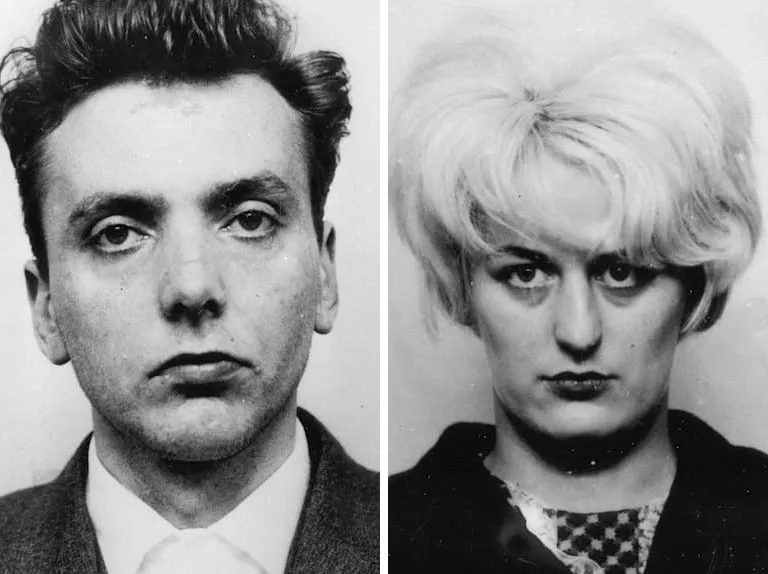
Ian Brady and Myra Hindley in a composite of two separate police photographs (cropped).
Policejní snímky / picture alliance / Photoshot / Felicity W přes WELT / © All rights reserved / welt.de
About this image
- Original title
- ian-brady-myra-hindley-policejni-portrety-dvojice.jpg
- Author
- Policejní snímky / picture alliance / Photoshot / Felicity W přes WELT
- Source
- welt.de
- Licence
- © All rights reserved
- Changes
- resized, converted to AVIF and WebP, metadata removed
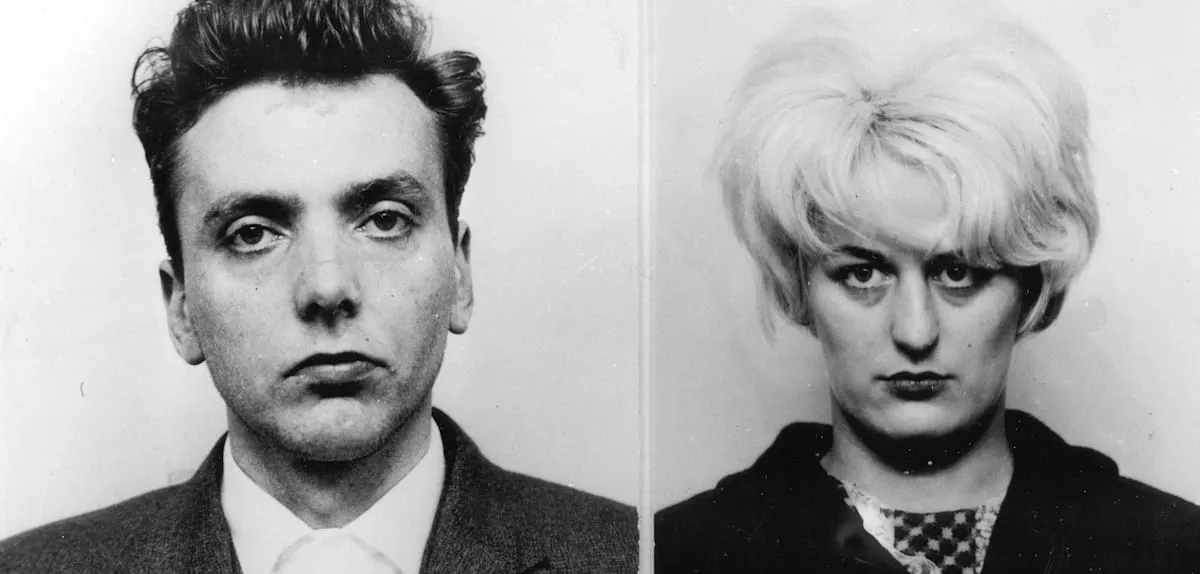
Ian Brady and Myra Hindley in a composite of two separate police photographs.
Policejní snímky / picture alliance / Photoshot / Felicity W přes WELT / © All rights reserved / welt.de
About this image
- Original title
- ian-brady-myra-hindley-u-lodi-1963.jpg
- Author
- Sky News, autor fotografie neuveden
- Source
- news.sky.com
- Licence
- © All rights reserved
- Changes
- resized, converted to AVIF and WebP, metadata removed
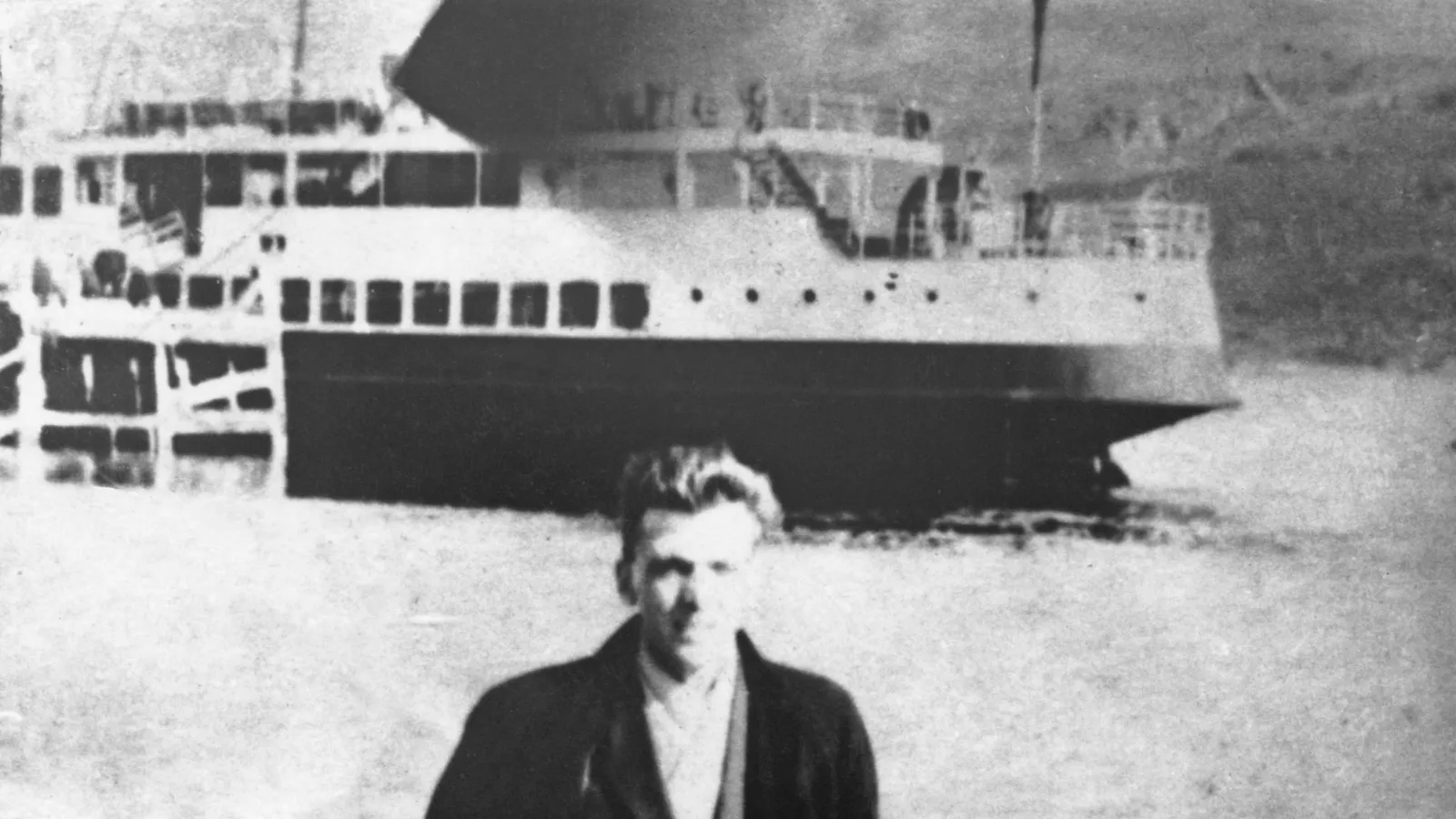
A young Ian Brady by a ship, around 1963 according to a Sky gallery.
Sky News, autor fotografie neuveden / © All rights reserved / news.sky.com
About this image
- Original title
- ian-brady-myra-hindley-ve-voze-1965.jpg
- Author
- William H. Alden / Getty Images
- Source
- gettyimages.ie
- Licence
- © All rights reserved
- Changes
- resized, converted to AVIF and WebP, metadata removed
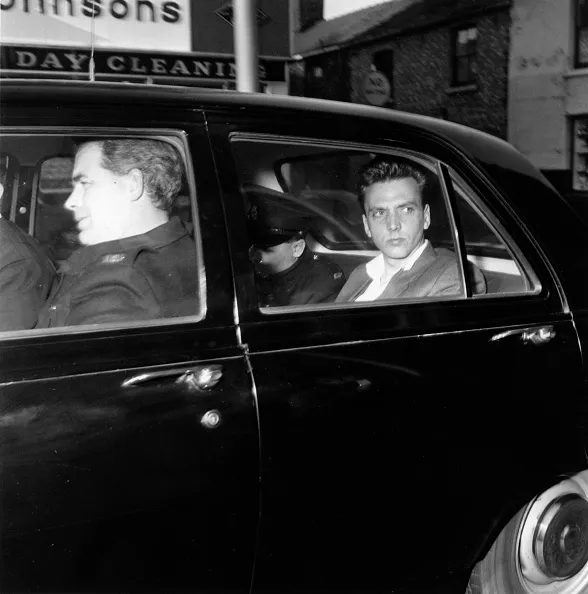
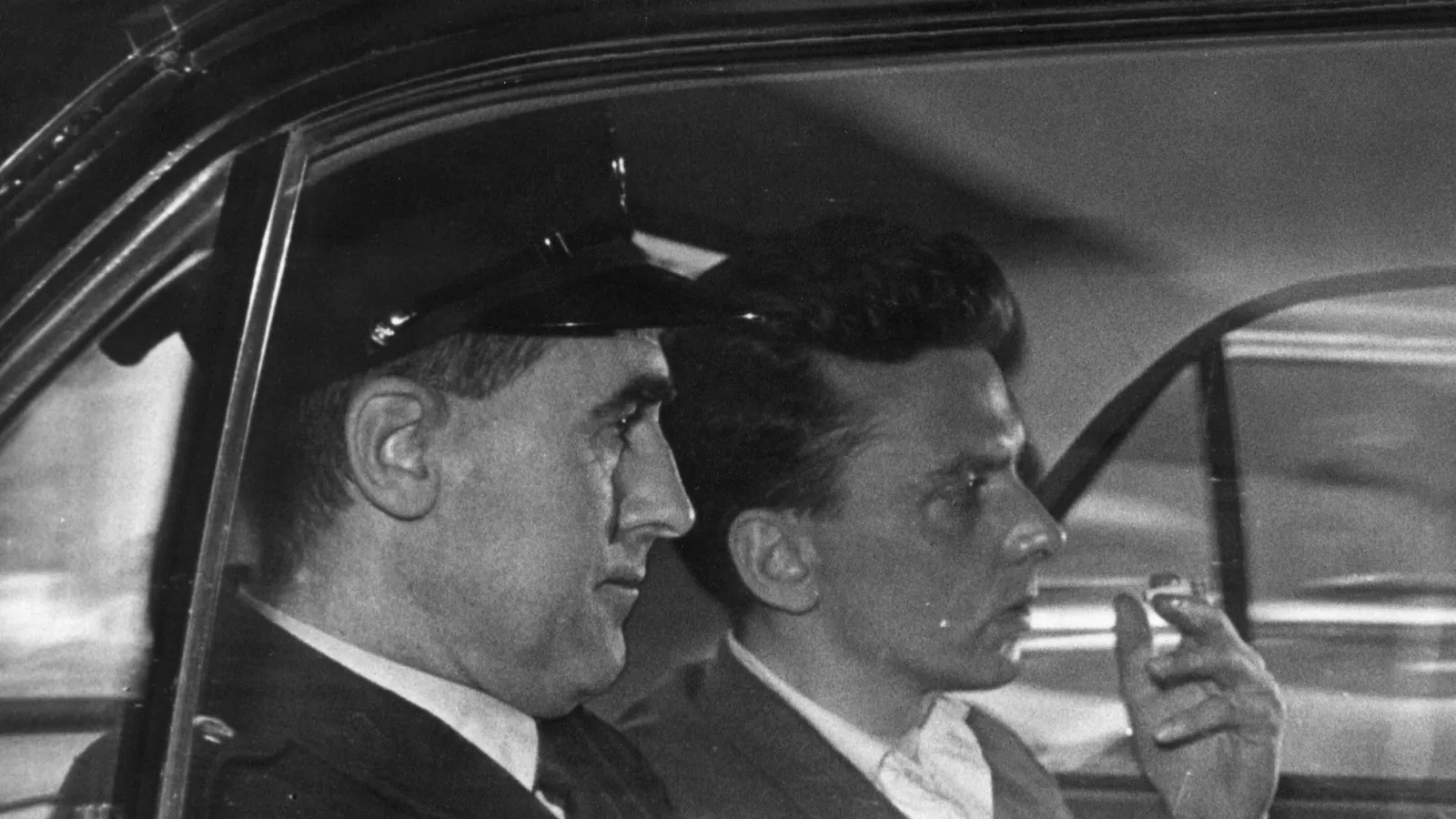
Ian Brady under police escort before a court hearing, October 1965.
William H. Alden / Getty Images / © All rights reserved / gettyimages.ie
About this image
- Original title
- ian-brady-myra-hindley-prijezd-k-soudu-1966.jpg
- Author
- Sky News, autor fotografie neuveden
- Source
- news.sky.com
- Licence
- © All rights reserved
- Changes
- resized, converted to AVIF and WebP, metadata removed
Ian Brady arriving at court in May 1966.
Sky News, autor fotografie neuveden / © All rights reserved / news.sky.com
About this image
- Original title
- ian-brady-myra-hindley-hindleyova-na-saddleworth.jpg
- Author
- Ian Brady, fotografie poskytnutá Greater Manchester Police / Sky News
- Source
- news.sky.com
- Licence
- © All rights reserved
- Changes
- resized, converted to AVIF and WebP, metadata removed
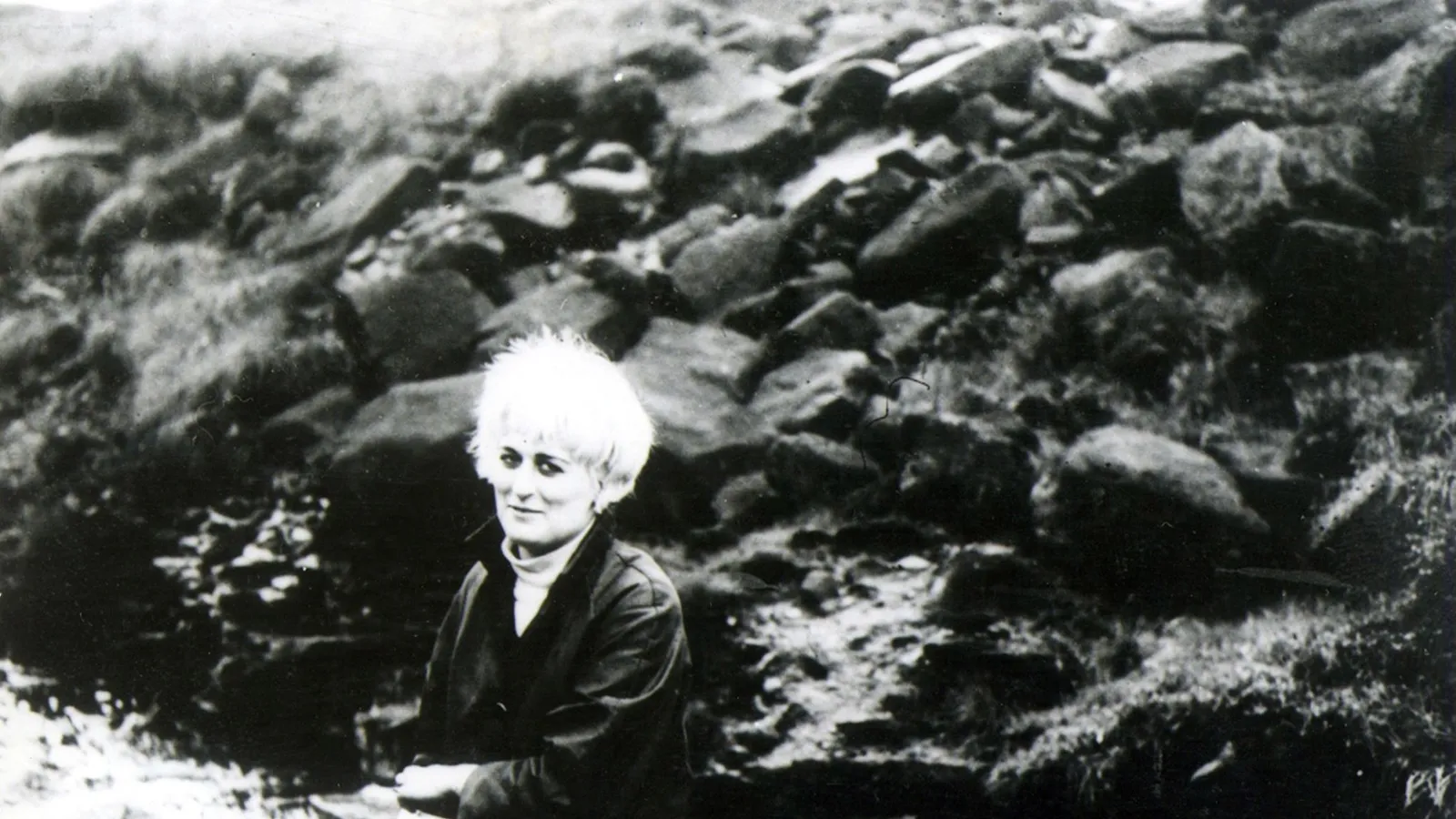
Myra Hindley on Saddleworth Moor in a photograph by Ian Brady.
Ian Brady, fotografie poskytnutá Greater Manchester Police / Sky News / © All rights reserved / news.sky.com
About this image
- Original title
- ian-brady-myra-hindley-tribunal-2013.jpg
- Author
- Sky News, kreslíř v galerii neuveden
- Source
- news.sky.com
- Licence
- © All rights reserved
- Changes
- resized, converted to AVIF and WebP, metadata removed
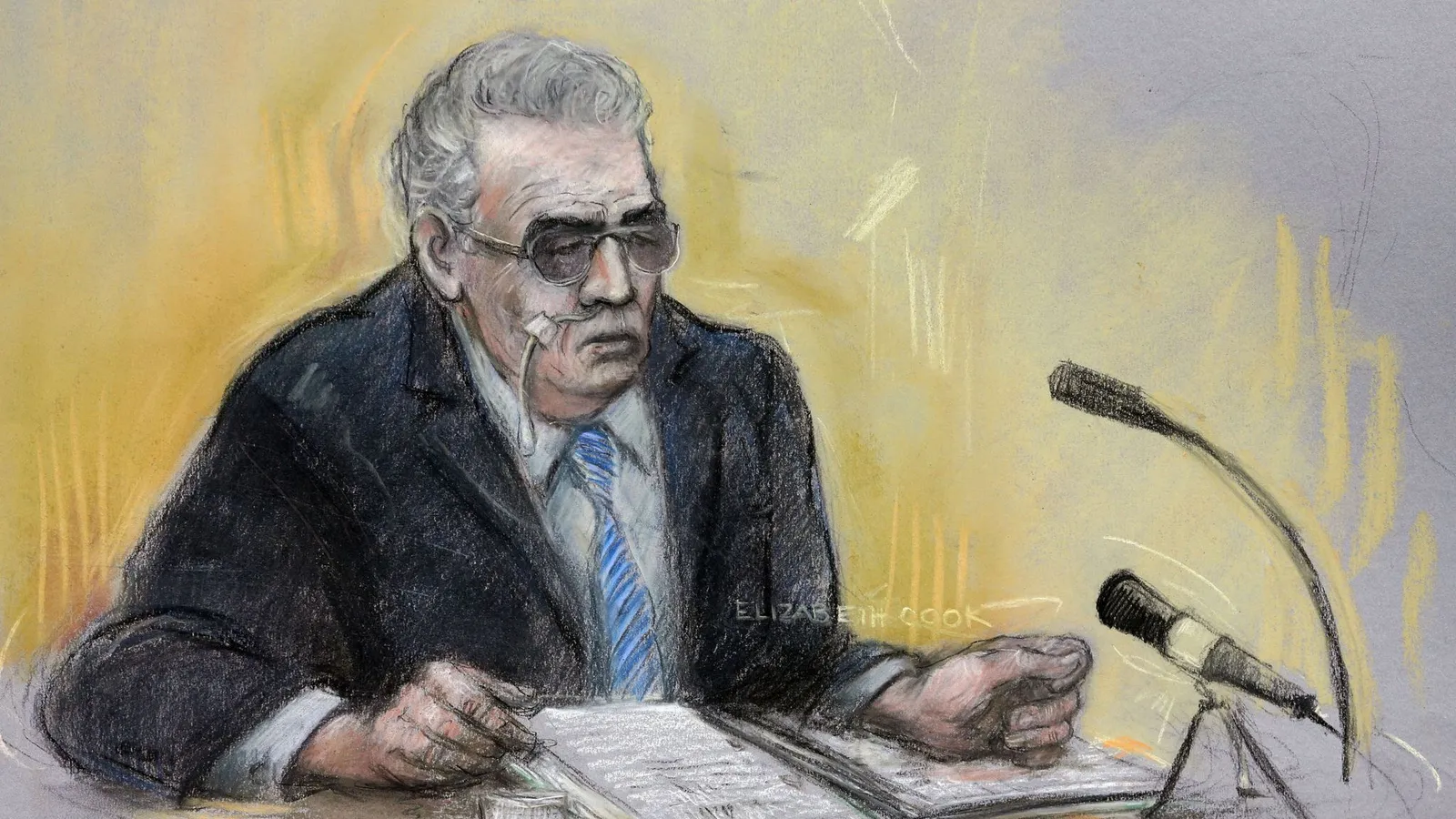
Court sketch of Ian Brady during a tribunal hearing in Manchester in 2013.
Sky News, kreslíř v galerii neuveden / © All rights reserved / news.sky.com

About this image
- Original title
- Chester Castle - Outer bailey - Assize Courts Block.JPG
- Author
- Worm That Turned
- Source
- commons.wikimedia.org
- Licence
- CC BY-SA 3.0
- Changes
- resized, converted to AVIF and WebP, metadata removed
The Assize Courts in Chester, the building linked to the trial of Brady and Hindley.
Worm That Turned / CC BY-SA 3.0 / commons.wikimedia.org
About this image
- Original title
- ian-brady-myra-hindley-saddleworth-policie-1986.jpg
- Author
- picture alliance / empics / Dok5 přes WELT
- Source
- welt.de
- Licence
- © All rights reserved
- Changes
- resized, converted to AVIF and WebP, metadata removed
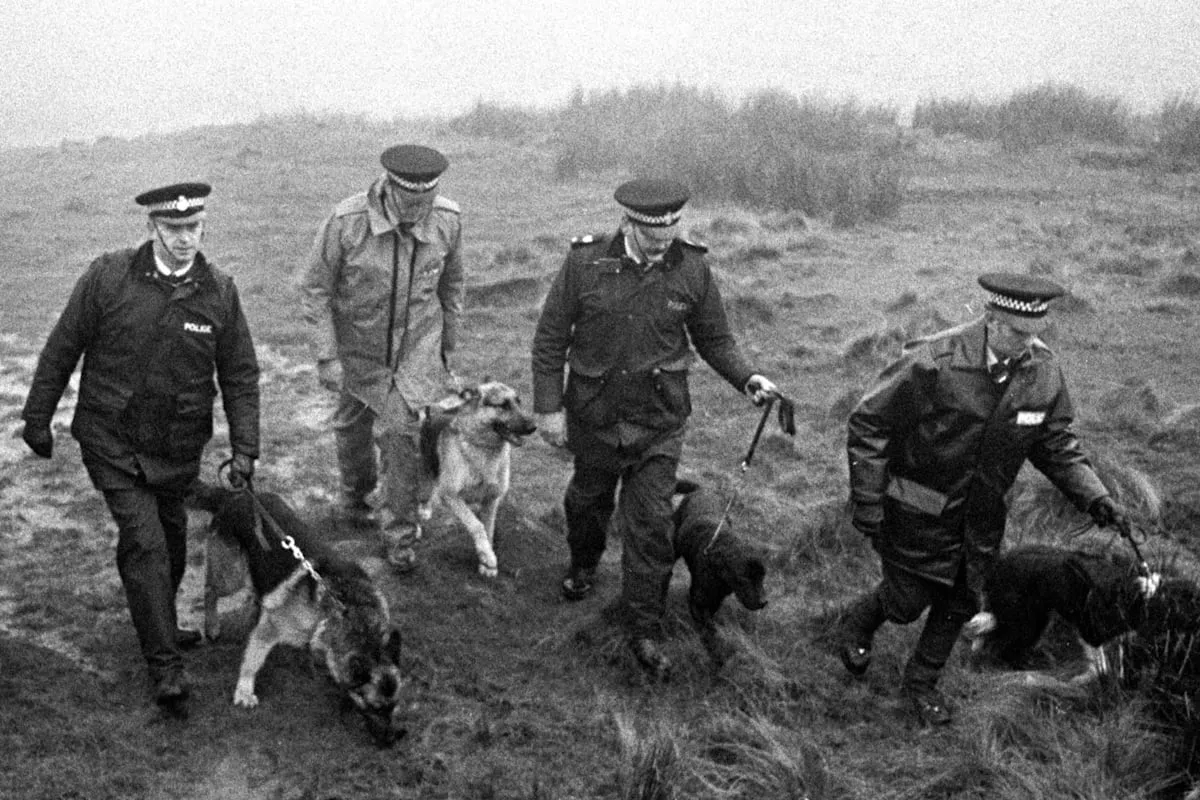
Police officers with dogs on Saddleworth Moor during the search in 1986.
picture alliance / empics / Dok5 přes WELT / © All rights reserved / welt.de
About this image
- Original title
- ian-brady-myra-hindley-hindleyova-blackpool.jpg
- Author
- Bob Thomas Sports Photography / Getty Images
- Source
- gettyimages.com.au
- Licence
- © All rights reserved
- Changes
- resized, converted to AVIF and WebP, metadata removed
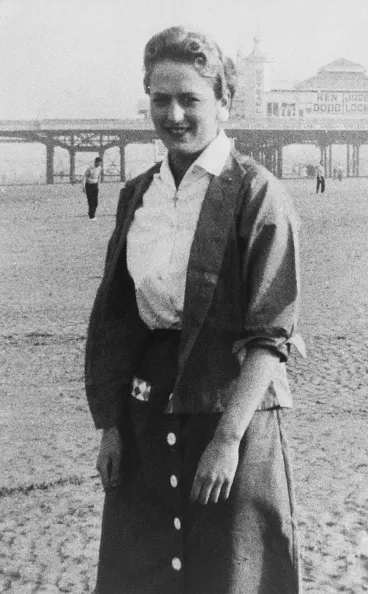
Myra Hindley on the beach at Blackpool around 1960, according to an agency catalogue.
Bob Thomas Sports Photography / Getty Images / © All rights reserved / gettyimages.com.au
About this image
- Original title
- ian-brady-myra-hindley-hindleyova-dobovy-portret.jpg
- Author
- Manchester Evening News Archive / Mirrorpix / Getty Images
- Source
- gettyimages.ie
- Licence
- © All rights reserved
- Changes
- resized, converted to AVIF and WebP, metadata removed
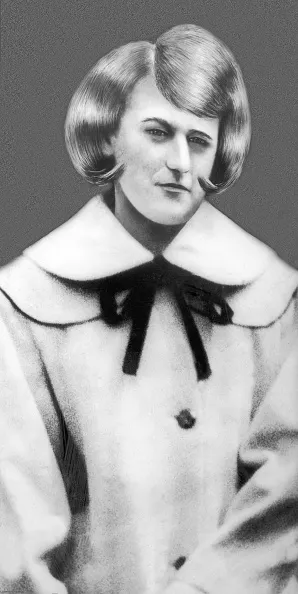
Period portrait of Myra Hindley, from around 1960 according to the agency.
Manchester Evening News Archive / Mirrorpix / Getty Images / © All rights reserved / gettyimages.ie
About this image
- Original title
- ian-brady-myra-hindley-hindleyova-prevoz-1968.jpg
- Author
- Harry Dempster / Daily Express / Getty Images
- Source
- gettyimages.ch
- Licence
- © All rights reserved
- Changes
- resized, converted to AVIF and WebP, metadata removed
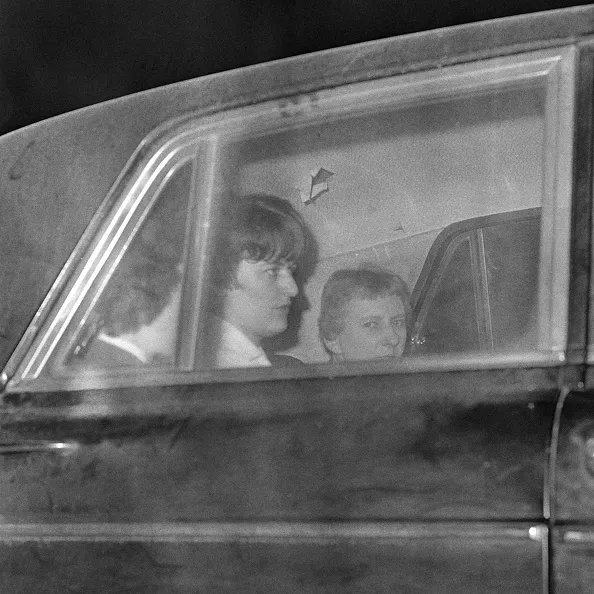
Myra Hindley being transferred from Risley to Holloway Prison in London, 31 January 1968.
Harry Dempster / Daily Express / Getty Images / © All rights reserved / gettyimages.ch
About this image
- Original title
- ian-brady-myra-hindley-policejni-podobizna.jpg
- Author
- Bentley Archive / Popperfoto via Getty Images
- Source
- gettyimages.ie
- Licence
- © All rights reserved
- Changes
- resized, converted to AVIF and WebP, metadata removed
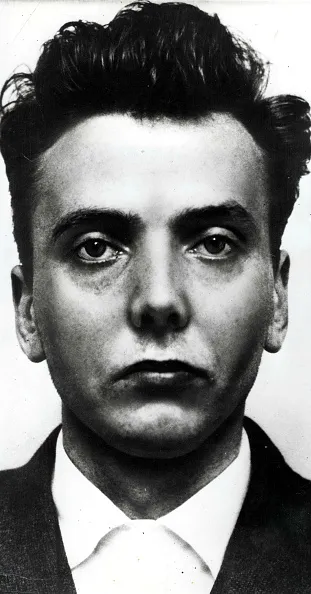
Police portrait of Ian Brady, dated to around 1966 in agency records.
Bentley Archive / Popperfoto via Getty Images / © All rights reserved / gettyimages.ie
About this image
- Original title
- ian-brady-myra-hindley-pripisovany-spolecny-soukromy-zaber.jpg
- Author
- Tutorial At Home, zveřejněná reprodukce / autor předlohy nedoložen
- Source
- tutorialathome.in
- Licence
- © All rights reserved
- Changes
- resized, converted to AVIF and WebP, metadata removed
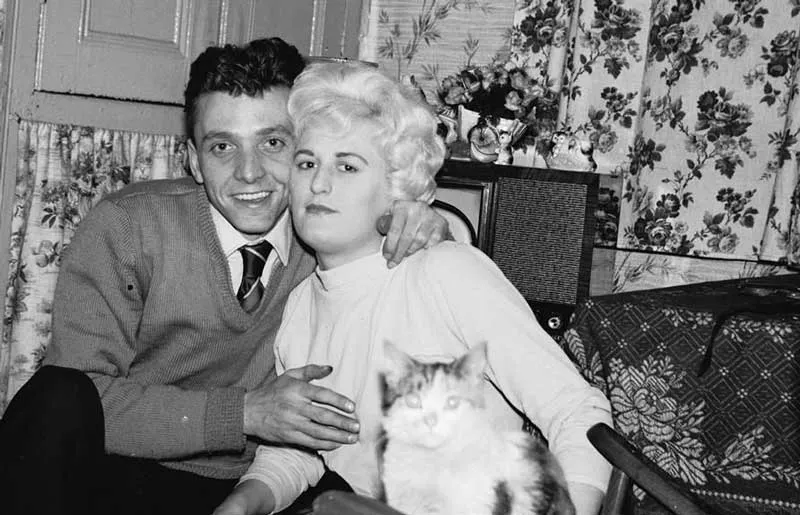
Private group photograph attributed to Ian Brady and Myra Hindley.
Tutorial At Home, zveřejněná reprodukce / autor předlohy nedoložen / © All rights reserved / tutorialathome.in
13 / 15 / Open questions
What is still missing
- Where Keith Bennett is buried.
- Who strangled Lesley Ann Downey: Hindley claimed it was Brady, Brady claimed it was her.
- How great a part Hindley played in the sexual abuse of the victims; Brady claimed she took part, she denied it.
- Whether Brady’s 1987 claims of five further victims are true.
- Differences between sources: date of the verdict (6 or 5 May 1966), start of the trial (19, 21 or 27 Apr 1966), discovery of Downey (16 or 10 Oct 1965), discovery of Reade (1 Jul or 30 Jun 1987), year they met (1961 or 1962), year of the confession (1985 or 1987), length of the recording (13 or 17 minutes).
- When exactly the decision on Hindley’s whole life tariff was made: sources give the years 1985, 1990, 1994 and 1997; the House of Lords decision dates Howard’s decision to 3 Feb 1997.
- The 1966 judgment, Hindley’s 1966 appeal and the 1988 decision of the Director of Public Prosecutions were not available during research.
Not yet covered: comparison.
14 / 15 / Citations
Sources
A number in square brackets next to a claim refers to an item in this list. A claim without a number has no source assigned yet. Details may vary between sources; disputed and theoretical items are marked.
55Sources in total
- Primary9
- Secondary10
- Media36
Checked: 17 Nov 2026. The profile is based on research (1 round, 55 sources read; the English Wikipedia served only as a guide and is not in the list). Code UK-1963-IBMH: Great Britain, year of the first murder (Pauline Reade, 12 Jul 1963), initials of both perpetrators. The primary sources are the 2013 tribunal reasons, the introduction to the 2000 House of Lords decision and Hansard records; neither the 1966 judgment nor the 1988 DPP decision was available. The RTÉ and Irish Times texts of November 2017 are the same PA report. Information from only one source is marked in the text or left out. Before publication, check the date of the verdict (5 or 6 May 1966), the date of Hindley’s arrest and the dates the bodies were found against contemporary press or National Archives files.
- [1]First-tier Tribunal (Mental Health), HH Judge Robert K. Atherton (11 Dec 2013, published 24 Jan 2014), In the matter of an application by Ian Stuart Brady: The Reasons for the Tribunal's Decision. judiciary.uk / cited 6×primary
- [2]House of Lords, [2000] UKHL 21, vLex (30 Mar 2000), R v Secretary of State for the Home Department, ex parte Hindley - vLex United Kingdom. vlex.co.uk / cited 5×primary
- [3]Hansard, House of Commons (11 May 1966), WITNESSES (PAYMENTS BY NEWSPAPERS) (Hansard, 11 May 1966). api.parliament.uk / cited 2×primary
- [4]Hansard, House of Lords (16 Jul 1979), DEALINGS WITH WITNESSES BILL [H.L.] (Hansard, 16 July 1979). api.parliament.uk / cited 1×primary
- [5]Hansard, House of Lords (14 Sep 1972), MYRA HINDLEY: WOMEN PRISONERS' EXERCISE FACILITIES (Hansard, 14 September 1972). api.parliament.uk / cited 1×primary
- [6]Hansard, House of Commons (20 Jun 1974), Lord Longford (Prison Visits) (Hansard, 20 June 1974). api.parliament.uk / cited 1×primary
- [7]Hansard, House of Lords (4 May 2000), Myra Hindley (Hansard, 4 May 2000). api.parliament.uk / cited 3×primary
- [8]legislation.gov.uk, The National Archives, Murder (Abolition of Death Penalty) Act 1965. legislation.gov.uk / cited 2×primary
15 / 15 / Revision history
Revision history
Every edit to this page is logged. Corrections sent in by readers are applied only after the editors check them against sources.
- Published
- Updated
- Edits
- 1
- Page published