01
Content warningReal violent crimes; victims are named. Help: findahelpline.com. More
This page describes real violent crimes and names the victims. Victims come first; we leave out details that serve only sensationalism. Help: free helplines in your country at findahelpline.com; in an emergency call 112 (EU) or 911 (US).
Harold Shipman
Harold Frederick Shipman, born 14 Jan 1946, Nottingham
A general practitioner from Hyde near Manchester who for more than twenty years killed his own patients, mostly elderly women living alone. He injected them with lethal doses of an opiate, most often diamorphine, usually during a home visit, and then himself recorded the deaths as natural. He was exposed by the forged will of his last victim, Kathleen Grundy, which left him her entire estate. On 31 January 2000 a jury at Preston Crown Court found him guilty of the murders of 15 patients and of forging the will. The public inquiry, the Shipman Inquiry, later attributed to him 218 victims identified by name between 1972 and 1998 and estimated the total at about 250. He never admitted guilt. On 13 January 2004 he hanged himself in his cell at Wakefield prison.
- 15
- murders of patients of which the Preston jury convicted him on 31 Jan 2000● Fact
- 218
- victims identified by name by the Shipman Inquiry: 215 in Todmorden and Hyde, 3 in Pontefract● Fact
- about 250
- victims between 1971 and 1998 according to the inquiry’s overall estimate◐ Disputed
- 888
- deaths examined by the inquiry in its first phase● Fact
6Fact
5Disputed
2Theory
77 of 77claims have a source
59sources, 11 of them primary
02 / 16 / Timeline
From birth to the inquiry’s final report
Events: 50 / 1946–2024
- 01
Life
1946–70 - 02
Crimes
1972 - 03
Life
1974 - 04
Crimes
1974–75 - 05
Life
1975 - 06
Capture, trial and aftermath
1976 - 07
Life
1976–77 - 08
Crimes
1978–88 - 09
Life
1992 - 10
Crimes
1995–97 - 11
Capture, trial and aftermath
1998 - 12
Crimes
1998 - 13
Capture, trial and aftermath
1998–24 - April
Interviews about Todmorden
Capture, trial and aftermathWest Yorkshire Police interviewed Shipman about nine deaths from 1974 and 1975. Given only by the Irish Examiner. [52]
- 2007February
Government action programme
Capture, trial and aftermathThe government summarised its response to the inquiry’s recommendations in the document Cm 7014. [7]
03 / 16 / Victims first
Named victims
Named victims: 15 / Survivors: 2
The list contains the 15 women of whose murders Shipman was convicted on 31 Jan 2000. All were his patients in Hyde and 14 of them died in their own homes. Nine bodies were exhumed and morphine was found in all of them; six women had been cremated. The sixteenth count of the indictment was forging Kathleen Grundy’s will. The public inquiry, the Shipman Inquiry, attributed many more victims to him. The first report in 2002 identified 215 people killed in Todmorden and Hyde, 171 women and 44 men, and found real suspicion in a further 45 deaths. The sixth report in 2005 added three victims from the hospital in Pontefract in 1972, making 218 names in all, and estimated the total between 1971 and 1998 at about 250. By place: Pontefract 3 victims and an estimate of 10 to 15, Todmorden 1, the Donneybrook practice in Hyde 71 (1978 to 1990), the single-handed practice in Hyde 143 (1992 to 1998). By year the inquiry gives, among others, 4 victims in 1978, 30 in 1996, 37 in 1997 and 18 in 1998; the figures for most other years are given only by the appendix to the first report. Sources give Jean Lilley’s age as 58 or 59 and Norah Nuttall’s as 64 or 65, so we do not give it. According to five sources Pamela Hillier was 68, the Guardian’s profile gives 70. The name of the first victim on the indictment is spelled both Marie and Maria West. The streets where the victims lived are given only by the BBC list.
Showing 12 of 15
- Marie Westin her home, Hyde; a friend was in the kitchen, Tameside (Hyde), Greater Manchester6 Mar 1995 (murder conviction, cremated)age 81
- Irene Turnerin her home, Hyde, Tameside (Hyde), Greater Manchester11 Jul 1996 (murder conviction, exhumed, morphine found)age 67
- Lizzie Adamsin her home, Hyde, Tameside (Hyde), Greater Manchester28 Feb 1997 (murder conviction, cremated)age 77
- Jean Lilleyin her home, Hyde, Tameside (Hyde), Greater Manchester25 Apr 1997 (murder conviction, exhumed, morphine found)age unknown
- Ivy LomasShipman’s surgery, 21 Market Street, Hyde, Tameside (Hyde), Greater Manchester29 May 1997 (murder conviction, exhumed, morphine found)age 63
- Muriel Grimshawin her home, Hyde, Tameside (Hyde), Greater Manchester14 Jul 1997 (murder conviction, exhumed, morphine found)age 76
- Marie Quinnin her home, Hyde, Tameside (Hyde), Greater Manchester24 Nov 1997 (murder conviction, exhumed, morphine found)age 67
- Laura Kathleen Wagstaffin her home, Hyde, Tameside (Hyde), Greater Manchester9 Dec 1997 (murder conviction, cremated)age 81
- Bianka Pomfretin her home, Hyde, Tameside (Hyde), Greater Manchester10 Dec 1997 (murder conviction, exhumed, morphine found)age 49
- Norah Nuttallin her home, Hyde, Tameside (Hyde), Greater Manchester26 Jan 1998 (murder conviction, cremated)age unknown
- Pamela Marguerite Hillierin her home; the BBC gives Mottram near Hyde, Tameside (Hyde), Greater Manchester9 Feb 1998 (murder conviction, cremated)age 68
- Maureen Alice Wardflat in a sheltered housing block, Hyde, Tameside (Hyde), Greater Manchester18 Feb 1998 (murder conviction, cremated)age 57
By location
Tameside (Hyde), Greater Manchester15
Victim profile
12 and under0
13–170
18–240
25 and over13
Women and girls: 15 / Men and boys: 0 (of 15 named)
Survivors
- Elaine OswaldOn 21 Aug 1974 in Todmorden, after tablets he had prescribed for her, he gave her an injection, probably of pethidine. She went into respiratory arrest and survived in hospital. The inquiry did not establish an intent to kill but found the act unlawful
- Georgina Francisaged 62; in April 1996 in Hyde she was given diamorphine by him. In its sixth report the inquiry found no reason to suspect him of attempted murder
Unconfirmed
Besides the 15 murders of which he was convicted, the Shipman Inquiry attributed to Shipman a further 203 victims identified by name, none of whom was the subject of a trial. According to the sixth report, at the hospital in Pontefract in 1972 he killed Thomas Cullumbine (54), John Brewster and James Rhodes; in the case of four-year-old Susie Garfitt the inquiry expressed only grave suspicion, and it also expressed suspicion in the cases of several other hospital patients. According to the first report, the first victim in Todmorden was Eva Lyons (70, 17 Mar 1975); the three deaths on the evening of 21 Jan 1975 (Elizabeth Pearce, Robert Lingard, Lily Crossley) remained without a finding. In Hyde the inquiry identified Sarah Hannah Marsland (86, 7 Aug 1978) as the first victim, Peter Lewis (41, 2 Jan 1985) as the youngest and Ann Cooper (93, 15 Feb 1988) as the oldest. The last three victims before the police investigation in March 1998 were Lily Higgins (83), Ada Warburton (77) and Martha Marley (88). In 2000 and 2001 the coroner John Pollard returned verdicts of unlawful killing in the cases of, among others, Sarah Ashworth and Alice Kitchen. In the case of Alfred Wright (63, 1987) the inquiry concluded that Shipman had not killed him. The claim by fellow prisoner John Harkin that Shipman confessed 508 victims to him was examined and rejected by the inquiry. That the last victim at Donneybrook was Mary Dudley (30 Dec 1990) and that Alice Gorton died in 1979 after a sublethal dose of an opiate is stated only by the inquiry’s first report.
04 / 16 / Offender’s pattern
What recurred
Shipman left no messages and no traces of violence. His signature is medical routine: a visit, an injection, a death certificate and an altered medical record. Each item states whether it is a documented fact, a disputed point or a theory.
Traits: 7
02
Home visit
● Fact03
As if asleep
● Fact04
Altered records
● Fact05
No post mortem, no coroner
● Fact06
Stockpiling diamorphine
● Fact07
Motive
○ TheoryThe prosecutor spoke of him exercising the ultimate power over life and death, the police of a desire for control and Dame Janet Smith of a possible “addiction to killing”. Shipman himself never gave a motive. [5] [16] [21] [28] [31]
Necrophiliac traits according to the psychiatrist Richard Badcock are given only by the Guardian, possible experimentation with drugs in Pontefract only by the inquiry’s sixth report.
05 / 16 / Modus operandi
How the behaviour evolved
Phases: 3
1946-1975
Before the murders and the first victims
Childhood in Nottingham, medical studies in Leeds, his first post at the hospital in Pontefract and then the practice in Todmorden. There, in 1975, his partners caught him abusing pethidine.
- 1946: born in Nottingham
- 1965 to 1970: medicine in Leeds
- 1970 to 1974: hospital in Pontefract, according to the inquiry 3 victims in 1972
- 1974 to 1975: Todmorden, first victim of the first report Eva Lyons
- 1976: convicted of forging prescriptions for pethidine
1977-1998 / Hyde
The murders in Hyde
From October 1977 he worked in the Donneybrook group practice, from 1992 on his own. The inquiry attributed 214 victims in Hyde to him, the number rising to 37 in 1997.
- 1978: first victim in Hyde
- 1978 to 1990: 71 victims at the Donneybrook practice
- 1992 to 1998: 143 victims in the single-handed practice
- March to April 1998: failed police investigation
- 24 Jun 1998: murder of Kathleen Grundy and the forged will
From 24 Jul 1998
Capture, trial, inquiry
The daughter of the last victim uncovered the forgery and police arrested him after an exhumation. After his conviction a public inquiry began, which described the scale of the murders in six reports. Shipman hanged himself in 2004.
- 7 Sep 1998: arrest
- 31 Jan 2000: guilty of 15 murders
- 19 Jul 2002: first report of the inquiry, 215 victims
- 13 Jan 2004: suicide in Wakefield
- 27 Jan 2005: final report, 218 victims
06 / 16 / Crime scenes
Where and in what order
Places: 8
map of crime scenes (points by date and place) / add from coordinates
- 01Nottingham1946-1965
- 02Leeds (studies)1965-1970
- 03Pontefract General Infirmary, West Yorkshire1970-1974
- 04Todmorden, West Yorkshire1974-1975
- 05County Durham1976-1977
- 06Hyde, Donneybrook practice1977-1991
- 07Hyde, 21 Market Street1992-1998
- 08Strangeways, Frankland and Wakefield prisons1998-2004
07 / 16 / Investigation
How he was caught
Steps: 8
01 / 1975
Pethidine in Todmorden
His partners in the practice discovered that Shipman was abusing pethidine and forging prescriptions. He was convicted of drug offences; at the time nobody suspected murder. [1] [32]
02 / March to April 1998
Covert investigation
After the warning from Dr Linda Reynolds, Inspector David Smith looked into the deaths of Shipman’s patients. A medical adviser went through the records and found nothing; on 17 Apr 1998 the investigation was closed. [3] [4] [38]
03 / 24 Jul 1998
Suspicious will
Angela Woodruff reported that her mother’s will was a forgery. Greater Manchester Police quickly established that it concerned the doctor from the spring investigation. [1] [40]
04 / August 1998
Exhumation and typewriter
Kathleen Grundy’s body was exhumed and police seized the typewriter from the surgery on which the will had been typed. Toxicology showed a lethal level of morphine. [1] [33] [40]
05 / 7 Sep 1998
Arrest
Shipman attended the police station in Ashton-under-Lyne and was arrested. In interviews he denied everything, and from November he answered no comment. [1] [14] [33]
06 / September 1998 to February 1999
14 further charges
Police exhumed eight more patients and examined the cremated cases. They gradually charged him with 15 murders. [1] [33] [39]
What went wrong
- General Medical Council 1976After his conviction for drug offences he was able to continue working as a doctor. The General Medical Council (GMC) neither disciplined him nor suspended his registration.
- Investigation in March 1998The case went to an inexperienced inspector without supervision and without a plan. He did not discover Shipman’s criminal record and did not request a post mortem on two bodies that were still available. The inquiry found that a proper investigation would probably have saved the last three victims.
- Warning to the killerOn 2 Apr 1998 the undertaker Alan Massey hinted to Shipman that people were talking about him. The inquiry found that Shipman then temporarily stopped killing. Given only by the inquiry’s second report.
- Death certificates and cremationAlmost all the deaths went through on Shipman’s own death certificate. The second doctors at cremation did not question witnesses, and the inquiry wrote that the procedures had provided no protection at all.
- Controlled drugsWithout a controlled drugs register he was able to amass a large quantity of diamorphine and nobody noticed.
- Internal police reviewGreater Manchester Police did not review the failure of the 1998 investigation for a long time. Serious mistakes were admitted only by a later review. Given only by the inquiry’s second report.
Impact on forensics and law
- Measures from 2000The government introduced mandatory reporting of convictions and disciplinary measures against doctors, monitoring of deaths in practices and a review of death certification.
- The inquiry’s recommendationsIn its second to fifth reports the inquiry made 190 recommendations. On that basis the government tightened controls on controlled drugs and checks on general practitioners and reformed the General Medical Council (GMC).
- Scrutiny of every deathSince 9 Sep 2024 every death in England and Wales that is not investigated by a coroner must be independently scrutinised by a doctor, a so-called medical examiner. The official explanatory memorandum explicitly refers to the inquiry’s third report.
08 / 16 / People in the case
Witnesses, investigators, relatives
People: 22
Wife
Primrose Shipman
Née Oxtoby, married in 1966, worked on the reception of the surgery and was in court every day of the trial.
Chair of the inquiry
Dame Janet Smith
High Court judge, chaired the Shipman Inquiry from 2001 to 2005.
Judge
Mr Justice Forbes
Presided over the trial in Preston and recommended that Shipman remain in prison for the rest of his life.
Prosecutor
Richard Henriques QC
Led the prosecution.
Defence lawyer
Nicola Davies QC
Led the defence and challenged the toxicology findings.
Investigator
Bernard Postles
Detective Superintendent, led the investigation from 3 Aug 1998.
Accomplices: none. The sources do not speak of accomplices; the inquiry attributes the late discovery to failures of the system, not to other persons.
09 / 16 / Trial and sentence
From the drugs conviction to the inquests
Proceedings: 6
13 Feb 1976 / Halifax
Drug offences
Halifax Magistrates’ Court. He admitted obtaining pethidine by deception, unlawful possession and forging prescriptions; the court took dozens of further offences into consideration. [1] [32] [41]
£600 fine
September 1998 / Ashton-under-Lyne
Remand
On 8 Sep 1998 Tameside Magistrates’ Court remanded him in custody at Strangeways prison in Manchester. [1] [11] [33]
Remand
5 Oct 1999 to 31 Jan 2000 / Preston Crown Court
Main trial
Indictment for 15 murders and forging a will, judge Mr Justice Forbes. Shipman denied everything. The jury of seven men and five women deliberated for six days and found him guilty on all counts. The judge recommended that he never be released. [1] [22] [24] [31] [35]
15 life sentences and 4 years
11 Feb 2000 / GMC
Struck off the register
The General Medical Council struck him off the medical register. The date is given only by the inquiry’s first report. [1]
Struck off
2000 to 2002 / CPS
Further charges
The Crown Prosecution Service received files on 23 further deaths. The Director of Public Prosecutions announced that there would be no further criminal proceedings because Shipman could not receive a fair trial. [1] [34] [47]
No prosecution
August 2000 to April 2001 / coroner
Inquests
The coroner John Pollard conducted inquests into the deaths of Shipman’s patients and returned verdicts of unlawful killing, among others in the cases of Sarah Ashworth and Alice Kitchen. The figure of 25 verdicts from 27 inquests is given only by the inquiry’s first report. [1] [43] [44]
Unlawful killing
Prison
He spent his remand at Strangeways prison in Manchester, after the verdict he was at Frankland prison near Durham and from 18 Jun 2003 at Wakefield prison. Shortly before his death he lost privileges because he refused courses in which prisoners are expected to admit their guilt.
Death
On the morning of 13 Jan 2004 he was found in his cell hanged with bedsheets; death was pronounced at 08:10. It was the day before his 58th birthday. The Ombudsman Stephen Shaw concluded that the death could not have been predicted or prevented, but criticised the record keeping. Because he died before the age of sixty, his widow received his full pension.
Funeral
That he was cremated after a short ceremony attended by his wife and four children is stated only by 4NI, citing the Daily Mirror. The sources do not give where his remains were laid to rest.
10 / 16 / Psychology and myths
What is documented and what is not
Items: 6 / each labelled Fact, Disputed or Theory
He killed 15 people as a student
◐ DisputedThat was the Irish Times headline in 2005. In Pontefract he was already a qualified junior doctor and the inquiry identified three victims there; the figure of 10 to 15 is only an estimate. [5] [18] [48]
The youngest victim was a four-year-old girl
◐ DisputedThe NZ Herald wrote of Susie Garfitt as the “youngest known victim”. The inquiry expressed only grave suspicion in her case. The youngest identified victim is 41-year-old Peter Lewis. [1] [5] [18] [50]
He confessed to 508 murders
◐ DisputedThis was claimed by fellow prisoner John Harkin. The inquiry examined the claim and rejected it. Shipman never admitted guilt. [5] [15] [18] [22] [49]
He killed for money
◐ DisputedThe only documented attempt at gain is Kathleen Grundy’s forged will. The other victims were not wealthy and Shipman gained nothing from their deaths. The inquiry suggested that the forgery may also have been a cry for attention. [12] [28] [37]
He killed with morphine because of his mother
○ TheoryHis mother was given morphine in the last weeks of her life; that is documented. The link with the murders is only journalists’ speculation. [16] [20] [37]
The police could have stopped him
◐ DisputedThe inquiry found that a proper investigation in 1998 would probably have saved the last three victims. In 2000 the police leadership claimed the opposite: the records had been falsified and without evidence no investigation was possible. [3] [37] [38]
11 / 16 / Comparison
Related cases
1972-1978 / USA
John Wayne Gacy
33 victims / Executed 1994
In common
Both series began in 1972 and lasted many years before the killer was given away by the investigation of a single case.
Difference
Gacy killed young men in his house and was executed. Shipman, as a doctor, killed elderly patients in their homes and hanged himself in prison.
1888 / United Kingdom
Jack the Ripper
5 canonical victims / Unidentified
In common
Both cases are among the best-known British serial murders.
Difference
Jack the Ripper was never identified. Shipman was convicted of 15 murders and the inquiry attributed 218 victims to him.
12 / 16 / Books and films
Treatments of the case
The label is an editorial rating: Recommended means a balanced treatment with verifiable sources; With caution means the work gives the perpetrator a platform or opts for a simplified version.
Official report / 2002Source
Death Disguised
The first report of the Shipman Inquiry. How many patients he killed, how and when, with a chronological list of decisions.
Official report / 2005Source
Shipman: The Final Report
The inquiry’s sixth report on Pontefract and the overall number of victims.
Book / 2000With caution
Prescription for Murder
Brian Whittle and Jean Ritchie. A journalistic book published after the trial, revised edition 2009.
TV documentary / 2020Recommended
The Shipman Files: A Very British Crime Story
BBC Two, three parts, directed by Chris Wilson. About the victims and the neglect of elderly people.
13 / 16 Photos and documents
Photos and documents7
Photos and documents from readers. We publish them after review; you see your own uploads straight away, marked Pending review.
About this image
- Original title
- harold-shipman-policejni-portret.jpg
- Author
- Greater Manchester Police / Getty Images
- Source
- gettyimages.ie
- Licence
- © All rights reserved
- Changes
- resized, converted to AVIF and WebP, metadata removed
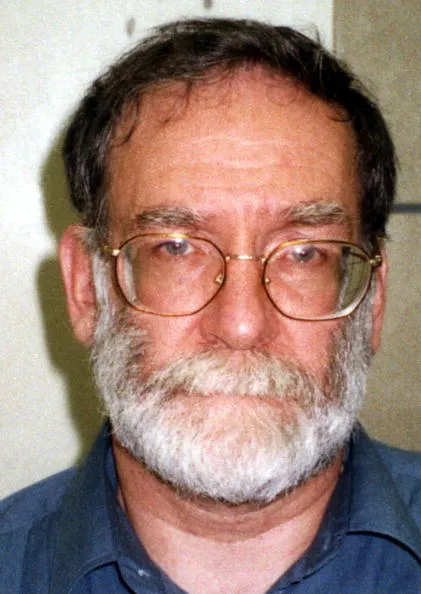
Archive police portrait of Harold Shipman.
Greater Manchester Police / Getty Images / © All rights reserved / gettyimages.ie
About this image
- Original title
- harold-shipman-u-soudu-zari-1998.jpg
- Author
- AFP / AFPBB News / News1 přes MoneyToday
- Source
- mt.co.kr
- Licence
- © All rights reserved
- Changes
- resized, converted to AVIF and WebP, metadata removed
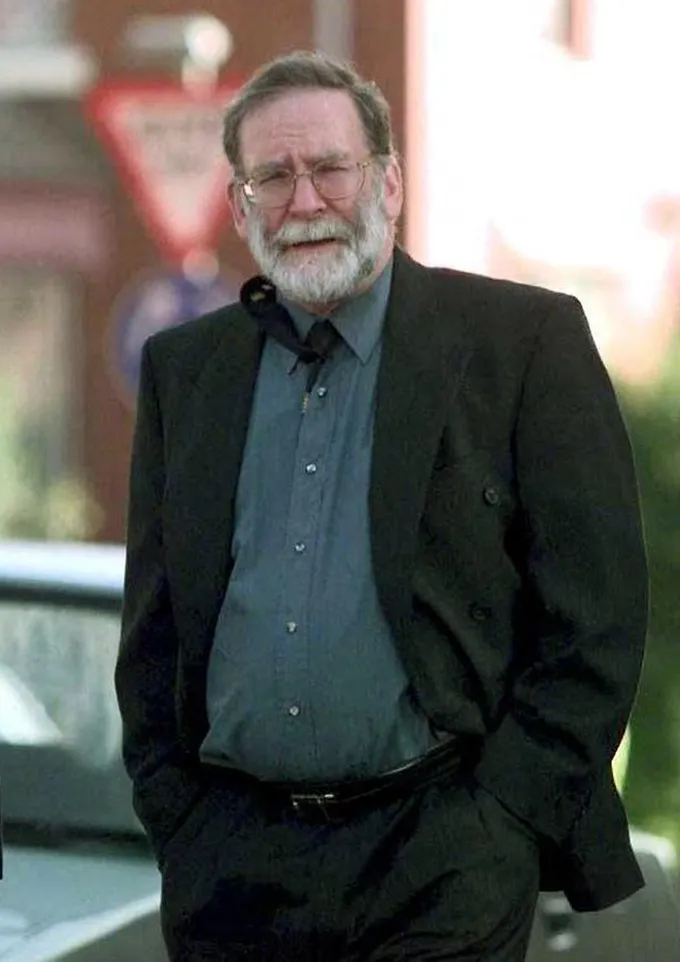
Harold Shipman arriving at court in September 1998.
AFP / AFPBB News / News1 přes MoneyToday / © All rights reserved / mt.co.kr
About this image
- Original title
- harold-shipman-ordinace-market-street.jpg
- Author
- PA Images via Getty Images
- Source
- gettyimages.ie
- Licence
- © All rights reserved
- Changes
- resized, converted to AVIF and WebP, metadata removed
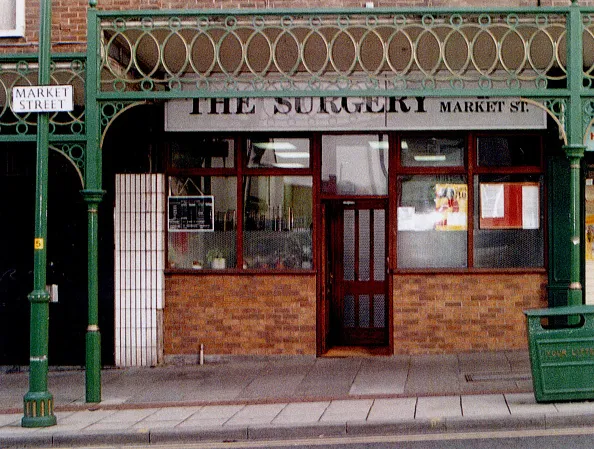
Harold Shipman's surgery on Market Street in Hyde in a period agency photograph.
PA Images via Getty Images / © All rights reserved / gettyimages.ie
About this image
- Original title
- Session House Preston.jpg
- Author
- Francis C. Franklin
- Source
- commons.wikimedia.org
- Licence
- CC BY-SA 4.0
- Changes
- resized, converted to AVIF and WebP, metadata removed
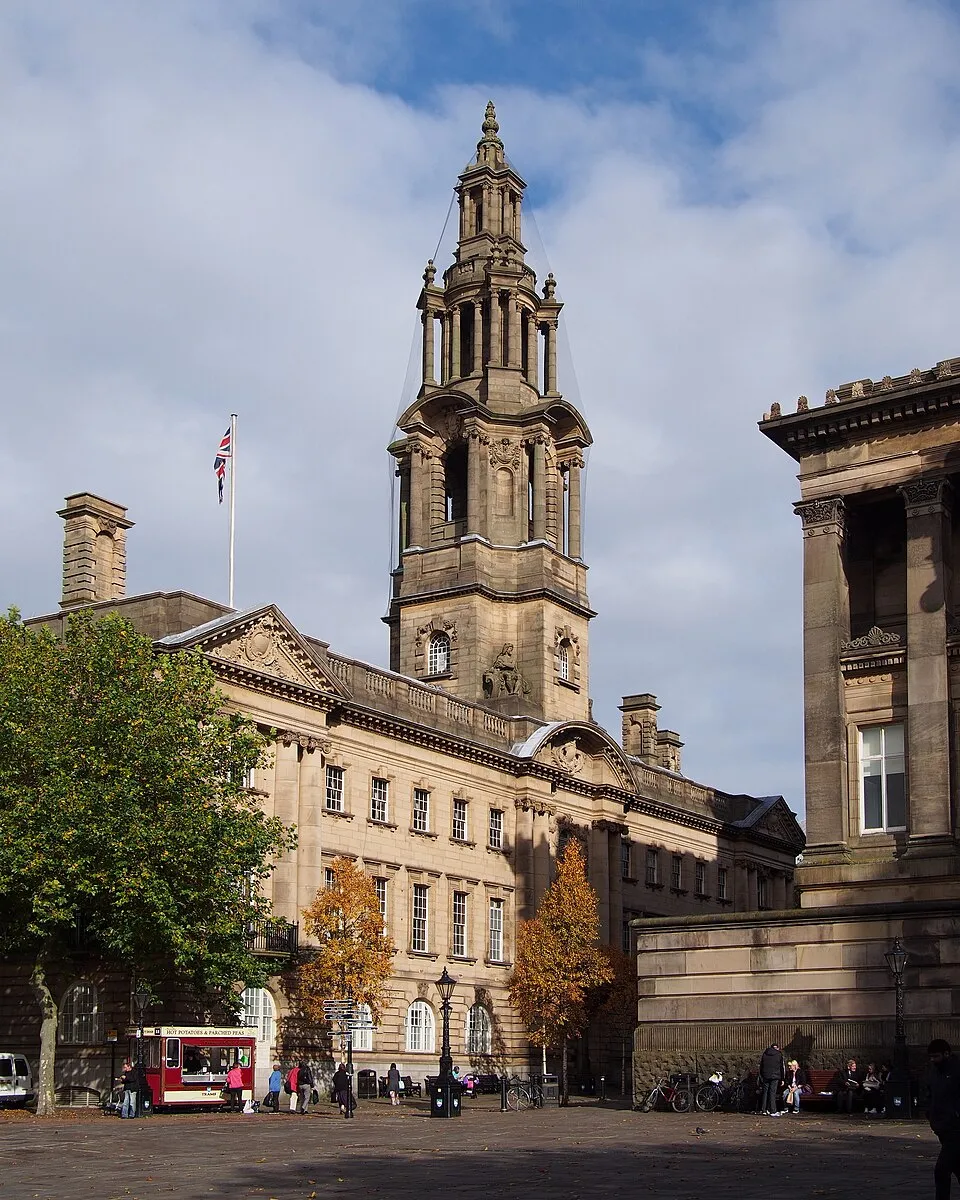
Sessions House in Preston, the court building linked to the trial of Harold Shipman.
Francis C. Franklin / CC BY-SA 4.0 / commons.wikimedia.org
About this image
- Original title
- harold-shipman-preston-soudni-kresba-1999.webp
- Author
- Elizabeth Cook / Elizabeth Cook Court Artist
- Source
- elizabethcookcourtartist.com
- Licence
- © All rights reserved
- Changes
- resized, converted to AVIF and WebP, metadata removed
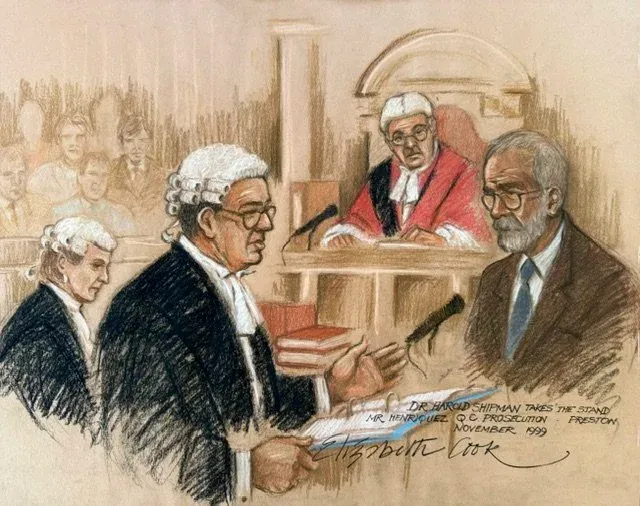
Court sketch from Preston in 1999, with prosecutor Richard Henriques questioning Harold Shipman.
Elizabeth Cook / Elizabeth Cook Court Artist / © All rights reserved / elizabethcookcourtartist.com
About this image
- Original title
- harold-shipman-barevny-portret-v-kravate.jpg
- Author
- Universal History Archive / Universal Images Group via Getty Images přes ABC News
- Source
- abc.net.au
- Licence
- © All rights reserved
- Changes
- resized, converted to AVIF and WebP, metadata removed
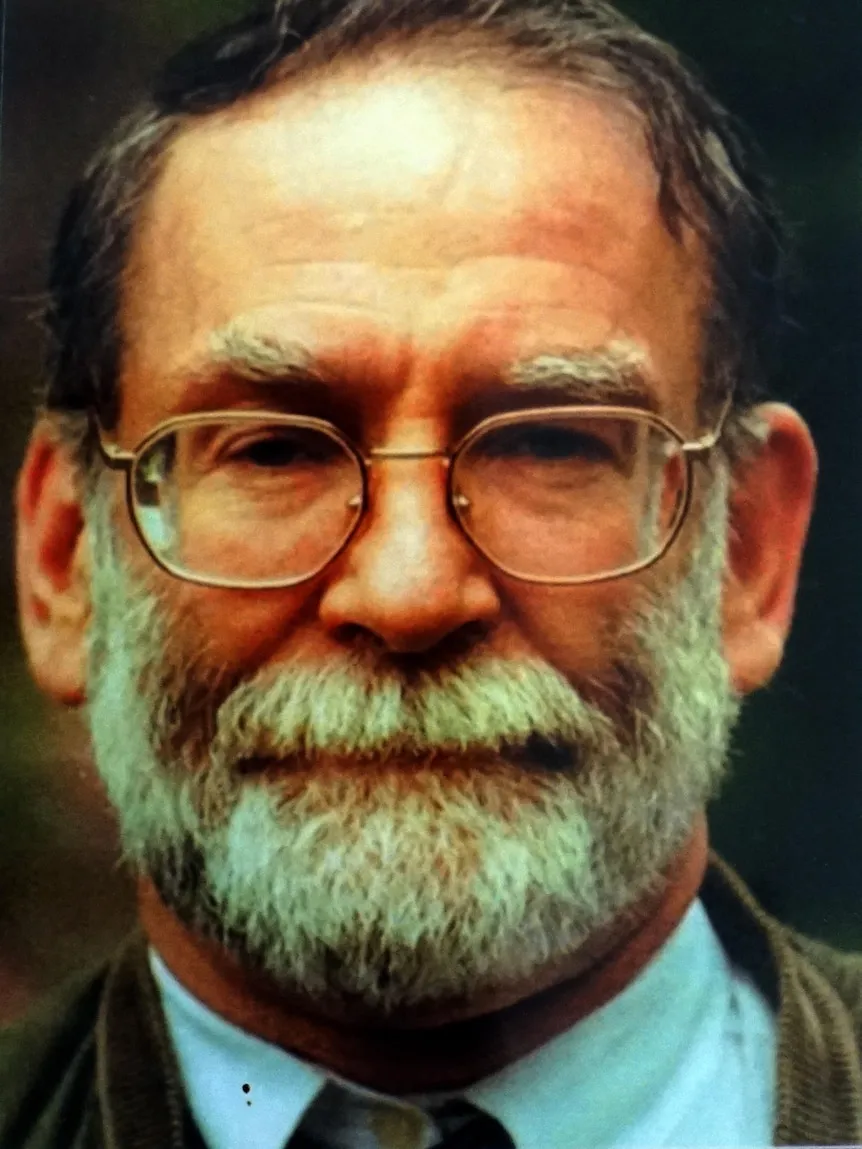
Harold Shipman in a separate colour portrait held by the Universal History Archive.
Universal History Archive / Universal Images Group via Getty Images přes ABC News / © All rights reserved / abc.net.au
About this image
- Original title
- Pontefract General Infirmary - geograph.org.uk - 1057406.jpg
- Author
- Gerald England
- Source
- commons.wikimedia.org
- Licence
- CC BY-SA 2.0
- Changes
- resized, converted to AVIF and WebP, metadata removed
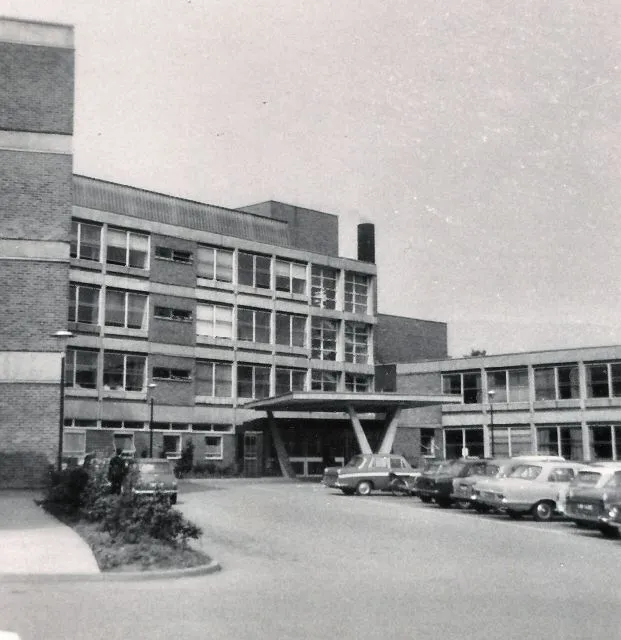
Pontefract General Infirmary in 1969. Harold Shipman later worked here as a young doctor.
Gerald England / CC BY-SA 2.0 / commons.wikimedia.org
14 / 16 / Open questions
What is still missing
- How many people he really killed: 218 names are identified, about 250 is only an estimate. The 45 suspicious deaths from the first report and dozens of deaths from Pontefract remain without a finding.
- Why he began killing and why in 1998 he risked a conspicuous forgery of a will. The sources offer only hypotheses: control, addiction, a cry for attention.
- How he killed in Pontefract, where opiates were strictly controlled. The inquiry did not establish this.
- Why the suspicious deaths in Pontefract stopped after June 1972. An explanation is offered only by 4NI.
- Whether the Home Secretary confirmed a whole life tariff. The sources give only the judge’s recommendation.
- Differences between sources: the year of the single-handed practice (1992 or 1993), the ages of several victims, the value of Kathleen Grundy’s estate (£300,000 to £400,000, most often £386,000) and the number of deaths examined by police up to 2000.
- The full texts of the inquiry’s decisions on individual deaths are not available; the first and sixth reports were read only as copies.
15 / 16 / Citations
Sources
A number in square brackets next to a claim refers to an item in this list. A claim without a number has no source assigned yet. Details may vary between sources; disputed and theoretical items are marked.
59Sources in total
- Primary11
- Secondary5
- Media43
Checked: 17 Nov 2026. Research in one round, 59 sources read: the official reports of the Shipman Inquiry (the second and third from gov.uk, the first and sixth only as copies on murderpedia.org), the government document Cm 7014, the catalogue of The National Archives, Hansard, the BMJ and contemporary reporting by the Guardian, the BBC and others. Information marked as fact has at least two sources; information only from copies of the inquiry’s reports without independent confirmation is marked in the text with “given only by” or left out. Murderpedia and Wikipedia served only as a guide and are not among the sources. Code UK-1972-HS: Great Britain, year of the first identified victim (Thomas Cullumbine, 12 Apr 1972, according to the sixth report), initials of Harold Shipman. The victim count of 15, per the user’s decision, corresponds to the murders of which he was convicted; the inquiry’s findings are in the introduction to the victims, in the statistics and under unconfirmed. Not available: the full PDFs of the first and sixth reports on the official website, the inquiry’s individual decisions, the ombudsman’s report on the death, politics.co.uk, the Yorkshire Post. Before publication, check the victim counts by year beyond the summaries, the date of removal from the GMC register and the details of the funeral.
- [1]The Shipman Inquiry, Dame Janet Smith (19 Jul 2002), copy of the official report on murderpedia.org, First Report Volume One Death Disguised THE SHIPMAN INQUIRY. murderpedia.org / cited 49×primary
- [2]The Shipman Inquiry (19 Jul 2002), The Shipman Inquiry - First Report. the-shipman-inquiry.org.uk / not cited in the textprimary
- [3]The Shipman Inquiry (July 2003), Cm 5853, Second Report: The Police Investigation of March 1998. assets.publishing.service.gov.uk / cited 8×primary
- [4]The Shipman Inquiry (July 2003), Cm 5854, Third Report: Death Certification and the Investigation of Deaths by Coroners. assets.publishing.service.gov.uk / cited 7×primary
- [5]The Shipman Inquiry (27 Jan 2005), copy of the official report on murderpedia.org, Shipman: The Final Report. murderpedia.org / cited 15×primary
- [6]The Shipman Inquiry, The Shipman Inquiry - Sixth Report. the-shipman-inquiry.org.uk / not cited in the textprimary
- [7]Home Office and Department of Health (February 2007), Cm 7014, Learning from tragedy, keeping patients safe. Overview of the Government's action programme in response to the recommendations of the Shipman Inquiry. assets.publishing.service.gov.uk / cited 3×primary
- [8]The National Archives, C16350, Independent Inquiry into the issues arising from the case of Dr Harold Shipman. beta.nationalarchives.gov.uk / cited 4×primary
16 / 16 / Revision history
Revision history
Every edit to this page is logged. Corrections sent in by readers are applied only after the editors check them against sources.
- Published
- Updated
- Edits
- 1
- Page published