Skip to content
Content warningReal violent crimes; victims are named. Help: findahelpline.com. More

This page describes real violent crimes and names the victims. Victims come first; we leave out details that serve only sensationalism. Help: free helplines in your country at findahelpline.com; in an emergency call 112 (EU) or 911 (US).

Executed 17 Jun 2008Japan / 1988-1989Revision history

Tsutomu Miyazaki

Tsutomu Miyazaki (宮﨑勤, also 宮崎勤), born 21 Aug 1962, Itsukaichi (now Akiruno, Tokyo)

Tsutomu Miyazaki helped out in the family printing business in Itsukaichi on the western edge of Tokyo, where his father published a local newspaper. From August 1988 to June 1989 he abducted and murdered four girls aged 4 to 7, three in Saitama Prefecture and one in Tokyo. He lured them into his car, drove them into the mountains and strangled them. He sexually abused and filmed the dead bodies, left a box of burnt bones outside the door of the first victim’s family and wrote letters under the female name Yūko Imada. He was detained on 23 July 1989 in Hachiōji while photographing a six-year-old girl he had undressed. He then confessed to the murders. The trial lasted seven years and revolved around his criminal responsibility; the courts found him fully responsible and sentenced him to death. He was executed on 17 June 2008. The discovery of thousands of videotapes in his room set off a moral panic in Japan about fans of anime and videos, the so-called otaku.

4
girls murdered, aged 4, 7, 4 and 5
● Fact
5
girls abducted from August 1988 to July 1989; the fifth survived
● Fact
5,763
videotapes seized in his room; other sources give 5,792 or about 6,000
◐ Disputed
19
years passed from his detention in 1989 to his execution in 2008
● Fact
6Fact
7Disputed
1Theory
76 of 76claims have a source
58sources, 10 of them primary
Ratings and discussion →
How to read labels and source numbers
● Factestablished by a court, authority, witnesses or confession
◐ Disputedsources disagree
○ Theoryassumption, unverified
A number in square brackets [n] next to a claim opens a preview of the source. A claim without a number has no source assigned yet.
02 / 16 / Timeline

From birth to execution

Events: 49 / 1962–2024

  1. 01

    Life

    1962–88
    1962
    21 Aug

    Birth in Itsukaichi

    Life

    Tsutomu Miyazaki was born prematurely in Itsukaichi (五日市町, now Akiruno) on the western edge of Tokyo. He had a congenital deformity of the forearms, because of which he could not turn his palms upwards. [13] [49] [51] [2]

  2. 1984

    First photographs of a girl

    Life

    According to testimony at trial, he photographed a young girl’s genitals for the first time. Given only by Bunshun. [13]

  3. 1988
    May

    Death of his grandfather

    Life

    His grandfather died, a factory owner and municipal councillor to whom he was closest. It was three months before the first murder. [5] [13]

  4. 02

    Crimes

    1988
    1988
    22 Aug

    Abduction and murder of Mari Konno

    Crimes

    The day after his 26th birthday he led four-year-old Mari away from a pedestrian bridge near a housing estate in Iruma (Saitama), drove her to a forest and strangled her. He filmed the dead body. [12] [15] [2]

  5. October

    Abduction and murder of Masami Yoshizawa

    Crimes

    He lured the seven-year-old girl into his car in Hannō (Saitama) and murdered her. The day, 3 Oct, is given only by the book World Serial Killers; the month is confirmed by Tōyō Keizai. Until September 1989 she was listed as missing. [50] [49] [16]

  6. December

    Abduction of Erika Namba

    Crimes

    The four-year-old girl from a housing estate in Kawagoe (Saitama) disappeared on her way home from a friend’s. The day differs between sources; 9 or 12 Dec is given. [38] [16] [55] [57]

  7. 15 Dec

    Erika Namba’s body found

    Crimes

    The body of the strangled girl lay naked with her hands and feet bound in the mountains of Saitama about 35 km from home. The Japan Times reported the discovery on its front page on 16 Dec. [21] [16] [20] [38]

  8. 03

    Capture, trial and aftermath

    1988
    1988
    December

    Joint headquarters

    Capture, trial and aftermath

    After three girls had disappeared in western Saitama, police searched along rivers and set up a joint investigation headquarters. [21] [55]

  9. 04

    Crimes

    1988–89
    1988
    around 24 Dec

    A letter to a schoolchild

    Crimes

    The Asahi newspaper’s Tensei Jingo column wrote “A letter to a primary school student” about the murdered Erika from Kawagoe and warned children about strangers. [38]

  10. 1989
    6 Feb

    The box of bones

    Crimes

    Outside the Konno family’s flat he left a box with burnt bones, photographs of clothes and a note. [22] [12] [16] [2]

  11. 05

    Capture, trial and aftermath

    1989
    1989
    10 Feb

    Dispute over the teeth

    Capture, trial and aftermath

    Police had earlier announced that the teeth from the box did not belong to Mari. According to the Japan Times index, an expert then stated that the test could not determine this. [22] [55]

  12. 06

    Crimes

    1989
    1989
    10 to 11 Feb

    First “Yūko Imada” letter

    Crimes

    He sent the Asahi newspaper and the Konno family a statement with a photograph, signed with the female name Yūko Imada (今田勇子). [39] [8] [16] [2]

  13. 07

    Capture, trial and aftermath

    1989
    1989
    1 Mar

    Bones confirmed

    Capture, trial and aftermath

    According to the Japan Times index, the remains from the box were confirmed as those of Mari Konno. The paper reported it on 2 Mar. [23]

  14. 08

    Crimes

    1989
    1989
    11 Mar

    Second letter, the confession

    Crimes

    Another letter signed Yūko Imada reached the family and the Asahi newspaper, this time with an account of the motive. The Japan Times printed it on its front page on 12 Mar. [23] [2] [55]

  15. early June

    Abduction of Ayako Nomoto

    Crimes

    The five-year-old girl disappeared in Kōtō in Tokyo. The day, 6 Jun, is given only by the book The Evil Within. On 11 Jun police appealed to the public for help. [24] [8] [52]

  16. 11 to 12 Jun

    Dismembered body found

    Crimes

    A child’s torso was found near a cemetery in Hannō (Saitama); on 12 Jun it was identified as the body of Ayako Nomoto. [24] [8]

  17. 09

    Capture, trial and aftermath

    1989–24
    1989
    18 Jun

    Cases linked

    Capture, trial and aftermath

    The Japan Times wrote that Ayako’s murder was probably connected with the three abductions in Saitama. [24]

  18. 23 Jul

    Detention in Hachiōji

    Capture, trial and aftermath

    In a park in Hachiōji (Tokyo) he led a six-year-old girl onto a forest path, undressed her and photographed her. The girl’s father caught him, and Miyazaki was detained in the act for forcible indecency. [12] [58] [9] [41]

  19. 10 Aug

    The head in Okutama

    Capture, trial and aftermath

    On the basis of his statement police found the head of a five-year-old girl in the Okutama mountains. The Japan Times printed this on its front page on 11 Aug. [25] [8]

  20. 11 Aug

    Confession to Ayako’s murder

    Capture, trial and aftermath

    That evening the Asahi ran the confession as its lead story. Police transferred Miyazaki to Kōtō and arrested him for murder. [8] [25]

  21. 13 to 16 Aug

    Confession to two more

    Capture, trial and aftermath

    He first hinted at and then admitted the murders of Mari Konno and Erika Namba in Saitama. [25] [40] [8]

  22. August

    A room full of tapes

    Capture, trial and aftermath

    The media showed his room with thousands of videotapes. According to the Telegraph and ANN police seized 5,763 of them; other sources give other numbers. [6] [9] [8]

  23. 19 Aug

    Yomiuri apology

    Capture, trial and aftermath

    The Yomiuri newspaper apologised for a false report about his hideout in the mountains. [25] [8]

  24. 22 to 29 Aug

    Evidence from the tapes

    Capture, trial and aftermath

    On the seized tapes police found a recording of the body of Mari Konno, film of the body of Ayako Nomoto and negatives of the body of Erika Namba. They seized a further 677 items. [25] [8]

  25. 2 Sep

    Indicted for Ayako’s murder

    Capture, trial and aftermath

    He was indicted for the murder of Ayako Nomoto; the Japan Times reported it on its front page on 3 Sep. [26] [55]

  26. 5 to 6 Sep

    Confession to the fourth murder

    Capture, trial and aftermath

    He admitted the murder of Masami Yoshizawa and led police to her remains in the mountains. The location near the Komine pass in Itsukaichi is given only by the Japanese Wikipedia. [26] [55]

  27. 8 to 9 Sep

    Charged with Mari’s murder

    Capture, trial and aftermath

    Police charged him with the murder of Mari Konno. [26]

  28. 9 Sep

    LA Times report

    Capture, trial and aftermath

    The Los Angeles Times wrote about the media frenzy surrounding the case and about the debate on “rori-kon”, a fondness for little girls. [8]

  29. 13 Sep

    Bone fragments

    Capture, trial and aftermath

    Police found bone fragments, which they identified as the remains of Mari Konno. [26] [55]

  30. 20 Oct

    Further indictments

    Capture, trial and aftermath

    The prosecutors’ office indicted him for further murders. [27]

  31. 27 Oct

    Horror films not the cause

    Capture, trial and aftermath

    The Japan Times wrote that the link between the murders and horror videos was weakening. [27]

  32. 1990
    30 Mar

    First hearing

    Capture, trial and aftermath

    At the Tokyo District Court he said that he had committed the murders as if in a dream. He admitted the acts but denied planning them or intending to kill. [28] [55]

  33. 28 Nov

    Motion for an evaluation

    Capture, trial and aftermath

    The defence moved for a psychiatric evaluation and the trial was adjourned. [29] [55]

  34. 1994
    21 Nov

    Father’s suicide

    Capture, trial and aftermath

    His father jumped from the Jindai Bridge (神代橋) into the Tama River. According to Bunshun he had first secured money to compensate the families. [13] [14] [5]

  35. 1995
    2 Feb

    Two further evaluations

    Capture, trial and aftermath

    Two further psychiatric evaluations concluded that his responsibility was diminished; one cited a dissociative disorder, the other schizophrenia. [30] [55]

  36. 1996
    7 Oct

    Death penalty sought

    Capture, trial and aftermath

    The prosecution sought the death penalty; the Japan Times reported it on its front page on 8 Oct. [31] [55]

  37. 25 Dec

    Defence closing argument

    Capture, trial and aftermath

    The defence asked for an acquittal on the grounds of insanity. [32] [55]

  38. 1997
    April

    Death sentence

    Capture, trial and aftermath

    The Tokyo District Court found him fully responsible and sentenced him to death. The Japan Times reported it on its front page on 15 Apr; the day of the verdict, 14 Apr, is given only by the Japanese Wikipedia. Miyazaki appealed. [33] [4] [55]

  39. 1998
    December

    A book from detention

    Capture, trial and aftermath

    The publisher 創出版 issued his book of letters 夢のなか. [42]

  40. 1999
    21 Dec

    Appeal proceedings

    Capture, trial and aftermath

    Appeal proceedings began at the Tokyo High Court. The defence again argued insanity. [34] [55]

  41. 2001
    28 Jun

    Appeal dismissed

    Capture, trial and aftermath

    The Tokyo High Court upheld the death sentence. [1] [35] [4]

  42. 2006
    17 Jan

    Supreme Court

    Capture, trial and aftermath

    The Third Petty Bench of the Supreme Court unanimously dismissed the final appeal. The Japan Times reported it on its front page on 18 Jan. [1] [2] [36]

  43. 1 to 2 Feb

    Sentence final

    Capture, trial and aftermath

    The court rejected a motion to correct the judgment, and the death sentence became final on 2 Feb 2006. [3] [37] [16]

  44. February

    Second book from detention

    Capture, trial and aftermath

    A second book of his letters, 夢のなか、いまも, was published. [43]

  45. 2008
    30 May

    Letter to the minister

    Capture, trial and aftermath

    Defence lawyer Maiko Tagusari informed the Minister of Justice that she was preparing a request for a retrial and asked for a stay. [19] [10]

  46. 17 Jun

    Execution

    Capture, trial and aftermath

    He was hanged at the Tokyo Detention House together with Shinji Mutsuda and Yoshio Yamasaki. He was 45. [4] [5] [7] [18] [19]

  47. 2017
    7 Oct

    Interrogation recordings

    Capture, trial and aftermath

    Fuji Television broadcast the programme 衝撃スクープSP 30年目の真実 with his voice from police interrogations. [16]

  48. 2019
    January

    The book 肉声

    Capture, trial and aftermath

    Journalist Hideki Yasunaga published a book based on the interrogation recordings. [14] [45]

  49. 2024

    The book 殺め家

    Capture, trial and aftermath

    Writer Takaaki Yagisawa published a book for which he visited the crime scenes. [12] [13]

03 / 16 / Victims first

Named victims

Named victims: 4 / Survivors: 1

The list contains the four murdered girls for whose murders Miyazaki was convicted and to which he confessed. He abducted three in Saitama Prefecture and one in the Tokyo ward of Kōtō. The families made the names public in 1989; today’s Japanese press mostly anonymises them. The names are given in Hepburn romanisation as in English-language sources: Mari Konno, Masami Yoshizawa, Erika Namba (also Nanba) and Ayako Nomoto. The exact days of the abductions of Masami Yoshizawa (3 Oct 1988) and Ayako Nomoto (6 Jun 1989) are given only by books; the months are confirmed by more sources. For Erika Namba sources differ between 9 and 12 Dec 1988. He abducted and sexually assaulted a fifth girl, who survived.

Showing 4 of 4
  • Mari Konno
    Iruma, pedestrian bridge near the Iruma Village housing estate (入間ビレジ); murdered in a forest, remains burnt, Saitama Prefecture
    22 Aug 1988
    age 4
  • Masami Yoshizawa
    Hannō; body dumped in the mountains, Saitama Prefecture
    October 1988 (3 Oct is given by only one book); remains found in September 1989 following his confession
    age 7
  • Erika Namba
    Kawagoe, housing estate; body in the mountains of Saitama about 35 km from home, Saitama Prefecture
    December 1988 (9 or 12 Dec, sources differ); body found 15 Dec 1988
    age 4
  • Ayako Nomoto
    Kōtō; torso left near a cemetery in Hannō, head found in the Okutama mountains, Tokyo
    June 1989 (6 Jun is given by only one book); torso found 11 Jun 1989
    age 5

By location

Saitama Prefecture3
Tokyo1

Victim profile

12 and under4
13–170
18–240
25 and over0
Women and girls: 4 / Men and boys: 0 (of 4 named)

Survivors

  • Six-year-old girl from Hachiōji
    name not published. On 23 Jul 1989 he picked her out in a park together with her older sister, led the younger one onto a forest path, undressed her and photographed her. The girl’s father caught him and Miyazaki was detained. He was convicted of kidnapping for the purpose of indecency and forcible indecency

Unconfirmed

Apart from the four murders, Miyazaki was not charged with any other. The Japanese Wikipedia states that the “Yūko Imada” letter of March 1989 mentioned the 1987 murder of a girl from Gunma Prefecture, which the media linked to Miyazaki. No charge was ever brought and the statute of limitations expired in 2002. The Japan Times index of September 1989 mentions a drawing of a suspect in a 1987 child murder case, but a connection with Miyazaki cannot be confirmed from it. No other source documents this.

04 / 16 / Offender’s pattern

What recurred

Miyazaki chose young girls who were outside alone. His pattern consists of luring them into his car, strangling them at a secluded spot, filming the dead bodies and letters with which he mocked the families and the police. Each item states whether it is a documented fact, a disputed point or a theory. Claims of cannibalism and drinking blood are disputed and belong in the Myths section.

Traits: 7

01

Luring into the car

● Fact

According to the Supreme Court, he skilfully approached girls who did not know how to distrust anyone and lured them into his car. With the first victim, according to the District Court judgment, he crouched down by a pedestrian bridge and offered to take her somewhere cool. [2] [15]

Details of the first victim and of the Nissan Langley with tinted windows are given only by criminologist Nobuo Komiya in Newsweek Japan.

02

Strangling in the mountains

● Fact

He drove the girls far into the mountains or to places out of sight, pushed them down and strangled them with his hands. He killed all four on the same day he abducted them. [2] [8] [12]

03

Filming the dead bodies

● Fact

He sexually abused the dead bodies and filmed them with a video camera. Among his tapes police found a recording of the body of Mari Konno, film of the body of Ayako Nomoto and negatives of the body of Erika Namba. [2] [12] [8] [25]

04

Dismembering and burning the remains

● Fact

He dismembered the body of Ayako Nomoto, left the torso near a cemetery in Hannō and the head in the Okutama mountains. He burnt the bones of Mari Konno. [2] [8] [25] [12]

05

The box of bones

● Fact

On 6 Feb 1989 he left outside the Konno family’s flat a box with their daughter’s burnt bones, photographs of her clothes and a note. [2] [12] [22] [16]

06

The “Yūko Imada” letters

● Fact

In February and March 1989 he sent the Asahi newspaper and the Konno family a statement and a confession signed with the female name Yūko Imada. Erika Namba’s family received a postcard in December 1988. [2] [8] [12] [23] [39] [22]

Of the verified sources, only the Japan Times index mentions the postcard to the Namba family.

07

Misleading the hunt

◐ Disputed

According to recordings of his interrogations broadcast by Fuji Television in 2017, he intended the letters to divert the hunt towards a woman from Saitama and deliberately avoided motorways. [16]

This is Fuji Television’s interpretation of the recordings, not a finding of the court.

05 / 16 / Modus operandi

How the behaviour evolved

Phases: 3

1962-1988

Before the murders

He grew up in Itsukaichi in the family of a printing business owner. He suffered from a congenital deformity of the forearms, which the court named as a background to his crimes. According to Bunshun his parents were busy with work and he was cared for mainly by his grandfather.

  • 1962: born in Itsukaichi
  • 1984: according to testimony at trial, first photographs of a girl
  • collector of videotapes and member of tape-trading clubs
  • May 1988: death of his grandfather
1988-1989 / Saitama, Tokyo

Murders

In ten months he abducted and murdered four girls. Between the murders he sent remains and letters to the families and to the Asahi newspaper.

  • 22 Aug 1988: Mari Konno, Iruma
  • October 1988: Masami Yoshizawa, Hannō
  • December 1988: Erika Namba, Kawagoe
  • February to March 1989: box of bones and letters
  • June 1989: Ayako Nomoto, Kōtō
From 23 Jul 1989

Capture, trial, execution

He was detained during a further abduction. He confessed to all the murders; the trial focused on his criminal responsibility. The death sentence was upheld at all three levels.

  • 23 Jul 1989: detention in Hachiōji
  • August to September 1989: confession
  • 1997: death sentence
  • 2006: Supreme Court, sentence final
  • 17 Jun 2008: execution
06 / 16 / Crime scenes

Where and in what order

Places: 7

  1. 01Itsukaichi (now Akiruno), Tokyo1962-1989
  2. 02Iruma, Saitama1988
  3. 03Hannō, Saitama1988
  4. 04Kawagoe, Saitama1988
  5. 05Kōtō, Tokyo1989
  6. 06Hachiōji, Tokyo1989
  7. 07Tokyo Detention Houseuntil 2008
07 / 16 / Investigation

How he was caught

Steps: 7

01 / 1988

Missing girls

After three girls had disappeared in western Saitama, police searched along rivers and in December 1988 set up a joint headquarters. On 15 Dec they found the body of Erika Namba. [21] [55]

02 / February to March 1989

The box and the letters

Police examined the box of bones, the letters and the photographs. According to the Japan Times index, in June 1989 they pointed to someone in the printing trade. [22] [23] [24]

03 / June 1989

Cases linked

After the body of Ayako Nomoto was found in Hannō, police and the press linked the murder in Tokyo with the abductions in Saitama. [24] [8]

04 / 23 Jul 1989

Detained for another crime

The father of a six-year-old girl in Hachiōji caught Miyazaki photographing his daughter. Miyazaki was detained in the act for forcible indecency, not for the murders. [12] [58] [9]

05 / August 1989

Confession

Under interrogation he confessed first to the murder of Ayako Nomoto and showed where her head was, then to the murders of Mari Konno and Erika Namba. [25] [8] [40]

06 / August 1989

Searching the collection

Police went through the seized videotapes and found recordings of dead bodies on them. They seized a further 677 items. [25] [8]

07 / September 1989

The fourth victim

He admitted the murder of Masami Yoshizawa and led police to her remains. Indictments for all the murders followed. [26] [27]

What went wrong

  • Dispute over the teeth
    After the box was found, Saitama police first announced that the teeth did not belong to Mari Konno, and then retracted this. Miyazaki responded with his first letter.
  • The theory of a woman
    The letters signed with a female name led part of the investigation to suppose that the perpetrator was a woman.
  • A different car
    According to Tōyō Keizai, witnesses described a different type of car, and investigators therefore did not suspect Miyazaki at first. A former police officer said there that without the chance detention in Hachiōji there would have been a fifth and a sixth murder.
  • The media in his room
    Animag in 1991 and Bunshun in 2019 described how journalists rearranged his room for the cameras. The Yomiuri newspaper had to retract a false report about his hideout in the mountains.

Impact on forensics and law

  • Moral panic about otaku
    The discovery of thousands of videotapes in his room set off a moral panic about otaku, fans of anime and videos. According to ANN the word otaku already existed before 1989, but the case spread it and gave it a bad name.
  • Violent videos
    According to the LA Times, the Tokyo police called for an ordinance restricting minors’ access to violent videos, and the broadcaster NHK withdrew horror films from its schedule.
  • Psychiatrists in court
    The trial with three psychiatric evaluations lasted seven years. According to Tōyō Keizai, psychiatric evaluations became common in Japanese courts after it.
  • The perpetrator’s family
    His father took his own life; according to Bunshun his siblings lost their jobs and one of his sisters her wedding.
08 / 16 / People in the case

Witnesses, investigators, relatives

People: 16

Presiding judge
Tokiyasu Fujita (藤田宙靖)
Presided over the Third Petty Bench of the Supreme Court, which dismissed the final appeal on 17 Jan 2006.
Supreme Court justices
Kunio Hamada, Toyozō Ueda, Yukio Horigome
Members of the bench; the decision was unanimous. The names are given in the judgment.
Defence lawyer
Maiko Tagusari (田鎖麻衣子)
Filed the final appeal to the Supreme Court, was preparing a request for a retrial and after the execution protested that it had taken place without warning.
Minister of Justice
Kunio Hatoyama
Signed the execution order in 2008.
Minister of Justice
Masao Gotō (後藤正夫)
In 1989, even before the trial, declared that the death penalty was not enough.
Investigator
Ōmine (大峯泰宏)
Tokyo police investigator, conducted the interrogations. The kanji of his name differ between sources.

Accomplices: none. He committed all the crimes alone.

09 / 16 / Trial and sentence

From indictment to execution

Proceedings: 6

30 Mar 1990 to April 1997 / Tokyo District Court

First instance

Indictment for kidnapping, murder, damaging and abandoning dead bodies, kidnapping for the purpose of indecency and forcible indecency. Miyazaki admitted the acts but denied intending to kill. The three psychiatric evaluations diverged: the first found a personality disorder and full responsibility, two more in 1995 diminished responsibility. The court sided with full responsibility. [28] [29] [30] [31] [32] [33] [4]

Death sentence
21 Dec 1999 to 28 Jun 2001 / Tokyo High Court

Appeal

The defence argued insanity, a coerced confession and the unconstitutionality of the death penalty. The court dismissed the appeal. [1] [34] [35] [4]

Death sentence upheld
17 Jan 2006 / Supreme Court

Final appeal

Defence lawyer Maiko Tagusari argued a violation of Article 36 of the Constitution and an error of fact. The Third Petty Bench unanimously dismissed the final appeal. In its reasons it cited sexual desire and the desire to have his own video recordings as the motive, and mentioned that his mother had paid the families 8 million yen. [1] [2] [36]

Dismissed
1 to 2 Feb 2006 / Supreme Court

Motion to correct the judgment

The court rejected the defence motion and the judgment became final on 2 Feb 2006. Bunshun gives 1 Feb 2006. [3] [37] [11]

Final
May 2008

Retrial

The defence lawyer was preparing a request for a retrial and on 30 May 2008 asked the minister for a stay. She did not manage to file the request. [19] [10]

Not filed
17 Jun 2008 / Tokyo Detention House

Execution

The order was signed by Minister Kunio Hatoyama. Miyazaki was hanged together with two other condemned men, 2 years and 4 months after the judgment became final. The press described it as a speedy execution. [4] [5] [7] [10] [18]

Executed

In detention

From his detention in 1989 until his execution he was held in custody; he was executed at the Tokyo Detention House. He wrote letters, from which two books were published. According to Bunshun he watched anime in his cell.

Execution

He was hanged on 17 Jun 2008, aged 45. His defence lawyer stated that the execution took place without warning while she was preparing a request for a retrial. His alleged last words about a videotape he had not finished watching are given only by the book 死刑囚238人 最期の言葉.

Grave

According to Bunshun his name is not on the family grave. Where his remains are kept is not reliably documented.

10 / 16 / Psychology and myths

What is documented and what is not

Items: 7 / each labelled Fact, Disputed or Theory

Cannibalism and drinking blood

◐ Disputed

In 2008 AP, AFP and the Telegraph wrote that he ate parts of the bodies and drank the victims’ blood. According to Bunshun he flatly denied drinking blood under interrogation and only came up with the claim in court, as a ritual to resurrect his grandfather. The Japanese Wikipedia states that the court of first instance described the claim of eating the hands as probably invented. [4] [5] [6] [14] [55]

Inspired by horror

◐ Disputed

In 1989 police hinted at a link with the film Guinea Pig 2: Flowers of Flesh and Blood. In October 1989 the Japan Times wrote that the link with horror films was weakening. [8] [27]

A room full of pornography

◐ Disputed

Most of the tapes were animated films and recordings of television programmes. According to a witness quoted by Bunshun, a television crew put an erotic comic on top of the pile for a better shot. [8] [40] [14]

The remark about thousands of Miyazakis

◐ Disputed

The oft-repeated remark by a reporter that there were ten thousand, or a hundred thousand, Miyazakis at the Comiket fan convention is, according to Bunshun, an urban legend without evidence. [14] [55]

What Yūko Imada means

○ Theory

In February 1989 the Asahi wrote of a pun meaning now I will tell, and Animag in 1991 of the name of a policewoman from a comic. The perpetrator himself never confirmed any interpretation. [39] [41]

Arrested in Saitama

◐ Disputed

The Telegraph wrote of Saitama as a Tokyo suburb, Animag that he gave himself up, and Tōyō Keizai of an arrest in August. He was detained on 23 Jul 1989 in Hachiōji, which is part of Tokyo. [6] [41] [16] [12] [58]

The nerd cult

◐ Disputed

The Telegraph linked him to a “nerd cult”. According to ANN the case only popularised the word otaku, which already existed before and has no connection with his crimes. [6] [9]

11 / 16 / Comparison

Related cases

1968-1969 / USA

Zodiac

5 confirmed victims / Unidentified
In common

Both sent letters to newspapers and to the victims’ families and mocked the hunt.

Difference

The Zodiac was never identified. Miyazaki was caught by chance during a further abduction and confessed to the murders.

1978-1990 / USSR

Andrei Chikatilo

52 proven victims / Executed 1994
In common

Both killed children and both were executed.

Difference

Miyazaki murdered four young girls in Saitama and Tokyo in 1988 and 1989. Chikatilo killed in the USSR for twelve years, from 1978 to 1990, and was convicted of 52 murders of children, girls and women.

12 / 16 / Books and films

Treatments of the case

The label is an editorial rating: Recommended means a balanced treatment with verifiable sources; With caution means the work gives the perpetrator a platform or opts for a simplified version.

Book / 1991-2000Source
宮崎勤裁判
Ryūzō Saki, Asahi Shimbun. Court reportage in four volumes.
Book / 1997Source
宮崎勤 精神鑑定書
Takahiro Takino, Kodansha. On the psychiatric evaluations, later a revised edition.
Book / 1998With caution
夢のなか
The perpetrator’s letters from detention, 創出版. The perpetrator’s own account.
Book / 2006With caution
夢のなか、いまも
Second volume of letters from detention up to the Supreme Court verdict.
13 / 16 Photos and documents

Photos and documents1

Photos and documents from readers. We publish them after review; you see your own uploads straight away, marked Pending review.

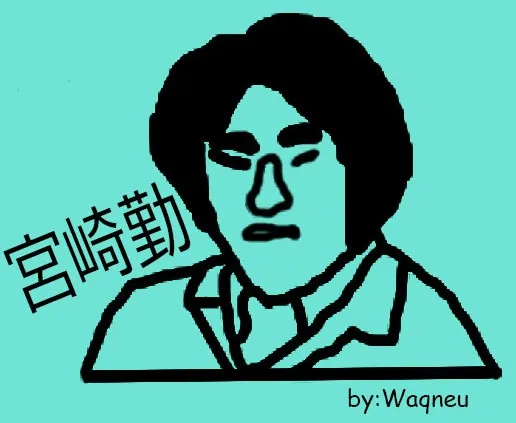
Tsutomu Miyazaki, drawing
Drawing of Tsutomu Miyazaki (Waqneu, 2019), not a photograph.
14 / 16 / Open questions

What is still missing

  • The exact day of the abduction of Erika Namba: 9 or 12 Dec 1988.
  • Was Miyazaki insane, or was he faking illness? The courts found him fully responsible, two of the three evaluations found diminished responsibility, and according to Fuji Television the interrogation recordings show an ordinary-seeming young man.
  • The real motive: the court cited a sexual and collecting desire, a psychologist and the perpetrator himself spoke of resurrecting his grandfather, the defence of schizophrenia.
  • Whether he had a connection with the 1987 murder of a girl in Gunma Prefecture, on which the statute of limitations expired.
  • How great the influence of the media was on the image of his room and on the evidence that journalists tampered with.
  • Why he was executed so soon after the judgment became final; the press speculated about a connection with the Akihabara attack of 8 Jun 2008.
  • Sources do not agree on the number and order of his siblings or on what happened to his remains.

You can help

Add a source, a photo or a correction. We check every submission and credit your nickname on approved ones.

Send a tipCase discussion
15 / 16 / Citations

Sources

A number in square brackets next to a claim refers to an item in this list. A claim without a number has no source assigned yet. Details may vary between sources; disputed and theoretical items are marked.

58Sources in total
  • Primary10
  • Secondary16
  • Media32
Checked: 17 Nov 2026. Research in one round, 58 sources: the full text of the Supreme Court of Japan judgment of 17 Jan 2006, the government’s reply to the House of Councillors of 2007, contemporary indexes of The Japan Times and Asahi Shimbun columns on archive.org, the Los Angeles Times 1989, agency reports from 2008 and the Japanese press (Bunshun, J-CAST, Newsweek Japan, Tōyō Keizai). Facts have at least two sources; details from a single source are marked in the text or omitted. Wikipedia and the blog Executed Today serve only as a guide and do not count towards the two sources. In this English version names are given in Hepburn romanisation; the name field remains as on the card. Code JP-1988-TM: Japan, year of the first murder (Mari Konno, 22 Aug 1988), initials of the name on the card, Tsutomu Miyazaki. The surviving girl is deliberately not named. Unavailable: articles of The Japan Times (403), the full texts of the District Court and High Court judgments, the contemporary archives of the Saitama Shimbun, Yomiuri and Mainichi. Omitted because of a single source: education, the names of the lower court judges and of the psychiatrists, the Supreme Court hearing of 23 Nov 2005, police commander Shigeru Hashizume, his father’s words after the suicide, the location of his remains. Before publication verify the exact days of the abductions of Masami Yoshizawa and Ayako Nomoto, the day of the April 1997 verdict and the romanisation of the victims’ names.
16 / 16 / Revision history

Revision history

Every edit to this page is logged. Corrections sent in by readers are applied only after the editors check them against sources.

Published
Updated
Edits
1
  1. Page published
    OverviewEditors

Share this page

https://www.killeratlas.com/en/killers/tsutomu-miyazaki/profile

How to cite

Killer Atlas. Tsutomu Miyazaki (1988-1989): case profile [online]. https://www.killeratlas.com/en/killers/tsutomu-miyazaki/profile [accessed 15 Nov 2026]. Checked 15 Nov 2026.