Skip to content
Content warningReal violent crimes; victims are named. Help: findahelpline.com. More

This page describes real violent crimes and names the victims. Victims come first; we leave out details that serve only sensationalism. Help: free helplines in your country at findahelpline.com; in an emergency call 112 (EU) or 911 (US).

Executed 27 Jun 2025Japan / 2017Revision history

Takahiro Shiraishi

Takahiro Shiraishi (白石隆浩), born 1990, grew up in Zama (Kanagawa Prefecture)

Takahiro Shiraishi grew up in Zama in Kanagawa Prefecture, south-west of Tokyo. After high school he worked in a supermarket, then recruited women for sex businesses in Tokyo’s Kabukichō district. In the spring of 2017 he set up Twitter accounts and approached people who posted about suicidal thoughts. He promised them that he would die with them or help them die, and invited them to his flat in Zama. From the end of August to 23 October 2017 he murdered nine people there aged 15 to 26, eight women and girls and one man. He raped the women, robbed the victims, and cut up and hid the bodies. He was traced through the search for the last victim, started by her brother. Police entered the flat on 30 October 2017. In court he admitted the murders, yet the defence argued that the victims had consented to their deaths. The court rejected this and on 15 December 2020 sentenced him to death. He withdrew his appeal and on 27 June 2025 he was hanged, the first condemned prisoner executed in Japan since July 2022. The case led the government to take measures against posts encouraging suicide.

9
murdered, aged 15 to 26, 8 women and girls and 1 man
● Fact
2
months: murders from the end of August to 23 Oct 2017
● Fact
over 600
people queued on 30 Sep 2020 for a few public seats at the first hearing
● Fact
4 years and 5 months
from the sentence becoming final to the execution; the average for executions in 2015 to 2024 was 9 years and 6 months
● Fact
5Fact
9Disputed
0Theory
72 of 72claims have a source
62sources, 8 of them primary
Ratings and discussion →
How to read labels and source numbers
● Factestablished by a court, authority, witnesses or confession
◐ Disputedsources disagree
○ Theoryassumption, unverified
A number in square brackets [n] next to a claim opens a preview of the source. A claim without a number has no source assigned yet.
02 / 16 / Timeline

From birth to execution

Events: 45 / 1990–2025

  1. 01

    Life

    1990–17
    1990

    Birth

    Life

    He was born as the first child. The date 9 Oct 1990 is given only in his mother’s statement, which the court read out; it matches his age in court reports. [19] [11] [49]

  2. 1992

    Sister and the house in Zama

    Life

    His younger sister was born. The family bought a house in Zama in Kanagawa Prefecture, where he grew up. [19] [40]

  3. 2009
    spring

    Graduation and the supermarket

    Life

    After high school he joined the supermarket where he had previously worked part-time. He left after about two years. [19] [40]

  4. 2011
    around

    Recruiter in Kabukichō

    Life

    He began recruiting women for sex businesses in Tokyo’s Kabukichō district. [40] [29]

  5. 2017
    February

    Arrest

    Life

    He was arrested for violating the Employment Security Act because he had placed women in prostitution work. [3] [40]

  6. March

    Twitter account

    Life

    He set up a Twitter account. According to the indictment, he wanted to use it to make contact with women who were considering suicide. [32] [3]

  7. May

    Suspended sentence

    Life

    He received a suspended sentence for placing women in prostitution work. He was left without a job. [3] [40]

  8. June

    “I don’t know why I’m alive”

    Life

    He told his father that he did not know why he was alive. [40] [43]

  9. 02

    Crimes

    2017
    2017
    August

    Preparation

    Crimes

    According to interviews in custody and court reports, he prepared for the crimes in advance. Reported only by Bunshun. [26] [25]

  10. 22 Aug

    Moving into the flat

    Crimes

    He moved into a flat in a two-storey building in Zama near Sōbudaimae station. [43] [40] [14]

  11. end of August

    Victim A

    Crimes

    The first murder. The court referred to her as victim A, a 21-year-old woman from Kanagawa Prefecture who moved in with him that day. [12] [26] [43]

  12. end of August

    Victim B

    Crimes

    According to the court, the second victim was a 15-year-old schoolgirl from Gunma Prefecture. [12] [21]

  13. 29 Aug

    Victim C

    Crimes

    He murdered a 20-year-old man from Kanagawa Prefecture who knew the first victim, so that he would not reveal her disappearance. The date is given only in Bunshun’s court reports. [13] [20] [24] [1]

  14. 30 Aug

    Searching about the death penalty

    Crimes

    In the evening he searched online for how many murders bring the death penalty. Reported only by Bunshun, citing the prosecution. [22]

  15. September

    Victims D and E

    Crimes

    He murdered a 19-year-old student and a 26-year-old woman, both from Saitama Prefecture. [20] [22] [24]

  16. 28 Sep

    Victim F

    Crimes

    He murdered a 17-year-old high school student from Fukushima Prefecture who had come to see him the day before. Reported only in Bunshun’s court reports. [14]

  17. 30 Sep

    Victim G

    Crimes

    He murdered a 17-year-old student from Saitama Prefecture who had left home that day. The date is given only by Bunshun. [15] [29]

  18. 18 Oct

    Victim H

    Crimes

    He murdered a 25-year-old woman from Kanagawa Prefecture. The date is given only by Bunshun. [21] [29]

  19. 23 Oct

    Victim I

    Crimes

    Cameras recorded a 23-year-old woman from Hachiōji with a man at Hachiōji station and then near the station in Zama. She was the last victim. [17] [42] [48]

  20. 03

    Capture, trial and aftermath

    2017–25
    2017
    24 Oct

    Missing person report

    Capture, trial and aftermath

    The brother of the missing woman from Hachiōji reported her disappearance at Takao police station and searched for clues himself through her Twitter account. [42] [48] [5]

  21. 30 Oct

    A fake meeting and entry into the flat

    Capture, trial and aftermath

    A woman who had met him earlier arranged, at the request of police, a meeting at Machida station. Officers followed him home and in the evening entered the flat, where they found the remains of nine people. [42] [48] [11] [7]

  22. 31 Oct

    Arrest

    Capture, trial and aftermath

    He was formally arrested for abandoning a dead body. He admitted that he had murdered nine people. [41] [44] [43]

  23. 1 Nov

    Handed over to prosecutors

    Capture, trial and aftermath

    Police handed him over to the Tachikawa branch of the public prosecutors office. [41] [43]

  24. 6 Nov

    First identification

    Capture, trial and aftermath

    Police confirmed the identity of the first victim, a 23-year-old woman from Hachiōji. [9] [8]

  25. 10 Nov

    All nine identified

    Capture, trial and aftermath

    Police announced the identities of all nine victims from Tokyo and four prefectures. The press printed their names at the time. [7] [8]

  26. 10 Nov

    Ministerial meeting

    Capture, trial and aftermath

    The government convened the first ministerial meeting on preventing a repeat of the Zama case. [50] [52]

  27. 6 Dec

    Recommendation to platforms

    Capture, trial and aftermath

    The council for a safe internet environment for young people issued an urgent recommendation to social network operators. Reported only in a government document. [52]

  28. 19 Dec

    Package of measures

    Capture, trial and aftermath

    The government adopted measures to prevent a repeat of the case: removal of posts encouraging suicide, counselling for young people through social networks and better protection of minors online. [52] [51] [4]

  29. 2018
    April to September

    Psychiatric evaluation

    Capture, trial and aftermath

    For five months he underwent a psychiatric evaluation to assess his criminal responsibility. [46] [36]

  30. 10 Sep

    Indictment

    Capture, trial and aftermath

    Prosecutors indicted him for nine murders combined with robbery, and with rape in the case of the eight women, as well as for damaging and abandoning dead bodies. [46] [36] [1]

  31. 2020
    30 Sep

    First hearing

    Capture, trial and aftermath

    At the Tachikawa branch of the Tokyo District Court he said the indictment was correct in every respect. The defence argued that it was killing with consent. The court withheld the victims’ names. Over 600 people waited for the public seats. [32] [11] [49]

  32. October to November

    Hearings on the victims

    Capture, trial and aftermath

    The court heard the murders in three groups by month: August, September and October 2017. Reported only by Bunshun. [11]

  33. 24 Nov

    Expert and his mother’s statement

    Capture, trial and aftermath

    The psychiatric expert found no mental disorder. The court read out his mother’s statement: “育て方が悪かったの? なぜこんなことができるの?” (Did I raise him badly? How could he do something like this?). Reported only by Bunshun. [18] [19]

  34. 25 Nov

    Final questioning

    Capture, trial and aftermath

    He declared that he would not appeal the verdict and apologised to some of the bereaved. [21] [3]

  35. 26 Nov

    Death penalty sought

    Capture, trial and aftermath

    The prosecution sought the death penalty, saying that the perpetrator “万死に値する” (deserves death ten thousand times over). Reported only by Bunshun. [22] [24]

  36. 15 Dec

    Death sentence

    Capture, trial and aftermath

    The court found him fully criminally responsible and sentenced him to death. It ruled that none of the victims had consented to being killed. [24] [33] [35]

  37. 18 Dec

    Defence appeal

    Capture, trial and aftermath

    The defence filed an appeal with the Tokyo High Court. The date is given only by Tokyo Reporter. [6]

  38. 21 Dec

    Appeal withdrawn

    Capture, trial and aftermath

    He withdrew the appeal himself; the court announced it on 23 Dec. [25] [5]

  39. 2021
    5 Jan

    Sentence final

    Capture, trial and aftermath

    The death sentence became final after the deadline for appeal expired. [25] [3]

  40. February

    Ikkō Ono’s book

    Capture, trial and aftermath

    The book 冷酷 座間9人殺害事件 was published, based on eleven interviews with the perpetrator in custody. [53] [31]

  41. 2022
    January

    Tetsuya Shibui’s book

    Capture, trial and aftermath

    The court reportage ルポ座間9人殺害事件 was published, focusing on the victims and on why they turned to the perpetrator. [54] [3]

  42. December

    Sociological study

    Capture, trial and aftermath

    Sociologist Hiroki Nakamori published the book 「死にたい」とつぶやく on suicidal posts on social networks and the Zama case. [55] [4]

  43. 2025
    23 Jun

    Execution order

    Capture, trial and aftermath

    Justice Minister Keisuke Suzuki signed the execution order. Reported only by the Ministry of Justice. [1]

  44. 27 Jun

    Execution

    Capture, trial and aftermath

    He was hanged in the morning at the Tokyo Detention House. He was 34. It was the first execution in Japan since July 2022. [1] [30] [39] [37] [38]

  45. 27 Jun

    Reactions

    Capture, trial and aftermath

    Amnesty International condemned the execution. The ministry said that 105 people remain on death row in Japan. [37] [1]

03 / 16 / Victims first

Named victims

Named victims: 9 / Survivors: 2

The list contains the nine people whose murders Shiraishi was convicted of. All of them died in his flat in Zama in Kanagawa Prefecture between the end of August and 23 Oct 2017. Police and the press published the names after identification in November 2017. The court withheld them during the trial and referred to the victims by the letters A to I in the order in which they were killed. We therefore give only the first name in Hepburn romanisation and the initial of the surname. The court never stated which name belongs to which letter, so we do not give the dates of the murders from court reports next to the names; they are on the timeline under the letters. The names are in alphabetical order. The region is the victim’s prefecture of residence. The age is given only where two sources agree; for Kazumi M. the lists differ between 25 and 21, and court reports give one of the victims as 25.

Showing 9 of 9
  • Aiko T.
    the perpetrator’s flat in Zama; residence Hachiōji, Tokyo, Tokyo
    disappeared 23 Oct 2017
    age 23
  • Akari S.
    the perpetrator’s flat in Zama; residence Fukushima Prefecture, Fukushima Prefecture
    August to October 2017
    age 17
  • Hinako S.
    the perpetrator’s flat in Zama; residence Saitama Prefecture, Saitama Prefecture
    August to October 2017
    age 19
  • Hitomi F.
    the perpetrator’s flat in Zama; residence Saitama Prefecture, Saitama Prefecture
    August to October 2017
    age 26
  • Kazumi M.
    the perpetrator’s flat in Zama; residence Kanagawa Prefecture, Kanagawa Prefecture
    August to October 2017
    age unknown
  • Kureha I.
    the perpetrator’s flat in Zama; residence Gunma Prefecture, Gunma Prefecture
    August to October 2017
    age 15
  • Mizuki M.
    the perpetrator’s flat in Zama; residence Kanagawa Prefecture, Kanagawa Prefecture
    August to October 2017
    age 21
  • Natsumi K.
    the perpetrator’s flat in Zama; residence Saitama Prefecture, Saitama Prefecture
    August to October 2017
    age 17
  • Shōgo N.
    the perpetrator’s flat in Zama; residence Kanagawa Prefecture, Kanagawa Prefecture
    end of August 2017; for the only murdered man the court gives 29 Aug
    age 20

By location

Fukushima Prefecture1
Gunma Prefecture1
Kanagawa Prefecture3
Saitama Prefecture3
Tokyo1

Victim profile

12 and under0
13–173
18–244
25 and over1
Women and girls: 8 / Men and boys: 1 (of 9 named)

Survivors

  • People he did not kill
    sources say that more people who survived met him or stayed in his flat during the period of the murders. The number differs: Ikkō Ono writes of three women, Tetsuya Shibui of four of the thirteen people he met, and two women were mentioned in court. Names not published
  • The woman who helped police
    name not published. She met him a week before his capture but did not go to his home. At the request of police, on 30 Oct 2017 she arranged a meeting with him at Machida station, from where officers followed him all the way to the flat

Unconfirmed

Sources attribute no further victims to him. He was convicted of all nine murders and did not confess to any others. Japanese Wikipedia gives the police view that one empty container in the flat had been prepared for another victim; no other source supports this.

04 / 16 / Offender’s pattern

What recurred

Shiraishi looked for victims on Twitter among people who posted about exhaustion, loneliness and wanting to die. His pattern consists of a false promise of dying together or of help with dying, an invitation to his flat, a surprise attack and hiding the remains in the flat. Each item is marked as a documented fact, a disputed point or a theory. We deliberately describe the methods and details of the crimes only in general terms.

Traits: 7

01

Recruiting through Twitter

● Fact

According to the indictment, he set up a Twitter account in March 2017 to make contact with women who were considering suicide and whom he saw as easy targets. He used several accounts, including “死にたい” (I want to die) and “首吊り士” (Hangman). He said himself that he searched not only for the word suicide but also for words such as “lonely” or “tired”. [32] [3] [29]

The numbers of contacts from the individual accounts are given only by Bengoshi JP News, so we do not give them.

02

A false promise to die together

● Fact

He wrote to the victims that he wanted to die with them or would help them die, and persuaded them to come to his flat. He later told police that this was a lie. The court ruled that the victims did not expect a surprise attack. [6] [24] [33]

03

A surprise attack in the flat

● Fact

In the flat he attacked the victims without warning and strangled them. He raped the eight women and girls before killing them and took money or belongings from all nine. The court described his conduct as “狡猾、巧妙で卑劣” (cunning, sophisticated and despicable). [1] [24] [33] [46]

That he prepared the flat and tools in advance is reported, from the reasons for the judgment, only by Bunshun. We deliberately omit details of his methods.

04

Cutting up and hiding the remains

● Fact

He cut up the bodies in the flat. He hid parts in containers in the flat, where police found them on 30 Oct 2017, and threw the rest out with the rubbish. [24] [43] [44] [11]

The number and type of containers differ between sources.

05

Silencing a witness

● Fact

According to the judgment, he killed the only man among the victims so that he would not reveal the disappearance of the first victim, whom he knew. [24] [1] [13]

06

The “flowchart”: money or death

◐ Disputed

In interviews he himself spoke of a “flowchart”: from people who seemed to have money he wanted to live as a kept man, the others he killed. The court accepted the money motive. Journalist Tetsuya Shibui points out that the victims were mostly students and people without income, so this logic makes no sense. According to Bunshun, the total loot did not even reach 600,000 yen. [27] [25] [24]

Both the interviews and the court reports were published by Bunshun Online, which is a single outlet.

07

The victims’ alleged consent

◐ Disputed

The defence argued that the victims wanted to die and that this was killing with consent, which carries at most seven years. The perpetrator disagreed with his own defence and said that no one had consented. The court ruled that none of the nine victims consented to being killed, not even tacitly. [32] [33] [24] [22]

05 / 16 / Modus operandi

How the behaviour evolved

Phases: 3

1990-2017

Before the murders

He grew up in Zama; according to classmates he was quiet and inconspicuous. After high school he worked in a supermarket and then as a recruiter of women for businesses in Kabukichō. In 2017 he received a suspended sentence, was left without work and told his father he did not know why he was alive.

  • 1990: born
  • 2009: high school graduation, supermarket
  • February 2017: arrest
  • March 2017: Twitter account
  • May 2017: suspended sentence
22 Aug to 30 Oct 2017 / Zama

The murders

In less than two months he murdered nine people in his flat in Zama. The court referred to them by the letters A to I in the order in which they were killed.

  • 22 Aug: moves into the flat
  • end of August: victims A, B and C
  • September: victims D, E, F and G
  • October: victims H and I
  • 30 Oct: police enter the flat
From 30 Oct 2017

Capture, trial, execution

He admitted the murders immediately after his capture. The trial before a panel with lay judges lasted less than three months and ended with a death sentence. He withdrew his appeal and was executed four and a half years later.

  • 31 Oct 2017: arrest
  • 10 Sep 2018: indictment
  • 15 Dec 2020: death sentence
  • 5 Jan 2021: sentence final
  • 27 Jun 2025: execution
06 / 16 / Crime scenes

Where and in what order

Places: 5

  1. 01Zama, Kanagawachildhood-2017
  2. 02Kabukichō, Tokyo (work)about 2011-2017
  3. 03flat in Zama, Kanagawa2017
  4. 04custody in Tachikawa, Tokyo2017-2021
  5. 05Tokyo Detention House2021-2025
07 / 16 / Investigation

How he was caught

Steps: 8

01 / August to October 2017

Missing victims

The victims were reported missing, but the searches did not lead to the perpetrator. Police got into the flat only after the ninth murder. [4] [43]

02 / 24 Oct 2017

The missing woman’s brother

The brother of the 23-year-old woman from Hachiōji reported her disappearance and searched for clues himself in her Twitter account. Tokyo police assessed the case as a threat to life and deployed the special investigations unit and the SSBC analysis unit. [48] [42] [5]

03 / October 2017

Camera footage

Analysts went through camera footage. At Hachiōji station they found the missing woman with a man, and further footage led them to Zama. [48] [42] [9]

04 / 30 Oct 2017

A fake meeting

A woman who had earlier got to know the perpetrator through Twitter arranged, at the request of police, a meeting with him in Machida. After the meeting officers followed him all the way to the flat. [48] [42]

05 / 30 Oct 2017

Entry into the flat

Officers entered the flat. The perpetrator at first denied everything, then admitted that he had killed the missing woman and showed where the remains were. The remains of nine people were found in the flat. [11] [42] [45]

06 / 31 Oct 2017

Arrest and confession

He was arrested for abandoning a dead body and admitted nine murders. Further arrests for the individual victims followed. [41] [43] [10]

07 / 6 to 10 Nov 2017

Identification

Police established the identity of all nine victims using DNA from the families and documents found in the flat. [9] [7] [8]

08 / 2018

Evaluation and indictment

After a five-month psychiatric evaluation, prosecutors indicted him on 10 Sep 2018 for nine murders. [46] [36]

What went wrong

  • Missing persons not linked
    All nine victims were reported missing, but the individual searches were not linked. After the news of the discovery, parents of other missing people contacted police.
  • An emergency call
    According to Bunshun’s court reports, a friend of one of the victims called police on the very day of the murder, yet the victim died. Reported only by Bunshun.
  • A sense of impunity
    In court he said that after several murders he became less careful because no one asked him anything. Reported only by Bunshun.
  • Unmonitored social networks
    The perpetrator deliberately sought out public posts about wanting to die. Twitter’s rules and the government measures against posts encouraging suicide came only after his capture.

Impact on forensics and law

  • Government measures
    On 19 Dec 2017 the government adopted a package of measures: calls on social network operators to ban and remove posts encouraging suicide, reporting of such posts to an internet hotline, counselling for young people through social networks and earlier introduction of filters for minors.
  • Twitter
    According to the BBC, after his capture Twitter added to its rules that users should not promote or encourage suicide or self-harm. It began showing helpline contacts in searches for suicide-related terms.
  • Debate on suicide prevention
    In Japan the case opened a debate on why young people with suicidal thoughts turn to strangers on social networks. According to sociologist Hiroki Nakamori, similar cases recurred later as well.
  • Death penalty
    The execution in June 2025 came after almost three years without executions. Amnesty International condemned it. According to the Ministry of Justice, 105 people remain on death row in Japan.
08 / 16 / People in the case

Witnesses, investigators, relatives

People: 12

Presiding judge
Naokuni Yano (矢野直邦)
Presided over the panel of the Tachikawa branch of the Tokyo District Court that passed the death sentence on 15 Dec 2020.
Justice Minister
Keisuke Suzuki (鈴木馨祐)
Signed the execution order and announced it at an extraordinary press conference on 27 Jun 2025.
Cabinet member
Hachirō Okonogi (小此木八郎)
Chairman of the National Public Safety Commission; in November and December 2017 he spoke about the case and the government measures.
Defence lawyers
court-appointed defence lawyers
They argued that the victims had consented to their deaths. In court the perpetrator disagreed with their interpretation.
Psychiatric expert
name not published
After a five-month evaluation he found no mental disorder. The court found the perpetrator fully criminally responsible.
Family
mother, name not published
The court read out her statement from the investigation on 24 Nov 2020.

Accomplices: none. He committed all the murders alone.

09 / 16 / Trial and sentence

From indictment to execution

Proceedings: 5

10 Sep 2018 / Tachikawa branch of the public prosecutors office

Indictment

After a five-month psychiatric evaluation, prosecutors filed an indictment on nine counts: for the eight women robbery, rape and murder, for the man robbery-murder, as well as damaging and abandoning dead bodies. [46] [36] [1]

Indicted
30 Sep to 15 Dec 2020 / Tachikawa branch of the Tokyo District Court

First instance with lay judges

The perpetrator admitted guilt; the defence argued killing with consent and diminished responsibility. The court referred to the victims by the letters A to I. The panel presided over by Naokuni Yano ruled that no victim had consented to being killed, not even tacitly, and that the perpetrator was fully criminally responsible. It found no mitigating circumstances. [32] [11] [24] [33] [34] [35]

Death sentence
18 to 21 Dec 2020 / Tokyo High Court

Appeal

The defence appealed, and the perpetrator withdrew the appeal himself. The court announced it on 23 Dec 2020. The date the appeal was filed is given only by Tokyo Reporter. [6] [25] [5]

Withdrawn
5 Jan 2021

Sentence final

The death sentence became final after the deadline for appeal expired. The perpetrator was transferred to the Tokyo Detention House. [25] [3]

Final
27 Jun 2025 / Tokyo Detention House

Execution

The order was signed by Justice Minister Keisuke Suzuki. The perpetrator was hanged 4 years and 5 months after the sentence became final. The ministry did not say whether he had requested a retrial. [1] [2] [30] [39]

Executed

In custody

Until 2021 he was held in custody in Tachikawa, where he gave interviews to journalists. After the sentence became final he was transferred to the Tokyo Detention House. According to Bunshun and the monthly 創, he was looking for a wife so that he could receive visits after the sentence became final.

Execution

He was hanged on the morning of 27 Jun 2025 at the Tokyo Detention House, aged 34. Bengoshi JP News quotes his words in a headline: “大人しく罪を認め、罰を受けます。以上です” (I meekly admit my guilt and will accept the punishment. That is all.).

Grave

Sources do not say where his remains are buried.

10 / 16 / Psychology and myths

What is documented and what is not

Items: 7 / each labelled Fact, Disputed or Theory

The man was the first victim’s boyfriend

◐ Disputed

In 2017 the press wrote that the murdered man was the first victim’s partner. In court it emerged that they knew each other through a contact about suicide and that the perpetrator only suspected a relationship. Journalist Tetsuya Shibui writes that it was never confirmed. [41] [43] [7] [13] [3]

The man was the second victim

◐ Disputed

Police leaks in 2017 described the man as the second victim. According to the court he was the third; the second victim was a 15-year-old girl. [43] [12] [13] [21]

The victims wanted to die

◐ Disputed

The defence argued that it was killing with consent. The court rejected this for all nine victims, and the perpetrator himself said that no one had really wanted to die. [32] [33] [24]

He searched only for the word suicide

◐ Disputed

He said himself that he searched rather for words such as “lonely”, “tired” or “I want to die”. In this way he also approached people who had not written directly about suicide. [29] [3]

He got rich from the murders

◐ Disputed

According to Bunshun, the total loot did not even reach 600,000 yen, most of it money borrowed from the first victim. Reported only by Bunshun. [25]

He killed only for sex

◐ Disputed

The court named three motives: money, sexual desire and silencing a witness. [24] [1]

Murders by month

◐ Disputed

After his arrest it was reported that he killed one person in August and four each in September and October. According to the court he killed three people in August, four in September and two in October. [43] [12] [14] [16] [17]

11 / 16 / Comparison

Related cases

12 / 16 / Books and films

Treatments of the case

The label is an editorial rating: Recommended means a balanced treatment with verifiable sources; With caution means the work gives the perpetrator a platform or opts for a simplified version.

Book / 2021With caution
冷酷 座間9人殺害事件
Ikkō Ono, Gentōsha. Interviews with the perpetrator in custody; the perpetrator’s own account.
Book / 2022Source
ルポ座間9人殺害事件 被害者はなぜ引き寄せられたのか
Tetsuya Shibui, Kōbunsha. Reportage from the trial focusing on the victims.
Book / 2022Source
「死にたい」とつぶやく 座間9人殺害事件と親密圏の社会学
Hiroki Nakamori, Keio University Press. A sociological study of suicidal posts on social networks.
Article series / 2020With caution
Interviews in custody, Shūkan Jitsuwa
Ikkō Ono, eleven visits in custody, reprinted in Bunshun Online.
13 / 16 Photos and documents

Photos and documents9

Photos and documents from readers. We publish them after review; you see your own uploads straight away, marked Pending review.

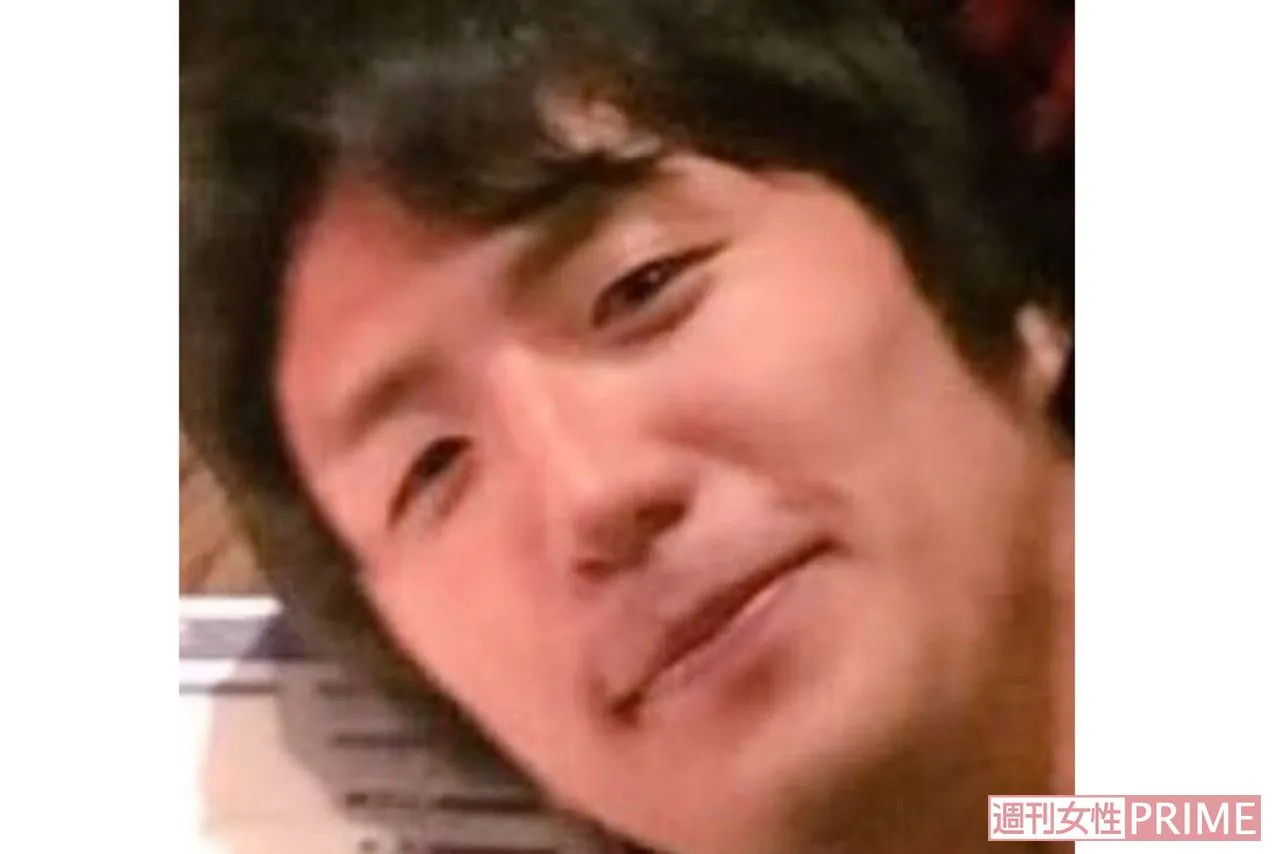
Portrait of Takahiro Shiraishi with his head turned slightly.
Takahiro Shiraishi in an archive portrait.
Shūkan Josei PRIME / © All rights reserved / jprime.jp
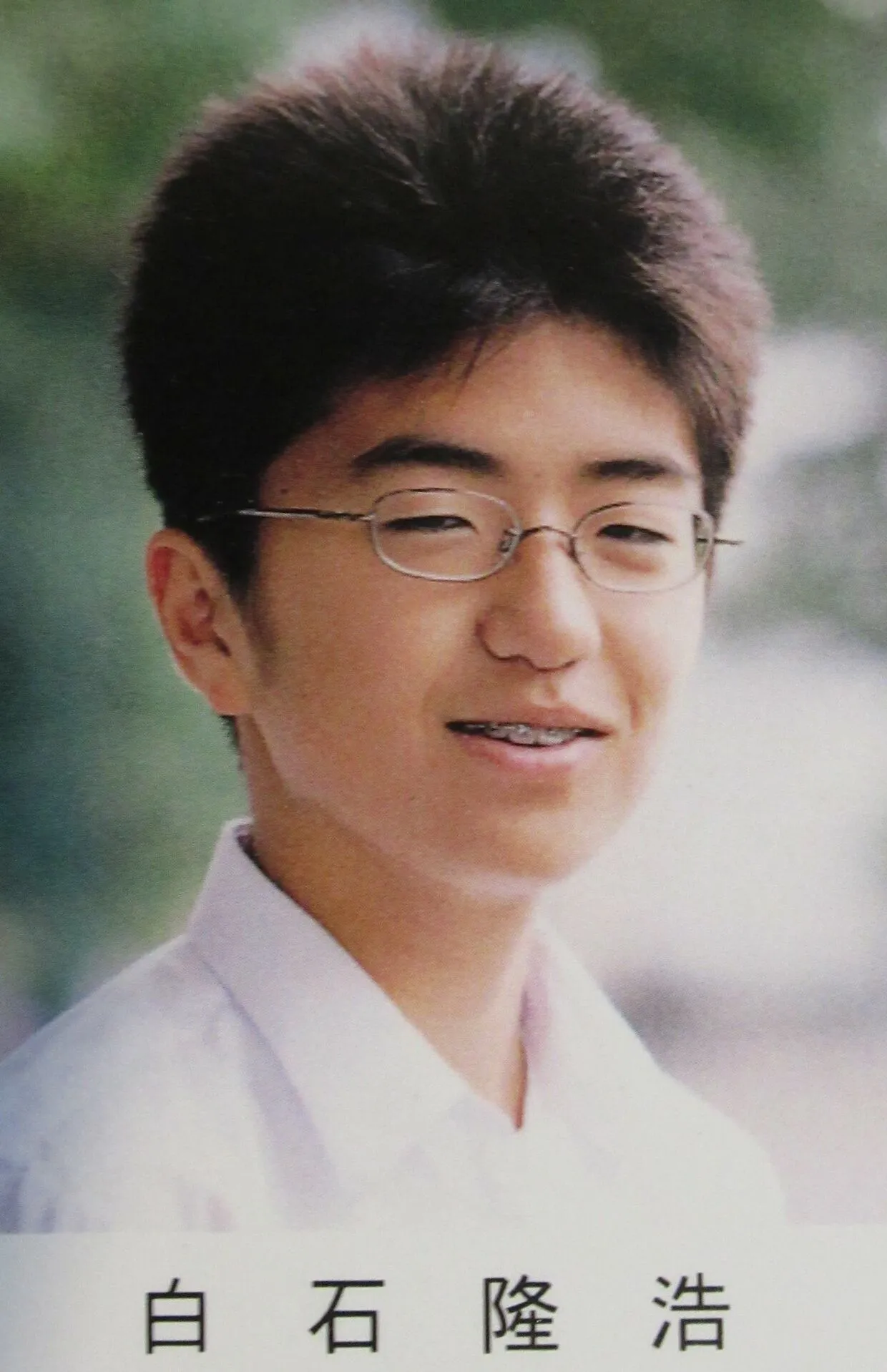
Takahiro Shiraishi wearing glasses and a white shirt in a school portrait photograph.
Takahiro Shiraishi in a school yearbook portrait.
Školní ročenka via Shūkan Josei PRIME / © All rights reserved / jprime.jp
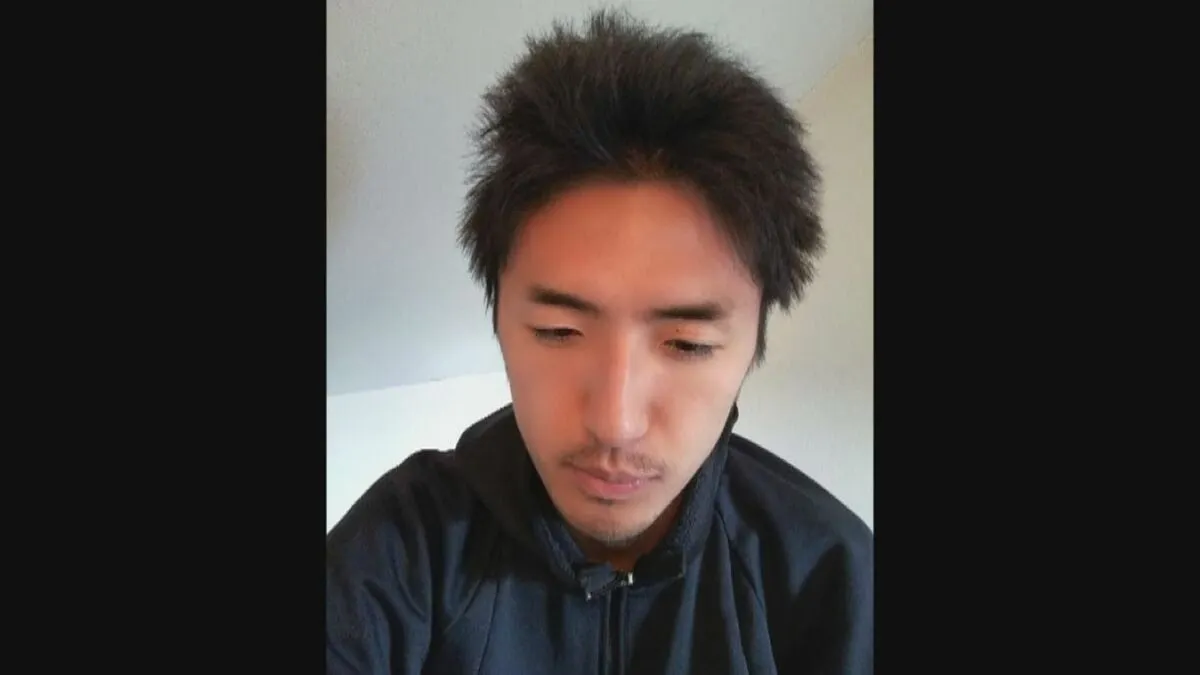
Frontal shot of Takahiro Shiraishi in dark clothing.
Takahiro Shiraishi in archive television footage with his face uncovered.
TBS NEWS DIG / © All rights reserved / newsdig.tbs.co.jp
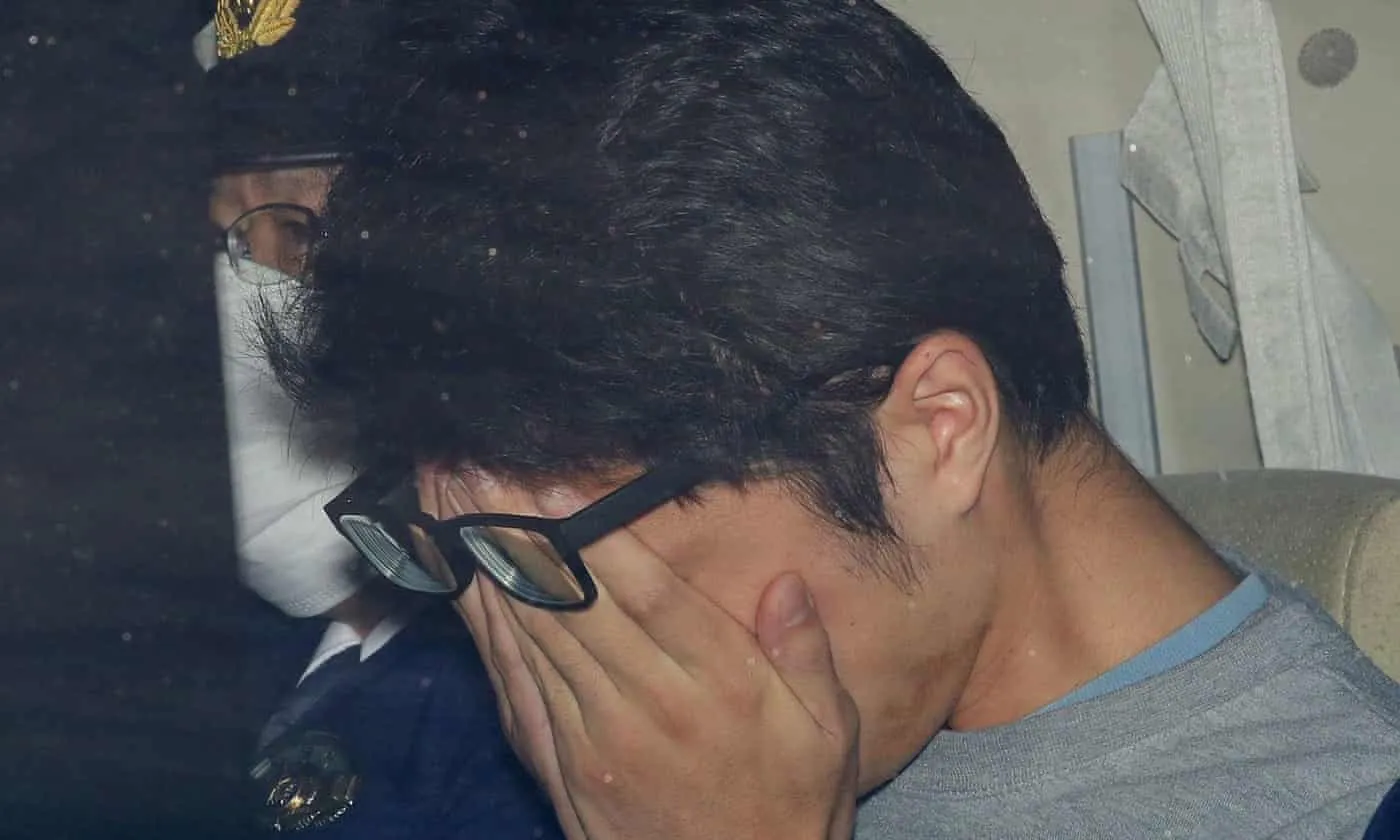
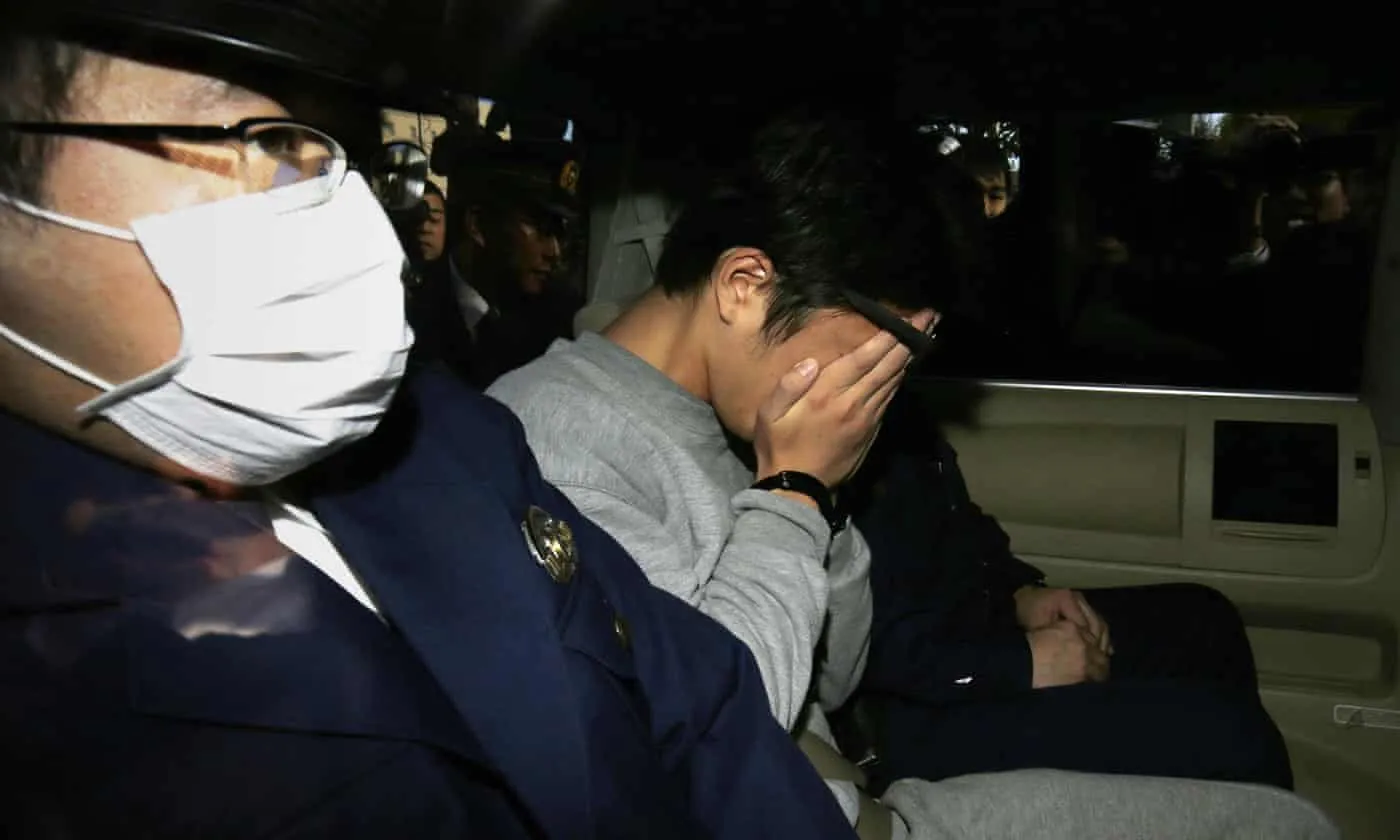
Side view of Shiraishi in glasses with his face covered behind a car window.
Takahiro Shiraishi covering his face during a police transfer in Tokyo.
Kyodo / Reuters via The Guardian / © All rights reserved / theguardian.com
Takahiro Shiraishi with his face covered on the back seat beside an officer.
Takahiro Shiraishi being transferred from a police station in Tokyo.
Jiji Press / AFP via Getty Images / © All rights reserved / theguardian.com
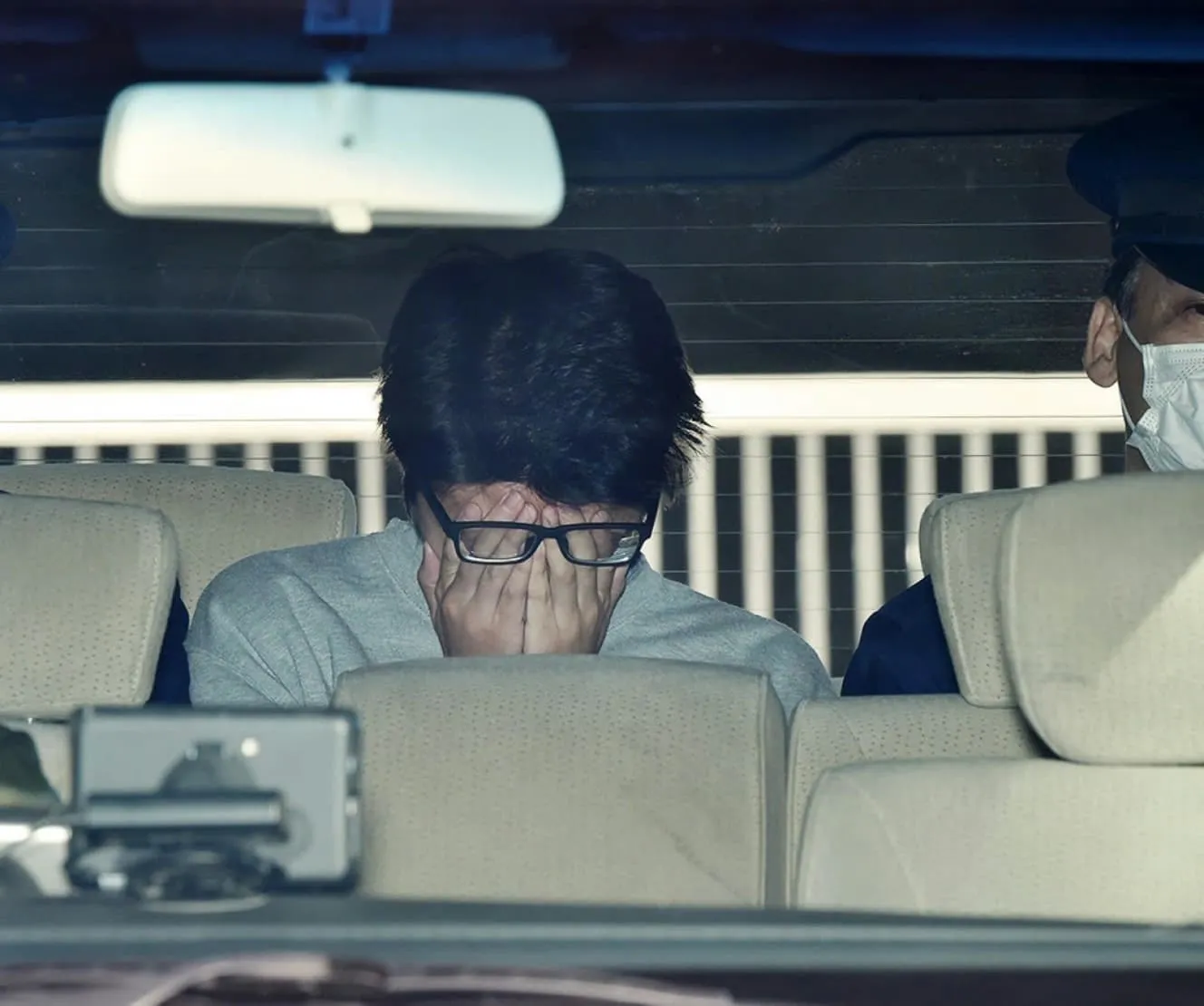
Front view of the back seat of the car and Shiraishi with his head bowed.
Takahiro Shiraishi during a police transfer in a FRIDAY Digital photograph.
FRIDAY Digital / Kōdansha / © All rights reserved / friday.kodansha.co.jp
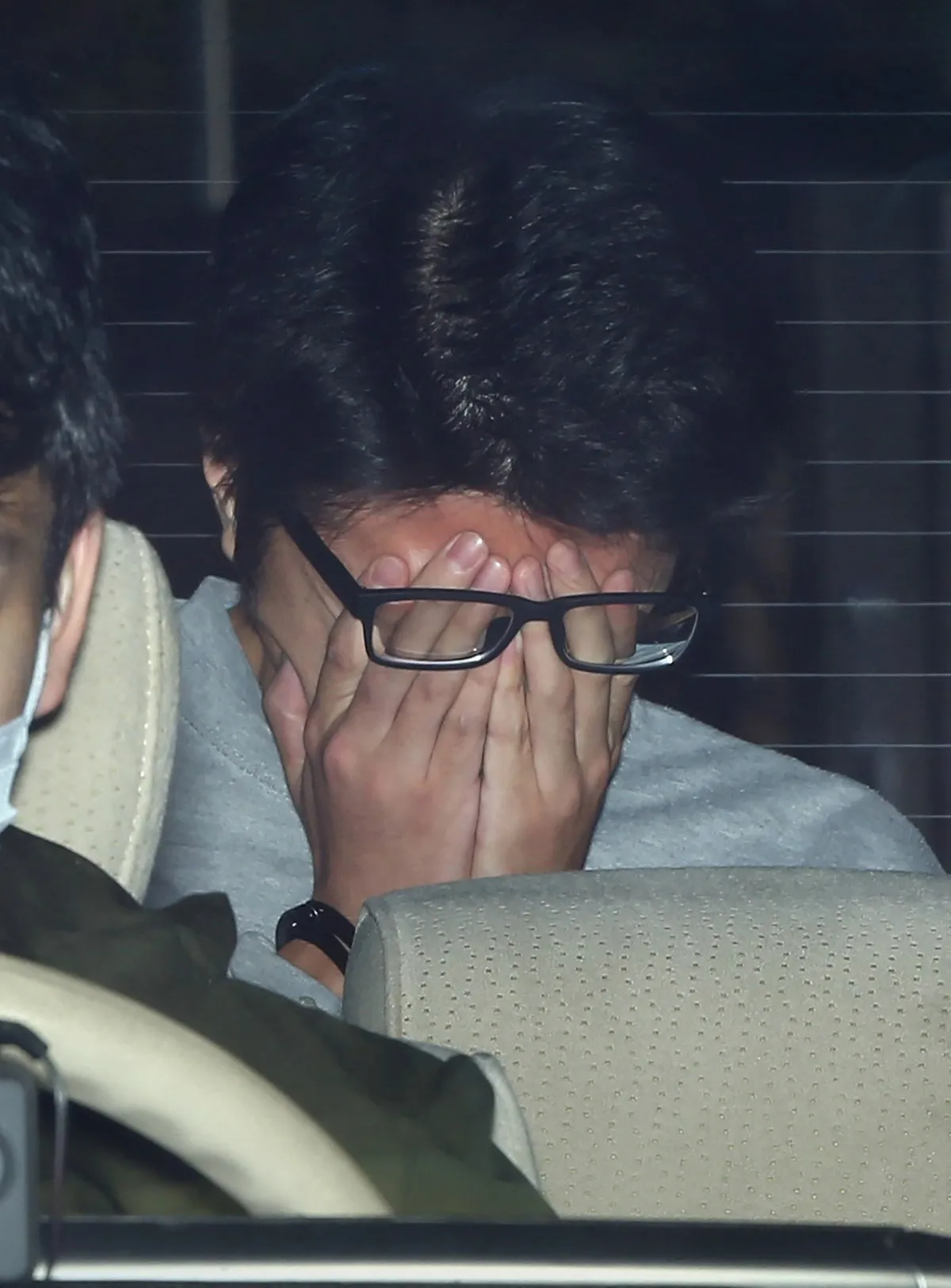
Takahiro Shiraishi covering part of his face behind the car window.
Takahiro Shiraishi during the transfer in an archive agency photograph.
AFP via O Globo / © All rights reserved / oglobo.globo.com
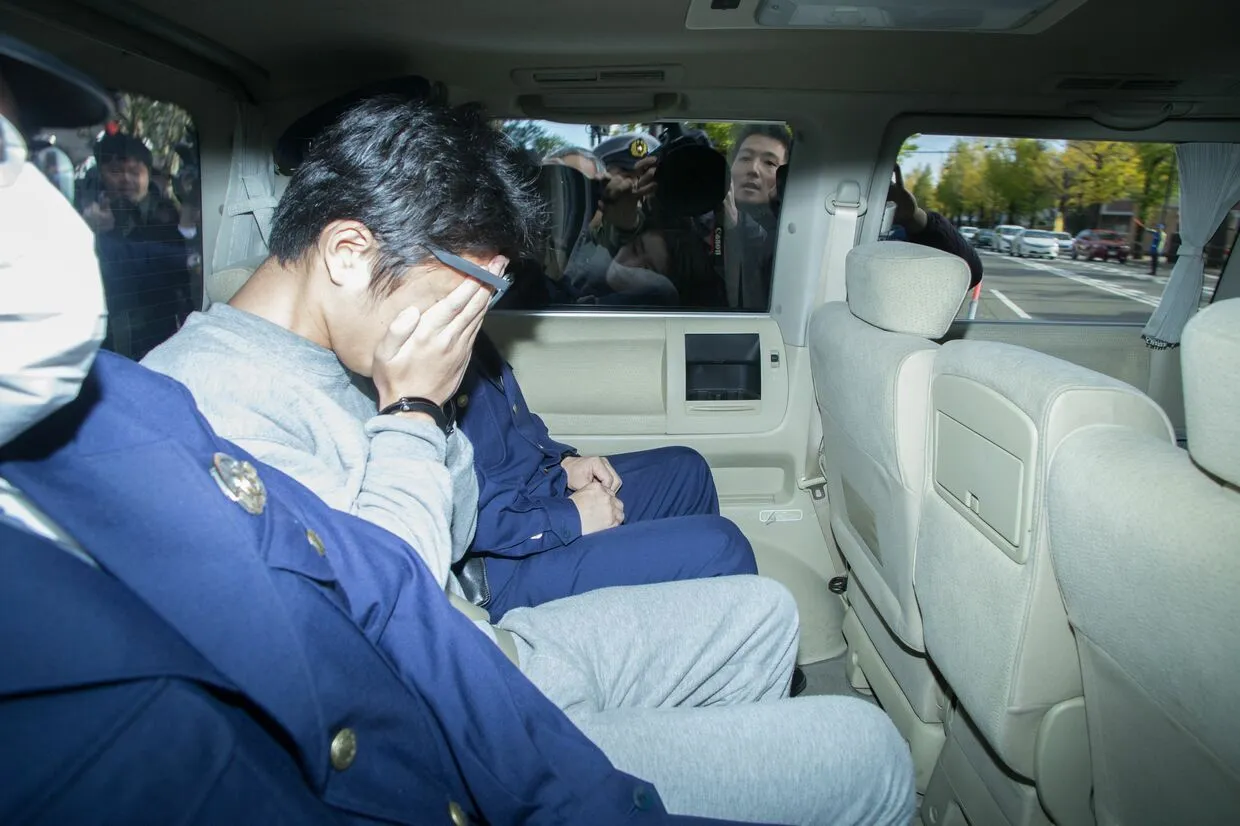
View into the car from the side; Shiraishi has his face covered with his hands.
Takahiro Shiraishi during a police transfer in a wider shot from a Japanese gallery.
Bunshun Online / Bungeishunjū / © All rights reserved / bunshun.jp
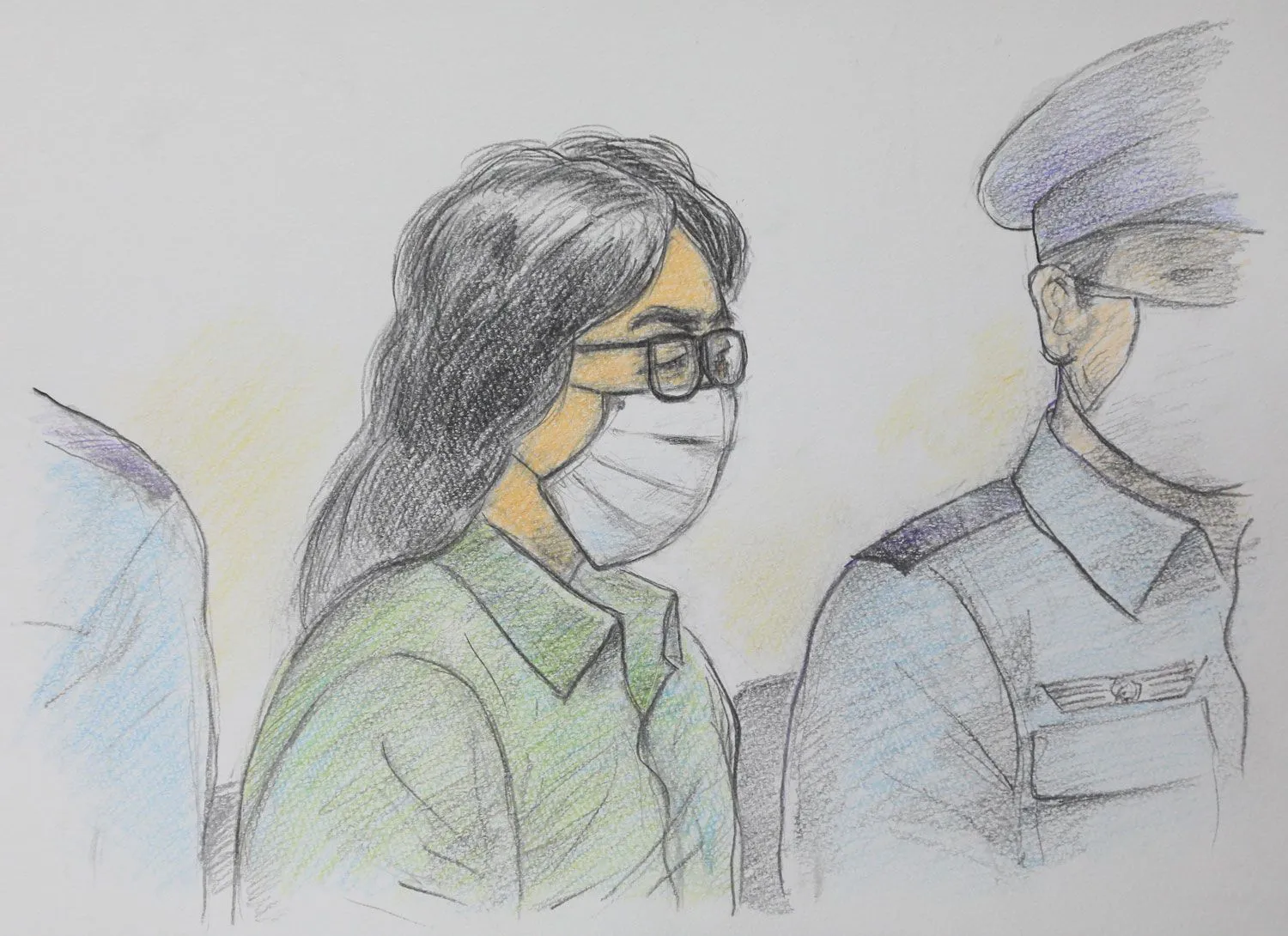
Drawing of Takahiro Shiraishi with glasses and a face mask in court, with another figure beside him.
Takahiro Shiraishi in a court sketch from Tokyo.
Jiji Press via Bunshun Online / © All rights reserved / bunshun.jp
14 / 16 / Open questions

What is still missing

  • The exact dates of the murders of the first two victims and of victims D and E; sources give only “end of August” and “September”.
  • How many people met him during the period of the murders and survived: sources give two, three or four people.
  • The date of the formal arrest: police entered the flat on 30 Oct 2017, some sources give the arrest as 31 Oct.
  • The number and type of containers in which the remains were found differ between sources.
  • Why the experts did not interview his mother and sister and why the evaluation did not include a family history.
  • Whether he requested a retrial before his execution; the ministry declined to say.
  • The real motive: the court named money, sex and silencing a witness; after the verdict criminal psychologist Takayuki Harada wrote that the main question remained unanswered.

You can help

Add a source, a photo or a correction. We check every submission and credit your nickname on approved ones.

Send a tipCase discussion
15 / 16 / Citations

Sources

A number in square brackets next to a claim refers to an item in this list. A claim without a number has no source assigned yet. Details may vary between sources; disputed and theoretical items are marked.

62Sources in total
  • Primary8
  • Secondary5
  • Media49
Checked: 20 Nov 2026. Research in one round, 62 sources: the transcript of the Japanese Justice Minister’s press conference of 27 Jun 2025, the government document on measures after the case of 19 Dec 2017, Cabinet Office press conferences, Tetsuya Shibui’s court reports and Ikkō Ono’s interviews in Bunshun Online, Bengoshi JP News, the AP, AFP, Reuters and Kyodo agencies in reprints, the BBC, CNN, the Guardian, the Japanese press and the National Diet Library catalogue. Bunshun Online counts once towards two independent sources; information only from Bunshun is marked “reported only by” in the text. Wikipedia serves only as a guide. The full text of the judgment is not publicly available; its wording comes only from quotations in Bunshun. The court withheld the victims’ names and referred to them by the letters A to I; the profile gives only the first name in Hepburn romanisation and the initial of the surname, and omits full surnames, the kanji spelling of names and towns of residence from a single source. The assignment of names to letters is only inferred, so the dates of death from court reports are not given next to the names; the date of Aiko T.’s disappearance comes from 2017 agency and police reports (AP, Gendai), and the date for Shōgo N. applies to the only murdered man. Survivors and the bereaved are not named, and details of the crimes are described only in general terms. The name field stays as on the card, and the text uses the same form, Shiraishi. Code JP-2017-TS: Japan, year of the first murder (end of August 2017, after moving into the flat on 22 Aug 2017), initials of the name on the card, Takahiro Shiraishi. Not available: The Japan Times, AP News, NY Times, NHK, Asahi, Sankei and Kanagawa Shimbun (403 or 404). Omitted because of a single source: place of birth, towns of residence of five victims, names of the lay judges, prosecutors and defence lawyers, numbers of contacts from the accounts, the scope of the psychiatric evaluation, a former partner, the Kanagawa police search. Before publication, check the date of arrest (30 or 31 Oct 2017), the age of Kazumi M. and the romanisation of the victims’ names.
16 / 16 / Revision history

Revision history

Every edit to this page is logged. Corrections sent in by readers are applied only after the editors check them against sources.

Published
Updated
Edits
1
  1. Page published
    OverviewEditors

Share this page

https://www.killeratlas.com/en/killers/takahiro-shiraishi/profile

How to cite

Killer Atlas. Takahiro Shiraishi (2017): case profile [online]. https://www.killeratlas.com/en/killers/takahiro-shiraishi/profile [accessed 21 Nov 2026]. Checked 21 Nov 2026.