01
Content warningReal violent crimes; victims are named. Help: findahelpline.com. More
This page describes real violent crimes and names the victims. Victims come first; we leave out details that serve only sensationalism. Help: free helplines in your country at findahelpline.com; in an emergency call 112 (EU) or 911 (US).
Luis Garavito
Luis Alfredo Garavito Cubillos, born 25 Jan 1957, Génova (Quindío)
An itinerant street vendor and casual labourer from Quindío department who murdered children from 1992 to 1999, almost always boys from poor families. He lured them with money, sweets or work and led them to secluded places outside town. He killed in at least 11 Colombian departments and in July 1998 also in Ecuador. He was arrested by chance on 22 April 1999 in Villavicencio during an attack on a young lottery ticket seller, and in autumn 1999 he confessed to about 140 murders. Colombian courts convicted him of 138 murders and imposed sentences totalling 1,853 years and 9 days, but the law merged them into no more than 40 years in prison. He died in custody on 12 October 2023 in Valledupar.
- 138
- murders of which, according to the Fiscalía, he was finally convicted● Fact
- 1853
- years and 9 days as the sum of all sentences, the most in Colombian history● Fact
- 40
- years in prison: the statutory ceiling into which the sentences were merged● Fact
- 172
- victims attributed to him by the Fiscalía; confessions range from 140 to more than 190◐ Disputed
6Fact
5Disputed
3Theory
91 of 91claims have a source
75sources, 2 of them primary
02 / 16 / Timeline
From birth to the dispute over the body
Events: 58 / 1957–2025
- 01
Life
1957–78 - 1978
Circasia
LifeHe worked as an assistant in the Supermercados Centrales chain in Circasia. This comes only from an interview with an acquaintance of his in El Tiempo. [15]
- 02
Crimes
1988–93 - 1993
Quindío
CrimesIn a statement quoted by Semana he spoke of eleven children killed in 1993 in Quindío, among other places in Quimbaya and Calarcá. Only Semana gives the number. [5]
- 03
Capture, trial and aftermath
1994199419 FebAn innocent man arrested
Capture, trial and aftermathNelson Bonilla Garzón was arrested for the murder of a boy in Tuluá. Garavito later confessed to the same murder. The details come from Corte Constitucional decision T-659/05. [2]
Released in Corinto
Capture, trial and aftermathBy his own statement he was detained in Corinto (Cauca) over a child’s disappearance and the proceedings were dropped. Only Semana reports this. [5]
- 2 Dec
Bonilla convicted
Capture, trial and aftermathThe criminal court in Tuluá sentenced Nelson Bonilla Garzón to 40 years. The appeal court in Buga upheld the judgment on 1 Feb 1995. [2]
- 04
Life
1995 - 05
Crimes
1996–97 - 06
Capture, trial and aftermath
1997–981997AugustSpecial unit
Capture, trial and aftermathThe Fiscalía stepped up the investigation and set up a unit that travelled around the whole country. By the end of 1999 it had collected 118 bones and clothing. Only Semana reports this. [4]
- 1998March
The shoe clue
Capture, trial and aftermathA prosecutor in Palmira found a worn shoe by a boy’s body. From it a medical examiner from Buga concluded that the offender had a foot defect. Only Semana reports this. [5]
- 07
Crimes
1998 - 08
Capture, trial and aftermath
1998 - 09
Crimes
1998 - 10
Capture, trial and aftermath
1998 - 11
Crimes
1998 - 12
Capture, trial and aftermath
1998–25 - 2000January
Further confessions
Capture, trial and aftermathHe confessed to 24 more murders; in four of them other people had already been convicted. Only El Tiempo reports this. [18]
- 2001April
Judgment in Pereira
Capture, trial and aftermathFor eleven murders, including the twins from the Cuba neighbourhood, the court in Pereira sentenced him to 33 years and 4 months. Only El Tiempo reports this. [26]
- 2003August
Another 28
Capture, trial and aftermathAccording to Noticias Caracol he confessed to another 23 children and 5 adults. A news agency report from that time could not be fully loaded. [41]
- 2004March
Soacha
Capture, trial and aftermathFor the 1996 murder of a boy in Soacha he received 15 years and 8 months. Only El Tiempo reports this. [19]
- 30 Apr
Judgment in Tuluá
Capture, trial and aftermathThe court in Tuluá sentenced him to 250 months for the murder for which Nelson Bonilla Garzón had been in prison since 1994. [2]
- 200523 Jun
An innocent man released
Capture, trial and aftermathIn decision T-659/05 the Corte Constitucional ordered Nelson Bonilla Garzón released within 48 hours, pending a Corte Suprema ruling on reopening his case. [2]
- 29 Dec
Arrest warrants from Ecuador
Capture, trial and aftermathThe Ecuadorian judiciary issued arrest warrants over the 1998 murders. Only Caracol Radio reports this. [39]
- 20082 Sep
Proceedings in Ecuador
Capture, trial and aftermathA court in Pichincha province opened the trial for two murders in Santo Domingo. This is reported in the Corte Suprema decision; no Ecuadorian judgment was found. [1]
- August
Burial of the twins
Capture, trial and aftermathThe Fiscalía handed over the remains of the Pereira twins and another boy to their families. Reported by the El Tiempo archive. [26]
- 2016March
New finds
Capture, trial and aftermathCTI criminal investigators examined three bodies from Manizales and Pereira that matched his modus operandi. Only La Opinión reports this. [54]
- 20245 Aug
Notes in the Bible
Capture, trial and aftermathThe journalist Kevin Pinzón published notes from Garavito’s Bible which, in his view, could provide new leads. Only El País (Cali) reports this. [51]
- 20251 May
Victims’ families
Capture, trial and aftermathAccording to Noticias RCN the victims’ families received no compensation, and one of the survivors left the country after threats. Only Noticias RCN reports this. [45]
03 / 16 / Victims first
Named victims
Named victims: 4 / Survivors: 4
Garavito was convicted of 138 murders, mostly of boys aged 8 to 16. A full list of the judgments with the victims’ names is not publicly available, so the list contains only four children whose names are given by at least two independent sources. The names of about twenty other children appear only in the archive of one daily (El Tiempo, several articles count as one source), so we do not give them. In Pereira in 1997 the twins from the Cuba neighbourhood disappeared, as did a boy from Cartago whom Garavito lured away from the bus terminal; he was convicted of all three in 2001 and the remains were found near Nacederos. Their names are given only by the El Tiempo archive and the standfirst of the regional daily Crónica del Quindío, which could not be loaded in full, so we do not give them. The age is left out where sources disagree or only one gives it. Other victims are known only by description. In Ecuador in July 1998, besides the two boys from Chone, he also killed two boys in Santo Domingo de los Colorados (10 and 12 Jul 1998), a sweet seller and a shoeshine boy; their names are given only in the Ecuadorian file quoted by the Corte Suprema. According to Semana, the Ecuadorian police in 1999 initially ruled out the double murder in Santo Domingo. In Meta department the remains of 13 or 14 children and one adult were found on a plot of land near Villavicencio; he was convicted for six children in 2004. In Risaralda mass graves of children were found near Pereira in 1997 and 1998 (Nacederos and the road to Marsella). In Quindío he killed three boys from Génova in June 1998. In Cundinamarca the murder of a boy in Soacha in April 1996 is documented, in Valle del Cauca the murder of a boy in Tuluá for which an innocent man was imprisoned, and in Caquetá, according to El Tiempo, four victims from Florencia.
Showing 4 of 4
- Ronald Delgado QuinteroTunja, scrubland near the Batallón Bolívar barracks; body found after five days, Boyacá, ColombiaJune 1996age 11
- Abel Gustavo Loor VélezChone, hills above the town; he sold newspapers and shined shoes, Manabí, Ecuador20 Jul 1998age 14
- Jimmy Leonardo Palacios AnchundiaChone, hills above the town; a pupil approached after school, Manabí, Ecuador21 Jul 1998age 12
- Johan Orlando Muñoz AbrilPereira, led away from the centre; remains by the road to Marsella, handed to his mother in January 2014, Risaralda, Colombia13 Oct 1998 (disappearance), remains found 17 Nov 1998age 13
By location
Boyacá, Colombia1
Manabí, Ecuador2
Risaralda, Colombia1
Victim profile
12 and under2
13–172
18–240
25 and over0
Women and girls: 0 / Men and boys: 4 (of 4 named)
Survivors
- Lottery ticket seller from Villavicencioname given only by Semana; 12 years old according to Semana, 10 according to El Tiempo. On 22 Apr 1999 Garavito led him to the Anillo Vial ring road. A homeless man who threw stones at the attacker saved him, and the attack led to the arrest. Garavito was convicted of the attempt in Tunja in 1999
- William Trujilloaccording to Noticias RCN he was 11 and the attack took place on 1 Jan 1991 in Caicedonia (Valle del Cauca), according to Noticias Caracol he was 9 in 1979. He survived, reported the attack years later and left the country after threats
- Boy from Calarcáname not published; in 1988 he survived an attack at Alto del Río near Calarcá (Quindío). Ten years later he described the offender to investigators and led them to a restaurant through which they learned Garavito’s name
- Other attackssources mention other boys who survived an attack, mostly without a name or under a pseudonym and only in one source
Unconfirmed
Garavito claimed that he also killed in Venezuela; no proceedings or specific place were found. Noticias Caracol reports that in 2003 he also confessed to five adults and quotes the Fiscalía as saying there could have been up to 300 victims. In 2011 Senator Gilma Jiménez drew attention to 76 unidentified children who could have been his victims. In 2016 CTI criminal investigators examined three bodies from Manizales and Pereira matching his modus operandi (reported only by La Opinión). By his own statement he killed about four boys in the Bogotá neighbourhood of La Victoria (reported only by Semana). The journalist Mauricio Aranguren Molina counted 192 murdered children. The names of other victims from Quindío, Villavicencio, Florencia and Tuluá are given by only one source, so they are not on the list.
04 / 16 / Offender’s pattern
What recurred
Garavito left no messages or letters. His pattern consists of choosing poor boys from the street, disguises and pretexts, leading them out of town, traces of alcohol at the crime scenes and the records he kept of his victims. Each item states whether it is a documented fact, a disputed point or a theory. We deliberately do not give details of how the victims were treated.
Traits: 7
02
Disguises and pretexts
● FactHe posed as a monk, priest, beggar, disabled person or representative of a foundation. He offered the children money, sweets or work, such as help with cattle or carrying things. [4] [28] [69] [43] [23]
The Nuevo Amanecer foundation, whose representative he claimed to be, is named by Semana and Noticias RCN.
03
Leading them out of town
● Fact04
Alcohol at the crime scene
● Fact05
Clippings and records
● Fact06
Constant travel
● Fact07
Pact with the devil
○ Theory05 / 16 / Modus operandi
How the behaviour evolved
Phases: 3
1957-1992
Before the murders
A childhood in Génova with a violent father, leaving home early, alcohol and a life on the road.
- 1957: born in Génova, the eldest of seven children
- childhood: raped by his own account, the versions differ
- youth: his father throws him out of home
- treatment for alcoholism, a Pentecostal church, two stays in psychiatric care
- 1988: attack on a boy near Calarcá, the boy survived
1992-1999 / Colombia and Ecuador
Murders
By his own statement he began killing in October 1992 in Jamundí. He then moved around the whole country, in July 1998 also to Ecuador.
- 1992: first murder near Jamundí (Valle del Cauca)
- 1996: Tunja and Soacha
- 1997-1998: a series of disappearances and mass finds of remains in Pereira
- June 1998: three boys from Génova
- July 1998: four boys in Ecuador
- 1998: finds of children’s remains near Villavicencio
From 22 Apr 1999
Capture, trials, aftermath
Arrested by chance, he confessed half a year later. Dozens of proceedings and repeated disputes over his release followed.
- 22 Apr 1999: arrest in Villavicencio
- October 1999: confession
- 1999-2007: dozens of judgments, totalling 1,853 years
- 2012: Colombia refuses to extradite him to Ecuador
- 2021: court rejects parole
- 12 Oct 2023: death in custody
06 / 16 / Crime scenes
Where and in what order
Places: 10
map of crime scenes (points by date and place) / add from coordinates
- 01Génova (Quindío)1957
- 02Jamundí (Valle del Cauca)1992
- 03Tuluá (Valle del Cauca)1993-1994
- 04Bogotá and Soacha (Cundinamarca)1995-1996
- 05Tunja (Boyacá)1996
- 06Pereira (Risaralda)1997-1998
- 07Génova (Quindío)1998
- 08Santo Domingo de los Colorados and Chone (Ecuador)1998
- 09Villavicencio (Meta)1998-1999
- 10Valledupar (Cesar), La Tramacúa prison2002-2023
07 / 16 / Investigation
How he was caught
Steps: 9
01 / 1997
A nationwide unit
After the finds of remains in Pereira, the Fiscalía set up a unit in August 1997 that collected bones and clothing in various departments. Only Semana reports this. [4]
02 / June 1998
Génova and old cases
After the disappearance of three boys in Génova, investigator Aldemar Durán traced older unsolved cases with the same features in a number of departments. [69] [28]
03 / 1998
Bottle caps
Bottles and caps of cheap brandy kept turning up at the sites where bodies were found. Investigators went round shops and cheap lodging houses. [5] [14] [20] [28]
04 / 17 Sep 1998
Joint team
In Villavicencio a team of prosecutors, CTI, DAS and police began working together. In December 1998 it considered that there were two offenders. [13] [7]
05 / 1999
A survivor and boxes of clippings
The boy who had survived the 1988 attack led investigators to the name Garavito. At the homes of his acquaintances boxes of newspaper clippings, calendars and photographs were found. [28] [69] [62]
06 / 22 Apr 1999
Chance arrest
In Villavicencio he was arrested under a false name during an attack on a young lottery ticket seller. In his backpack he had, among other things, ropes and bus tickets. [4] [13]
07 / July 1999
Identification
At a meeting in Pereira investigators pooled their material and identified the man arrested in Villavicencio as Luis Alfredo Garavito Cubillos. [13] [68]
What went wrong
- The wrongly convicted Nelson Bonilla GarzónAccording to Corte Constitucional decision T-659/05, Nelson Bonilla Garzón was arrested on 19 Feb 1994 for the murder of a boy in Tuluá and sentenced to 40 years on 2 Dec 1994; in 1995 the appeal court in Buga upheld the judgment. Garavito confessed to the murder on 31 Oct 1999 and was himself convicted of it on 30 Apr 2004. Bonilla nevertheless remained in prison until the Corte Constitucional ordered his release within 48 hours on 23 Jun 2005. How the reopening of his case before the Corte Suprema ended could not be established.
- Others convicted of his crimesAccording to El Tiempo of January 2000, other people had previously been convicted in four cases to which Garavito confessed. Only this source reports what happened to them.
- False leadsSome investigators in Pereira initially looked for a satanic sect, and in December 1998 another man was arrested; the suspicion was not confirmed.
- A fragmented investigationFor a long time the police and the Fiscalía did not share material and kept everything on paper. According to VICE and the BBC, investigators long refused to accept that a single serial killer was involved. According to Semana he was already detained and released in Corinto in 1994.
- Families without helpIdentifying the remains took years and, according to sources, the families received no compensation. According to El Tiempo, cases to which he did not confess were shelved as closed.
Impact on forensics and law
- The 40-year ceilingUnder the law of the time, sentences totalling 1,853 years were merged into no more than 40 years. Repeated disputes over his possible release in 2011, 2018 and 2021 set off a nationwide debate.
- Debate on life imprisonmentThe 2020 constitutional amendment that introduced life imprisonment for murderers and rapists of children was struck down by the Corte Constitucional on 2 Sep 2021. It would not have applied to Garavito retroactively.
- Tougher sentences and profilingAccording to El País (Cali), the case served as a basis for tougher sentences and a ban on sentence reductions for crimes against children. According to investigator Durán in VICE, the Fiscalía developed its own offender profiling on the basis of the case. Each of these details has only one source.
08 / 16 / People in the case
Witnesses, investigators, relatives
People: 20
Wrongly convicted
Nelson Bonilla Garzón
From February 1994 in custody and then in prison for the murder of a boy in Tuluá, to which Garavito confessed in 1999. Released on the basis of Corte Constitucional decision T-659/05 of June 2005.
Investigator
Aldemar Durán
Fiscalía investigator in Quindío, linked older unsolved cases and led the questioning.
Prosecutor
María Lily Naranjo Patiño
Prosecutor from Armenia, led the questioning in Villavicencio during which Garavito confessed. Mentioned only by Semana.
Prosecutor
Ofelia Corzo Delgado
Prosecutor for Risaralda department, led the investigation in Pereira. Mentioned only by Semana.
Defence lawyer
Oscar Fernando Rincón
Court-appointed defence lawyer from Meta department. According to Semana he persuaded him to confess.
Director of the CTI
Pablo Elías González
Director of the CTI criminal investigation unit, rejected the theory of a satanic sect.
Accomplices: none were found. In December 1998 the investigation team considered that two people were killing, and a contemporary theory of a satanic sect was not confirmed.
09 / 16 / Trial and sentence
From the first judgment to parole refused
Proceedings: 10
7 Dec 1999 / Juzgado 5° Penal del Circuito de Tunja
First judgment
The murder of Ronald Delgado Quintero and the attempt in Villavicencio. Garavito accepted an expedited procedure (sentencia anticipada), so the court reduced the 60-year sentence by one eighth. Clarín gives 22 years on 7 Feb 2000 as the first judgment. [16] [17] [60] [71]
52 years and 6 months
to May 2000 / various courts
The first 32 judgments
By the end of May 2000, 32 judgments had been handed down in various departments. [70] [71]
Total of 835 years
April 2001 / Juzgado 1° Penal del Circuito de Pereira
Eleven murders in Pereira
The victims included the twins from the Cuba neighbourhood and the boy from the bus terminal. Only El Tiempo reports this. [26]
33 years and 4 months
30 Apr 2004 / Juzgado 2° Penal del Circuito de Tuluá
Murder in Tuluá
The murder of a boy for which Nelson Bonilla Garzón was convicted in 1994. Garavito again accepted an expedited procedure. [2]
250 months
10 Sep 2004 / court in Villavicencio
Children from the plot near Villavicencio
Judgment for six of the thirteen children whose remains were found on a plot of land near the town. He was not punished for the seven unidentified ones. [20] [21]
31 years, 9 months and 10 days
23 Jun 2005 / Corte Constitucional
T-659/05
The Constitutional Court upheld Nelson Bonilla Garzón’s complaint and ordered his release within 48 hours, pending a Corte Suprema ruling on reopening his case. [2]
Innocent man released
6 Jul 2007 / Juzgado 6° Penal del Circuito de Pereira
Murders in Ecuador
Under the principle of extraterritorial jurisdiction, a Colombian court tried him for four murders of boys in Santo Domingo and Chone. The judgment became final on 3 Sep 2007. [1] [23]
266 months and 20 days
2 Sep 2008 / Juzgado 17 de lo Penal de Pichincha, Ecuador
Ecuadorian proceedings
An Ecuadorian court opened the trial for two murders in Santo Domingo. The judgment could not be traced. [1]
No documented judgment
23 May 2012 / Corte Suprema de Justicia
Ecuador’s extradition request
The court issued an unfavourable opinion because he had already been finally convicted of the same acts in Colombia. [1] [74] [57]
Extradition refused
21 May 2021 / sentence enforcement court in Valledupar
Parole
The court recorded 77 sentences merged into 480 months, of which he had served 328. It refused release because he had no address and had not compensated the victims. [30] [6]
Refused
In custody
Until September 2002 he was in prison in Villavicencio, then in La Tramacúa prison in Valledupar, where he was held apart from the other prisoners.
Death
He suffered from leukaemia, confirmed in 2020, and a tumour of the left eye. He died on 12 Oct 2023 in a clinic in Valledupar, preliminarily of cardiorespiratory arrest. The autopsy result could not be verified.
No grave
The cremation planned for 18 Oct and then for 18 Nov 2023 was postponed twice. Whether it finally took place and where the remains are could not be verified from two sources.
10 / 16 / Psychology and myths
What is documented and what is not
Items: 7 / each labelled Fact, Disputed or Theory
The world’s worst serial killer
◐ DisputedVICE and Semana call him that. Other overviews rank Harold Shipman, for example, higher. The comparison rests on uncertain numbers. [69] [4] [52]
More than 200 or 300 victims
◐ DisputedThe courts convicted him of 138 murders. The figures 172, 189, 192, 200 and 300 come from charges, confessions and journalists’ estimates. [23] [8] [70] [72] [41]
He got 1,853 years
◐ DisputedThis is the sum of the individual sentences. The law merged them into no more than 40 years, and in 2021 the court worked with 480 months. [30] [66] [6]
Ecuador sentenced him to 22 years
◐ DisputedEl Comercio, RPP and Vistazo write of an Ecuadorian judgment. But the sentence of about 22 years was imposed in 2007 by a Colombian court in Pereira; according to the Corte Suprema the Ecuadorian proceedings went no further than the opening of the trial. [1] [23] [57] [58] [59]
Sentence reduced for cooperation
◐ DisputedIn 2011 Semana and El Comercio wrote of the sentence being reduced to 20 to 24 years. In 2021 the court worked with the 40-year ceiling and with credits for work and study in prison. [10] [11] [58] [30]
Satanic sect
○ TheoryThe finds of remains in Pereira were initially attributed to a sect. The director of the CTI rejected this; Garavito himself later spoke of a pact with the devil. [4] [44] [66]
Only blue-eyed boys
○ TheoryThat he chose only blue-eyed, fair-haired boys is stated only by investigator Durán in VICE. Other sources speak of poor boys regardless of appearance. [69]
11 / 16 / Comparison
Related cases
1978-1990 / USSR
Andrei Chikatilo
52 proven victims / Executed 1994
In common
Both killed mainly children and adolescents, and for a long time the police did not link the individual cases into one series.
Difference
Chikatilo killed in the USSR from 1978 to 1990 and was executed in 1994. Garavito killed in Colombia and Ecuador from 1992 to 1999 and died in prison.
1972-1978 / USA
John Wayne Gacy
33 victims / Executed 1994
In common
The victims of both were mainly boys and adolescents, and both are among the killers with the highest number of murder convictions in their country.
Difference
Gacy killed in his house near Chicago and was executed. Garavito travelled around the whole country and left the bodies at secluded places outside towns.
12 / 16 / Books and films
Treatments of the case
The label is an editorial rating: Recommended means a balanced treatment with verifiable sources; With caution means the work gives the perpetrator a platform or opts for a simplified version.
Book / 2002Source
El gran fracaso de la Fiscalía
Mauricio Aranguren Molina, Oveja Negra publishers. A critique of the justice system and a reconstruction of the capture and confession.
TV interview / 2006With caution
Especiales Pirry
Guillermo Prieto La Rotta’s interview for Canal RCN. In it Garavito spoke of possession by the devil.
TV / 2021Source
Los Informantes
Caracol Televisión programme of 31 Oct 2021 that published the prison service’s letter about a possible release.
Interviews / 2020-2022With caution
Testigo Directo
The last long interviews by Rafael Poveda and Kevin Pinzón.
13 / 16 Photos and documents
Photos and documents8
Photos and documents from readers. We publish them after review; you see your own uploads straight away, marked Pending review.
About this image
- Original title
- luis-garavito-policejni-dvojzaber-1999-vyrez.jpg
- Author
- Policía Nacional de Colombia dle souborové evidence / La FM
- Source
- lafm.com.co
- Licence
- © All rights reserved
- Changes
- cropped, resized, converted to AVIF and WebP, metadata removed
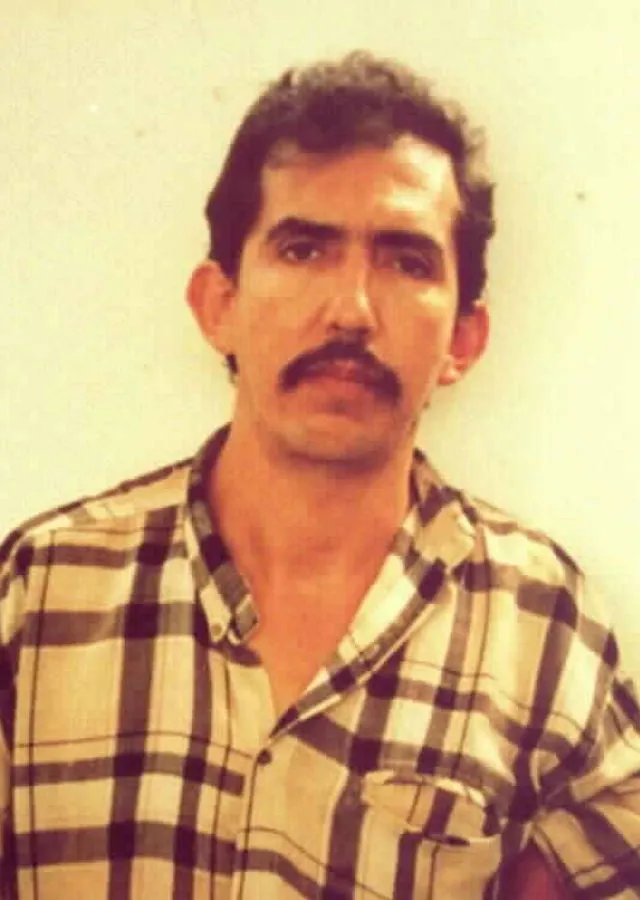
Police record photographs of Luis Alfredo Garavito from 1999, side and front views (cropped).
Policía Nacional de Colombia dle souborové evidence / La FM / © All rights reserved / lafm.com.co
About this image
- Original title
- luis-garavito-policejni-dvojzaber-1999.jpg
- Author
- Policía Nacional de Colombia dle souborové evidence / La FM
- Source
- lafm.com.co
- Licence
- © All rights reserved
- Changes
- resized, converted to AVIF and WebP, metadata removed
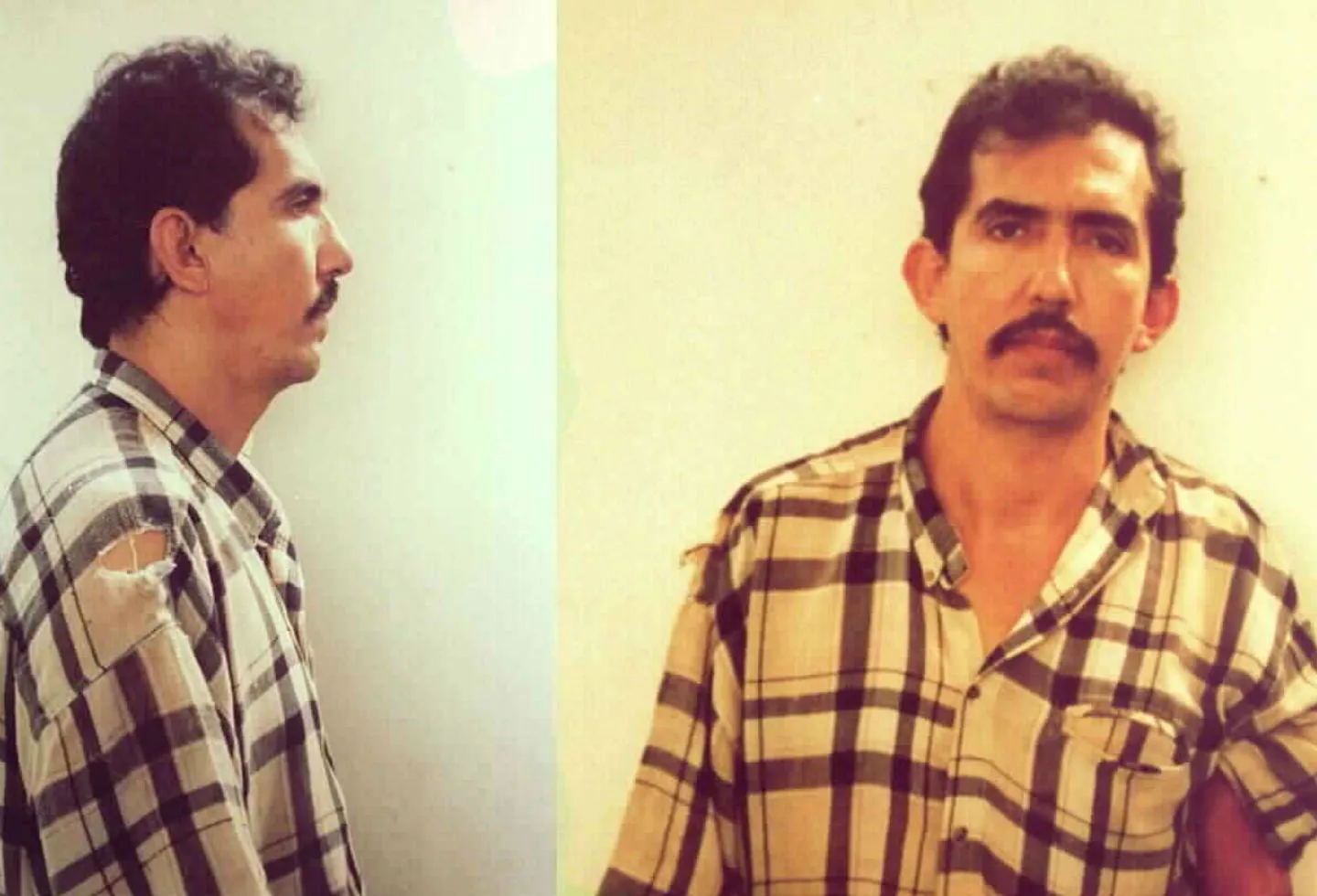
Police record photographs of Luis Alfredo Garavito from 1999, side and front views.
Policía Nacional de Colombia dle souborové evidence / La FM / © All rights reserved / lafm.com.co
About this image
- Original title
- luis-garavito-policejni-portret-postava.png
- Author
- Policía Nacional de Colombia dle záznamu Wikimedia Commons
- Source
- commons.wikimedia.org
- Licence
- © All rights reserved
- Changes
- resized, converted to AVIF and WebP, metadata removed
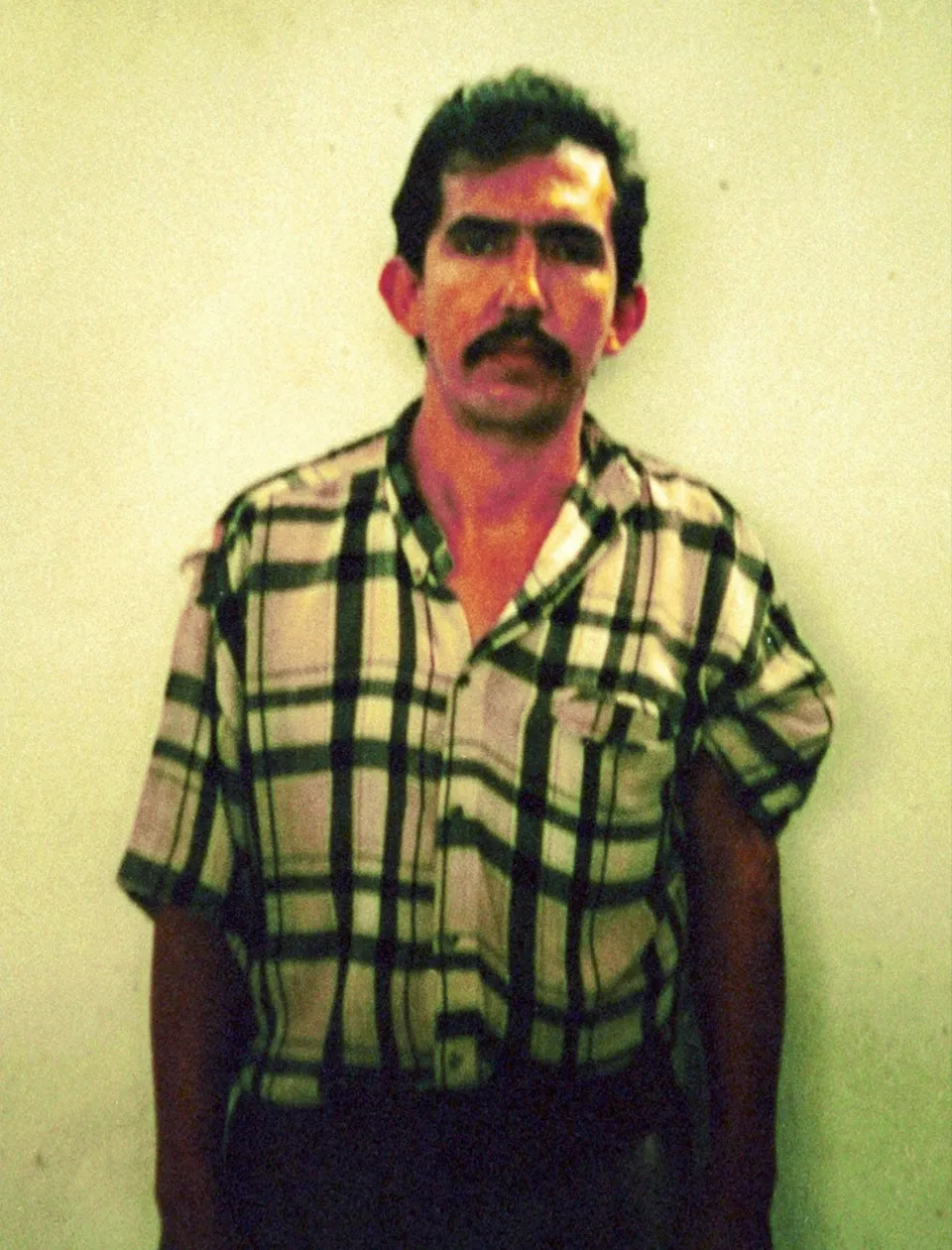
Luis Alfredo Garavito in a wider shot of a police record photograph.
Policía Nacional de Colombia dle záznamu Wikimedia Commons / © All rights reserved / commons.wikimedia.org
About this image
- Original title
- luis-garavito-valledupar-2011.jpg
- Author
- Colprensa / Semana
- Source
- semana.com
- Licence
- © All rights reserved
- Changes
- resized, converted to AVIF and WebP, metadata removed
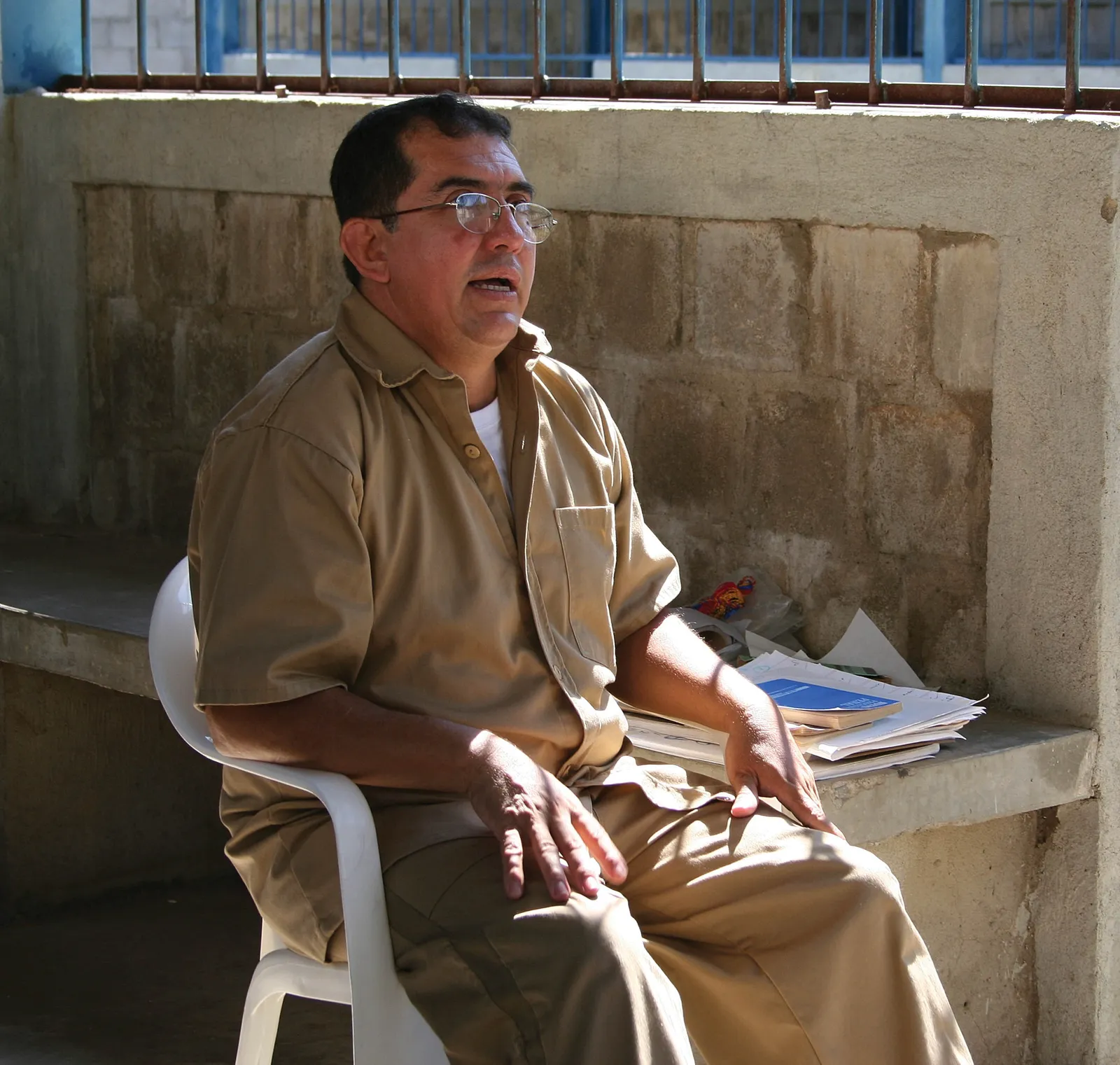
Luis Alfredo Garavito in prison in 2011.
Colprensa / Semana / © All rights reserved / semana.com
About this image
- Original title
- luis-garavito-rozhovor-detail-v-brylich.jpg
- Author
- Canal 1, archivní záběr
- Source
- canal1.com.co
- Licence
- © All rights reserved
- Changes
- resized, converted to AVIF and WebP, metadata removed
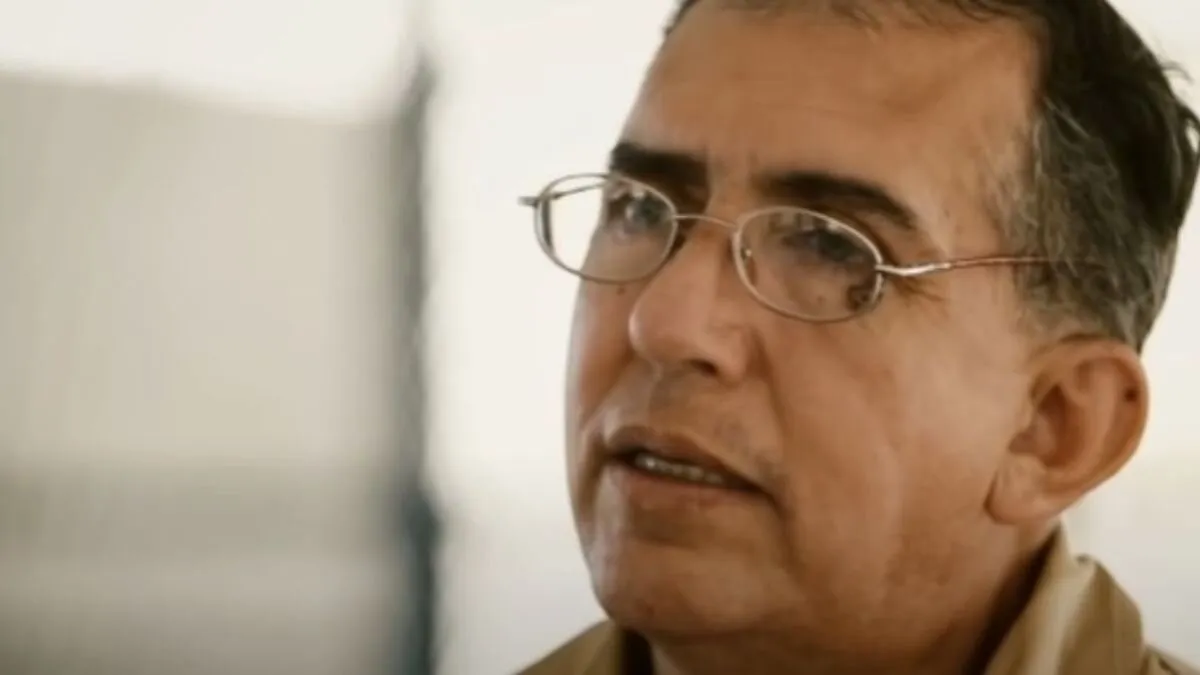
Luis Alfredo Garavito in archive footage published by the Colombian broadcaster Canal 1.
Canal 1, archivní záběr / © All rights reserved / canal1.com.co
About this image
- Original title
- luis-garavito-rozhovor-za-mrizemi.jpg
- Author
- Pulzo, reprodukce archivního rozhovoru
- Source
- pulzo.com
- Licence
- © All rights reserved
- Changes
- resized, converted to AVIF and WebP, metadata removed
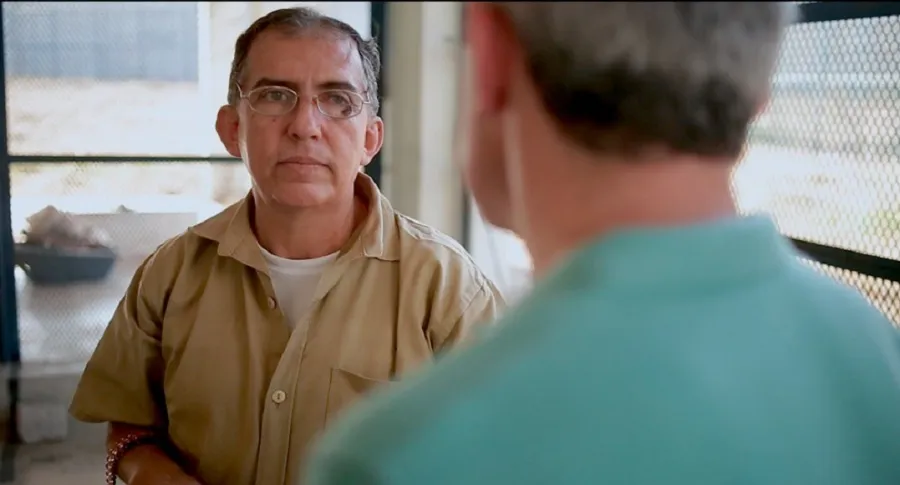
Luis Alfredo Garavito during a prison interview, in archive footage.
Pulzo, reprodukce archivního rozhovoru / © All rights reserved / pulzo.com
About this image
- Original title
- luis-garavito-rozhovor-testigo-directo.jpg
- Author
- Testigo Directo / El País Colombia
- Source
- elpais.com.co
- Licence
- © All rights reserved
- Changes
- resized, converted to AVIF and WebP, metadata removed
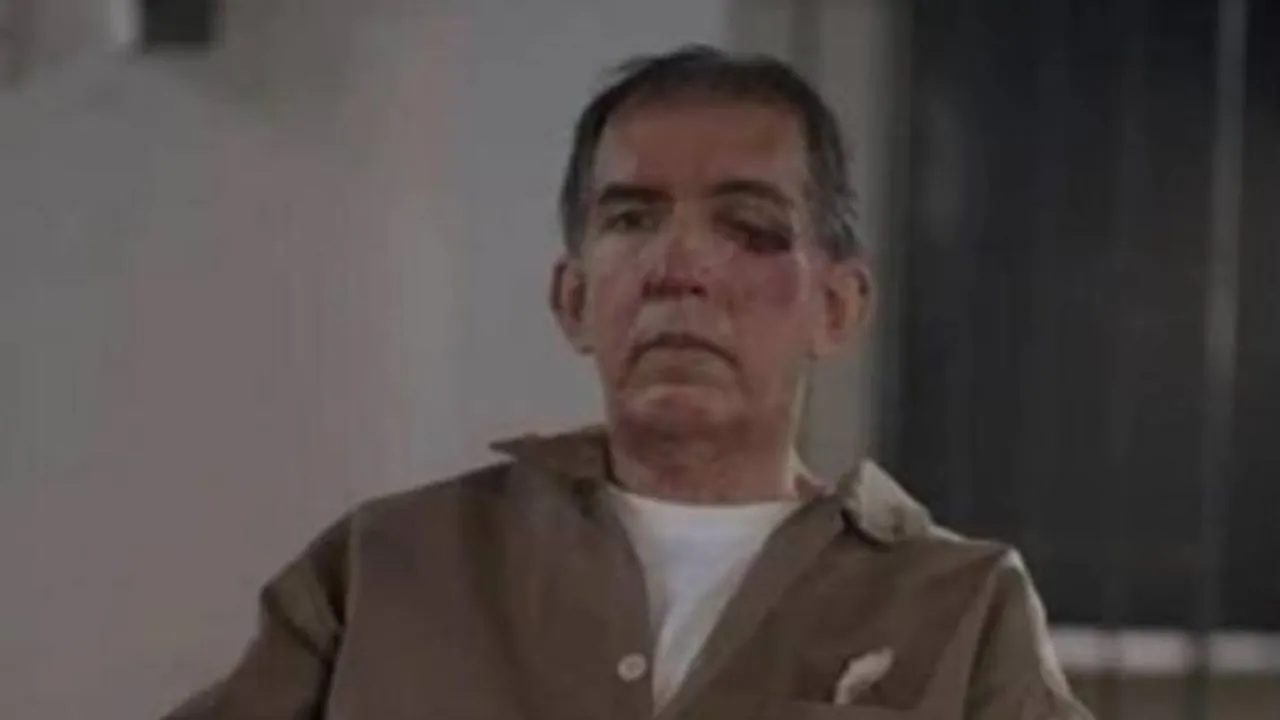
Luis Alfredo Garavito in footage from a prison interview for Testigo Directo.
Testigo Directo / El País Colombia / © All rights reserved / elpais.com.co
About this image
- Original title
- luis-garavito-fotografie-s-novinarem.jpg
- Author
- La Opinión / archiv k projektu Tras la sombra de Garavito
- Source
- laopinion.co
- Licence
- © All rights reserved
- Changes
- resized, converted to AVIF and WebP, metadata removed
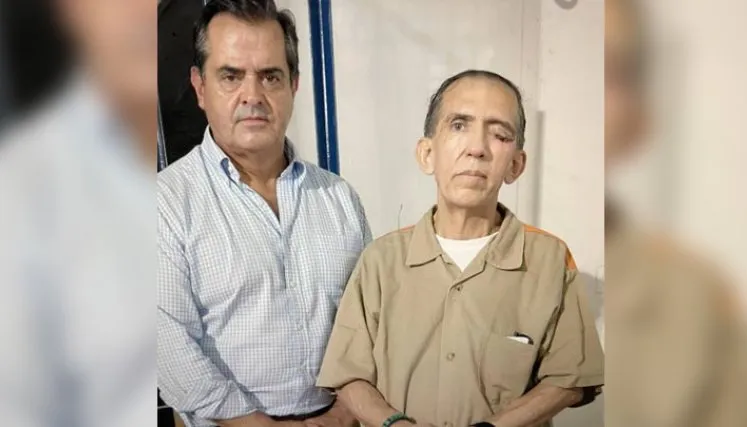
Luis Alfredo Garavito in an archive photograph published together with an interview in La Opinión.
La Opinión / archiv k projektu Tras la sombra de Garavito / © All rights reserved / laopinion.co
14 / 16 / Open questions
What is still missing
- How many children he actually killed and when he began: 1992 according to the courts and his own statement, 1990 according to El País, from the 1980s according to some later texts.
- A full list of the 77 sentences with the victims’ names is not publicly available. The judgments of the courts in Tunja, Pereira, Villavicencio, Florencia and Soacha could not be loaded.
- How the reopening of Nelson Bonilla Garzón’s case before the Corte Suprema ended and whether other people convicted of his crimes were exonerated.
- Whether the Ecuadorian court handed down a judgment; the Corte Suprema file is silent on this.
- Differences between sources: the date of the arrest (21, 22 or 23 Apr 1999), the date of the confession, the age of the Pereira twins (10 or 11) and the date of their disappearance, the age of Johan Orlando Muñoz Abril (13 or 14), the number of departments (11, 13 or more than 14).
- The autopsy result, whether the cremation took place and where the remains are kept.
15 / 16 / Citations
Sources
A number in square brackets next to a claim refers to an item in this list. A claim without a number has no source assigned yet. Details may vary between sources; disputed and theoretical items are marked.
75Sources in total
- Primary2
- Secondary2
- Media71
Checked: 17 Nov 2026. Research in one round: the full texts of two court decisions (Corte Suprema 2012, Corte Constitucional T-659/05), the contemporary archive of El Tiempo and Semana from 1999 to 2004, and Colombian, Ecuadorian and international reporting. Details marked as fact have at least two sources; several El Tiempo articles count as one source, as do republished agency reports. Details from a single source are marked in the text with “only … reports” or left out. Pages the research could not fully load (BBC 1999, Emol 2003, Crónica del Quindío 2011, Caracol Radio 2020) are not among the sources; Wikipedia served only as a guide. Code CO after the country where he committed most of his crimes. The victims are children, so the profile gives no details of how they were treated. Before publication, check: a second independent source for the names of the twins and the boy from Pereira from 1997 (currently only the El Tiempo archive and the Crónica del Quindío standfirst, hence no names), the full list of judgments from the Fiscalía, the outcome of the reopening of Nelson Bonilla Garzón’s case and whether the cremation took place.
- [1]Corte Suprema de Justicia, Sala de Casación Penal (M. P. José Leonidas Bustos Martínez, 23 May 2012), Proceso nº 36997, concepto de extradición. cortesuprema.gov.co / cited 13×primary
- [2]Corte Constitucional (M. P. Clara Inés Vargas Hernández, 23 Jun 2005), full text from the DMS Jurídica case-law collection, Sentencia T-659/05. dmsjuridica.com / cited 7×primary
- [3]Open Library (Library of Congress record, LCCN 2002497735), El Gran fracaso de la fiscalía. openlibrary.org / cited 1×secondary
- [4]Semana (28 Nov 1999), LA BESTIA. semana.com / cited 15×media
- [5]Semana (12 Dec 1999), LA CONFESION. semana.com / cited 15×media
- [6]Semana (31 Oct 2021), La historia de ‘la Bestia’ Garavito, el hombre que el Inpec pidió dejar en libertad. semana.com / cited 5×media
- [7]Semana (12 Oct 2023), Garavito tenía un oscuro plan para morir al momento de ser capturado. semana.com / cited 3×media
- [8]Semana (25 Oct 2018), Garavito está a punto de cumplir su condena. semana.com / cited 3×media
16 / 16 / Revision history
Revision history
Every edit to this page is logged. Corrections sent in by readers are applied only after the editors check them against sources.
- Published
- Updated
- Edits
- 1
- Page published