01
Content warningReal violent crimes; victims are named. Help: findahelpline.com. More
This page describes real violent crimes and names the victims. Victims come first; we leave out details that serve only sensationalism. Help: free helplines in your country at findahelpline.com; in an emergency call 112 (EU) or 911 (US).
John Wayne Gacy
born 17 Mar 1942, Chicago, Illinois
A building contractor from suburban Chicago who murdered 33 young men and boys in his house between January 1972 and December 1978. He lured them with work, money or marijuana, handcuffed them and strangled them. He buried most of the bodies in the crawl space under his house and threw the last four into a river. As early as 1968 he had been convicted in Iowa of sexually assaulting a boy. He was exposed by the disappearance of fifteen-year-old Robert Piest on 11 Dec 1978. In March 1980 a jury found him guilty of all 33 murders, and he was executed on 10 May 1994. Five victims still have no name.
- 33
- murders of which the jury found him guilty on 12 Mar 1980● Fact
- 12
- death sentences, natural life for the remaining 21 murders● Fact
- 29
- bodies on his property, another 4 in rivers● Fact
- 5
- victims remain without a name (as of 2021)● Fact
6Fact
9Disputed
2Theory
97 of 97claims have a source
58sources, 3 of them primary
02 / 16 / Timeline
From birth to DNA identifications
Events: 63 / 1942–2025
- 01
Life
1942–66 - 02
Capture, trial, execution
1968 - 03
Crimes
1968 - 04
Capture, trial, execution
1968–71 - 05
Life
1971 - 06
Crimes
1972 - 07
Capture, trial, execution
1972 - 08
Life
1972 - 09
Crimes
1974–75 - 10
Life
1976 - 11
Crimes
1976–78 - 12
Life
1978 - 13
Crimes
1978 - 14
Capture, trial, execution
1978–25
03 / 16 / Victims first
Named victims
Named victims: 33 / Survivors: 8
The list contains the 33 victims for whose murder Gacy was convicted in 1980. He killed all of them in his house. The dates are dates of disappearance; where two sources do not agree, we give only the month, the year or the period of discovery (December 1978 to March 1979). The age is left out where sources disagree or only one gives it (Alexander 20 or 21, Nelson, Winch 16 or 18, Bowman). The age of Butkovich differs (17 or 18), as do those of McCoy (15 or 16) and Bundy (18 or 19); we give the prevailing figure. The NYT in 1979 gives Johnston’s disappearance as 8 Jun 1976, the others 6 Aug 1976; for Parker and Marino both 24 and 25 Oct 1976 are given. Two victims have a name documented by only one source (Oxygen), so we do not give it. Five victims remain unidentified.
Showing 12 of 33
- Timothy McCoyhouse on W. Summerdale Avenue, Norwood Park Township, crawl space (body No. 9), Norwood Park Township, Cook County3 Jan 1972age 15
- John Butkovichhouse on W. Summerdale Avenue, Norwood Park Township, under the garage, Norwood Park Township, Cook County31 Jul 1975age 18
- Darrell Samsonhouse on W. Summerdale Avenue, Norwood Park Township, under the dining room, Norwood Park Township, Cook County6 Apr 1976age 18
- Randall Reffetthouse on W. Summerdale Avenue, Norwood Park Township, Norwood Park Township, Cook Countyfound 1978-1979age 15
- Samuel Stapletonhouse on W. Summerdale Avenue, Norwood Park Township, Norwood Park Township, Cook Countyfound 1978-1979age 14
- Michael Bonninhouse on W. Summerdale Avenue, Norwood Park Township, crawl space, Norwood Park Township, Cook County3 Jun 1976age 17
- William Carrollhouse on W. Summerdale Avenue, Norwood Park Township, crawl space, Norwood Park Township, Cook County13 Jun 1976age 16
- Rick Johnstonhouse on W. Summerdale Avenue, Norwood Park Township, crawl space, Norwood Park Township, Cook County6 Aug 1976age 17
- James Byron Haakensonhouse on W. Summerdale Avenue, Norwood Park Township, crawl space (body No. 24), Norwood Park Township, Cook CountyAugust 1976age 16
- Kenneth Parkerhouse on W. Summerdale Avenue, Norwood Park Township, crawl space (body No. 15), Norwood Park Township, Cook County25 Oct 1976age 16
- Michael Marinohouse on W. Summerdale Avenue, Norwood Park Township, crawl space (body No. 14), Norwood Park Township, Cook County25 Oct 1976age 14
- William George Bundyhouse on W. Summerdale Avenue, Norwood Park Township, crawl space (body No. 19), Norwood Park Township, Cook CountyOctober 1976age 19
By location
Norwood Park Township, Cook County29
rivers (Des Plaines, Illinois)4
Victim profile
12 and under0
13–1711
18–2411
25 and over0
Women and girls: 0 / Men and boys: 33 (of 33 named)
Survivors
- Donald Vorheesa teenage boy from Waterloo, Iowa, over whom Gacy was convicted in 1968. Gacy hired a young man to beat him up. The name follows the 1984 decision (elsewhere Voorhees); Crime+Investigation gives other names (Mark Miller), so this is a disputed point
- Other assaults in Iowaa schoolmate and a KFC employee whom Gacy assaulted according to the 1984 decision; only this one source gives their names
- Young man from Chicago (1971)on 12 Feb 1971 he accused Gacy of attempting to force him into sex at a bus station; the charge was dropped
- Young man from Northbrook (1972)on 22 Jun 1972 Gacy impersonated a police officer and forced him into sex
- Tony Antonucci15; in July 1975 Gacy handcuffed him in his house, but he freed himself and put the handcuffs on Gacy. He later testified in court
- Robert Donnelly19; on the night of 30 to 31 Dec 1977 abducted at gunpoint, tortured and raped, then released. Police did not prosecute Gacy
- Jeffrey Rignall26; in March 1978 drugged with chloroform, raped and dumped in Lincoln Park. He tracked down Gacy’s car and house himself. He wrote the book 29 Below
- Young man hit with a hammeraccording to the 1984 decision, Gacy hit him from behind with a hammer in the garage; only this source gives his name
Unconfirmed
Cook County Sheriff Tom Dart considers it possible that Gacy also killed outside Illinois on business trips, and entered his DNA into the CODIS database; prosecutor Kunkle does not believe in further victims. Gacy claimed he threw five bodies into the river; four were found. According to UPI, he once spoke of 45 victims. The disappearance of a nine-year-old boy in January 1976, over which police watched his house, was not linked to him.
04 / 16 / Offender’s pattern
What recurred
Gacy left no messages. His pattern consists of a job offer, the handcuff trick and the rope trick, graves under his own house and a respected public role. Each item is marked as a documented fact, a disputed point or a theory.
Traits: 8
02
Handcuff trick
● Fact03
Rope trick
● FactHe tightened a rope around the victim’s neck by twisting it. In his statement he demonstrated this to officers with a rosary. Medical examiners found a ligature around the neck of six bodies and a foreign object in the mouth and throat of thirteen. [1] [3]
The numbers of ligatures and objects in the mouth are given in the 1984 decision.
04
The stabbed first victim
● Fact05
Graves under the house
● Fact06
Bodies in the river
◐ Disputed07
Jack
○ Theory08
Public face
● Fact05 / 16 / Modus operandi
How the behaviour evolved
Phases: 3
1942-1971
Before the murders
Childhood in Chicago with a violent father, a career in Iowa and the first conviction for sexually assaulting a boy.
- 1942: born in Chicago
- 1964 to 1966: Springfield, first marriage
- 1966 to 1968: Waterloo, KFC restaurants, Jaycees
- 1968: sentenced to ten years in Iowa
- 1970: parole
- 1971: house on Summerdale Avenue
1972-1978 / Norwood Park Township
Murders
In less than seven years he killed 33 young men and boys in his house. He committed most of the murders after his divorce in March 1976.
- 1972: first murder
- 1975: Butkovich, Antonucci escapes
- 1976: second divorce, series of murders
- 1977: attack on Donnelly
- 1978: attack on Rignall, bodies into the river
- 11 Dec 1978: disappearance of Piest
From 11 Dec 1978
Capture, trial, execution
After Robert Piest disappeared, Des Plaines police followed him for ten days. Then he confessed and the search for bodies in the house began.
- 21 Dec 1978: arrest
- 12 Mar 1980: verdict
- 13 Mar 1980: death sentence
- 10 May 1994: execution
- 2011 to 2021: DNA identifications
06 / 16 / Crime scenes
Where and in what order
Places: 7
map of crime scenes (points by date and place) / add from coordinates
- 01Chicago1942-1964
- 02Springfield, Illinois1964-1966
- 03Waterloo, Iowa1966-1968
- 04Iowa State Reformatory, Anamosa1968-1970
- 05Norwood Park Township near Chicago1971-1978
- 06Menard Correctional Center, Chester1980-1994
- 07Stateville Correctional Center1994
07 / 16 / Investigation
How he was caught
Steps: 9
01 / 1975-1976
Unlinked disappearances
Chicago police looked into the disappearances of Gacy’s employees Butkovich and Godzik. They found nothing and did not link the disappearances. [4] [5]
02 / 1976
Surveillance without result
Chicago police watched his house for two weeks over a missing nine-year-old boy. They found nothing, and the case was never linked to Gacy. [5] [37]
03 / 1977-1978
Survivors not heard
Robert Donnelly and Jeffrey Rignall reported the attacks. In Donnelly’s case police accepted Gacy’s version; Rignall tracked down the attacker himself. [5] [38]
04 / 11 Dec 1978
Piest disappears
Elizabeth Piest reported her son missing. Kozenczak did not consider him a runaway and learned at the pharmacy that the boy had gone to see Gacy. [1] [26]
05 / 13 Dec 1978
First search warrant
A background check revealed the conviction in Iowa. In the house police seized dozens of items, among them a receipt from the pharmacy and John Szyc’s ring. [1] [38]
06 / 13 to 21 Dec 1978
Surveillance
Two teams of officers followed him around the clock. Gacy talked to them and invited them for meals. [1] [23] [26]
07 / 21 Dec 1978
Second warrant
The application rested on the receipt and the smell of decomposition noticed by Robert Schultz. During the search, remains were found under the house. [1] [23]
What went wrong
- Parole board not informedThe Iowa parole board never learned of the February 1971 arrest (NYT, Biography.com).
- Unlinked disappearancesIn 1975 and 1976 Chicago police did not link the disappearances of two of Gacy’s employees, even though John Butkovich’s father called more than a hundred times.
- Survivors dismissedIn Robert Donnelly’s case police believed the version of consensual sex; Jeffrey Rignall tracked down the attacker himself, and the case ended as a misdemeanour.
- PrejudiceMore recent sources (Oxygen, TheWrap) state that police treated the disappearances of young men, some of them gay, as runaways. This is the authors’ interpretation.
- Lost jawbonesAccording to ABC7, in 2009 the medical examiner buried the preserved jawbones of the unidentified victims, and the sheriff then had to track them down. Only this source reports it.
- Possible misidentificationA private DNA test in 2012 cast doubt on the identity of body No. 14 (Michael Marino). The authorities did not change the identification.
Impact on forensics and law
- Record number of convictionsIn 1980 these were the most murders for which one person had been convicted in the US (UPI, NYT). Later overviews rank him behind other offenders in number of victims.
- DNA and old casesThe Cook County Sheriff’s effort since 2011 led to three identifications of victims, solved at least 11 unrelated cases and found several missing persons alive.
- Law named after the caseNo specific law or regulatory change arising from this case could be documented.
08 / 16 / People in the case
Witnesses, investigators, relatives
People: 16
Investigator
Joseph R. Kozenczak
Chief of detectives of the Des Plaines police. He did not consider Piest a runaway and signed the applications for the search warrants. He died in 2016.
Investigator
Michael Albrecht
Des Plaines officer who followed Gacy and took his first statement. Later mayor of Des Plaines.
Investigator
David Hachmeister
Albrecht’s partner during the surveillance. The decision spells the name Hackmeister.
Investigator
Robert Schultz
According to his testimony, he smelled decomposition during a visit to the house. The application for the second search warrant rested on this.
Prosecutor
William J. Kunkle Jr.
Lead prosecutor at the 1980 trial. He witnessed the execution.
Prosecutor
Terry Sullivan
Member of the prosecution team, author of the book Killer Clown.
Accomplices: the court found none. Theories about the involvement of others are in the Myths and disputed points section.
09 / 16 / Trial and sentence
From Iowa to execution
Proceedings: 8
1968 / Black Hawk County, Iowa
Sodomy with a teenage boy
He pleaded guilty. Before sentencing he underwent a psychiatric evaluation. He was paroled after 18 months. [1] [5] [37]
10 years in prison
6 Feb to 13 Mar 1980 / Cook County Circuit Court, Chicago
Trial for 33 murders
The jury from Winnebago County rejected the insanity defence. Defence experts spoke of a psychosis, prosecution experts of a personality disorder. The death sentence was imposed only for the 12 murders committed after Illinois’s new death penalty statute took effect. [1] [3] [16] [37]
12 death sentences, 21 natural life
6 Jun 1984 / Illinois Supreme Court
Direct appeal
The court rejected the challenges to the searches, the jury selection and the assessment of sanity. Justice Simon dissented on the death sentence. [1] [16]
Judgment affirmed
4 Mar 1985 / US Supreme Court
Petition for certiorari
The court declined to hear the case. [3] [37]
Denied
29 Sep 1988 / Illinois Supreme Court
Post-conviction proceedings
Gacy claimed ineffective assistance of counsel. The court rejected the claims. [2] [17]
Denied
1992-1993 / federal courts
Habeas corpus
The district court in Chicago denied the petition, and the 7th Circuit Court of Appeals affirmed the denial in April 1993. In October 1993 the US Supreme Court declined the case for the third time. [3] [18]
Denied
1982-1983 / civil courts
Lawsuits by the families
The families of John Mowery, Michael Marino and John Butkovich won damages in the millions of dollars. Only UPI reports it. [14] [15]
Damages awarded
10 May 1994 / Stateville
Execution
The courts rejected his last appeals and requests for a stay. Executed by lethal injection. [6] [8] [9] [20]
Executed
Execution
The execution at Stateville prison began after midnight on 10 May 1994. It was delayed by about ten minutes because a tube carrying one of the drugs clogged. He was pronounced dead at 0:58. According to the corrections director, he said that his death would not make up for the loss of the other lives and that the state was murdering him.
No grave
The body was cremated after the autopsy.
House
The house on Summerdale Avenue was demolished in 1979. A different house stands on the lot today.
Unknown names
Five victims remain without a name. The Cook County Sheriff continues to compare their DNA with samples from relatives of missing persons.
10 / 16 / Psychology and myths
What is documented and what is not
Items: 9 / each labelled Fact, Disputed or Theory
He killed in a clown costume
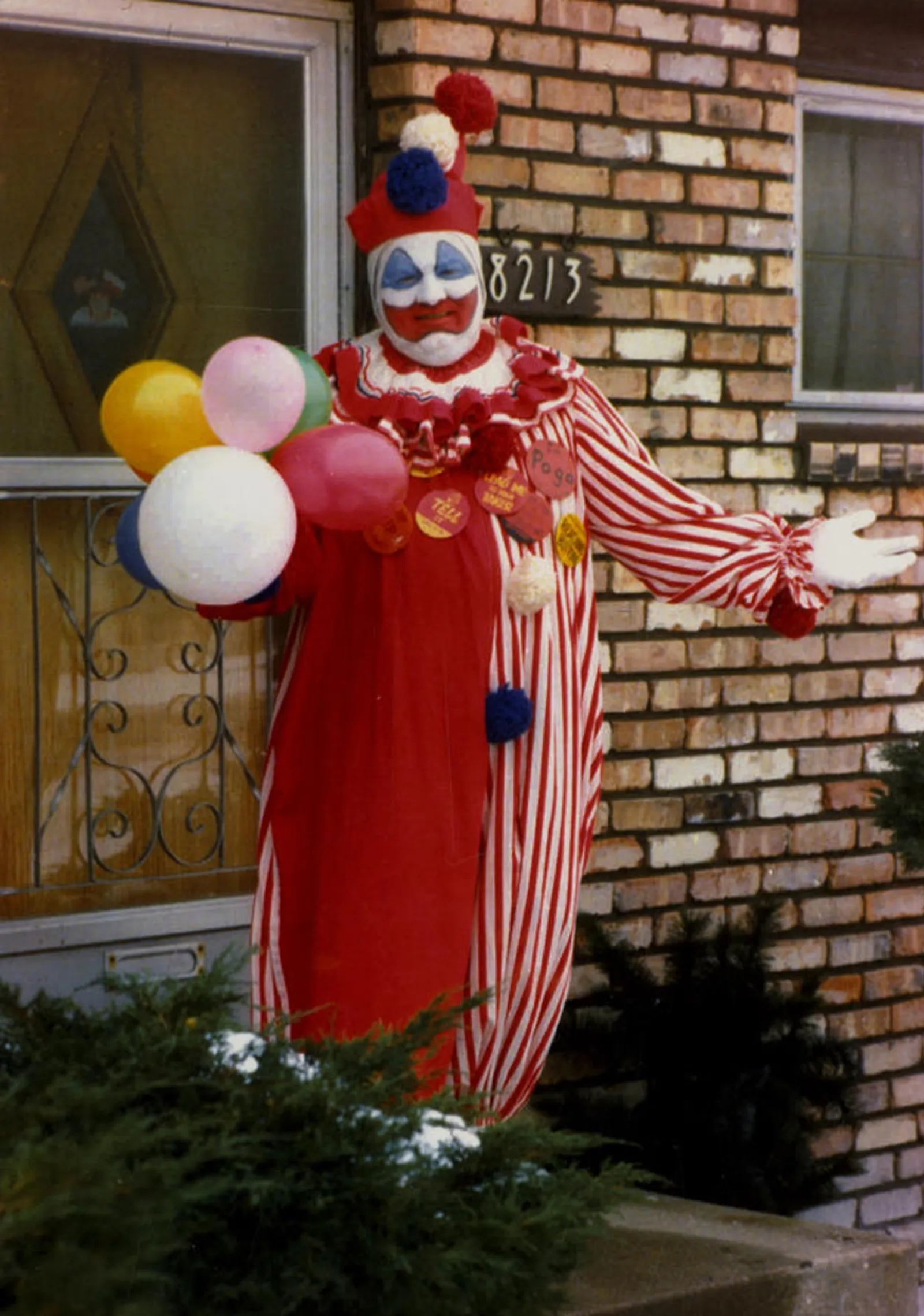
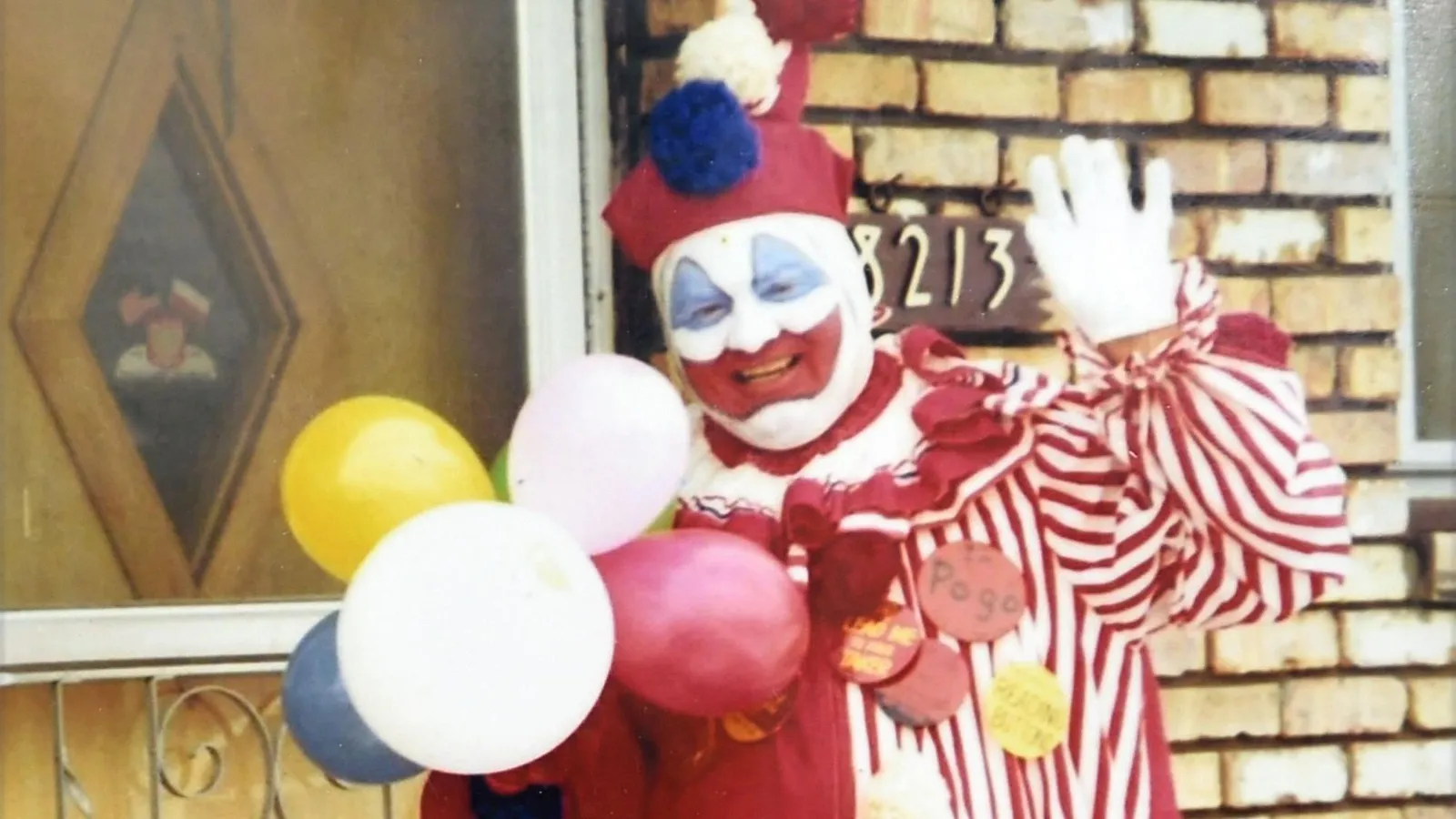
◐ DisputedSources document performances as the clown Pogo and Patches at children’s and charity events, not murders in costume. Such scenes in the 2025 series are dramatisation. [38] [43] [47]
Last words
◐ DisputedContemporary AP, UPI and LA Times reports quote only his remark that the state was murdering him. A cruder version of his last words is not documented in contemporary reports. According to Biography.com, prosecutor Kunkle said he did not speak at the end. [8] [9] [20] [38]
The smell and the second search warrant
◐ DisputedIn 1984 the court accepted Robert Schultz’s testimony about the smell of decomposition. A 2021 podcast reported on by the Chicago Sun-Times disputes both the smell and where the receipt was found: according to it, technician Karl Humbert smelled nothing and the receipt was lying in rubbish on the pavement. This is a disputed point; the judgment was not called into question by it. [1] [27]
Piest’s mother put the receipt in the jacket
◐ DisputedThe receipt belonged to Kim Byers, who had borrowed Piest’s jacket. Oxygen wrongly attributes it to his mother and sister. [1] [41] [44]
He had accomplices
○ TheoryThe 2021 Peacock documentary suggests the involvement of others. Gacy himself accused two of his employees. Prosecutor Sullivan considered it possible, but without evidence. The court found no accomplice. [22] [27]
The worst serial killer in the US
◐ DisputedThe claim held true for the number of convictions in 1980. Later overviews list offenders with more victims. [16] [17] [43]
How many murders he confessed to
◐ DisputedAccording to the judgment he confessed about 30 murders to police, according to the NYT 32, according to AP 33. UPI states that he once claimed 45. On death row he recanted his confession. [1] [4] [5] [8] [18]
Where the bodies lay
◐ DisputedAll sources agree on 29 bodies on the property and 4 in the river. The breakdown differs: the 1984 decision at one point also mentions five bodies from the Des Plaines River, the appeals court 28 under the house and 1 under the driveway, AP 27 under the house and 2 elsewhere on the property, FOX 32 and AP in 2021 26 under the house and 3 elsewhere. In January 1979 the contemporary press reported 27 bodies from the house and garage. The difference most likely depends on whether the bodies under the garage and the driveway are counted as part of the crawl space. [1] [3] [8] [30] [49] [52] [58]
Piest’s river
◐ DisputedAccording to the 1984 decision and Oxygen, Robert Piest’s body was found in the Illinois River; according to UPI, Harper's Bazaar and Fox News, in the Des Plaines River. [1] [40] [17] [18] [44] [45]
11 / 16 / Comparison
Related cases
1974-1978 / USA
Ted Bundy
30 confessed murders / Executed 1989
In common
Both seemed trustworthy, lured victims with a pretext and were executed.
Difference
Bundy murdered young women in several states. Gacy killed young men and boys in his house and buried most of the bodies under it.
1978-1990 / USSR
Andrei Chikatilo
52 proven victims / Executed 1994
In common
A long series of young victims and execution in 1994.
Difference
Chikatilo murdered in the USSR from 1978 to 1990, Gacy in the US and in a single house near Chicago.
1974-1991 / USA
Dennis Rader (BTK)
10 victims / Life sentence
In common
A series of murders in the US that began in the 1970s.
Difference
Rader received life sentences, Gacy was executed.
12 / 16 / Books and films
Treatments of the case
The label is an editorial rating: Recommended means a balanced treatment with verifiable sources; With caution means the work gives the perpetrator a platform or opts for a simplified version.
Book / 1979Source
29 Below
Memoir of survivor Jeffrey Rignall.
Book / Source
Buried Dreams
Tim Cahill with Russ Ewing, based on recordings of a defence investigator.
Book / Source
Killer Clown
Prosecutor Terry Sullivan.
Book / Source
The Chicago Killer
Investigator Joseph Kozenczak with Karen Kozenczak.
13 / 16 Photos and documents
Photos and documents12
Photos and documents from readers. We publish them after review; you see your own uploads straight away, marked Pending review.
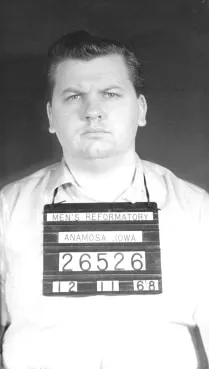
About this image
- Original title
- john-wayne-gacy-anamose-vezenska-dvojice-vyrez.jpg
- Author
- Anamosa State Penitentiary Museum and History Archive
- Source
- asphistory.com
- Licence
- © All rights reserved
- Changes
- cropped, resized, converted to AVIF and WebP, metadata removed
Prison double portrait of John Wayne Gacy from the Anamosa archive (cropped).
Anamosa State Penitentiary Museum and History Archive / © All rights reserved / asphistory.com
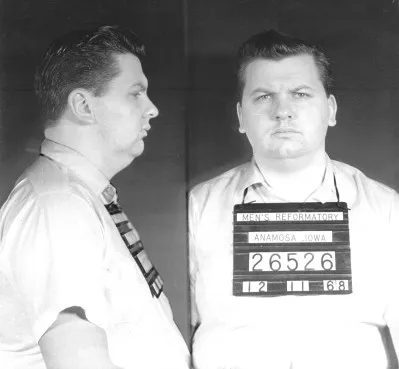
About this image
- Original title
- john-wayne-gacy-anamose-vezenska-dvojice.jpg
- Author
- Anamosa State Penitentiary Museum and History Archive
- Source
- asphistory.com
- Licence
- © All rights reserved
- Changes
- resized, converted to AVIF and WebP, metadata removed
Prison double portrait of John Wayne Gacy from the Anamosa archive.
Anamosa State Penitentiary Museum and History Archive / © All rights reserved / asphistory.com
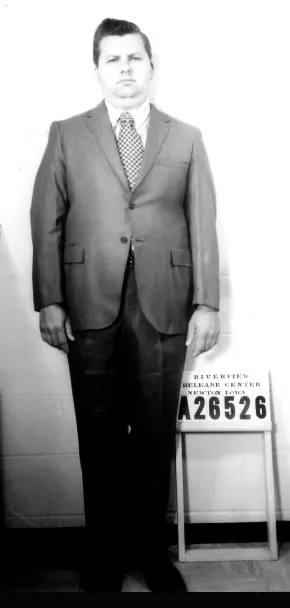
About this image
- Original title
- john-wayne-gacy-anamosa-celopostavovy-zaber.jpg
- Author
- Anamosa State Penitentiary Museum and History Archive
- Source
- asphistory.com
- Licence
- © All rights reserved
- Changes
- resized, converted to AVIF and WebP, metadata removed
Full-length photograph of John Wayne Gacy from the Anamosa archive.
Anamosa State Penitentiary Museum and History Archive / © All rights reserved / asphistory.com
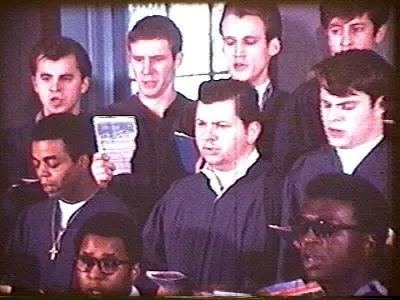
About this image
- Original title
- john-wayne-gacy-anamosa-sbor-1969.jpg
- Author
- Anamosa State Penitentiary Museum and History Archive
- Source
- asphistory.com
- Licence
- © All rights reserved
- Changes
- resized, converted to AVIF and WebP, metadata removed
John Wayne Gacy in the choir at Anamosa in 1969.
Anamosa State Penitentiary Museum and History Archive / © All rights reserved / asphistory.com
About this image
- Original title
- john-wayne-gacy-anamosa-kuchar-1969.jpg
- Author
- WHO-TV / Anamosa State Penitentiary Museum and History Archive
- Source
- asphistory.com
- Licence
- © All rights reserved
- Changes
- resized, converted to AVIF and WebP, metadata removed
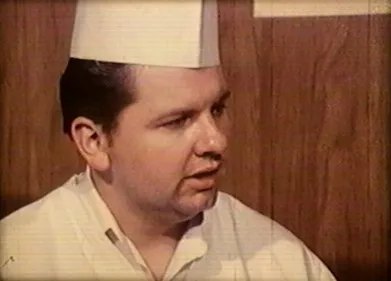
John Wayne Gacy during an interview with WHO-TV at Anamosa in 1969.
WHO-TV / Anamosa State Penitentiary Museum and History Archive / © All rights reserved / asphistory.com
About this image
- Original title
- john-wayne-gacy-anamosa-jmenovka-1969.jpg
- Author
- WHO-TV / Anamosa State Penitentiary Museum and History Archive
- Source
- asphistory.com
- Licence
- © All rights reserved
- Changes
- resized, converted to AVIF and WebP, metadata removed
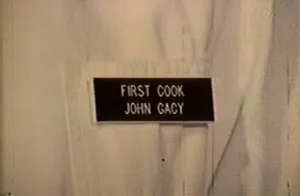
Close-up of the name tag from the interview with Gacy at Anamosa.
WHO-TV / Anamosa State Penitentiary Museum and History Archive / © All rights reserved / asphistory.com
About this image
- Original title
- john-wayne-gacy-pogo-na-verande-1976.jpg
- Author
- Martin Zielinski / The Atlanta Constitution / Wikimedia Commons
- Source
- commons.wikimedia.org
- Licence
- © All rights reserved
- Changes
- resized, converted to AVIF and WebP, metadata removed
John Wayne Gacy in the Pogo costume on a porch in 1976.
Martin Zielinski / The Atlanta Constitution / Wikimedia Commons / © All rights reserved / commons.wikimedia.org

About this image
- Original title
- john-wayne-gacy-pogo-s-balony-v-interieru.jpg
- Author
- Marty Zielinski / Peacock / El Comercio Perú
- Source
- elcomercio.pe
- Licence
- © All rights reserved
- Changes
- resized, converted to AVIF and WebP, metadata removed
John Wayne Gacy in the Pogo costume in another shot with balloons.
Marty Zielinski / Peacock / El Comercio Perú / © All rights reserved / elcomercio.pe
About this image
- Original title
- john-wayne-gacy-eskorta-v-des-plaines-1978.jpg
- Author
- IMAGO / ZUMA Wire / Kölner Stadt-Anzeiger
- Source
- ksta.de
- Licence
- © All rights reserved
- Changes
- resized, converted to AVIF and WebP, metadata removed
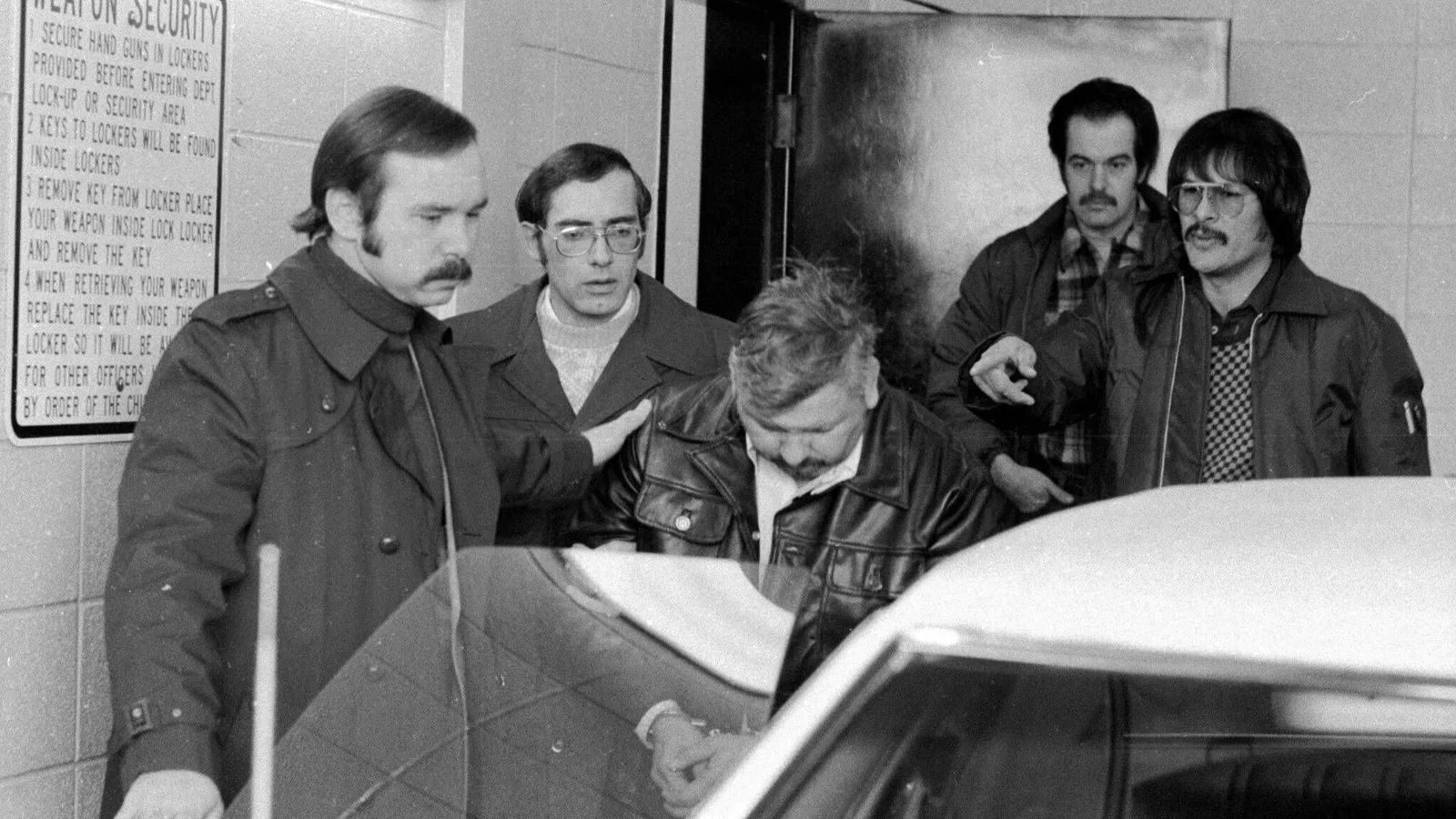
John Wayne Gacy under police escort in Des Plaines in 1978.
IMAGO / ZUMA Wire / Kölner Stadt-Anzeiger / © All rights reserved / ksta.de

About this image
- Original title
- john-wayne-gacy-walter-jacobson-rozhovor-1992.png
- Author
- CBS 2 Chicago (WBBM-TV)
- Source
- cbsnews.com
- Licence
- © All rights reserved
- Changes
- resized, converted to AVIF and WebP, metadata removed
John Wayne Gacy in a prison interview with Walter Jacobson in 1992.
CBS 2 Chicago (WBBM-TV) / © All rights reserved / cbsnews.com
About this image
- Original title
- john-wayne-gacy-pogo-v-kostymu-mava.jpg
- Author
- IMAGO / United Archives / Kölner Stadt-Anzeiger
- Source
- ksta.de
- Licence
- © All rights reserved
- Changes
- resized, converted to AVIF and WebP, metadata removed
Archive photograph of John Wayne Gacy in the Pogo costume.
IMAGO / United Archives / Kölner Stadt-Anzeiger / © All rights reserved / ksta.de
About this image
- Original title
- john-wayne-gacy-setkani-s-rosalynn-carter-1978.jpg
- Author
- Wikimedia Commons (reprodukce), původní autor nedoložen
- Source
- commons.wikimedia.org
- Licence
- © All rights reserved
- Changes
- resized, converted to AVIF and WebP, metadata removed
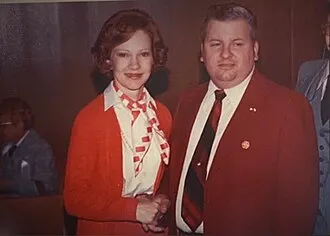
John Wayne Gacy and Rosalynn Carter at a meeting in Chicago in May 1978.
Wikimedia Commons (reprodukce), původní autor nedoložen / © All rights reserved / commons.wikimedia.org
14 / 16 / Open questions
What is still missing
- The identity of the five unidentified victims and the fate of the fifth body, which according to Gacy ended up in the river.
- Whether body No. 14 really is Michael Marino and body No. 15 Kenneth Parker.
- Whether he also killed outside Illinois on business trips. Sheriff Dart considers it possible and entered Gacy’s DNA into the CODIS database; prosecutor Kunkle does not assume further victims.
- Whether anyone else took part in the murders.
- Exact dates of the murders: sources give dates of disappearance, and for several victims only the year of discovery.
- Names of the Iowa victims from 1968: the 1984 decision gives Donald Vorhees and the attacker R. E. Schroeder, Crime+Investigation the names Mark Miller and Dwight Andersson.
- The official list of all 33 victims from the Cook County Sheriff was not available during research. The names of two victims are given only by Oxygen, so they appear in the profile by description.
15 / 16 / Citations
Sources
A number in square brackets next to a claim refers to an item in this list. A claim without a number has no source assigned yet. Details may vary between sources; disputed and theoretical items are marked.
58Sources in total
- Primary3
- Secondary4
- Media51
Checked: 17 Nov 2026. Research in two rounds, 58 sources read, including the full texts of three court decisions (1984, 1988, 1993); facts have at least two sources, information from a single source is marked in the text or left out. The English Wikipedia serves only as a guide. Not available: Cook County Sheriff press releases, Chicago Tribune, Washington Post. Before publication, check the sheriff’s official list of victims, the disappearance dates of victims with a single source and the names of the two victims given by description.
- [1]Supreme Court of Illinois (Justice Goldenhersh, 6 Jun 1984), The People of the State of Illinois, Appellee, v. John Wayne Gacy, Appellant (103 Ill. 2d 1). static.case.law / cited 39×primary
- [2]Supreme Court of Illinois (Justice Clark, 29 Sep 1988), People v. Gacy (125 Ill. 2d 117). static.case.law / cited 2×primary
- [3]U.S. Court of Appeals, 7th Circuit (Judge Easterbrook, 12 Apr 1993), Gacy v. Welborn (994 F.2d 305). static.case.law / cited 10×primary
- [4]The New York Times (27 Dec 1978), 4 More Bodies Found Under House Of Contractor, Bringing Total to 9. nytimes.com / cited 8×media
- [5]The New York Times (10 Jan 1979), Suspect in Mass Deaths Is Puzzle to All. nytimes.com / cited 18×media
- [6]The New York Times (11 May 1994), Gacy, Killer of 33, Is Put To Death as Appeals Fail. nytimes.com / cited 2×media
- [7]The New York Times (19 Jul 2017), John Wayne Gacy Victim Is Identified After Four Decades. nytimes.com / cited 2×media
- [8]Deseret News (AP, 10 May 1994), SERIAL KILLER EXECUTED BY INJECTION IN ILLINOIS. deseret.com / cited 5×media
16 / 16 / Revision history
Revision history
Every edit to this page is logged. Corrections sent in by readers are applied only after the editors check them against sources.
- Published
- Updated
- Edits
- 1
- Page published