01
Content warningReal violent crimes; victims are named. Help: findahelpline.com. More
This page describes real violent crimes and names the victims. Victims come first; we leave out details that serve only sensationalism. Help: free helplines in your country at findahelpline.com; in an emergency call 112 (EU) or 911 (US).
Dennis Rader
Dennis Lynn Rader, born 9 Mar 1945, Kansas
An alarm installer and later a municipal officer from Park City, Kansas, who killed 10 people in and around Wichita between 1974 and 1991: the four members of the Otero family and six women. He picked out his victims in advance, bound them and strangled most of them. He gave himself the name BTK (bind, torture, kill) and sent letters to the police and the media. After 25 years of silence he resurfaced in 2004. He was given away by a floppy disk he sent to a television station in February 2005 and by a DNA sample from his daughter. He was arrested on 25 February 2005, pleaded guilty to all 10 counts without a plea agreement on 27 June 2005, and in August 2005 received 10 consecutive life sentences.
- 10
- murdered between 1974 and 1991, convicted of all of them● Fact
- 31
- years passed from the first murder to the arrest● Fact
- 175
- years he must serve before he could apply for parole● Fact
- 1 326
- DNA samples taken from men during the investigation were burned by police in 2006● Fact
8Fact
5Disputed
3Theory
82 of 82claims have a source
53sources, 1 of them primary
02 / 16 / Timeline
From birth to new investigations
Events: 51 / 1945–2025
- 01
Life
1945–71 - 02
Crimes
1974 - 03
Capture, court, sentence
1974 - 04
Crimes
1974 - 05
Capture, court, sentence
1974 - 06
Crimes
1974 - 07
Capture, court, sentence
1974 - 08
Crimes
1977–78 - 09
Capture, court, sentence
1978 - 10
Crimes
1979 - 11
Capture, court, sentence
1979–84 - 12
Crimes
1985–86 - 13
Capture, court, sentence
1987 - 14
Crimes
1991 - 15
Life
1991 - 16
Crimes
2004 - 17
Capture, court, sentence
2004 - 18
Crimes
2004–05 - 19
Capture, court, sentence
2005 - 20
Crimes
2005 - 21
Capture, court, sentence
2005 - 22
Life
2005 - 23
Capture, court, sentence
2005–25 - 11 Sep
No charges
Capture, court, sentenceAccording to an AP report, District Attorney Mike Fisher said the evidence was insufficient to file charges. [32]
03 / 16 / Victims first
Named victims
Named victims: 10 / Survivors: 4
The list contains the 10 people murdered to whose murder Rader pleaded guilty in June 2005 and for which he was sentenced: the Otero family and six women. For some victims, age and date differ between sources: Vian is 24 or 26, Davis 62 or 63; one source places the Bright murder on 14 Apr 1974, and sources date the Davis murder to 13, 18 or 19 Jan 1991. We give the prevailing figure.
Showing 10 of 10
- Joseph Oterofamily house on Edgemoor Drive, northeast Wichita, Wichita15 Jan 1974age 38
- Julie Oterofamily house on Edgemoor Drive, northeast Wichita, Wichita15 Jan 1974age 34
- Josephine Oterofamily house on Edgemoor Drive, basement, Wichita15 Jan 1974age 11
- Joseph Otero IIfamily house on Edgemoor Drive, bedroom, Wichita15 Jan 1974age 9
- Kathryn Brighthouse on East 13th Street, Wichita, Wichita4 Apr 1974age 21
- Shirley Vianhouse on South Hydraulic, Wichita, Wichita17 Mar 1977age 24
- Nancy Foxflat in a duplex on South Pershing, Wichita, Wichita8 Dec 1977age 25
- Marine Hedgeher own house in Park City; body by a dirt road, Park City and surroundings27 Apr 1985age 53
- Vicki Wegerlefamily house in west Wichita, Wichita16 Sep 1986age 28
- Dolores Davisher own house near Park City; body under a bridge, Park City and surroundings19 Jan 1991age 63
By location
Park City and surroundings2
Wichita8
Victim profile
12 and under2
13–170
18–242
25 and over6
Women and girls: 8 / Men and boys: 2 (of 10 named)
Survivors
- Kevin Bright19; on 4 Apr 1974 bound in his sister’s house and shot twice in the head. He played dead and escaped, and was left with permanent nerve damage. ABC News gives three shots
- Steve Relford and siblingsthe three children of Shirley Vian, Steve was 5 or 6; on 17 Mar 1977 he locked them in the bathroom. According to investigators he meant to kill them, but the telephone interrupted him
- Brandon Wegerle2; on 16 Sep 1986 he was at home when his mother was murdered, and was unharmed
- Woman from 197963; on 28 Apr 1979 he waited for her in her house in Wichita, but she came home late. He then sent her a poem and the stolen items. Only one source gives her name, so we do not give it
Unconfirmed
In 2023 authorities in Osage County, Oklahoma, named him the prime suspect in the disappearance of sixteen-year-old Cynthia Dawn Kinney from Pawhuska (23 Jun 1976). Rader denies it; according to AP, the district attorney said in September 2023 that the evidence was insufficient to file charges; the outcome of any further investigation is not known. Suspicion in the murder of Shawna Garber in Missouri (1990) was dropped in March 2024, when the sheriff closed the case with another, deceased perpetrator. In January 1988 a man signing himself BTK sent a letter to the widow of Phillip Fager, whose family had been murdered in December 1987; Rader did not confess to these murders, and only the Wichita Eagle reports it. Biography.com writes that Sheriff Virden may have identified a woman from one of Rader’s drawings in September 2023; this is a single source.
04 / 16 / Offender’s pattern
What recurred
Rader did leave a signature: the name BTK, letters, poems and packages with his victims’ belongings. His pattern also includes long surveillance of the victim, a cut phone line, a bag of tools and repeated strangulation. Each item is marked as a documented fact, a disputed point or a theory.
Traits: 10
02
Cut phone line
● Fact03
Ruse
● Fact04
Bag of tools
● Fact05
Binding and repeated strangulation
● Fact06
Trophies
● Fact07
Letters and packages
● FactFrom 1974 to 1979 and again from 2004 to 2005 he sent the police and the media letters, poems and packages with details known only to the killer. After the Fox murder he called the dispatch centre himself. [37] [8] [24] [38]
The number of messages varies: the ABA Journal gives 19, the NYT 11 mailings in 2004 to 2005.
08
Bodies moved
● Fact09
Kathryn Bright’s wounds
◐ Disputed10
Servants in the afterlife
○ Theory05 / 16 / Modus operandi
How the behaviour evolved
Phases: 4
1945-1973
Before the murders
Childhood on the outskirts of Wichita, service in the Air Force, marriage and work at the Coleman company.
- 1945: born 9 Mar in southeastern Kansas
- 1963: high school diploma
- 1960s: US Air Force
- 1971: marriage
1974-1991 / Wichita, Park City
Murders
In 17 years he killed 10 people. He sent letters until 1979, then fell silent. Police did not link the last three murders to BTK.
- 1974: the Otero family and Kathryn Bright, first letter
- 1977: Shirley Vian and Nancy Fox
- 1978: police publicly announce a serial killer
- 1985: Marine Hedge
- 1986: Vicki Wegerle
- 1991: Dolores Davis
2004-2005
Return and capture
After an article marking the 30th anniversary of the Otero murders he started writing again. The floppy disk and DNA gave him away in less than a year.
- March 2004: letter with photographs of Wegerle
- 16 Feb 2005: floppy disk to a television station
- 25 Feb 2005: arrest
- 27 Jun 2005: guilty plea
- 18 Aug 2005: 10 life sentences
Since 2005
After sentencing
Serving his sentence in Kansas, civil lawsuits by the families and new investigations in Oklahoma and Missouri.
- 2005: divorce and civil lawsuits
- 2006: DNA samples burned
- 2023: search of his former property, no charges
- 2024: Garber case closed with another perpetrator
06 / 16 / Crime scenes
Where and in what order
Places: 5
map of crime scenes (points by date and place) / add from coordinates
- 01Wichita, northeast (Edgemoor Drive, 13th Street)1974
- 02Wichita (South Hydraulic, South Pershing)1977
- 03Park City1985
- 04Wichita, west1986
- 05Park City area1991
07 / 16 / Investigation
How he was caught
Steps: 9
01 / 1974
False leads
After the Otero murders three men confessed to the crime; police rejected all the confessions. Until 1978 it kept the BTK letters secret to avoid causing panic. [37] [10]
02 / 1978
Public announcement
After the letter to KAKE television, police changed course and publicly announced a serial killer. [29] [37] [10]
03 / 1979
Voice recording
Police released an edited recording of the 1977 call. Hundreds of tips came in; none led to the killer. [37] [38]
04 / 1984-1987
Secret task force
The Ghostbusters task force checked men from the victims’ surroundings. The FBI pointed out that the crimes had happened close to one another. It did not rule out all of its 225 suspects, and was then disbanded. [37] [7]
05 / 2004
Renewed manhunt
After the 2004 letters, police re-formed the task force, took DNA from more than 1,300 men and consulted FBI analysts. [49] [24] [12]
06 / January 2005
Playing the killer
In a package Rader asked whether a floppy disk could be traced. Landwehr answered him in an advertisement that it could not. A camera at a Home Depot store recorded his black Jeep. [24] [10]
07 / 16 Feb 2005
Floppy disk
The metadata of a deleted file on the disk contained the name Dennis and the name of a church. An internet search led to Rader, and a black Jeep was parked at his house. [8] [24] [10]
What went wrong
- The suspected husbandBill Wegerle was suspected of his wife’s murder for 18 years and failed two polygraph tests. Only the 2004 BTK letter cleared him.
- Unlinked murdersPolice did not link the Hedge (1985) and Davis (1991) murders to BTK, because the killer had moved the bodies. Only Rader’s confession added them to the series.
- The lost poemThe January 1978 poem about Shirley Vian got lost in the newspaper’s advertising department, and police learned of it late.
- Mass DNA samplingPolice took DNA from more than 1,300 men, which did not solve the case. Roger Valadez had to give a sample involuntarily. The ACLU criticised the sampling, and the destruction of the samples was delayed.
Impact on forensics and law
- Digital trailThe case became a textbook example of digital forensics: the killer was given away by the metadata of a deleted file on a floppy disk.
- A relative’s DNAPolice used a relative’s medical sample without her knowledge. A familial DNA match then confirmed the suspicion.
- Debate on samplingThe mass DNA sampling and the late destruction of the samples sparked a debate on the rights of innocent people who were checked. A specific change in Kansas law could not be documented.
08 / 16 / People in the case
Witnesses, investigators, relatives
People: 16
Head of the investigation
Ken Landwehr
Wichita police lieutenant who led the BTK task force and was the only one to communicate with him through the media. He lied to him that the floppy disk could not be traced. Died 13 Jan 2014.
Police chief 1978
Richard LaMunyon
In 1978 he publicly announced a serial killer, and later set up the secret Ghostbusters task force.
Police chief 2005
Norman Williams
Announced the arrest with the words “The bottom line: BTK is arrested.”
Investigators
Clint Snyder, Dana Gouge, Tim Relph, Sam Houston, Tom Lee, Larry Thomas, Ray Lundin
Detectives of the Wichita police and the sheriff’s office and KBI agents. At the sentencing hearing they described his statements.
Judge
Gregory Waller
Sedgwick County District Court. He accepted the guilty plea, imposed 10 life sentences and ordered the DNA samples destroyed.
District Attorney
Nola Foulston
Led the prosecution, together with Kevin O'Connor, Aaron Smith and Kim Parker.
Accomplices: none. Rader acted alone.
09 / 16 / Trial and sentence
From charges to sentence
Proceedings: 6
1 Mar 2005 / Sedgwick County District Court, Wichita
Charges
Over a video link from jail, Judge Gregory Waller read him 10 counts of first-degree murder and set bail at $10 million. He was assigned public defenders. [8] [22]
Charged on 10 counts
3 May 2005 / Wichita
Arraignment
Rader stood mute when the court addressed him. The judge entered a plea of not guilty on his behalf. The defence had earlier waived the preliminary hearing. [10] [16] [49]
Not guilty plea entered
27 Jun 2005 / Wichita
Guilty plea
On the day his trial was scheduled to begin, he pleaded guilty to all 10 counts, without a plea agreement. Answering the judge’s questions, he described the individual murders for almost an hour. [4] [5] [20]
Guilty on 10 counts
17 to 18 Aug 2005 / Wichita
Sentencing hearing
Judge Waller imposed 10 consecutive life sentences. For the Davis murder a stricter regime applies under a 1990 law, the so-called hard 40: 40 years without parole eligibility. For each of the nine earlier murders he becomes eligible for parole after 15 years. Together that makes 175 years. The death penalty was not an option, as Kansas did not reinstate it until 1994. No source mentions an appeal. [1] [42] [19] [3] [13] [10]
10 consecutive life sentences
September 2005 / civil proceedings
Lawsuits by the families
The victims’ families filed nine civil lawsuits so that he could not profit from his crimes. In the first, Marine Hedge’s daughter won a default judgment of $250,000. Only AP gives the details. [43] [44] [2]
Default judgment
12 Oct 2005 / Wichita
Destruction of DNA samples
Judge Waller ordered the destruction of the DNA samples police had taken during the investigation. Police burned them in May 2006. [51] [48]
Destruction ordered
Serving the sentence
Since August 2005 he has been serving his sentence in a Kansas prison, in the first years under the strictest regime. According to reports from 2025 he is alive and still in prison. We do not give further details of where he is held.
Family
His wife divorced him in 2005, and the house in Park City was sold and later demolished. His daughter writes and speaks publicly about her father. Out of consideration for the family we do not give where they live.
10 / 16 / Psychology and myths
What is documented and what is not
Items: 6 / each labelled Fact, Disputed or Theory
His daughter turned him in
◐ DisputedIn March 2005 Pastor Clark claimed that the daughter had given DNA voluntarily to clear her father. The ABA Journal, Biography.com and the Seattle Times state that police used her old medical sample without her knowledge. Either way, the identification was made possible by the medical sample. [8] [24] [10] [35] [7]
He wanted to be caught
○ TheoryFormer police chief LaMunyon hinted at this after the arrest. The ABA Journal writes that none of the investigators believes it: Rader was planning another murder and believed the floppy disk could not be traced. [7] [24]
Only the floppy disk convicted him
◐ DisputedThe floppy disk identified him, but the arrest came from a combination of evidence: the camera footage of the Jeep, the metadata and his daughter’s DNA. The confession followed. [24] [7] [10]
He was silent for 13 years
◐ DisputedThirteen years passed between the last murder in 1991 and 2004. But he last addressed the public in 1979, so he was silent for 25 years. The 1988 letter is disputed. [13] [8] [37]
He raped his victims
◐ DisputedHe was not charged with sexual assault. According to sources, the biological traces at the crime scenes did not come from rape. [4] [7] [37]
He killed more than 10 people
○ TheoryProfiler Robert Ressler considered it possible, and in 2023 Oklahoma named him the prime suspect. He was not charged, and the Missouri case was closed with another perpetrator. Rader insists on 10 victims. [24] [15] [32] [34] [16]
11 / 16 / Comparison
Related cases
1968-1969 / USA
Zodiac
5 confirmed victims / Unidentified
In common
In the 1970s both wrote letters to the police and the media and used a nickname.
Difference
Zodiac was never identified. Rader was given away by his own mailing, the 2005 floppy disk.
1974-1978 / USA
Ted Bundy
30 confessed murders / Executed 1989
In common
Both began killing in 1974 and outwardly seemed trustworthy.
Difference
Bundy moved between states and was executed. Rader killed near his home and received life sentences, because Kansas had no death penalty at the time of his murders.
12 / 16 / Books and films
Treatments of the case
The label is an editorial rating: Recommended means a balanced treatment with verifiable sources; With caution means the work gives the perpetrator a platform or opts for a simplified version.
Book / 2005With caution
Nightmare in Wichita: The Hunt for the BTK Strangler
Robert Beattie, a Wichita lawyer who was already writing it before the capture.
Book / 2007Recommended
Bind, Torture, Kill
Roy Wenzl, Tim Potter, Hurst Laviana and L. Kelly, Wichita Eagle reporters.
Book / 2007Recommended
Inside the Mind of BTK
John Douglas and Johnny Dodd, the view of an FBI profiler.
Book / 2016With caution
Confession of a Serial Killer
Katherine Ramsland, based on correspondence with Rader.
13 / 16 Photos and documents
Photos and documents1
Photos and documents from readers. We publish them after review; you see your own uploads straight away, marked Pending review.
About this image
- Original title
- Dennis Rader 1963.jpg
- Author
- Wichita Heights High School
- Source
- commons.wikimedia.org
- Licence
- Public domain
- Changes
- resized, converted to AVIF and WebP, metadata removed
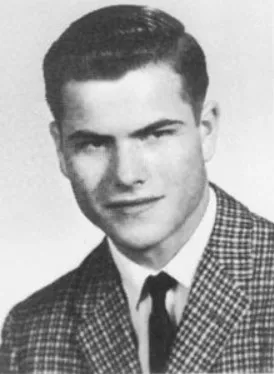
Dennis Rader in his 1963 Wichita Heights High School yearbook photo, long before the first murders.
Wichita Heights High School / Public domain / commons.wikimedia.org
14 / 16 / Open questions
What is still missing
- Date of the Dolores Davis murder: 19 Jan 1991 according to AP and Biography.com, 13 Jan according to AP citing Captain Houston’s testimony, the evening of 18 Jan according to Wikipedia. The court record, which is not online, would settle it.
- Victims’ ages: Shirley Vian 24 (AP, Dateline) or 26 (Wichita Eagle, ABC News); Dolores Davis 62 (AP at the plea) or 63 (AP and NPR at sentencing).
- Murder of Kathryn Bright: 4 Apr 1974 according to the charges and CNN, 14 Apr according to an AP overview. Number of stab wounds 2 to 3, 3 or 11.
- Which station he sent the floppy disk to: KWCH according to the New York Times, KSAS according to Wikipedia; AP only writes of a television station in Wichita.
- Whether his daughter gave DNA voluntarily, or police used her sample without her knowledge.
- Place of birth: Pittsburg or Columbus, Kansas.
- What the review of the Cynthia Kinney case after 2023 produced, and what the items found on the Park City property in 2023 belong to.
- Why he stopped killing after 1991; Rader does not explain it in the sources read.
- Court records, the Wichita Eagle archive and the prison record were not available during research.
15 / 16 / Citations
Sources
A number in square brackets next to a claim refers to an item in this list. A claim without a number has no source assigned yet. Details may vary between sources; disputed and theoretical items are marked.
53Sources in total
- Primary1
- Secondary8
- Media44
Checked: 17 Nov 2026. All 53 sources were read during research, titles taken from the page title tag. Much of the contemporary press consists of reprinted AP reports, which count as a single source; Wikipedia served only as a guide. Information from a single source is marked in the text or left out. Court records are not online. Check against the Sedgwick County District Court judgment and the current status of the sentence before publication.
- [1]NBC News (Associated Press, 18 Aug 2005), BTK killer gets maximum life sentence. nbcnews.com / cited 7×media
- [2]NPR (Greg Allen, 19 Aug 2005), Victims' Families Reject Kansas Killer's Apology. npr.org / cited 3×media
- [3]NPR (Greg Allen, 17 Aug 2005), Rader, the 'BTK' Killer, to Be Sentenced. npr.org / cited 2×media
- [4]Deseret News (Associated Press, 28 Jun 2005), BTK killer recounts grisly crimes. deseret.com / cited 9×media
- [5]The Spokesman-Review (USA Today, 28 Jun 2005), 'BTK' recounts murderous details. spokesman.com / cited 5×media
- [6]The Vindicator (Knight Ridder, 28 Jun 2005), Man pleads guilty as infamous BTK killer. vindyarchives.com / cited 3×media
- [7]CBS News (Associated Press, 4 Mar 2005), Computer Trail Led To BTK Suspect. cbsnews.com / cited 9×media
- [8]Deseret News (New York Times News Service, 2 Mar 2005), Disk may have led to BTK arrest. deseret.com / cited 7×media
16 / 16 / Revision history
Revision history
Every edit to this page is logged. Corrections sent in by readers are applied only after the editors check them against sources.
- Published
- Updated
- Edits
- 1
- Page published