Skip to content
Content warningReal violent crimes; victims are named. Help: findahelpline.com. More

This page describes real violent crimes and names the victims. Victims come first; we leave out details that serve only sensationalism. Help: free helplines in your country at findahelpline.com; in an emergency call 112 (EU) or 911 (US).

Life sentence, 49 consecutive terms (2003 and 2011)USA / 1982-1998Revision history

Gary Ridgway

Gary Leon Ridgway, born 18 Feb 1949, Utah

A truck painter at the Kenworth plant who between 1982 and 1998 murdered 49 women and girls in King County, Washington. He picked up most of them on Pacific Highway South near Sea-Tac Airport, strangled them at home or in his vehicle and left the bodies in woods and ravines, the first five by the Green River. Police questioned him as early as 1983, and in 1984 he passed a lie detector test. He was not arrested until 30 November 2001, when DNA from saliva taken in 1987 matched traces on the victims. In exchange for the death penalty being taken off the table, he led detectives to remains, and in November 2003 he pleaded guilty to 48 murders; a 49th was added in 2011. He told investigators he had killed as many as 71 women.

49
murders he was convicted of (48 in 2003, one in 2011)
● Fact
71
women he said he killed in the 2003 interviews; this is his claim
◐ Disputed
14
years the 1987 saliva sample sat before a DNA test linked it to the victims
● Fact
48
seconds of silence the judge ordered before passing sentence, one for each victim
● Fact
6Fact
8Disputed
0Theory
101 of 101claims have a source
98sources, 3 of them primary
Ratings and discussion →
How to read labels and source numbers
● Factestablished by a court, authority, witnesses or confession
◐ Disputedsources disagree
○ Theoryassumption, unverified
A number in square brackets [n] next to a claim opens a preview of the source. A claim without a number has no source assigned yet.
02 / 16 / Timeline

From birth to the 2024 search

Events: 72 / 1949–2025

  1. 01

    Life

    1949–60
    1949
    18 Feb

    Birth

    Life

    He was born in Utah. The date matches reports of his 62nd birthday on the day of his guilty plea, 18 Feb 2011. The city of Salt Lake City is given only by TIME. [1] [9] [55] [32]

  2. about 1960

    King County

    Life

    The family settled near Pacific Highway South in south King County. According to the prosecution’s summary he was 11; TIME gives the year as 1958. [1] [55]

  3. 02

    Crimes

    about 1964
    about 1964

    The stabbed boy

    Crimes

    According to the prosecution’s summary, at about 15 he stabbed a six-year-old boy in the side with a knife. The boy survived, and the attacker was not found at the time. [1] [74]

  4. 03

    Life

    1969–82
    1969
    June

    Graduation

    Life

    He graduated from Tyee High School after being held back. He worked briefly at Kenworth. [1] [2]

  5. 1969-1971

    Navy

    Life

    He served overseas in the US Navy and was honourably discharged. According to the prosecution he was in the Philippines, according to his brother in Vietnam. [1] [3] [27] [55]

  6. 1970

    First marriage

    Life

    He married Claudia. While he was at sea she began a relationship with another man, and they divorced after his return. [1] [27]

  7. 1971

    Kenworth paint shop

    Life

    After his discharge from the navy he returned to the Kenworth paint shop, where he then worked for over 30 years. [1] [2] [27]

  8. 1973
    December

    Second marriage

    Life

    He married Marcia. They lived in Renton, Federal Way and West Seattle. [1] [3] [27]

  9. 1975

    Son

    Life

    His only son, Matthew, was born. [1] [3]

  10. 1976-1980

    Religious period

    Life

    He went door to door proselytising for a Pentecostal church and wept during services. [27] [55]

  11. 1981
    May

    Divorce and house

    Life

    He divorced Marcia. He bought a house off Military Road near Pacific Highway South. [1] [2] [12]

  12. 1982
    May

    Prostitution sting

    Life

    He offered sex to an undercover policewoman and was found guilty of a misdemeanour. One Seattle Times article gives April. [2] [38] [39]

  13. 04

    Crimes

    1982
    1982
    8 Jul

    First victim charged

    Crimes

    Sixteen-year-old Wendy Lee Coffield disappeared from a foster home in Tacoma. [35] [72] [73]

  14. 15 Jul

    First discovery

    Crimes

    Children near Kent found Wendy Coffield’s body in the Green River. [6] [7] [41]

  15. 12 to 15 Aug

    Five bodies by the river

    Crimes

    On 12 Aug Debra Bonner’s body was found in the river; on 15 Aug the bodies of Marcia Chapman and Cynthia Hinds in the river and of Opal Mills on the bank. Detective Dave Reichert was among the first at the scene. [10] [34] [41] [72]

  16. 05

    Capture, trial and aftermath

    1982
    1982
    16 Aug

    First task force

    Capture, trial and aftermath

    A task force of 25 officers was set up under Major Richard Kraske. It was disbanded in November 1982. [6] [8]

  17. August

    Airport police

    Capture, trial and aftermath

    Airport police found him parked on a dead-end road on the night Terry Milligan disappeared. They let him go. [21] [27]

  18. September to October

    Suspect Foster

    Capture, trial and aftermath

    Investigators focused on taxi driver Melvyn Foster, whom they kept under round-the-clock surveillance. On 4 Oct 1982 he publicly protested his innocence. [6] [16]

  19. 06

    Crimes

    1982
    1982
    November

    Survivor

    Crimes

    Rebecca Garde Guay survived being strangled. Beforehand her attacker had shown her his Kenworth ID badge. [21] [44]

  20. 07

    Capture, trial and aftermath

    1983
    1983
    February

    Second stop

    Capture, trial and aftermath

    Airport police checked him during a meeting with a woman who later became a victim. [9] [27]

  21. 08

    Crimes

    1983
    1983
    30 Apr

    Marie Malvar

    Crimes

    Eighteen-year-old Marie Malvar disappeared. Her boyfriend followed a pickup truck, and with her father he later found the vehicle outside Ridgway’s house. Des Moines police believed Ridgway. [6] [15] [21]

  22. 09

    Capture, trial and aftermath

    1983–84
    1983
    20 Nov

    One perpetrator

    Capture, trial and aftermath

    Police confirmed that 11 women had been killed by the same man. [6] [7]

  23. 1984
    January

    Green River Task Force

    Capture, trial and aftermath

    Captain Frank Adamson and Sheriff Vern Thomas set up a task force of 43 people. [8] [34]

  24. 10

    Crimes

    1984
    1984
    20 Feb

    Letter to a newspaper

    Crimes

    He sent the Seattle Post-Intelligencer an anonymous letter signed “callmefred” with non-public details. [21] [22]

  25. 21 Mar

    Cindy Smith

    Crimes

    Seventeen-year-old Cindy Anne Smith disappeared while hitchhiking on Pacific Highway South. For years afterwards the authorities believed the murders had stopped. [8] [34] [72] [73]

  26. 11

    Capture, trial and aftermath

    1984
    1984
    May

    Lie detector

    Capture, trial and aftermath

    Ridgway himself approached the task force offering supposed information. During questioning he passed a lie detector test. [6] [7] [22] [46]

  27. August

    FBI assessment

    Capture, trial and aftermath

    Profiler John Douglas called the letter a “feeble and amateurish attempt” with no link to the murders. Only The Seattle Times reports it. [22]

  28. November

    Interviews with Bundy

    Capture, trial and aftermath

    Detectives Robert Keppel and Dave Reichert interviewed Ted Bundy in Florida, who had offered his help in a letter from death row. [24] [25] [54]

  29. 9 Dec

    42 victims

    Capture, trial and aftermath

    The list of probable victims rose to 42: 28 bodies and 14 missing women. [7] [48]

  30. 12

    Life

    1985
    1985

    Judith

    Life

    He met Judith, later his third wife. According to investigators the murders then slowed, but did not stop. [1] [12] [65]

  31. 13

    Crimes

    1985
    1985
    12 to 14 Jun

    Discovery in Oregon

    Crimes

    The remains of Denise Bush and Shirley Sherrill, which Ridgway had moved there, were found by Bull Mountain Road near Tigard. [35] [72] [73] [98]

  32. 14

    Capture, trial and aftermath

    1986
    1986
    6 Feb

    The trapper

    Capture, trial and aftermath

    A search, followed by the media, of the house of a man investigators were interested in. He was innocent and later won damages from the media. [6] [8] [16]

  33. 15

    Crimes

    1986
    1986
    October

    Patricia Barczak

    Crimes

    Patricia Barczak disappeared near Pacific Highway South. She was not on the official list of victims. [35] [73]

  34. 16

    Capture, trial and aftermath

    1987
    1987
    8 Apr

    Search and gauze

    Capture, trial and aftermath

    Police searched his house and vehicles. Under a court order he chewed a piece of gauze, and the saliva sample was stored with the evidence. It was not enough for charges. [4] [6] [7] [48]

  35. 17

    Life

    1988
    1988

    Third marriage

    Life

    He married Judith Mawson. [2] [65]

  36. 18

    Crimes

    1988
    1988
    30 May

    Debra Estes

    Crimes

    The buried remains of fifteen-year-old Debra Estes, who had disappeared in September 1982, were found in Federal Way. [35] [72] [73]

  37. 19

    Capture, trial and aftermath

    1989-1990
    1989-1990

    End of the task force

    Capture, trial and aftermath

    The task force was disbanded. The year differs between sources. [4] [23] [34]

  38. 20

    Crimes

    1990
    1990
    20 Sep

    Marta Reeves

    Crimes

    The body of Marta Reeves, who had disappeared in March, was found off Highway 410 east of Enumclaw. For a long time police did not count her among the victims of the series. [35] [73] [79]

  39. 21

    Capture, trial and aftermath

    1991
    1991
    July

    A lone detective

    Capture, trial and aftermath

    Only Detective Tom Jensen remained on the case. [5] [6] [8]

  40. 22

    Life

    1997
    1997

    Reichert becomes sheriff

    Life

    Dave Reichert became King County sheriff. The Ridgways moved to Auburn. [9] [13]

  41. 23

    Crimes

    1998
    1998
    6 Aug

    Patricia Yellow Robe

    Crimes

    A demolition crew found her body on a lot in South Park. The death certificate gave an accidental overdose. It is the last murder he was convicted of. [6] [44] [48] [73]

  42. 24

    Capture, trial and aftermath

    1999–25
    1999
    2 Nov

    DNA identification

    Capture, trial and aftermath

    Jensen used DNA to identify the remains of Tracy Winston. [5] [6]

  43. 2001
    March

    New DNA tests

    Capture, trial and aftermath

    The state crime lab began testing evidence with a new method. Jensen sent it the 1987 gauze. [5] [6] [44]

  44. 16 Nov

    Arrest in SeaTac

    Capture, trial and aftermath

    He was arrested in SeaTac for loitering for the purpose of prostitution and paid a fine of 700 USD. [2] [9]

  45. 30 Nov

    Arrest

    Capture, trial and aftermath

    At about 3 p.m. detectives arrested him as he left the Kenworth plant in Renton. DNA from the saliva matched traces on Green River victims. [4] [9] [46] [48]

  46. 5 Dec

    Charges

    Capture, trial and aftermath

    Prosecutors charged him with four counts of aggravated first-degree murder: Opal Mills, Marcia Chapman, Cynthia Hinds and Carol Christensen. [27] [38] [48]

  47. 18 Dec

    Not guilty

    Capture, trial and aftermath

    Defence attorney Anthony Savage entered a plea of not guilty on his behalf in court. [6] [39] [48]

  48. 2002
    15 Apr

    Death penalty

    Capture, trial and aftermath

    King County Prosecutor Norm Maleng announced that he would seek the death penalty. [29] [47]

  49. 2003
    27 Mar

    Three more charges

    Capture, trial and aftermath

    Charges were added for the murders of Wendy Coffield, Debra Bonner and Debra Estes. They were based on Imron paint spheres that the Microtrace laboratory had found on the clothing. [6] [31] [48]

  50. April

    Defence offer

    Capture, trial and aftermath

    Defence attorney Michele Shaw asked him whether he would cooperate, and the defence lawyers went to Maleng. [10] [19]

  51. 13 Jun

    Plea deal

    Capture, trial and aftermath

    He agreed to plead guilty to all the murders in King County in exchange for the death penalty being taken off the table. The interviews began. [12] [41] [48]

  52. 26 Jul

    Secret cell

    Capture, trial and aftermath

    He was moved from the county jail to a secret cell above the task force offices. [6] [11] [26] [42]

  53. August to September

    Remains found

    Capture, trial and aftermath

    He led detectives to remains. The remains of Pammy Avent (16 Aug), April Buttram (from 30 Aug) and Marie Malvar (29 Sep) were found. [12] [44] [48] [73] [75]

  54. 5 Nov

    Guilty plea to 48 murders

    Capture, trial and aftermath

    Prosecutor Jeff Baird read out his written statement. He pleaded guilty to 48 counts of aggravated first-degree murder. [1] [35] [36]

  55. 18 Dec

    Sentence

    Capture, trial and aftermath

    48 consecutive terms of life without parole, a fine of 480,000 USD and 48 seconds of silence for the victims. [26] [29] [37]

  56. 2004
    10 Feb

    Interview transcripts

    Capture, trial and aftermath

    The sheriff released 8,400 pages of transcripts and videos of the interviews. In them Ridgway spoke of as many as 71 victims. [12] [40]

  57. September to October

    Books and film

    Capture, trial and aftermath

    Books by Ann Rule and Dave Reichert were published, and A&E aired the film The Riverman. [25] [57] [60]

  58. 2006

    Defending Gary

    Capture, trial and aftermath

    Defence attorney Mark Prothero published his book about defending Ridgway. [30] [59]

  59. 2008
    30 to 31 Mar

    Miniseries

    Capture, trial and aftermath

    Lifetime aired the film The Capture of the Green River Killer. [50] [61]

  60. 2010
    21 Dec

    Skull near Auburn

    Capture, trial and aftermath

    Teenagers found a skull in a ravine near Auburn. Dental records showed it belonged to Rebecca Marrero, missing since December 1982. [7] [52] [80]

  61. 2011
    7 Feb

    Marrero charge

    Capture, trial and aftermath

    Prosecutors charged him with the murder of Rebecca Marrero. [7] [32] [81]

  62. 18 Feb

    49th murder

    Capture, trial and aftermath

    On his 62nd birthday he pleaded guilty to the murder of Marrero and received a 49th life sentence. [7] [32] [52] [81] [82]

  63. 2012

    Sandra Major

    Capture, trial and aftermath

    Remains designated Bones 16 were identified by DNA as Sandra Major. [83] [84]

  64. 2013
    September

    KOMO interviews

    Capture, trial and aftermath

    In telephone interviews with KOMO reporter Charlie Harger he claimed he had killed “75 or 80” women and offered to help find remains. [62] [63]

  65. 2015
    May to October

    Colorado

    Capture, trial and aftermath

    He was transferred to the federal prison in Florence, Colorado. After protests he returned to Washington. [51] [53]

  66. 2021
    25 Jan

    Wendy Stephens

    Capture, trial and aftermath

    The sheriff announced that the remains designated Bones 10 belong to fourteen-year-old Wendy Stephens from Denver, the youngest known victim. [86] [87] [88]

  67. 2023
    3 Mar

    NBC News investigation

    Capture, trial and aftermath

    NBC News showed that the lab could have found the paint traces on the victims’ clothing as early as the 1980s. [44] [45]

  68. December

    Lori Razpotnik

    Capture, trial and aftermath

    The remains designated Bones 17 were identified through genetic genealogy as fifteen-year-old Lori Anne Razpotnik from Lewis County. [90] [91] [92] [94]

  69. 2024
    22 Jan

    The last remains

    Capture, trial and aftermath

    The remains designated Bones 20 belong to sixteen-year-old Tammie Liles from Everett. According to the sheriff, no unidentified remains connected with the case are left. [95] [96] [97]

  70. 9 to 13 Sep

    Trip with detectives

    Capture, trial and aftermath

    He was moved to the King County Jail to lead detectives to sites with undiscovered remains. [66] [67] [69]

  71. 2025
    7 Mar

    Unsealing

    Capture, trial and aftermath

    A judge unsealed the transfer order of September 2024. [66] [67]

  72. December

    Health reports

    Capture, trial and aftermath

    KIRO reported end-of-life care, and the Department of Corrections denied it. Only FOX 13 reports it. [68]

03 / 16 / Victims first

Named victims

Named victims: 49 / Survivors: 5

The list contains the 49 women and girls whose murders Ridgway was convicted of: 48 in 2003 and Rebecca Marrero in 2011. According to his statement to the court, he killed them all in King County. The date is the day they were last seen; where sources do not give it, we give the range from the charges. The place is where the remains were found. Four victims were long listed as unidentified (Bones 10, 16, 17 and 20) and were named only between 2012 and 2024. The age is omitted where only the AP news agency gives it (Linda Rule, Patricia Barczak, Roberta Hayes, Patricia Yellow Robe). Differing dates, ages and spellings of names are listed in the open questions.

Showing 12 of 49

By location

Oregon1
Washington48

Victim profile

12 and under0
13–1719
18–2420
25 and over6
Women and girls: 49 / Men and boys: 0 (of 49 named)

Survivors

  • Rebecca Garde Guay
    in November 1982 her attacker strangled her after first showing her his Kenworth ID badge. She survived, reported the incident between 1984 and 1986 and did not want charges pressed. The investigator at the time believed Ridgway’s claim that she had bitten him
  • Six-year-old boy
    in about 1964 the fifteen- or sixteen-year-old Ridgway stabbed him in the side with a knife. The boy survived, and the attacker was not found at the time. Reported by the prosecution’s summary and the Radford student summary, which do not give his name
  • Woman in 1980
    in the summer of 1980 Ridgway choked her. He claimed self-defence and the charge was dropped. Sources do not give her name
  • Second wife
    by her own account he put her in a police chokehold at least once
  • Women he did not kill
    in his confession he said that for some unknown reason he did not kill several women. That before 1982 he tried to strangle five women and let them go is reported only by The Seattle Times

Unconfirmed

In 2003 he told investigators he had killed as many as 71 women; in 2013, in interviews with KOMO, he spoke of 75 or 80. He was convicted only of those whose remains were found; sources do not name his other confessed victims. Of the task force’s official list of 49 probable victims, five women were never charged: Amina Agisheff (36, disappeared 7 Jul 1982, remains found in 1984), Kassee Ann Lee (16), Keli McGinness (18) and Patricia Osborn (19), who are still missing, and Angela Girdner of Portland, sixteen according to KATU. According to KATU, Girdner’s remains from a golf course in Tualatin were identified in 2015; Ridgway denies her murder. The King County sheriff is still looking for at least three more possible victims. Jennifer Paxton believes Ridgway raped her in 1979; according to the authorities the attack does not fit his pattern; only The Seattle Times reports it. The drowning of a boy in Angle Lake, which Ridgway described as a “dream”, is also reported only by The Seattle Times.

04 / 16 / Offender’s pattern

What recurred

Ridgway drew no attention to himself apart from one anonymous letter to a newspaper and an offer of supposed information to the task force. His pattern consists of hunting on Pacific Highway South, strangling, leaving bodies in clusters and the life of an inconspicuous worker. Each item is marked as a documented fact, a disputed point or a theory.

Traits: 8

01

Hunting on Pacific Highway South

● Fact

Before and after work he cruised Highway 99 and other street prostitution areas, from Tukwila and Federal Way to Rainier Valley and Aurora Avenue in Seattle. He checked that a woman was not an undercover police officer. [1] [21]

That he stopped at a shop and opened the hood so as not to arouse suspicion is reported only by The Seattle Times, based on the prosecution’s summary of the evidence.

02

Gaining trust

◐ Disputed

He showed photographs of his son and promised to become a regular customer, or offered work or food. To women who asked whether he was the Green River killer, he pointed to his slight build. [1] [46]

Based on his confession. The promises of work and food are reported only by The Seattle Times, based on the prosecution’s summary.

03

Strangling from behind

● Fact

He strangled his victims from behind with his arm, a towel or a ligature. In his statement to the court he said for each of the 48 murders that he had strangled the victim. He demonstrated a chokehold in the crook of his arm to investigators. [1] [12] [35]

His line “Choking is what I did, and I was pretty good at it” is reported only by The Seattle Times, from the prosecution’s summary.

04

The house off Military Road

● Fact

He bought the house off Military Road near Pacific Highway South in 1981. According to his statement to the court, he killed most of the women there, many in his truck and some outdoors. [1] [35]

05

Removing evidence

◐ Disputed

He undressed his victims, took their jewellery and clipped their fingernails, and changed his tyres. He poured battery acid on his scratches. He left the victims’ jewellery in the women’s restrooms at Kenworth. [1] [15] [35] [46]

According to his confession. That he planted cigarette butts, chewing gum and motel brochures at the sites to mislead the police is reported only by The Seattle Times.

06

Clusters of bodies and returns

● Fact

He left the bodies in clusters near landmarks so that he would remember them, and liked to drive past them. He returned to some of them. He also moved victims’ remains to near Tigard, Oregon, to confuse investigators. [1] [35] [36] [96] [98]

How many victims he moved to Oregon varies: two according to his statement to the court and CNN, three according to the prosecution’s summary quoted by The Seattle Times; HeraldNet and KATU report four sets of remains found in Oregon.

07

The “callmefred” letter

● Fact

On 20 Feb 1984 he sent the Seattle Post-Intelligencer an anonymous letter with non-public details of the murders, headed “whatyouneedtonoaboutthegreenriverman” and signed “callmefred”. The FBI dismissed the letter as a hoax with no link to the murders. [21] [22]

Why FBI profiler John Douglas rejected the letter was never explained; in 2003 he could not remember.

08

An inconspicuous worker

● Fact

For over 30 years he painted trucks at Kenworth, mostly on night shifts. Colleagues described him as nice but a bit odd. By his account the murders slowed after he met his third wife, but did not stop. [1] [2] [4] [9] [12]

05 / 16 / Modus operandi

How the behaviour evolved

Phases: 3

1949-1982

Before the murders

Childhood near Pacific Highway South in south King County, the navy, two marriages and work in the Kenworth paint shop.

  • 1949: born in Utah
  • 1969: graduation and the navy
  • 1971: return to Kenworth
  • 1981: divorce and the house off Military Road
  • May 1982: arrested in a prostitution sting
1982-1998 / King County

Murders

He killed most of the women between the summer of 1982 and the spring of 1984. Then the pace slowed; the last murder he was convicted of dates from 1998.

  • 15 Jul 1982: first discovery in the Green River
  • 30 Apr 1983: Marie Malvar disappears, police question him
  • 1984: letter to a newspaper and lie detector test
  • 8 Apr 1987: search and saliva sample
  • 1990 and 1998: the last murders he was convicted of
From 30 Nov 2001

Capture, trial, aftermath

A DNA match led to his arrest. To escape the death penalty, he pleaded guilty and led detectives to remains.

  • 30 Nov 2001: arrest in Renton
  • 13 Jun 2003: plea deal
  • 18 Dec 2003: 48 life sentences
  • 18 Feb 2011: a 49th life sentence
  • September 2024: search for remains with detectives
06 / 16 / Crime scenes

Where and in what order

Places: 6

  1. 01Green River near Kent1982
  2. 02around Sea-Tac Airport and Star Lake1982-1984
  3. 03Mountain View Cemetery near Auburn1982-1983
  4. 04Highway 410 near Enumclaw and I-90 near North Bend1983-1990
  5. 05Tigard and Tualatin (Oregon)1984-1985
  6. 06South Park, Seattle1998
07 / 16 / Investigation

How he was caught

Steps: 9

01 / August 1982

Five bodies by the river

After five bodies were found by the Green River, investigators linked the murders and the first task force was formed. It was disbanded by November. [8] [34] [41]

02 / spring 1983

The pickup outside the house

Marie Malvar’s boyfriend and her father found the pickup truck outside Ridgway’s house. Des Moines police believed him. [6] [15] [21]

03 / 1984

Task force and lie detector

The 43-person team worked mainly on body recoveries and dental identifications. Ridgway contacted it himself and passed a lie detector test. [6] [8] [22]

04 / 8 Apr 1987

Search and saliva sample

Credit card records showed large petrol purchases in the weeks of the disappearances. Police searched his house and vehicles and took a saliva sample. The evidence was not enough for charges. [4] [23] [27]

05 / 1991-2001

A single detective

Only Tom Jensen remained on the case. He used DNA to identify the remains of Tracy Winston, and in 2001 he sent the 1987 gauze to the state lab. [5] [6]

06 / 2001

DNA match

A new DNA testing method compared the 1987 saliva with semen found on Green River victims. The match led to his arrest on 30 Nov 2001. [4] [44] [71]

07 / 2002-2003

Paint spheres

The Microtrace laboratory found DuPont Imron paint spheres on the clothing of five, later eight, victims. On that basis three more charges were added. [31] [44] [56]

08 / June to December 2003

Interviews and remains

After the plea deal, detectives interviewed him for months and took him out to the field. He showed them the places where the remains of four victims were found. [1] [12] [26] [44]

09 / 2010-2024

The last names

Rebecca Marrero’s skull, found in 2010, led to the 49th conviction. Four unidentified victims were named using DNA and genetic genealogy, the last in January 2024. [32] [86] [91] [97]

What went wrong

  • Fixation on Foster
    In 1982 and 1983 the first task force focused on taxi driver Melvyn Foster. Women kept disappearing even while Foster was under round-the-clock surveillance.
  • Marie Malvar’s pickup
    In 1983 Des Moines police believed Ridgway. He later admitted that he had hidden his scratches and poured acid on them.
  • Airport police
    Airport police stopped him at least twice in 1982 and 1983 and let him go.
  • The letter and the lie detector
    In 1984 the FBI dismissed the letter with non-public details as a hoax. The same year Ridgway passed a lie detector test and the task force set him aside.
  • A survivor nobody believed
    Rebecca Garde Guay reported the attack, but the investigator believed Ridgway’s version that she had bitten him.
  • The overlooked paint
    In the 1980s the state lab concentrated on hair and fibres and overlooked fine particles. It did not bring in the expert who finally found the paint in 2003, although he could have helped as early as 1985.
  • The killer supposedly dead
    In the late 1980s the task force believed the killer must be dead or in prison. The death of Patricia Yellow Robe in 1998 was recorded as an overdose.

Impact on forensics and law

  • A plea deal instead of the death penalty
    The 2003 plea deal complicated later attempts to seek the death penalty in Washington state.
  • A modern sheriff’s office
    Because of the case, the King County Sheriff’s Office changed from a rural police force into a modern agency renowned for its crime scene work. Only The Seattle Times reports it.
  • Identification by genetic genealogy
    Four victims listed as unidentified since the 1980s were named between 2012 and 2024 thanks to DNA. The sheriff says that no unidentified remains are now connected with the case.
  • Victims’ families
    About 20 families spoke at the sentencing in December 2003.
  • Popular culture
    Books on the case were written by investigators, a defence attorney and Ann Rule, and television films were made. A 2023 NBC News investigation brought the lab’s mistakes back into the spotlight.
08 / 16 / People in the case

Witnesses, investigators, relatives

People: 22

Father
Tom Ridgway
According to The Seattle Times a bus driver whose route ran past the Sea-Tac strip; TIME says a truck driver. He died before 2001.
Mother
Mary Ridgway
According to the prosecution’s summary, her son felt both lust and humiliation towards her.
Brothers
Greg and Ed Ridgway
The elder Greg and the younger Thomas Edward (“Ed”). Ed gave a statement to police on the day of his brother’s arrest.
Third wife
Judith Mawson
They met in 1985 and married in 1988. After his guilty plea she changed her name.
Sheriff
Dave Reichert
A detective at the discovery sites in 1982, for years the lead investigator, King County sheriff from 1997. He interviewed Ridgway in 2003 and wrote the book Chasing the Devil.
Detective
Tom Jensen
On the team from 1984, alone on the case in the 1990s. In 2001 he sent the saliva sample for DNA testing, and in 2003 he led the interviews.

Accomplices: none. He committed all the murders alone.

09 / 16 / Trial and sentence

From charges to the 49th life sentence

Proceedings: 6

May 1982 / King County

Offering sex to a policewoman

During a police prostitution sting he offered sex to an undercover policewoman. [2] [38]

Guilty, misdemeanour
16 Nov 2001 / SeaTac

Loitering for prostitution

Two weeks before his arrest for the murders he was fined 700 USD. The breakdown of the sentence (90 days suspended, a fine of 1,000 USD) is given in only one Seattle Times article. [2] [9]

Fine
5 Dec 2001 to 2003 / King County Superior Court

Charges and the threat of the death penalty

Charged with four counts of aggravated murder, he pleaded not guilty on 18 Dec 2001. On 15 Apr 2002 prosecutors announced they would seek the death penalty. On 27 Mar 2003 three more charges were added. The trial was scheduled for 2004. [31] [36] [38] [39] [47]

Death penalty sought
13 Jun and 5 Nov 2003 / Judge Richard A. Jones

Plea deal and guilty plea to 48 murders

Ridgway agreed to plead guilty to all the murders in King County and to tell the truth. On 5 Nov 2003 he pleaded guilty to 48 counts of first-degree murder with the aggravating circumstance of a common scheme or plan. The deal does not cover murders outside King County. [11] [35] [36] [41] [48]

Guilty on 48 counts
18 Dec 2003 / King County Superior Court

Sentence

48 consecutive terms of life without parole, a fine of 10,000 USD for each victim, 480,000 USD in total. He is barred from contacting the families and from profiting from his story. The victims’ families spoke for over three hours. [26] [29] [37] [42]

48 life sentences
18 Feb 2011 / Maleng Regional Justice Center, Kent

The 49th murder

He pleaded guilty to the 1982 murder of Rebecca Marrero and, under the 2003 plea deal, received another life sentence. [32] [52] [81] [82]

A 49th life sentence

Serving the sentence

He is serving his sentence in a Washington state prison, after 2003 for a long time in protective isolation. From May to October 2015 he was held in a federal prison in Colorado and returned after protests. We do not give further details of where he is held.

The 2024 search

From 9 to 13 Sep 2024 he was moved to the King County Jail to lead detectives to places where, by his account, he had left undiscovered remains. The outcome has not been made public, and the investigation is open.

Health

In December 2025 reports emerged of end-of-life care, which the Department of Corrections called untrue; only FOX 13 reports it. The research found no report of his death.

Family

His third wife changed her name after his guilty plea. Out of consideration for the family, we do not give their whereabouts.

10 / 16 / Psychology and myths

What is documented and what is not

Items: 6 / each labelled Fact, Disputed or Theory

Only new science caught him

◐ Disputed

Ridgway himself said technology got him. But in 2023 NBC News showed that the paint spheres were on the clothing of the first victim and that an expert could have found them as early as 1985. [1] [44] [45]

Ted Bundy helped catch the Green River killer

◐ Disputed

In 1984 Bundy advised watching the dump sites, but it did not lead to the capture. Keppel considered his theories largely a projection of himself, and Reichert plays down his role in his book. [24] [25] [58]

The murders ended in 1984

◐ Disputed

The authorities believed this for years. But murders he was convicted of also date from 1986, 1990 and 1998. [2] [8] [6] [35]

He killed 71, or even 80 women

◐ Disputed

This is his claim. Investigators describe him as a pathological liar; he was convicted of 49 murders. [12] [32] [62] [63]

He passed a lie detector test, so he was cleared

◐ Disputed

The lie detector did not clear him; in 1987 police searched his house. According to Sheriff Reichert, he “beat a polygraph test”. [4] [22] [40]

The most prolific serial killer in the US

◐ Disputed

This holds for the number of convictions, 48 and later 49 murders. It is a media formulation, not an official figure. [15] [43] [32]

11 / 16 / Comparison

Related cases

1974-1978 / USA

Ted Bundy

30 confessed murders / Executed 1989
In common

Both killed young women around Seattle, and detective Robert Keppel was connected with both cases. In 1984, from death row, Bundy advised the Green River investigators.

Difference

Bundy killed in several states and was executed in 1989. Ridgway avoided the death penalty through a plea deal.

1974-1991 / USA

Dennis Rader (BTK)

10 victims / Life sentence
In common

Both outwardly led orderly family lives, evaded the police for many years and are serving life sentences.

Difference

Rader killed ten people and communicated with the police and the media. Ridgway killed at least 49 women and, apart from one anonymous letter, drew no attention to himself.

1972-1978 / USA

John Wayne Gacy

33 victims / Executed 1994
In common

Both are among the American serial killers with the highest number of murder convictions.

Difference

Gacy killed young men and boys at his home near Chicago and was executed. Ridgway killed women and girls and left the bodies outdoors.

12 / 16 / Books and films

Treatments of the case

The label is an editorial rating: Recommended means a balanced treatment with verifiable sources; With caution means the work gives the perpetrator a platform or opts for a simplified version.

Book / 1991Recommended
The Search for the Green River Killer
Carlton Smith and Tomás Guillén, Seattle Times reporters. Published before his capture.
Book / 1995With caution
The Riverman: Ted Bundy and I Hunt for the Green River Killer
Detective Robert Keppel on the interviews with Bundy.
Book / 2004Recommended
Green River, Running Red
Ann Rule, published by Free Press.
Book / 2004With caution
Chasing the Devil
Memoir of Sheriff Dave Reichert, Little, Brown.
13 / 16 Photos and documents

Photos and documents1

Photos and documents from readers. We publish them after review; you see your own uploads straight away, marked Pending review.

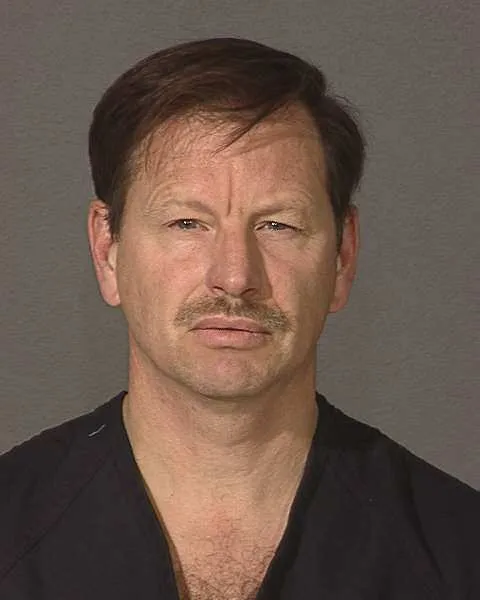
Gary Ridgway in a 2001 police photograph
Gary Ridgway in a King County Sheriff's Office booking photograph after his arrest in 2001.
King County Sheriff's Office / Public domain / commons.wikimedia.org
14 / 16 / Open questions

What is still missing

  • How many women he really killed and where the remains of the missing are. The outcome of the September 2024 search has not been made public.
  • Whether he was already killing in the 1970s and also after 1998. The prosecution allows for it; Sheriff Reichert believes he killed throughout the 1990s.
  • How many victims DNA linked in 2001: three from the Green River according to The Seattle Times and CNN, two from the river and one from 1983 according to NBC News, four according to KOMO.
  • How many sets of remains he moved to Oregon (two, three or four) and whether he also killed there. Oregon has not brought charges.
  • Since when he was a suspect: since the spring of 1983 (Malvar), since 1984 among the five main suspects, or according to FOX 13 as early as 1982. The day of his arrest was Friday, 30 Nov 2001; CNN wrote Saturday.
  • Dates last seen: Childers 14 or 16 Apr 1983, Ware 18 or 19 Jul 1983. For Cindy Smith the statement to the court gives the date of the murder as 13 Mar 1984, but she was last seen on 21 Mar. For Bones 20 (Liles) the range in the charges differs between transcripts. The statement gives the year 1992 for Mary Meehan, and a 2011 Seattle Times subheading refers to the murder of Marrero in 2002; both are typos.
  • Ages according to the Radford student summary against the agreement of The Seattle Times and AP: Bush 23, Summers 16, Matthews 23, Naon 19, Thompson 21, Buttram 16, Avent 15, Nelson 21. Reeves was 36 or 37, Debra Estes 15, or 17 according to one article.
  • Spelling of names in the original: Christensen or Christiansen, Major or Majors, Razpotnik or Ratzpotnik, Yellow Robe or Yellowrobe, Matthews or Mathews, Sherrill or Sherril, Plager or Placer; according to the sheriff Barczak’s middle name is Ann, according to AP Michelle.
  • According to the press, Colleen Brockman was found near Sumner in Pierce County; the statement to the court says he killed them all in King County.
  • Details from his youth differ: the move at age 11 or in 1958; his father a bus driver or a truck driver; service in the Philippines or in Vietnam.
  • The prosecution’s summary of the evidence, the text of the plea agreement and the charging document (Second Amended Information) were not available online, nor was the FBI file.

You can help

Add a source, a photo or a correction. We check every submission and credit your nickname on approved ones.

Send a tipCase discussion
15 / 16 / Citations

Sources

A number in square brackets next to a claim refers to an item in this list. A claim without a number has no source assigned yet. Details may vary between sources; disputed and theoretical items are marked.

98Sources in total
  • Primary3
  • Secondary8
  • Media87
Checked: 17 Nov 2026. The profile is based on two rounds of research: round 1 (71 sources) and round 2 with the list of victims (37 sources), merged into 98 sources without duplicates, all read during research. The AP lists of victims in The Seattle Times and Fox News are the same text and count as one source, as do other republished AP reports. The Radford University student summary is a weaker source and is listed separately where sources conflict. Wikipedia, Murderpedia and Biography.com served only as a guide. Information from a single source is marked in the text or omitted; the age is omitted where only AP gives it. The name of the survivor Rebecca Garde Guay was supported by two sources in round 1; round 2 did not find it. Before publication, check against the plea agreement, the charging document and the 2003 prosecution’s summary of the evidence, which were not available online, and the current status of his imprisonment.
16 / 16 / Revision history

Revision history

Every edit to this page is logged. Corrections sent in by readers are applied only after the editors check them against sources.

Published
Updated
Edits
1
  1. Page published
    OverviewEditors

Share this page

https://www.killeratlas.com/en/killers/gary-ridgway/profile

How to cite

Killer Atlas. Gary Ridgway (1982-1998): case profile [online]. https://www.killeratlas.com/en/killers/gary-ridgway/profile [accessed 15 Nov 2026]. Checked 15 Nov 2026.