01
Content warningReal violent crimes; victims are named. Help: findahelpline.com. More
This page describes real violent crimes and names the victims. Victims come first; we leave out details that serve only sensationalism. Help: free helplines in your country at findahelpline.com; in an emergency call 112 (EU) or 911 (US).
Edmund Kemper
Edmund Emil Kemper III, born 18 Dec 1948, Burbank (California)
A highway worker from Santa Cruz County, California, who killed ten people. In August 1964, aged fifteen, he shot his grandparents on their ranch near North Fork. He spent five years at Atascadero State Hospital and in 1969 returned to his mother. From May 1972 to February 1973 he killed six young women hitchhikers, most of them students, took the bodies home and dismembered them. Over Easter 1973 he killed his mother and her friend in Aptos, drove to Colorado and confessed to the Santa Cruz police himself from a phone booth in Pueblo. In November 1973 a jury found him sane and guilty of eight counts of first-degree murder, and the court sentenced him to life. The parole board has repeatedly denied his requests for parole, most recently in July 2024.
- 10
- people he killed (2 in 1964, 8 in 1972 and 1973)● Fact
- 8
- counts of first-degree murder on which the jury found him guilty on 8 Nov 1973● Fact
- 5
- hours the jury deliberated on sanity and guilt, spread over two days● Fact
- 2.06 m
- his height, hence the nickname “Big Ed”● Fact
6Fact
7Disputed
0Theory
70 of 70claims have a source
59sources, 29 of them primary
02 / 16 / Timeline
From birth to the last hearing
Events: 45 / 1948–2024
- 01
Life
1948–63 - 02
Crimes
1964 - 03
Capture, trial and aftermath
1964–69 - 196918 Dec
Release
Capture, trial and aftermathOn his 21st birthday he was released from Atascadero under the supervision of the California Youth Authority and returned to his mother. According to the NYT this was over the prosecutor’s objection. As a condition of his release he then attended community college. [1] [2] [15] [16] [17]
- 04
Life
1971 - 05
Crimes
1972 - 06
Capture, trial and aftermath
1972 - 07
Crimes
1972 - 08
Capture, trial and aftermath
1972 - 09
Crimes
1973 - 10
Capture, trial and aftermath
1973 - 11
Crimes
1973 - 12
Capture, trial and aftermath
1973 - 13
Crimes
1973 - 14
Capture, trial and aftermath
1973 - late October
Testimony
Capture, trial and aftermathKemper testified before the jury. According to a Sentinel headline of 30 Oct, he backed the death penalty; that he asked for death by torture for himself is reported only by Crime+Investigation. A Sentinel headline of 1 Nov summed up his testimony as saying he wanted the girls as a “possession”; the verbatim wording is missing from the sources read. [21] [49] [50]
- 15
Life
1977 - 16
Capture, trial and aftermath
1979–85 - 17
Life
1987 - 18
Capture, trial and aftermath
1988–24
03 / 16 / Victims first
Named victims
Named victims: 10 / Survivors: 1
The list contains all ten people Kemper killed. He was convicted of eight of them: the six young women, his mother and Sara Hallett. The 1964 murders of his grandparents were handled by the juvenile court and ended in his commitment to a psychiatric hospital. We give age only where at least two sources agree; the grandparents’ ages are each given by only one source, and for Cindy Schall and Rosalind Thorpe the sources disagree. Differing versions are listed in the open questions.
Showing 10 of 10
- Maude Kemper (grandmother)grandparents’ ranch near North Fork, Madera County, California27 Aug 1964age unknown
- Edmund Kemper Sr. (grandfather)grandparents’ ranch near North Fork, Madera County, California27 Aug 1964age unknown
- Mary Ann Pescepicked up in Berkeley, killed at a remote spot; skull found on Loma Prieta mountain (Santa Cruz County), California7 May 1972age 19
- Anita Luchessapicked up in Berkeley, killed at a remote spot, California7 May 1972age 18
- Aiko Koopicked up while hitchhiking to a dance class; sources do not agree on the place of the crime, California14 Sep 1972age 15
- Cindy Schallpicked up near Santa Cruz; head buried in the garden of his mother’s house in Aptos, California7 or 8 Jan 1973age unknown
- Rosalind Thorpepicked up on the UC Santa Cruz campus, shot in the car; body near Eden Canyon Road (Alameda County), California5 Feb 1973age unknown
- Alice “Allison” Liupicked up on the UC Santa Cruz campus, shot in the car; body near Eden Canyon Road (Alameda County), California5 Feb 1973age 23
- Clarnell Strandberg (mother)his mother’s apartment on Ord Street, Aptos (Santa Cruz County), California20 or 21 Apr 1973age 52
- Sara “Sally” Halletthis mother’s apartment on Ord Street, Aptos (Santa Cruz County), California20 to 21 Apr 1973age 59
By location
California10
Victim profile
12 and under0
13–171
18–243
25 and over2
Women and girls: 9 / Men and boys: 1 (of 10 named)
Survivors
- Hitchhikers given ridesaccording to his own statements, at first he picked up many hitchhikers and let them go. None of the sources read documents their names or number, and there is no documented survivor of an attack
Unconfirmed
No further victims are attributed to Kemper in the sources read. In February 1973 investigators linked the discoveries of the students’ bodies to Herbert Mullin, but as early as 21 Feb 1973 KPIX pointed out that Mullin’s murders did not involve dismemberment. Mary Guilfoyle, a Cabrillo College student, was a victim of Mullin, not Kemper.
04 / 16 / Offender’s pattern
What recurred
Kemper did not write to the police or the media. His pattern consists of choosing victims among women hitchhikers, the trust he inspired, what he did with the bodies and his closeness to local police officers. Each item is marked as a documented fact or a disputed point.
Traits: 7
02
The university parking sticker
● Fact03
A harmless driver
◐ DisputedAccording to his own statements, at first he picked up many hitchhikers and let them go again. He practised locking the car doors and pretended to be in a hurry by looking at his watch, so as to seem harmless. [14] [16]
Based only on his own statements. None of the sources read documents how many hitchhikers he gave rides to in this way.
04
Weapons in the car
● Fact05
Bodies at home
● FactHe took the bodies to his apartment or his mother’s apartment, where by his own confession he abused them, decapitated and dismembered them. He then scattered the parts in the mountains near Santa Cruz, in Eden Canyon and in the sea. [10] [14] [16] [17]
We know the details from his confession; the remains found confirm them.
06
Removing bullets
● Fact07
Among the police
● FactHe hung out at the Jury Room bar opposite the Santa Cruz courthouse, frequented by police officers. They called him “Big Ed” and did not suspect him. [14] [18] [21]
That he obtained information about the investigation from them is reported by SFGATE and Crime+Investigation, citing FBI profiler John Douglas.
05 / 16 / Modus operandi
How the behaviour evolved
Phases: 3
1948-1972
Before the series
Childhood in California and Montana, after running away to his father the grandparents’ ranch and the murder of both of them. Five years in a psychiatric hospital, then a return to his mother.
- 18 Dec 1948: born in Burbank
- 1957: parents divorce, to Montana with his mother
- 27 Aug 1964: murder of his grandparents near North Fork
- 1964 to 1969: Atascadero State Hospital
- 18 Dec 1969: released, returns to his mother
1972-1973 / Santa Cruz County
Murders
Within nine months he killed six hitchhikers. At the same time Herbert Mullin was killing around Santa Cruz, and police did not distinguish between the two perpetrators.
- 7 May 1972: Pesce and Luchessa
- 14 Sep 1972: Aiko Koo
- 18 Sep 1972: psychiatrists declare him harmless
- 7 or 8 Jan 1973: Cindy Schall
- 5 Feb 1973: Thorpe and Liu
- 20 to 21 Apr 1973: his mother and Sara Hallett
From 24 Apr 1973
Capture, trial, sentence
He confessed himself and led police to remains. At trial he pleaded insanity; the jury found him sane.
- 24 Apr 1973: arrested in Pueblo
- 30 Apr 1973: charged with 8 murders
- 8 Nov 1973: guilty on 8 counts
- 9 Nov 1973: life sentence
- from 1979: parole repeatedly denied
06 / 16 / Crime scenes
Where and in what order
Places: 6
map of crime scenes (points by date and place) / add from coordinates
- 01Grandparents’ ranch near North Fork, Madera County1964
- 02Atascadero State Hospital, San Luis Obispo County1964-1969
- 03Berkeley and the Bay Area1972
- 04Santa Cruz County, UC Santa Cruz campus1972-1973
- 05His mother’s apartment, Aptos1973
- 06Pueblo, Colorado1973
07 / 16 / Investigation
How he was caught
Steps: 6
01 / 27 Aug 1964
A call to his mother
After murdering his grandparents he phoned his mother. She told him to call the police, and a sheriff’s deputy arrested him. [15] [16] [17]
02 / 1972
Missing students
The families of Pesce and Luchessa reported them missing. In August only Pesce’s skull was found on Loma Prieta mountain. [1] [11] [16] [20]
03 / January and February 1973
Remains found
Parts of Schall’s body washed up from the sea, and the headless bodies of Thorpe and Liu were found near Eden Canyon Road. After Mullin’s arrest on 13 Feb, prosecutor Chang said: “We then have another homicidal maniac.” [14] [20] [23] [24] [25]
04 / 23 to 24 Apr 1973
Confession from Pueblo
Kemper called from a phone booth in Pueblo and asked for Lieutenant Scherer. At first the officers did not believe him; the arrest was finally handled by the Pueblo police. [14] [15] [31] [33] [35]
What went wrong
- Released to his motherIn 1969 he was released from Atascadero and returned to his mother. According to the NYT this was over the prosecutor’s objection. That it also went against the doctors’ recommendation that he not live with his mother is reported only by Biography.com.
- Psychiatrists declared him harmlessIn September 1972 two court-appointed psychiatrists declared him harmless just days after the murder of Aiko Koo. In November 1972 the court expunged his juvenile record. At trial it emerged that at Atascadero he had memorised the answers to psychological tests.
- A stop with bodies in the trunkAccording to his statement, with the bodies of Pesce and Luchessa in the trunk he was stopped by a police officer for a broken tail light and let go.
- A gun despite his psychiatric pastDespite his past he obtained a gun. Sheriff’s sergeant Mickey Aluffi visited him about it, but sources do not say with what result.
- A friend of the policeThe officers he sat with in the bar did not suspect him. They did not believe him during his first calls from Pueblo.
- The sticker adviceThe university advised students to ride only in cars with a campus parking sticker. Kemper had one and picked up his last two students on the campus itself.
Impact on forensics and law
- Predicting dangerousnessThe case opened a debate on whether psychiatrists can predict that a patient is dangerous. In May 1973 the psychiatrists admitted that Kemper had deceived them.
- FBI profilingThe interviews Robert Ressler and John Douglas conducted with him in prison contributed to the development of offender profiling at the FBI.
- MurdersvilleThe overlapping murders by Kemper and Mullin in 1972 and 1973 earned Santa Cruz County the press nickname “Murdersville” and later “murder capital of the world”.
- Popular cultureKemper was played by Cameron Britton in the Netflix series Mindhunter (2017), and in 2018 he was nominated for an Emmy for the role.
08 / 16 / People in the case
Witnesses, investigators, relatives
People: 17
Mother, victim
Clarnell Strandberg
She worked in the administration of UC Santa Cruz and lived in Aptos. Her son killed her in April 1973, when she was 52. The NYT and UPI spell her name “Clarenell” and “Claranell”.
Father
Edmund Emil Kemper Jr.
An electrician and World War II veteran. After the 1957 divorce he started a new family, and in 1963 he sent his son to the grandparents.
District attorney
Peter Chang
Santa Cruz District Attorney, led the prosecution in 1973. The remark about “Murdersville, U.S.A.” is attributed to him.
Defence attorney
James Jackson
Santa Cruz County Public Defender, built the defence on insanity.
Judge
Harry Brauer
Santa Cruz County Superior Court, presided over the trial and imposed the life sentence. His middle initial differs between sources (F. or E.).
Sheriff
Douglas James
Santa Cruz County sheriff at the time of the arrest.
Accomplices: none. He committed all the murders alone.
09 / 16 / Trial and sentence
From juvenile court to parole hearings
Proceedings: 6
1964 / juvenile court, Madera County
Murder of his grandparents
The court did not try fifteen-year-old Kemper as an adult. It committed him to Atascadero State Hospital for mentally ill offenders and placed him in the custody of the California Youth Authority. [15] [16]
Committed to Atascadero
18 Sep and 29 Nov 1972
Assessment and record expunged
At Kemper’s request two court-appointed psychiatrists declared him harmless, and the court then expunged his 1964 record. [1] [2]
Record expunged
30 Apr to 25 Sep 1973 / Santa Cruz County
Charges and grand jury
Charged with eight murders, indicted by a grand jury in May. In September he pleaded not guilty and not guilty by reason of insanity. [1] [29] [42] [44] [45] [47]
Indicted on 8 counts
23 Oct to 8 Nov 1973 / Santa Cruz County Superior Court
Trial on guilt and sanity
Peter Chang led the prosecution, James Jackson the defence. The deciding question was the California test of whether Kemper knew the difference between right and wrong. Court-appointed psychiatrists found him sane. The jury of six men and six women deliberated for about five hours. That the defence attorney did not dispute the verdict is reported only by the NYT. [1] [2] [15] [48] [53]
Guilty on 8 counts
9 Nov 1973 / Judge Harry Brauer
Sentence
Life. The death penalty, which Kemper asked for, was not being imposed in California at the time. Sources describe the form of the sentence differently: life, eight concurrent life sentences, or seven years to life on each count, served concurrently. [2] [3] [7] [12] [15] [16] [32] [54]
Life
1979 to 2024 / parole board
Parole hearings
The board denied parole in 1979 to 1982, 1988, 2007, 2017 and 2024. In 1985 and 2002 he waived the hearing. He did not attend the hearing on 9 Jul 2024; the next review falls in 2031. [4] [7] [10] [12] [15] [59]
Always denied
Serving the sentence
Since November 1973 he has been serving a life sentence in California. According to reports from July 2024 he is alive, 75 years old and uses a wheelchair. We do not give further details of where he is held.
Parole
The parole board has repeatedly denied his requests, most recently on 9 Jul 2024. The next review falls in 2031. That he waived the hearing in 2012 is reported only by the New York Post.
10 / 16 / Psychology and myths
What is documented and what is not
Items: 6 / each labelled Fact, Disputed or Theory
Cannibalism
◐ DisputedThat cannibalism also came to light is reported only by the Hungarian site Telex. The NYT’s contemporary reports on the trial do not mention it, and none of the other sources read documents it. [1] [2] [3] [22]
The “murder capital of the world” remark
◐ DisputedThe nickname is attributed to prosecutor Chang. According to SFGATE and Crime+Investigation, he only said “This must be Murdersville, U.S.A.” and the press distorted it. The NYT in October 1973 writes that the county was given that name in February by its district attorney. [1] [14] [20]
Maternal grandparents
◐ DisputedUPI wrote this in 1985. The other sources consistently give his paternal grandparents. [5] [10] [12] [15] [16]
His grandmother among the eight convicted murders
◐ DisputedThe East Bay Times in 2011 counts his grandmother among the eight women killed. He was convicted of the six young women, his mother and Hallett. [2] [3] [8]
His mother’s head in a jar
◐ DisputedReported only by the East Bay Times in 2011. The other sources do not have this detail. [8] [9] [17] [21]
A genius with an IQ of 145
◐ DisputedThe IQ figures differ between sources: 131, 136, 138 or 145. It is not clear which measurement is which. [2] [9] [17] [19] [31]
11 / 16 / Comparison
Related cases
1974-1978 / USA
Ted Bundy
30 confessed murders / Executed 1989
In common
Both killed young women, often students, in the 1970s and came across as trustworthy.
Difference
Bundy was executed in Florida. Kemper received a life sentence because California was not imposing the death penalty at the time.
12 / 16 / Books and films
Treatments of the case
The label is an editorial rating: Recommended means a balanced treatment with verifiable sources; With caution means the work gives the perpetrator a platform or opts for a simplified version.
Book / 1976Recommended
The Co-Ed Killer
Margaret Cheney, published by Walker. An expanded version appeared in 1992 as Why: The Serial Killer in America.
Book / 2015Recommended
Whoever Fights Monsters
Robert K. Ressler and Tom Shachtman (2015 edition), a chapter on the prison interviews with Kemper.
Book / 1998With caution
L'Ogre de Santa Cruz
Stéphane Bourgoin, in French, interviews with Kemper.
Book / 2021Recommended
Murder Capital of the World
Emerson Murray, an oral history of the Frazier, Mullin and Kemper murders in Santa Cruz.
13 / 16 Photos and documents
Photos and documents1
Photos and documents from readers. We publish them after review; you see your own uploads straight away, marked Pending review.
About this image
- Original title
- CDCB52453 2011.jpg
- Author
- California Department of Corrections and Rehabilitation
- Source
- commons.wikimedia.org
- Licence
- Public domain
- Changes
- resized, converted to AVIF and WebP, metadata removed
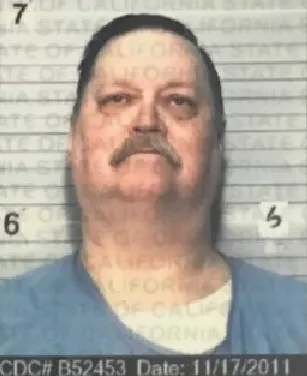
Edmund Kemper in an official California Department of Corrections and Rehabilitation photograph, 17 November 2011.
California Department of Corrections and Rehabilitation / Public domain / commons.wikimedia.org
14 / 16 / Open questions
What is still missing
- Date of his mother’s murder: 20 Apr 1973 according to the NYT and Oxygen, 21 Apr according to People and Telex; Biography.com gives Good Friday. According to Oxygen he killed Hallett the following day.
- Date of the call and the arrest: Biography.com gives the call as 23 Apr 1973, the NYT and KPIX the arrest as 24 Apr. The number of calls from Pueblo varies (two, three or “several”).
- Victims’ ages: Pesce 19 (NYT, People) or 18 (SFGATE, Oxygen); Luchessa 18, People 19; Schall 18 (Oxygen) or 19 (New York Post); Thorpe 22, 23 or 24; Liu 23 (New York Post, Crime+Investigation), Oxygen 20. His grandmother’s age (66) is given only by Vronsky, his grandfather’s (72) only by the Madera Tribune.
- Date of Schall’s murder: 7 Jan 1973 according to Oxygen and KPIX, 8 Jan according to Frasier and other books.
- Liu’s first name: Alice (Biography.com, Oxygen, People) or Allison (SFGATE, Crime+Investigation, KPIX).
- The judge: Harry F. Brauer (NYT, Thomas) or Harry E. Brauer (UPI, People).
- IQ: 131, 136, 138 or 145, depending on the source.
- When exactly the California Youth Authority supervision ended: 1970, 1971 or 1972, depending on the source.
- Whether the psychiatric assessment of 18 Sep 1972 was the day after the murder of Koo or three days after it.
- The 1997 and 2017 hearings: whether parole was denied or Kemper waived the hearing; the exact date of the 2017 hearing.
- Whether Anita Luchessa’s remains were ever found. Biography.com says they were not; the other sources are silent.
- The 1973 Santa Cruz County Superior Court case file and the parole board decisions are not online.
15 / 16 / Citations
Sources
A number in square brackets next to a claim refers to an item in this list. A claim without a number has no source assigned yet. Details may vary between sources; disputed and theoretical items are marked.
59Sources in total
- Primary29
- Secondary9
- Media21
Checked: 17 Nov 2026. The profile draws on 59 of the 139 research sources, all of which were read during research; UPI 1985 via WebFetch, title from the article. The books were checked only through Google Books snippets; the Santa Cruz Public Libraries catalogue records contain only the headline and date of the clipping and show only that and when the Santa Cruz Sentinel wrote about an event. Wikipedia served only as a guide and is not among the sources. Information marked as fact has at least two sources; information from a single source is marked in the text or omitted. Neither the 1973 court file nor the parole board decisions are online. Before publication, verify the Santa Cruz County Superior Court judgment, the judge’s name, the dates of his mother’s murder and of the arrest, and the victims’ ages.
- [1]The New York Times (21 Oct 1973), 8 MURDERS LAID TO A CALIFORNIAN. nytimes.com / cited 18×media
- [2]The New York Times (9 Nov 1973), COAST MAN GUILTY IN EIGHT MURDERS. nytimes.com / cited 14×media
- [3]The New York Times (UPI, 10 Nov 1973), SLAYER OF 8 GETS LIFE IN CALIFORNIA. nytimes.com / cited 4×media
- [4]Los Angeles Times (4 Jun 1985), The State - News from June 4, 1985. latimes.com / cited 3×media
- [5]UPI Archives (3 Jun 1985), Edmund Kemper III, the hulking former construction worker serving... upi.com / cited 2×media
- [6]Los Angeles Times (Charles Hillinger, 29 Jan 1987), Blind Couple See Only Good, Not the Guilt of the Helpers. latimes.com / cited 1×media
- [7]East Bay Times (Jennifer Squires, 24 Jul 2007), Serial killer Kemper denied parole. eastbaytimes.com / cited 3×media
- [8]East Bay Times (11 Oct 2011), Documentary to air that features Edmund Kemper, Santa Cruz County serial killer from 1970s. eastbaytimes.com / cited 3×media
16 / 16 / Revision history
Revision history
Every edit to this page is logged. Corrections sent in by readers are applied only after the editors check them against sources.
- Published
- Updated
- Edits
- 1
- Page published