01
Content warningReal violent crimes; victims are named. Help: findahelpline.com. More
This page describes real violent crimes and names the victims. Victims come first; we leave out details that serve only sensationalism. Help: free helplines in your country at findahelpline.com; in an emergency call 112 (EU) or 911 (US).
Ed Gein
Edward Theodore Gein, born 27 Aug 1906, La Crosse (Wisconsin)
A reclusive farmer from Plainfield, Wisconsin, who in November 1957 confessed to the murders of two women and to robbing graves in local cemeteries. Mary Hogan disappeared from her tavern in Pine Grove in December 1954; he shot Bernice Worden in her hardware store on 16 November 1957. Police found her body that same evening on Gein’s farm, together with objects made from human remains. For ten years he was found incompetent to stand trial. In November 1968 the judge found him guilty of the Worden murder, but at the same time found him insane at the time of the crime. He spent the rest of his life in state mental hospitals and died in 1984. The case became the model for the novel and the film Psycho.
- 2
- confessed murders, he was tried for only one● Fact
- 10
- years he was incompetent to stand trial, from January 1958 to January 1968● Fact
- 26
- years he spent in state mental hospitals● Fact
- 3
- cemeteries in the area where, by his own confession, he robbed graves● Fact
5Fact
7Disputed
3Theory
72 of 72claims have a source
25sources, 0 of them primary
02 / 16 / Timeline
From birth to death in a mental hospital
Events: 45 / 1906–2025
- 01
Life
1906–45 - 02
Crimes
1947–54 - 03
Life
1955 - 04
Crimes
1957 - 05
Capture, proceedings and aftermath
1957–25 - November
- 1987October
Death of Judge Gollmar
Capture, proceedings and aftermathJudge Robert H. Gollmar died at the age of 84. Only the obituary in The New York Times reports this. [8]
- 2019
Interrogation tapes found
Capture, proceedings and aftermathAccording to AOL (The Independent), the recordings of the November 1957 interrogation were found with the family of Judge Boyd Clark. Only this source gives the year of the discovery. [22]
03 / 16 / Victims first
Named victims
Named victims: 2 / Survivors: 0
The list contains the two women whose murders Gein confessed to in November 1957. He was tried only for the murder of Bernice Worden. The graves he robbed in local cemeteries are not murder victims and are described in the text. Mary Hogan’s age varies between sources; we give the prevailing figure.
Showing 2 of 2
- Mary Hoganher own tavern in Pine Grove, Portage County, Wisconsin8 Dec 1954age 54
- Bernice Wordenher own hardware store in Plainfield, Waushara County, Wisconsin16 Nov 1957age 58
By location
Portage County, Wisconsin1
Waushara County, Wisconsin1
Victim profile
12 and under0
13–170
18–240
25 and over2
Women and girls: 2 / Men and boys: 0 (of 2 named)
Unconfirmed
After his arrest Gein was confronted with other unsolved disappearances in the region; the polygraph did not link him to them and none of it was proven. According to the Hanneman Archive and TheWrap, he was suspected in the disappearance of eight-year-old Georgia Weckler near Fort Atkinson in 1947 and of two hunters, Victor Travis and Raymond Burgess, who vanished in November 1952 after leaving a bar in Plainfield. Judge Gollmar considered them possible victims. Detectives from La Crosse questioned him about the disappearance of the teenager Evelyn Hartley in 1953 (aged 15 or 14), and found nothing. Only TheWrap links him to the disappearance of his neighbour James Walsh in 1954. The circumstances of his brother Henry’s death in 1944 were never investigated. In 1982 UPI reported that Judge Gollmar suspected Gein of further disappearances; Biography writes that no link could be proven. According to the Hanneman Archive (citing Gollmar’s book), the finds from the house also included the remains of two teenage girls whose origin was never explained.
04 / 16 / Offender’s pattern
What recurred
Gein left no messages or signature. His pattern consists of two women he knew from local businesses, shooting them on their own premises, taking the body to his farm and a collection of objects made from human remains, most of which came from robbed graves. Each item is marked as a documented fact, a disputed point or a theory.
Traits: 7
02
Shot on the premises
● FactHe shot both women in their businesses. Blood and a cartridge case were left in Hogan’s tavern. He shot Worden with a .22 calibre rifle that he took from a rack in her store. [9] [11] [15] [17]
Gein later claimed that the rifle went off accidentally while he was examining it. This is stated by Milwaukee Mafia and TheWrap.
03
Body taken to the farm
● Fact04
Body dressed like game
● Fact05
Objects made from human remains
● FactIn the house were found masks made from facial skin, bowls made from skulls, chair coverings and other objects made from human skin and bone. Among them were Mary Hogan’s face mask and skull. [1] [9] [11] [13] [19]
The number of masks and skulls varies between sources; TIME gives ten skins from heads, UPI about a dozen masks.
06
Robbing fresh graves
◐ DisputedBy his own confession, from 1947 to 1952 he visited three cemeteries in the area at night and opened the graves of recently buried women. He described it as a trance-like state. Robbed graves are not murders and are not counted among the victims. [5] [11] [14] [7]
The extent is disputed: Daniels gives 9 graves, UPI about a dozen and 10 identified by the authorities, EBSCO up to 40 trips, of which he completed only some. UPI dates the start to 1944.
07
Attachment to his mother
○ TheoryPsychiatrists explained the motive by a pathological attachment to his mother, who died in 1945. According to them, the victims resembled her. CrimeReads points out that in the interrogation transcripts this idea was first voiced by an investigator, not by Gein. [6] [7] [13] [19]
This is an interpretation by psychiatrists and authors, not a finding of the court.
05 / 16 / Modus operandi
How the behaviour evolved
Phases: 3
1906-1954
Before the murders
Childhood on an isolated farm near Plainfield under the influence of a strictly religious mother. After the death of the whole family he remained on the farm alone.
- 1906: born in La Crosse
- 1914 to 1915: move to a farm near Plainfield
- 1940 to 1945: deaths of his father, brother and mother
- 1947 to 1952: robs graves, according to his confession
1954-1957 / Pine Grove, Plainfield
Murders
In three years he shot two women. The first disappearance remained unsolved, the second led straight to him.
- 8 Dec 1954: disappearance of Mary Hogan from her tavern in Pine Grove
- 1954 to 1957: neighbours see him as a harmless oddball
- 16 Nov 1957: murder of Bernice Worden in Plainfield
From 16 Nov 1957
Capture, hospitals, aftermath
Arrested the same evening, he confessed to both murders. He came to trial only after ten years.
- 16 Nov 1957: arrest and discovery of the body on the farm
- January 1958: incompetent to stand trial, Waupun
- November 1968: guilty, but insane
- 26 Jul 1984: death at Mendota Mental Health Institute
06 / 16 / Crime scenes
Where and in what order
Places: 6
map of crime scenes (points by date and place) / add from coordinates
- 01La Crosse, Wisconsin1906
- 02Farm near Plainfield, Waushara County1914-1957
- 03Pine Grove, Portage County1954
- 04Wautoma, Waushara County jail1957
- 05Waupun, Central State Hospital1958-1978
- 06Madison, Mendota Mental Health Institute1978-1984
07 / 16 / Investigation
How he was caught
Steps: 6
01 / 1954
Blood in the tavern
After Mary Hogan disappeared, blood and a cartridge case were left in the tavern. The search found no leads and the case stayed open for three years. [13] [17]
02 / 16 Nov 1957
Receipt for antifreeze
Frank Worden found blood in the store and discovered that the cash register was missing. The last receipt belonged to Gein, who had been in the store the day before. [1] [16] [25]
03 / 16 Nov 1957
Detention and search of the farm
Police detained Gein at his neighbours’. Sheriff Schley then found Worden’s body on the farm and objects made from human remains in the house. [1] [9] [11] [13]
04 / November 1957
Interrogations and polygraph
The first interrogation in Wautoma was recorded. He was then questioned by Charles Wilson and Joseph Wilimovsky of the state crime laboratory. Gein confessed to both murders and to grave robbing. [6] [13] [22]
What went wrong
- Brother’s death not investigatedThe authorities closed Henry Gein’s death in 1944 as an accident without an autopsy. Today it can no longer be clarified.
- Assault on the detaineeSheriff Schley physically assaulted Gein during the interrogation. In 1968 the court therefore excluded the confession as evidence.
- Unverified information in the pressIn the first days, District Attorney Kileen spoke about cannibalism. This and other rumours kept spreading, although the investigation did not confirm them.
- Leading questionsAccording to CrimeReads, key motifs such as the attachment to his mother were introduced into his statements by an investigator’s questions.
- Unverified number of gravesPolice opened only two graves. The true number of robbed graves is therefore unknown. The house with further evidence burned down in March 1958. Only UPI states that investigator Wilson had the masks buried.
Impact on forensics and law
- Model for horror filmsThe case inspired the novel and the film Psycho, The Texas Chain Saw Massacre and the character of Buffalo Bill in The Silence of the Lambs. Sources state that these characters draw on Gein only in part.
- Legal impact not documentedThe influence of the case on legislation or police practice could not be documented in the sources read. One website’s claim about an influence on the insanity doctrine contains obvious errors and is not used.
08 / 16 / People in the case
Witnesses, investigators, relatives
People: 15
Mother
Augusta Wilhelmine Gein
Strictly religious and domineering, she preached to her sons about the sinfulness of women. She died in 1945 after strokes.
Father
George Philip Gein
He drank and had no authority in the family. He died in 1940.
Brother
Henry Gein
Older brother, died in 1944 in a brush fire on the farm. The authorities closed it as an accident without an autopsy.
Waushara County Sheriff
Arthur Schley
In office for only a few weeks. He found Worden’s body and physically assaulted Gein during the interrogation, which is why the court excluded the confession.
Deputy Sheriff
Frank Worden
Son of Bernice Worden. He found the blood in the store and was the first to suspect Gein.
District Attorney
Earl Kileen
In the first days he spoke to the press about cannibalism, which was never confirmed.
Accomplices: none documented. Only Crime+Investigation UK mentions an accomplice called “Gus” who supposedly helped him rob graves.
09 / 16 / Trial and sentence
From charges to death in a mental hospital
Proceedings: 6
21 Nov 1957 / Waushara County court
Charges
Charged with the first-degree murder of Bernice Worden. Defence lawyer William Belter entered a plea of not guilty by reason of insanity. [1] [10]
Mental examination
January 1958
Competency hearing
After a short hearing, the court found him incompetent to stand trial. Diagnosis of schizophrenia. [1] [5] [11] [24]
Central State Hospital, Waupun
January 1968 / Judge Robert H. Gollmar
Competent to stand trial
After ten years the judge ruled that Gein understood the proceedings and could stand trial. [1] [11] [15]
Proceedings continue
October 1968
Confession excluded
Gollmar excluded the 1957 confession as evidence, among other reasons because Sheriff Schley had assaulted Gein during the interrogation. [15] [16] [25]
Confession inadmissible
November 1968 / bench trial
Trial
A trial without a jury at the request of the defence, only for the Worden murder. Gollmar found him guilty of first-degree murder. In a subsequent phase he found him insane at the time of the crime. EBSCO and Northeastern describe the outcome as not guilty by reason of insanity. The court record is not online. [1] [8] [11] [15] [5] [19]
Guilty, but insane
1974
Petition for release
Gein petitioned for release. The court returned him to the hospital. [1] [10] [18]
Denied
Years in mental hospitals
In Waupun he was considered a model patient and worked in the hospital. TODAY gives his transfer to Mendota Mental Health Institute in Madison in 1978, Biography only the late 1970s.
Death
He died on 26 Jul 1984 at Mendota of respiratory failure; he had cancer. He was 77. Today I Found Out gives 78.
Grave without a headstone
He is buried in the Plainfield cemetery next to his mother and brother. Someone stole the headstone in June 2000; it was found about a year later, but was not returned to the grave.
10 / 16 / Psychology and myths
What is documented and what is not
Items: 8 / each labelled Fact, Disputed or Theory
Heart in a pan on the stove
◐ DisputedUPI in 1984 and the Hanneman Archive write about Worden’s heart in a pan on the stove. TIME in 1957 gives a plastic bag on the stove, Daniels, citing the autopsy report, a plastic bag in front of the stove. CrimeReads, citing the interrogation transcript, writes of a paper bag and adds that the pan motif first appeared in Bloch’s 1962 essay. [7] [11] [9] [14] [13]
Cannibalism
◐ DisputedGein denied cannibalism, and according to Daniels the psychiatric report recorded this. According to Daniels, Judge Gollmar stated that he never confessed to it. The rumour arose from a remark by District Attorney Kileen in the first days. A profile in The New Yorker nevertheless presents it as fact. [13] [14] [21]
Lamps and a fridge with remains
◐ DisputedThe house had no electricity, so it could not have contained an electric lamp or a fridge. A lampshade made of human skin is nevertheless mentioned by many sources. [9] [13] [11] [14] [24]
Adeline Watkins as Gein’s sweetheart
◐ DisputedBiography presents her as Gein’s supposed love, and the Monster series portrays her the same way. CrimeReads writes that the press put these words in her mouth and the local paper, the Plainfield Sun, then printed a correction. Only CrimeReads mentions the correction. [1] [13]
The accomplice “Gus”
○ TheoryCrime+Investigation UK writes about an accomplice called Gus who supposedly helped him with the graves. No other source read mentions an accomplice. It is probably a myth. [16]
A serial killer with many victims
◐ DisputedGein confessed to only two murders. Neither the detectives nor the polygraph linked him to other disappearances. Judge Gollmar voiced the suspicion in his book; Biography writes that no link could be proven. [1] [2] [11] [13] [20]
Acquitted
◐ DisputedSome sources write that he was found not guilty by reason of insanity. Biography, TODAY, the Hanneman Archive and the judge’s obituary in the NYT state that the judge found him guilty and only in a subsequent phase insane. In 1984 UPI even wrote that he was never convicted. [5] [16] [19] [1] [10] [11] [8] [7]
Murder of his brother
○ TheorySpeculation that Ed killed his brother Henry in 1944 rests only on the fact that nobody investigated the death. Without an autopsy or an investigation, it cannot be decided. [1] [5] [24]
11 / 16 / Comparison
Related cases
1972-1978 / USA
John Wayne Gacy
33 victims / Executed 1994
In common
Both lived in the American Midwest, and police found their victims’ remains in their own homes.
Difference
Gacy killed 33 people and was executed. Gein confessed to two murders and the court found him insane.
1974-1978 / USA
Ted Bundy
30 confessed murders / Executed 1989
In common
Both are among the American cases that popular culture still revisits today.
Difference
Bundy confessed to 30 murders in several states and was executed. Gein killed two women in his own area and died in a mental hospital.
1888 / United Kingdom
Jack the Ripper
5 canonical victims / Unidentified
In common
Both cases gave rise to many legends that sources do not confirm.
Difference
The Ripper was never identified. Gein was arrested on the day of the second murder and confessed to both murders.
12 / 16 / Books and films
Treatments of the case
The label is an editorial rating: Recommended means a balanced treatment with verifiable sources; With caution means the work gives the perpetrator a platform or opts for a simplified version.
Novel / 1959With caution
Psycho
Robert Bloch, loosely inspired by the case.
Film / 1960With caution
Psycho
Directed by Alfred Hitchcock, based on Bloch’s novel. The character of Norman Bates.
Essay / 1962With caution
The Shambles of Ed Gein
Robert Bloch, a short magazine piece. According to CrimeReads, the heart in the pan first appeared in it.
Film / 1974With caution
The Texas Chain Saw Massacre
Directed by Tobe Hooper; the character Leatherface draws on the case only in part.
13 / 16 Photos and documents
Photos and documents9
Photos and documents from readers. We publish them after review; you see your own uploads straight away, marked Pending review.
About this image
- Original title
- ed-gein-portret-v-kosili-graveface.webp
- Author
- Graveface Museum (reprodukce)
- Source
- gravefacemuseum.com
- Licence
- © All rights reserved
- Changes
- resized, converted to AVIF and WebP, metadata removed
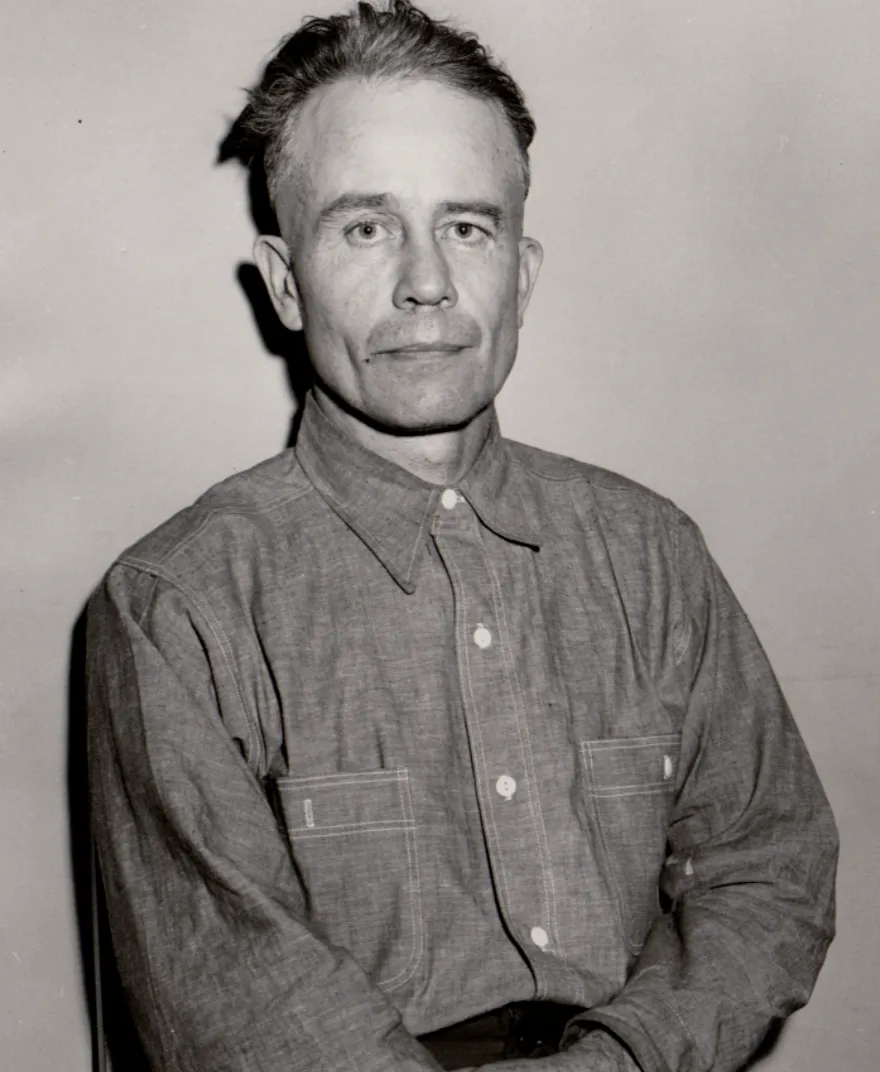
Portrait of Ed Gein published with a museum exhibition.
Graveface Museum (reprodukce) / © All rights reserved / gravefacemuseum.com
About this image
- Original title
- ed-gein-samostatny-archivni-portret.jpg
- Author
- A&E (reprodukce archivního snímku)
- Source
- aetv.com
- Licence
- © All rights reserved
- Changes
- resized, converted to AVIF and WebP, metadata removed
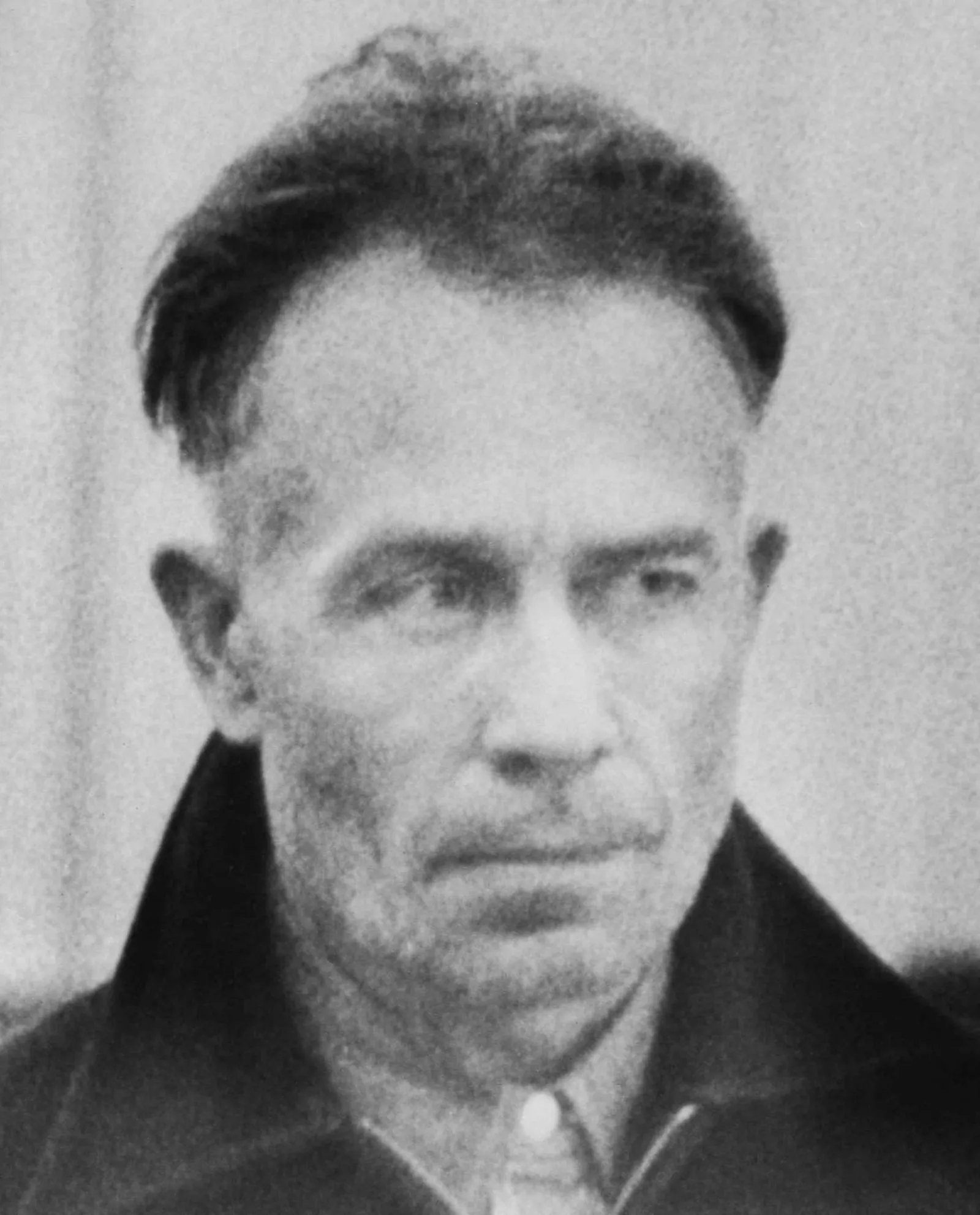
Archive portrait of Ed Gein published by A&E.
A&E (reprodukce archivního snímku) / © All rights reserved / aetv.com
About this image
- Original title
- ed-gein-eskorta-ke-kriminalisticke-laboratori-1957.webp
- Author
- Edwin Stein / Wisconsin Historical Society, IM139360 / Cordon Press / Antena 3
- Source
- antena3.com
- Licence
- © All rights reserved
- Changes
- resized, converted to AVIF and WebP, metadata removed
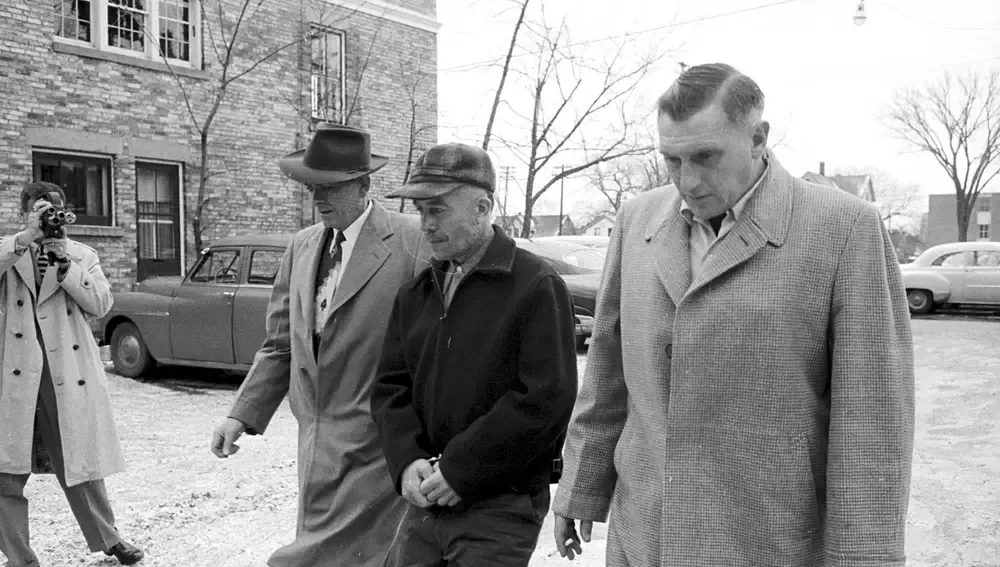
Police officers escort Ed Gein to the state crime laboratory in Wisconsin in 1957.
Edwin Stein / Wisconsin Historical Society, IM139360 / Cordon Press / Antena 3 / © All rights reserved / antena3.com
About this image
- Original title
- ed-gein-zapis-u-prepazky-madison-1957.jpg
- Author
- Bettmann / Getty Images / Oxygen
- Source
- oxygen.com
- Licence
- © All rights reserved
- Changes
- resized, converted to AVIF and WebP, metadata removed
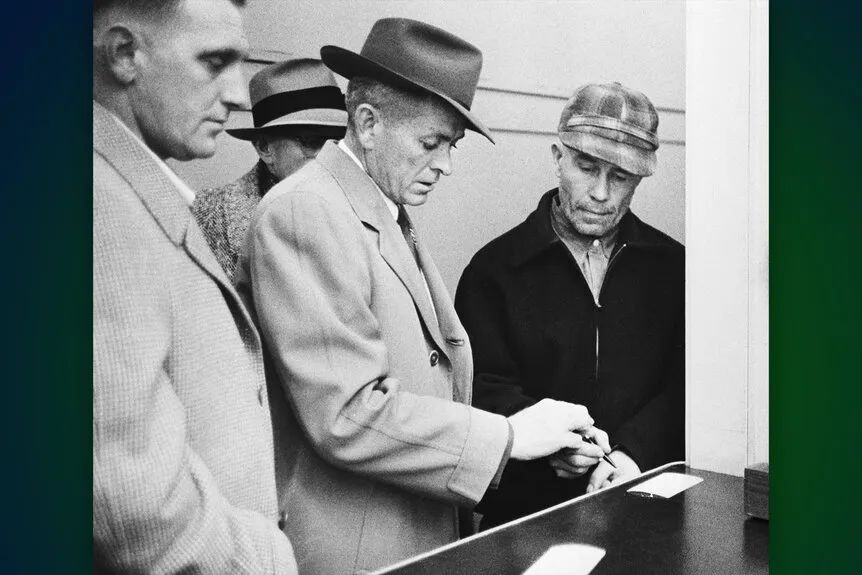
Registration of Ed Gein at the state crime laboratory in Madison.
Bettmann / Getty Images / Oxygen / © All rights reserved / oxygen.com
About this image
- Original title
- ed-gein-odvod-v-tmavem-kabate.jpg
- Author
- De Morgen (reprodukce)
- Source
- demorgen.be
- Licence
- © All rights reserved
- Changes
- resized, converted to AVIF and WebP, metadata removed
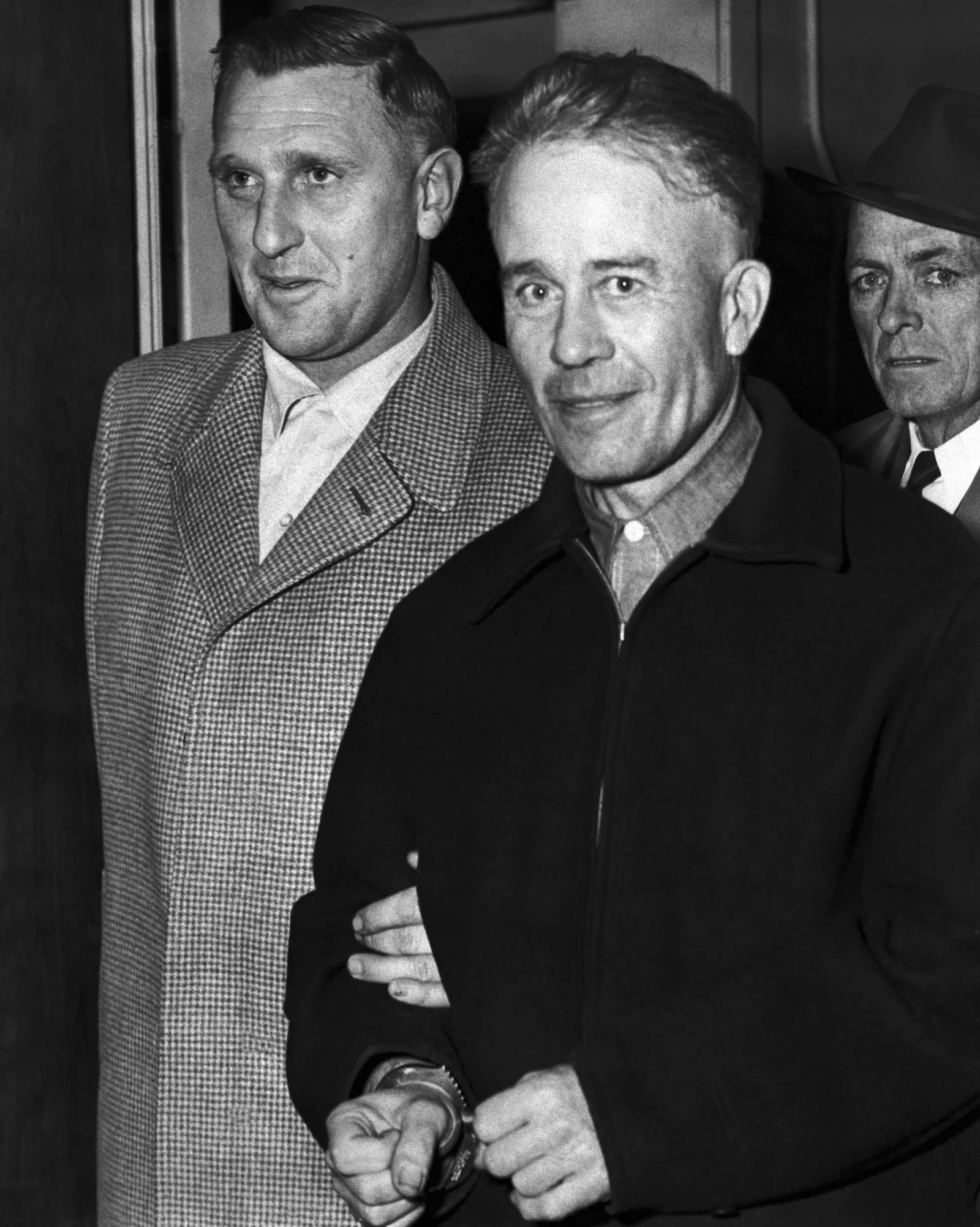
Archive photograph of Ed Gein being led away under escort.
De Morgen (reprodukce) / © All rights reserved / demorgen.be
About this image
- Original title
- ed-gein-geinuv-dum-loznice-1957.webp
- Author
- Frank Scherschel / Time & Life Pictures / Getty Images / TIME
- Source
- time.com
- Licence
- © All rights reserved
- Changes
- resized, converted to AVIF and WebP, metadata removed
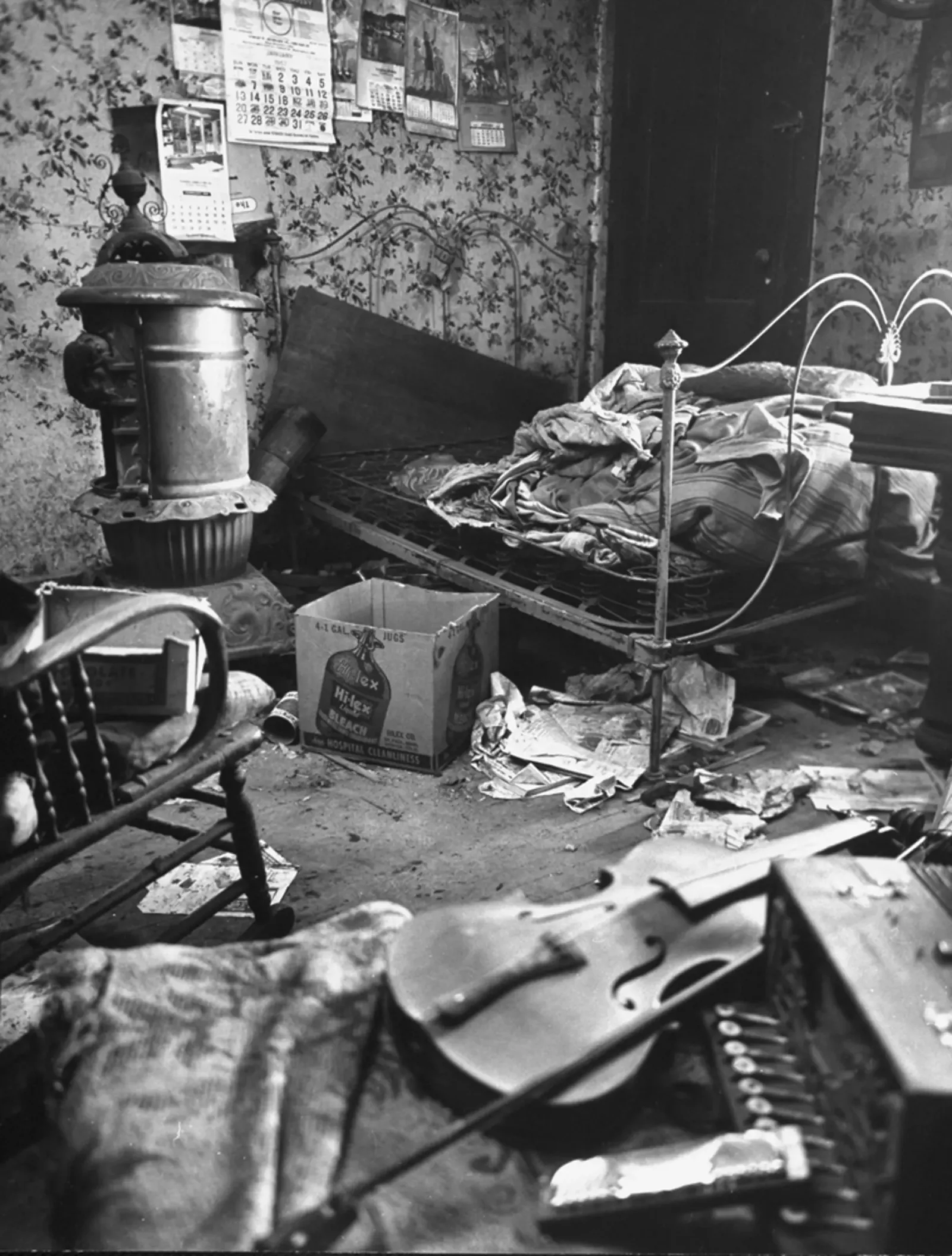
Interior of the bedroom in Ed Gein's house in Plainfield in 1957.
Frank Scherschel / Time & Life Pictures / Getty Images / TIME / © All rights reserved / time.com
About this image
- Original title
- ed-gein-vozidla-kriminalisticke-laboratore.jpg
- Author
- Frank Scherschel / LIFE Photo Collection / Google Arts & Culture
- Source
- artsandculture.google.com
- Licence
- © All rights reserved
- Changes
- resized, converted to AVIF and WebP, metadata removed
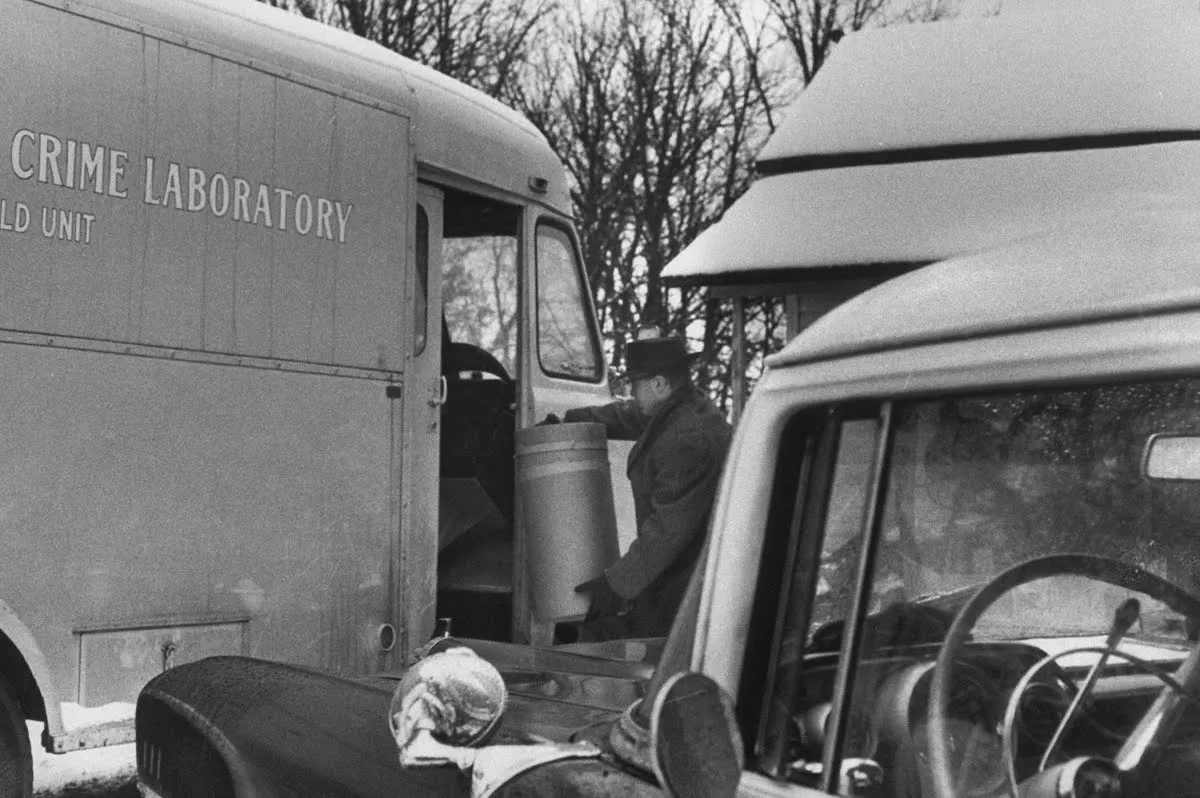
Contemporary image of state crime laboratory vehicles from a series on the Ed Gein case.
Frank Scherschel / LIFE Photo Collection / Google Arts & Culture / © All rights reserved / artsandculture.google.com
About this image
- Original title
- 1930 census Gein.jpg
- Author
- U.S. Bureau of the Census
- Source
- commons.wikimedia.org
- Licence
- Public domain
- Changes
- resized, converted to AVIF and WebP, metadata removed
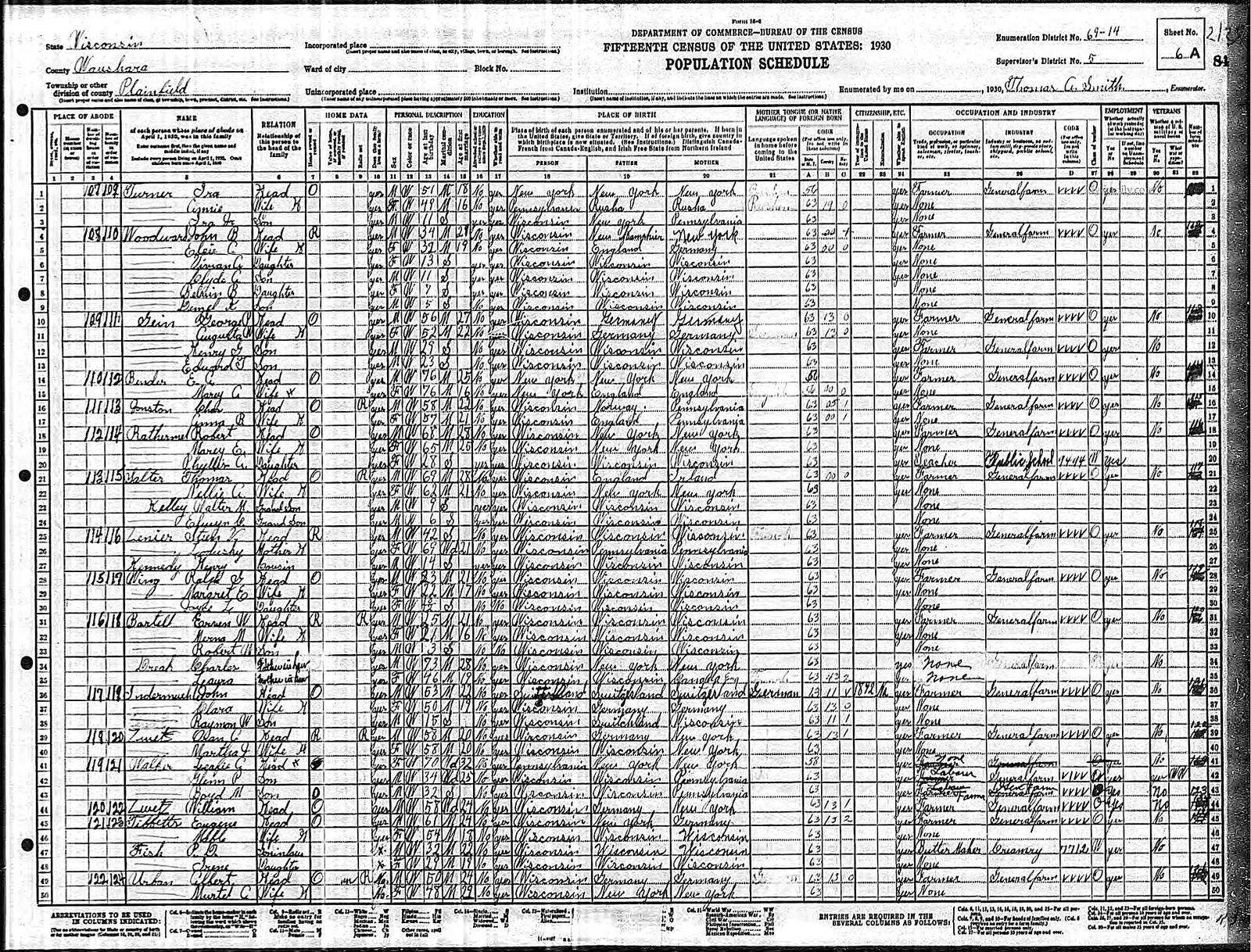
Page of the 1930 census in Plainfield listing the Gein family.
U.S. Bureau of the Census / Public domain / commons.wikimedia.org
About this image
- Original title
- ed-gein-po-zadrzeni-francis-miller.jpg
- Author
- Francis Miller / Time & Life Pictures / Getty Images / TIME
- Source
- time.com
- Licence
- © All rights reserved
- Changes
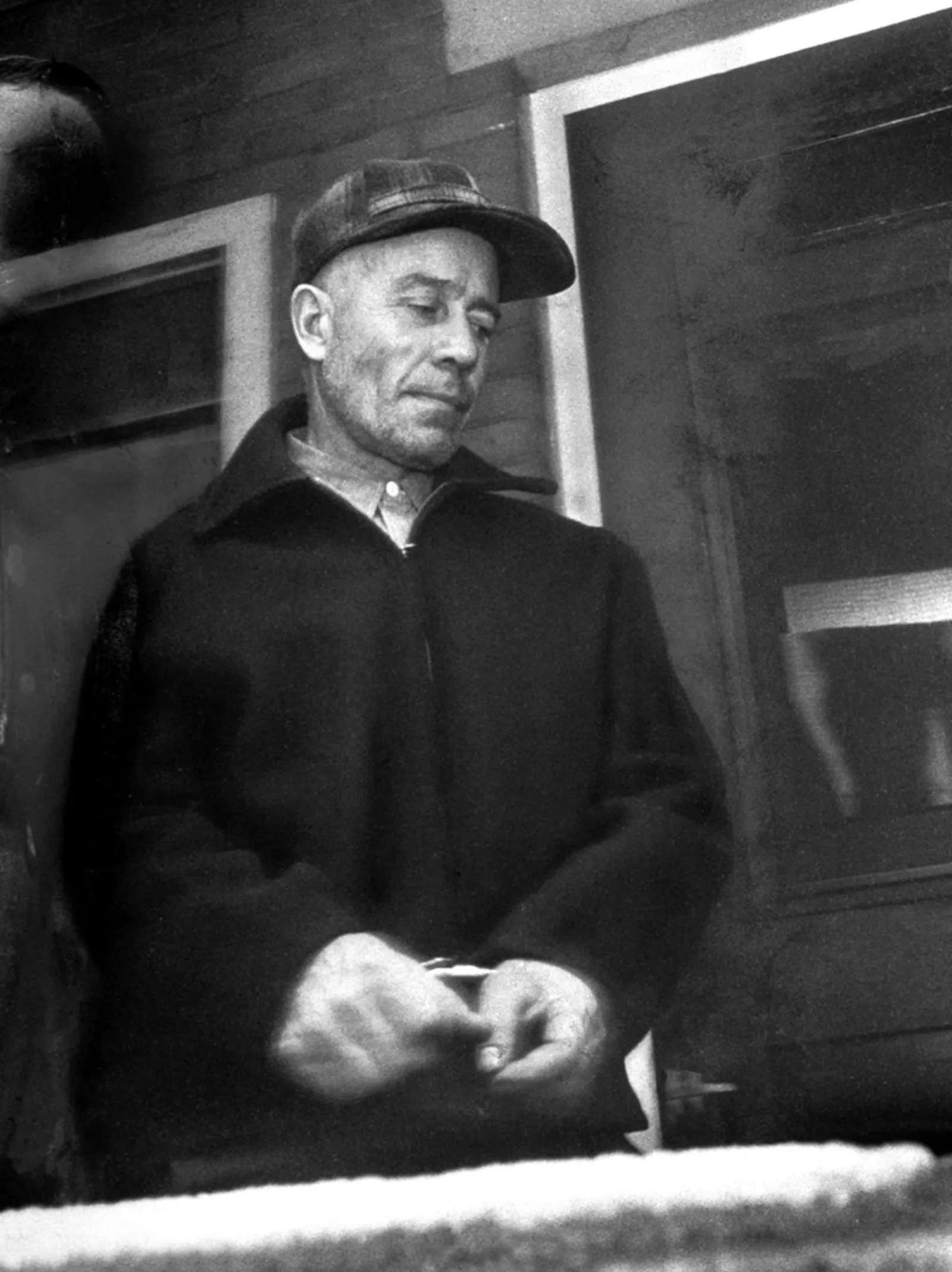
- resized, converted to AVIF and WebP, metadata removed
Ed Gein in a photograph by Francis Miller from Plainfield, 1957.
Francis Miller / Time & Life Pictures / Getty Images / TIME / © All rights reserved / time.com
14 / 16 / Open questions
What is still missing
- Did his brother Henry die in an accident in 1944, or did Ed kill him? The death was not investigated and no autopsy was performed.
- How many graves did Gein actually rob: 9, 10, about a dozen, or up to 40 trips, of which he completed only some? Police opened only two graves.
- Was Gein involved in the disappearances of Georgia Weckler, Evelyn Hartley, Victor Travis and Raymond Burgess, or James Walsh? Whose were the remains of two teenage girls mentioned by Judge Gollmar?
- Who set fire to Gein’s house on 20 Mar 1958?
- Did he shoot Worden deliberately, or by an accidental discharge while examining the rifle, as he claimed?
- The exact wording of the November 1968 verdict and the exact dates of the trial: neither the court record nor the decision is online.
- Differences between sources: Mary Hogan’s age (54 or 51), the date of the exhumation (15 or 25 Nov 1957), investigator Wilimovsky’s first name (Joseph or Allen), the year of the transfer to Mendota (1978 or the late 1970s), the year of Gollmar’s book (1981 or 1982).
- Contemporary Wisconsin newspapers, the Wisconsin Historical Society archive and the books by Gollmar and Schechter were not available during research.
15 / 16 / Citations
Sources
A number in square brackets next to a claim refers to an item in this list. A claim without a number has no source assigned yet. Details may vary between sources; disputed and theoretical items are marked.
25Sources in total
- Primary0
- Secondary12
- Media13
Checked: 17 Nov 2026. All 25 sources were read during research; Wikipedia and Find a Grave served only as a guide and are not among the sources. Every piece of information marked as fact has at least two independent sources (Biography.com, HISTORY and Crime+Investigation UK each count as a single publisher); information from a single source is marked in the text. Primary court documents were not available. Check against the 1968 court record, contemporary Wisconsin newspapers and the Wisconsin Historical Society archive before publication.
- [1]Biography.com (T. Piccotti, C. Caruso, 3 Oct 2025), Ed Gein: The Killer & Grave Robber Featured in ‘Monster’ Season 3. biography.com / cited 44×secondary
- [2]Biography.com (T. Piccotti), Was Ed Gein a Serial Killer? What We Know About His Victims. biography.com / cited 2×secondary
- [3]HISTORY (A&E), Body of Ed Gein's final victim, Bernice Worden, is found | November 16, 1957. history.com / cited 2×secondary
- [4]HISTORY (A&E), Infamous serial killer Ed Gein dies | July 26, 1984. history.com / cited 7×secondary
- [5]EBSCO Research Starters (C. Avinger, 2022), Ed Gein. ebsco.com / cited 16×secondary
- [6]UPI Archives (Ray Doherty, 16 Nov 1982), The tale of 'Psycho' killer Ed Gein. upi.com / cited 5×media
- [7]UPI Archives (Frank Ryan, 27 Jul 1984), 'Psycho' inspiration Ed Gein dies. upi.com / cited 8×media
- [8]The New York Times (AP, 22 Oct 1987), Judge Robert H. Gollmar, 84; Presided Over 'Psycho' Trial. nytimes.com / cited 5×media
16 / 16 / Revision history
Revision history
Every edit to this page is logged. Corrections sent in by readers are applied only after the editors check them against sources.
- Published
- Updated
- Edits
- 1
- Page published