Skip to content
Content warningReal violent crimes; victims are named. Help: findahelpline.com. More

This page describes real violent crimes and names the victims. Victims come first; we leave out details that serve only sensationalism. Help: free helplines in your country at findahelpline.com; in an emergency call 112 (EU) or 911 (US).

Killed 8 Aug 1973USA / 1970-1973Revision history

Dean Corll

Dean Arnold Corll, born 24 Dec 1939, Fort Wayne (Indiana)

An electrician from Houston whose family made sweets. From 1970 to 1973 he abducted, tortured and murdered boys and young men. His victims were brought to him by two teenage accomplices, David Brooks and Elmer Wayne Henley, often their own friends from the Houston Heights neighbourhood. The case came to light on 8 Aug 1973, when Henley shot Corll dead at his house in Pasadena and then led police to the graves. Within a week police dug up 27 bodies; counting the remains found in 1983, there are 28 known victims. Corll never stood trial; only his accomplices were convicted. One victim still has no name.

27
bodies dug up from 8 to 13 Aug 1973 at three sites
● Fact
28
known victims after the identification of the remains found in 1983
● Fact
6
murders for which Henley was convicted; Brooks for 1
● Fact
1
victim still without a name (ML73-3356)
● Fact
6Fact
7Disputed
2Theory
83 of 83claims have a source
77sources, 5 of them primary
Ratings and discussion →
How to read labels and source numbers
● Factestablished by a court, authority, witnesses or confession
◐ Disputedsources disagree
○ Theoryassumption, unverified
A number in square brackets [n] next to a claim opens a preview of the source. A claim without a number has no source assigned yet.
02 / 16 / Timeline

From birth to DNA identifications

Events: 51 / 1939–2025

  1. 01

    Life

    1939–67
    1939
    24 Dec

    Birth

    Life

    He was born in Fort Wayne, Indiana. The year and place are given by both the Houston Chronicle and All That’s Interesting; only the Houston Chronicle gives the exact day. [30] [33] [50]

  2. 1946-1953

    Family breakdown

    Life

    His parents divorced, remarried and divorced again. The family moved to Tennessee, to Pasadena and then to Vidor near Beaumont. He had a younger brother, Stanley. [33] [50]

  3. 1950s

    Pecan Prince

    Life

    His mother Mary and her next husband founded the Pecan Prince sweets business. Dean operated the machines. [33] [50]

  4. c. 1962

    Corll Candy Company

    Life

    After returning from Indiana he helped his mother with her new company in Houston Heights and was its vice president. Sources give the year of his return as 1960 or 1962. [33] [50]

  5. 1964

    Army

    Life

    According to the Houston Chronicle and All That’s Interesting he served about 10 months in the army and was discharged because of the family business. The NYT in August 1973 wrote of a year of service at Fort Hood from 1954 to 1955. [33] [50] [60] [62]

  6. 1967

    David Brooks

    Life

    He met twelve-year-old David Brooks, who later became his accomplice. [32] [50]

  7. 02

    Crimes

    1970–73
    1970
    25 Sep

    Jeffrey Konen

    Crimes

    The eighteen-year-old University of Texas student disappeared while hitchhiking home from Austin to Houston. He is the first known victim. [32] [50]

  8. 13 Dec

    Glass and Yates

    Crimes

    Two boys left a church meeting and got into a car with Brooks. [5] [34]

  9. 1971
    30 Jan

    The Waldrop brothers

    Crimes

    Donald (15) and Jerry (13) disappeared on their way to a bowling alley. They were buried in a single grave in the boat shed. [2] [5]

  10. March

    Randell Harvey

    Crimes

    The fifteen-year-old boy from the Heights disappeared on his way to work at a service station. [5] [6] [28]

  11. May

    Hilligiest and Winkle

    Crimes

    Thirteen-year-old David Hilligiest, Henley’s neighbour, went swimming with his friend Gregory Winkle, and neither came back. The NYT gives 29 May 1971, an AP report 5 May 1971. [3] [57] [61] [64]

  12. Ruben Haney

    Crimes

    According to his confession, Brooks witnessed a murder for the first time in Corll’s apartment on San Felipe. [2] [56]

  13. 1972

    Henley

    Crimes

    Brooks brought Elmer Wayne Henley to Corll. From then on, both accomplices also took part in the murders. [2] [3]

  14. March

    Frank Aguirre

    Crimes

    Rhonda Williams’s eighteen-year-old fiancé disappeared after his shift. According to his confession, Henley lured him with the handcuff trick. [3] [39] [68]

  15. 20 Apr

    Mark Scott

    Crimes

    Henley’s seventeen-year-old schoolmate was killed in Corll’s apartment on Schuler Street. He fought back with a knife. His body was never found. [3] [48] [50] [56] [77]

  16. Delone and Billy Baulch

    Crimes

    According to Brooks’s confession, Henley killed both, Delone with a shot to the head and strangulation, Baulch by strangulation. They were buried near High Island. [2] [3]

  17. 1973
    February

    Joseph Lyles

    Crimes

    Seventeen-year-old Lyles disappeared. His remains were not found until 1983. [7] [27] [74]

  18. June

    Billy Lawrence

    Crimes

    Henley’s fifteen-year-old friend disappeared in the first week of June. He then sent his father a letter about a job in Austin. According to the indictment of Brooks, he died around 10 Jul 1973. [2] [56] [59] [62]

  19. 25 Jul

    Jones and Cobble

    Crimes

    Marty Ray Jones (18) and Charles Cary Cobble (17) disappeared together. On 8 Aug 1973 they were the first victims Henley named to police. [3] [57] [60] [62]

  20. 3 Aug

    The last victim

    Crimes

    Thirteen-year-old James Stanton Dreymala rode off on his bicycle and did not come back. [2] [5] [10]

  21. 03

    Discovery, accomplices’ trials and aftermath

    1973–25
    1973
    8 Aug

    Corll’s death

    Discovery, accomplices’ trials and aftermath

    After an all-night party Corll tied up Henley, Tim Kerley and Rhonda Williams. Henley talked him into releasing him and then shot him dead in the house on Lamar Drive in Pasadena. In the morning he called the police himself. [3] [39] [45] [57]

  22. 8 Aug

    The boat shed

    Discovery, accomplices’ trials and aftermath

    Henley led police to the boat shed. That evening 8 bodies were dug up there, most of them wrapped in plastic and covered with lime. [3] [5] [57]

  23. 9 Aug

    Confessions and 9 more bodies

    Discovery, accomplices’ trials and aftermath

    Henley signed a written confession and Brooks gave a statement to the Houston police. Another 9 bodies were found in the boat shed. Henley then led officers to Lake Sam Rayburn. [2] [3] [5] [58]

  24. 10 Aug

    Sam Rayburn and High Island

    Discovery, accomplices’ trials and aftermath

    Henley showed the graves near Lake Sam Rayburn and on the beach near High Island. Brooks signed two written confessions. [2] [3]

  25. 11 Aug

    Charges in Houston

    Discovery, accomplices’ trials and aftermath

    Henley was charged with the murders of Cobble and Jones, Brooks with the murder of Billy Lawrence. [56] [60]

  26. 13 Aug

    Police defend their procedure

    Discovery, accomplices’ trials and aftermath

    Police Chief Herman Short defended the fact that the police had recorded the reported boys as runaways. A total of 27 bodies were found. [36] [62] [63]

  27. 17 Sep

    Self-defence

    Discovery, accomplices’ trials and aftermath

    The authorities ruled the shooting of Corll self-defence. Henley was not prosecuted for it. [45] [65]

  28. 1974
    1 Feb

    Change of venue

    Discovery, accomplices’ trials and aftermath

    Judge William M. Hatten moved Henley’s trial from Houston to San Antonio. Only the 1978 appellate decision reports it. [1]

  29. 1 Jul

    Henley’s trial

    Discovery, accomplices’ trials and aftermath

    Jury selection began in San Antonio. Henley was charged with 6 murders. [1] [66]

  30. 15 Jul

    Verdict

    Discovery, accomplices’ trials and aftermath

    After less than 90 minutes the jury found him guilty of all 6 murders. [1] [70]

  31. 16 Jul

    Six times 99 years

    Discovery, accomplices’ trials and aftermath

    The jury sentenced him to 99 years for each murder. The court ordered the sentences to be served consecutively. [1] [70] [71]

  32. 1975
    February to March

    Brooks’s trial

    Discovery, accomplices’ trials and aftermath

    Brooks was convicted in Houston of the murder of Billy Lawrence and sentenced to life. [2] [32] [45] [51]

  33. 1978
    20 Dec

    Conviction reversed

    Discovery, accomplices’ trials and aftermath

    The Texas Court of Criminal Appeals reversed Henley’s conviction because the court had denied him a hearing on a further change of venue. [1] [45]

  34. 1979
    16 May

    Brooks affirmed

    Discovery, accomplices’ trials and aftermath

    The appellate court affirmed Brooks’s life sentence. [2]

  35. June

    Retrial

    Discovery, accomplices’ trials and aftermath

    Henley was convicted again in Corpus Christi, this time receiving life for each of the 6 murders. [3] [42] [45]

  36. 1982
    16 Sep

    Judgment affirmed

    Discovery, accomplices’ trials and aftermath

    The Court of Appeals in Corpus Christi affirmed the 1979 judgments. [3]

  37. 1983

    Remains on the beach

    Discovery, accomplices’ trials and aftermath

    Skeletal remains were found on a beach in Jefferson County. In 2009 DNA identified them as Joseph Lyles. [7] [32] [74]

  38. 1985
    July

    Branch identified

    Discovery, accomplices’ trials and aftermath

    Remains from the boat shed were identified as W. K. “Rusty” Branch Jr. Only UPI reports the year of identification. [72] [75]

  39. 1994

    Misidentification

    Discovery, accomplices’ trials and aftermath

    A body from the boat shed was identified as Mark Scott; sources give the year as 1993 or 1994. In 2011 it turned out to be Steven Sickman. [5] [15] [73]

  40. 2008

    Randell Harvey

    Discovery, accomplices’ trials and aftermath

    Anthropologist Sharon Derrick obtained DNA from his sisters. Remains ML73-3349 were officially identified as Randell Lee Harvey. [6] [15] [30]

  41. 2009
    11 to 12 Nov

    Lyles and the burial of an unknown victim

    Discovery, accomplices’ trials and aftermath

    DNA identified Joseph Lyles. The next day the unidentified victim ML73-3356 was buried at Harris County Cemetery. [7] [29] [74]

  42. 2010
    September

    The Baulch mix-up

    Discovery, accomplices’ trials and aftermath

    DNA showed that the grave next to Billy Baulch did not hold his brother Michael. An exhumation followed. [16] [17] [28]

  43. 2011

    Sickman and Bunton

    Discovery, accomplices’ trials and aftermath

    DNA confirmed Steven Sickman and Roy Eugene Bunton, previously misidentified as Michael Baulch. [18] [27] [30] [73] [77]

  44. 2015
    October

    Review deferred by 10 years

    Discovery, accomplices’ trials and aftermath

    Henley was denied parole. He was the first prisoner to have his next review deferred by 10 years under a new law. [10] [11]

  45. 2020
    28 May

    Brooks’s death

    Discovery, accomplices’ trials and aftermath

    David Brooks died aged 65 in a hospital in Galveston. Sources give COVID-19 as a contributing cause. [23] [43] [44]

  46. 2021
    August

    New search

    Discovery, accomplices’ trials and aftermath

    Texas EquuSearch and the Pasadena police searched for further remains using radar. [20] [42]

  47. 2022
    August

    No compassionate release

    Discovery, accomplices’ trials and aftermath

    The parole board denied Henley’s request for compassionate release. [11] [13] [45]

  48. 2023
    August

    New reconstruction

    Discovery, accomplices’ trials and aftermath

    NCMEC released a new likeness of the unidentified victim “John Houston Doe 1973”. [21] [24] [52]

  49. 2025
    April

    Lise Olsen’s book

    Discovery, accomplices’ trials and aftermath

    The book The Scientist and the Serial Killer, about Sharon Derrick’s work, was published. [22] [48] [49]

  50. 17 Aug

    Documentary

    Discovery, accomplices’ trials and aftermath

    The Serial Killer’s Apprentice (Investigation Discovery, HBO Max) featured Henley’s first interview about the murders. [9] [37] [51]

  51. 7 Nov

    Denied again

    Discovery, accomplices’ trials and aftermath

    According to KPRC, the parole board again denied Henley parole and deferred the next review by 10 years. [10]

03 / 16 / Victims first

Named victims

Named victims: 30 / Survivors: 2

The list contains 28 known victims: 27 bodies dug up in August 1973 and the remains of Joseph Lyles found in 1983. Also listed are Mark Scott, whose body was never found, and a victim attributed only on the basis of bones from the boat shed. The dates are dates of disappearance; where two sources do not agree, we give only the month or the year. The place is the place of discovery. The age is given only where two independent sources agree on it (11 victims). For the others the sources differ or only one gives the age: Ruben Haney 19 or 17, Johnny Ray Delone 18 or 16, Roy Bunton 17 to 19, Rusty Branch 18 or 19. Delone’s name is spelled Delome elsewhere, and the courts spell Baulch as Balch. James Stanton Dreymala was called Stanton by his family. Seven victims have a name documented by only one source or only by Wikipedia, so they are listed by description. According to the NYT, the medical examiner in 1974 did not consider one of them a victim of this case; another is attributed only by Lise Olsen’s research. One victim remains unidentified.

Showing 12 of 30
  • Jeffrey Alan Konen
    beach near High Island, Bolivar Peninsula, under a boulder, High Island, Bolivar Peninsula (Galveston County)
    25 Sep 1970
    age 18
  • James Eugene Glass
    Southwest Boat Storage boat shed, Silver Bell Street, southwest Houston, boat shed, southwest Houston (Harris County)
    13 Dec 1970
    age unknown
  • Danny Michael Yates
    Southwest Boat Storage boat shed, Silver Bell Street, southwest Houston, boat shed, southwest Houston (Harris County)
    13 Dec 1970
    age unknown
  • Donald Wayne Waldrop
    Southwest Boat Storage boat shed, Silver Bell Street, southwest Houston, shared grave with his brother, boat shed, southwest Houston (Harris County)
    30 Jan 1971
    age 15
  • Jerry Lynn Waldrop
    Southwest Boat Storage boat shed, Silver Bell Street, southwest Houston, shared grave with his brother, boat shed, southwest Houston (Harris County)
    30 Jan 1971
    age 13
  • Randell Lee Harvey
    Southwest Boat Storage boat shed, Silver Bell Street, southwest Houston (ML73-3349, identified in 2008), boat shed, southwest Houston (Harris County)
    March 1971
    age 15
  • David William Hilligiest
    Southwest Boat Storage boat shed, Silver Bell Street, southwest Houston, boat shed, southwest Houston (Harris County)
    May 1971 (29 May or 5 May, sources differ)
    age 13
  • Gregory Malley Winkle
    Southwest Boat Storage boat shed, Silver Bell Street, southwest Houston, boat shed, southwest Houston (Harris County)
    May 1971 (disappeared with Hilligiest)
    age unknown
  • Ruben Willfard Watson Haney
    Southwest Boat Storage boat shed, Silver Bell Street, southwest Houston according to Brooks; Henley, from hearsay, gave High Island, boat shed, southwest Houston (Harris County)
    1971
    age unknown
  • Frank Anthony Aguirre
    beach near High Island, Bolivar Peninsula, High Island, Bolivar Peninsula (Galveston County)
    March 1972
    age unknown
  • Mark Steven Scott
    body not found; according to Henley buried near High Island, according to Brooks on the beach or in the boat shed, High Island, Bolivar Peninsula (Galveston County)
    20 Apr 1972
    age 17
  • Johnny Ray Delone
    beach near High Island, Bolivar Peninsula, High Island, Bolivar Peninsula (Galveston County)
    1972
    age unknown

By location

High Island, Bolivar Peninsula (Galveston County)7
beach in Jefferson County1
boat shed, southwest Houston (Harris County)18
Lake Sam Rayburn, San Augustine County4

Victim profile

12 and under0
13–179
18–242
25 and over0
Women and girls: 0 / Men and boys: 30 (of 30 named)

Survivors

  • Rhonda Williams
    Aged 15, from the Heights, former fiancée of Frank Aguirre. During the night before 8 Aug 1973 Corll tied her up together with Henley and Kerley in the house on Lamar Drive. She survived because Henley shot Corll dead. In 2014 she spoke about the attack to the Houston Press
  • Tim Kerley
    Timothy Cordell Kerley; sources give his age as both 19 and 20. On 8 Aug 1973 he lay tied to the torture board when Henley shot Corll dead

Unconfirmed

Henley claimed that police stopped digging prematurely in August 1973 and that more bodies remain on the beach near High Island, among them Mark Scott. In their 2025 book, Lise Olsen and Sharon Derrick count at least 30 victims; the authorities have not accepted all of their identifications. According to the Houston Chronicle, 42 other boys disappeared during Corll’s series, and in 2021 Texas EquuSearch spoke of up to 20 further victims; each figure is reported by only one source. In his confession Brooks said that the first victims were supposed to have been “sent off somewhere in California”, and he did not know the names of the first two, killed in the apartment on Yorktown (only the 1979 decision reports it). Norman Lamar Prater (16), who disappeared on 14 Jan 1973 in Dallas and had previously been linked to Corll, was ruled out: he died on 9 Jul 1973 in Rockport in a hit-and-run accident and was identified in December 2025 (only The Charley Project reports it).

04 / 16 / Offender’s pattern

What recurred

Corll left no messages. His pattern consists of the accomplices who brought him boys from the neighbourhood for money, the handcuff trick, the torture board and graves at three sites. Each item is marked as a documented fact, a disputed point or a theory.

Traits: 8

01

Accomplices brought the victims

● Fact

Brooks and later Henley lured boys, often their own friends and schoolmates, with a party, beer, marijuana or a ride. Corll paid them for it. [3] [4] [5] [10] [59] [68]

The amount differs: in his confession Henley said he was promised $200 for each boy, police in August 1973 spoke of $5 to $10, and according to the AP it was $10 to $200.

02

The handcuff trick

● Fact

Henley put the handcuffs on himself, with the key in his pocket, and challenged the victim to try them on too. According to his confession, this is how he lured Frank Aguirre. The same trick came up at the 1974 trial. [3] [68]

Only Henley’s confession, as quoted by the court, reports that Corll bought the handcuffs at various pawnshops.

03

The torture board

● Fact

He tied the victims by their hands and feet to a large plywood board, raped them and tortured them for hours or days. A loud radio muffled the screams. [1] [5] [39] [41]

Only Rhonda Williams, in an interview with the Houston Press, gives the board’s dimensions (about 8 × 2 feet).

04

Letters and calls home

● Fact

The victims had to write to or call their families so that a search would not start right away. Billy Lawrence sent his father a letter about a job in Austin, Charles Cobble called his father, and Mark Scott’s family received a postcard from Austin. [2] [32] [50] [77]

05

Strangling or shooting

◐ Disputed

According to the medical examiner at Brooks’s trial, most victims were strangled with a cord, which often remained around the neck. Others were shot in the head. [2] [8] [32] [58]

The calibre differs: more recent sources give a .22 pistol, while Brooks in his confession gave a .25 calibre in Delone’s case.

06

Plastic, lime and three burial sites

● Fact

He transported the bodies in a wooden box in a van, wrapped them in plastic and covered them with lime. He buried them in rented stall No. 11 at a boat shed in southwest Houston, in the woods near Lake Sam Rayburn and on the beach near High Island. [2] [3] [29] [57]

07

Constant moving

● Fact

From 1970 to 1973 he frequently changed apartments and houses in Houston (Yorktown, San Felipe, Mangum, Columbia, Schuler Street, Westcott) and finally settled on Lamar Drive in Pasadena. [2] [3] [50]

08

The Dallas organisation

○ Theory

He told his accomplices that he belonged to an organisation in Dallas that bought and sold boys, and that it would get them if they betrayed him. Lise Olsen, Katherine Ramsland and Tracy Ullman believe there was a real link to a pornography ring. The police did not investigate it at the time. [3] [22] [41] [49]

05 / 16 / Modus operandi

How the behaviour evolved

Phases: 3

1939-1970

Before the murders

A childhood marked by his parents’ divorces and moves, then work in the family sweets business in Houston Heights, where he handed out sweets to neighbourhood children.

  • 1939: born in Fort Wayne
  • 1950s: Pecan Prince sweets
  • c. 1962: Corll Candy Company
  • 1964: army
  • 1967: meets Brooks
1970-1973 / Houston and Pasadena

Murders

In less than three years he killed at least 28 boys and young men. From 1972 his accomplices also killed.

  • 25 Sep 1970: Jeffrey Konen
  • 1971: the Waldrop brothers, Harvey, Hilligiest and Winkle
  • 1972: Henley joins
  • 1972 to 1973: a series of victims from the Heights
  • 3 Aug 1973: James Stanton Dreymala
From 8 Aug 1973

Death, accomplices’ trials, identification

Henley shot Corll dead and showed the graves. The accomplices were convicted; the identification of the victims continues to this day.

  • 8 to 13 Aug 1973: 27 bodies
  • 1974 and 1979: Henley’s trials
  • 1975: Brooks’s trial
  • 2008 to 2011: DNA identifications
  • 2025: Henley denied parole again
06 / 16 / Crime scenes

Where and in what order

Places: 6

  1. 01Fort Wayne, Indiana1939
  2. 02Tennessee, Pasadena, Vidor (Texas)1940s and 1950s
  3. 03Houston Heights, Corll Candy Companyc. 1962
  4. 04US Army1964
  5. 05Houston, changing apartments1970-1973
  6. 06Pasadena, 2020 Lamar Drive1973
07 / 16 / Investigation

How the case came to light

Steps: 9

01 / 1970-1973

Reports without a search

Families reported their sons missing; the police recorded them as runaways. In the Heights 150 to 200 missing minors were reported each year, in Houston as a whole more than 5,000. [4] [36] [62] [63]

02 / 8 Aug 1973, morning

The phone call

Henley called the Pasadena police. Officers found him on the pavement in front of the house with Kerley and Williams; Corll’s body lay inside. Henley said he knew of other bodies. [3] [57]

03 / 8 Aug 1973

The names Cobble and Jones

Henley named two missing boys. The Houston police had their missing person reports, and Henley recognised them in photographs. [3] [58]

04 / 8 to 9 Aug 1973

The boat shed

In rented stall No. 11, prisoners under police supervision dug up 8 bodies on the first evening and another 9 the next day. [3] [4] [5] [57]

05 / 9 to 10 Aug 1973

Confessions

Henley signed a written confession, Brooks two after questioning. Henley said Corll had told him of 24 victims; Brooks estimated 25 to 30. [2] [3] [58]

06 / 9 to 13 Aug 1973

Sam Rayburn and High Island

Henley led officers to the graves near Lake Sam Rayburn and on the beach near High Island. In total 27 bodies were found. [2] [3] [62]

07 / August 1973

Evidence in the house

In the house on Lamar Drive officers found a board with holes for handcuffs, plastic sheeting and a box of tools, and in the shed a wooden box for transporting bodies. A driving licence belonging to one of the victims lay in the bedroom. [2] [3] [5]

08 / 1973-1974

Identification by teeth

The victims were identified from dental records, old fractures and descriptions from their families. By July 1974, 21 of the 27 bodies had been identified. [4] [5] [67]

09 / 2006-2011

DNA and corrected errors

Sharon Derrick compared the remains with relatives’ DNA. She identified Harvey and Lyles and uncovered three misidentifications: Bunton had been recorded as Michael Baulch, Sickman as Mark Scott, and the real remains of Michael Baulch had lain unidentified for years. [6] [7] [27] [28] [30]

What went wrong

  • Missing boys treated as runaways
    The Houston police recorded the reported boys as runaways from home and did not search for them. In August 1973 Chief Herman Short defended this by saying that in a runaway case an officer cannot obtain an arrest warrant or enter a place where he is refused entry. By his own account, the Waldrops’ father was told: “You know your boys are runaways.”
  • No one connected disappearances from one neighbourhood
    Many of the victims came from Houston Heights, and eleven attended the same junior high school as the accomplices. In August 1973 the parents of two missing boys publicly criticised the police.
  • Families searched on their own
    David Hilligiest’s family hired a private detective (only the NYT reports it). According to Steven Sickman’s sister, the police hung up on her mother (only the Houston Chronicle reports it).
  • Search ended prematurely
    Henley insisted that bodies remained on the beach near High Island. The search ended nevertheless, and Mark Scott’s body was never found. Olsen and other authors believe the authorities wanted to close the case quickly.
  • Misidentifications
    In 1973 Roy Bunton was identified as Michael Baulch, and in 1994 Steven Sickman as Mark Scott. The real remains of Michael Baulch lay unidentified in cold storage for decades. The errors were corrected only by DNA in 2010 and 2011.
  • An uninvestigated network
    At the time, the police did not investigate Corll’s claims about an organisation in Dallas and about pornography involving the victims.

Impact on forensics and law

  • No death penalty
    The murders fell into a period when the death penalty was suspended in the US and Texas had no life without parole. The victims’ families therefore repeatedly speak out against Henley’s parole.
  • Review deferred by 10 years
    A 2015 law, pushed through by Andy Kahan, allowed the board to defer the next review in the most serious crimes by up to 10 years. Henley was the first prisoner to whom it was applied.
  • Procedural precedent
    Under the 1978 decision of the Texas Court of Criminal Appeals, a court must hold an evidentiary hearing before trial on a motion for a change of venue.
  • Identifying the victims
    The work of anthropologist Sharon Derrick and NCMEC showed how DNA and genetic genealogy give victims back their names after decades.
08 / 16 / People in the case

Witnesses, investigators, relatives

People: 15

Accomplice
Elmer Wayne Henley Jr.
He was 17 in 1973. He brought victims and killed some himself. On 8 Aug 1973 he shot Corll dead and led police to the graves. Convicted of 6 murders.
Accomplice
David Owen Brooks
He had known Corll since the age of 12 and introduced Henley to him. Convicted of the murder of Billy Lawrence. Died on 28 May 2020.
Mother
Mary Corll
Ran the family businesses Pecan Prince and Corll Candy Company.
Investigator
David M. Mullican
Pasadena police detective; on 9 Aug 1973 he took down Henley’s confession.
Investigator
Jim Tucker
Houston police detective; on 9 Aug 1973 he questioned Brooks.
Police chief
Herman Short
Chief of the Houston police. In August 1973 he defended the fact that the police had recorded the reported boys as runaways.

Accomplices: David Owen Brooks and Elmer Wayne Henley Jr. brought Corll his victims and took part in the murders. In 1974 Henley was convicted of 6 murders and sentenced to 6 × 99 years, to be served consecutively. The judgment was reversed in 1978; at his 1979 retrial he received life for each murder, affirmed in 1982. He was most recently denied parole on 7 Nov 2025; Henley is alive and remains in prison. In 1975 Brooks received a single life sentence for the murder of Billy Lawrence, and he died in prison in 2020.

09 / 16 / Trial and sentence

The accomplices’ trials

Proceedings: 8

17 Sep 1973 / Harris County

The shooting of Corll

Assistant District Attorney Don Lambright declared that it was clearly a case of self-defence. [45] [65]

Henley not prosecuted
1 to 16 Jul 1974 / San Antonio

Henley, 6 murders

The trial was moved from Houston because of media coverage. According to the NYT, the prosecution relied on Henley’s confession and on autopsies that matched it. The jury found him guilty on 15 Jul and on 16 Jul sentenced him to 99 years for each murder. [1] [66] [69] [70] [71]

6 × 99 years, consecutive
February to March 1975 / Houston

Brooks, murder of Billy Lawrence

According to the 1979 decision, the prosecution relied on the law of principals. Brooks pleaded not guilty, and the jury convicted him. [2] [45] [51]

Life
20 Dec 1978 / Texas Court of Criminal Appeals

Henley, appeal

The court reversed the judgment because the judge had refused to hold a pretrial evidentiary hearing on a further change of venue. It also expressed concern about the jury, which had not been sequestered. [1] [45]

Judgment reversed
16 May 1979 / Texas Court of Criminal Appeals

Brooks, appeal

According to the decision, Brooks’s confessions were admissible and he was not entitled to a jury instruction on being an accessory. [2]

Judgment affirmed
June 1979 / Corpus Christi

Henley, retrial

At Henley’s request, a single jury decided on all 6 murders from 1972 and 1973. It found him guilty again. [3] [42] [45]

Life for each murder
16 Sep 1982 / Court of Appeals in Corpus Christi

Henley, second appeal

The court rejected the objections to the jury selection and to the instruction on the right to counsel. [3]

Judgment affirmed
2015-2025 / Texas Board of Pardons and Paroles

Parole

Henley was repeatedly denied parole, and in 2022 compassionate release as well. Brooks never succeeded either; his last review was in 2018. [10] [11] [13] [23] [30]

Denied

Death

Corll died on the morning of 8 Aug 1973 at his house on Lamar Drive in Pasadena. Henley shot him with his own pistol. He was 33. According to the NYT he was buried on 10 Aug 1973; the sources do not give the location of the grave.

The house

The house at 2020 Lamar Drive was demolished in February 2023 (only the Houston Chronicle reports it).

The accomplices

Henley is alive and remains in prison. Brooks died on 28 May 2020 in a hospital in Galveston.

An unknown name

Victim ML73-3356, found on 9 Aug 1973 in the boat shed wearing Catalina swimming trunks, was buried as unknown in 2009 and later exhumed twice for genetic genealogy. He still has no name.

10 / 16 / Psychology and myths

What is documented and what is not

Items: 7 / each labelled Fact, Disputed or Theory

Henley received six life sentences in 1974

◐ Disputed

That is what the AP and other media report. According to the court decisions, in 1974 he received 99 years for each murder, to be served consecutively, and life for each murder only at the 1979 retrial. [1] [3] [5] [13] [71]

Henley and Brooks pleaded guilty

◐ Disputed

Oxygen writes that they pleaded guilty. Both pleaded not guilty in court and were convicted by a jury. [1] [2] [24] [51] [52]

Brooks received six life sentences

◐ Disputed

That is what KPRC and the AP report. According to the appellate decision, he received a single life sentence for the murder of Billy Lawrence. [2] [10] [43]

The victims were runaways

◐ Disputed

That is how the police recorded them. According to their families, Olsen and other sources, most of the boys were taken to a party by friends; they had not run away. [34] [36] [49] [50] [63]

Mark Scott was identified in 1994

◐ Disputed

According to DNA in 2011, the body identified in 1994 as Scott was Steven Sickman. Scott’s body was never found. [5] [15] [30] [73] [77]

Who was strangled and who was shot

◐ Disputed

The NYT on 14 Aug 1973 wrote that Cobble was strangled and Jones shot. Henley’s confession, the NYT on 10 Aug 1973 and the Houston Chronicle state the opposite: Cobble shot, Jones strangled. [3] [56] [58] [62]

Corll’s Dallas organisation

○ Theory

This was Corll’s claim to his accomplices. It was never proven; Olsen and Ullman believe a real pornography ring was behind it. [3] [41] [49]

11 / 16 / Comparison

Related cases

1972-1978 / USA

John Wayne Gacy

33 victims / Executed 1994
In common

Both murdered boys and young men in the 1970s and buried the bodies; identifying the victims through DNA has taken decades.

Difference

Gacy killed alone in his house near Chicago and was executed. Corll had two accomplices, buried his victims at three sites and never stood trial because one of his accomplices shot him dead.

12 / 16 / Books and films

Treatments of the case

The label is an editorial rating: Recommended means a balanced treatment with verifiable sources; With caution means the work gives the perpetrator a platform or opts for a simplified version.

Book / 1974Source
The Man with the Candy: The Story of the Houston Mass Murders
Jack Olsen, with interviews with Corll’s mother.
Book / 1976Source
The Texans
James Conaway, with Henley’s statements.
Feature / 2011Source
The Lost Boys
Skip Hollandsworth, Texas Monthly. A feature about the victims from the Heights.
Film / 2013With caution
In a Madman's World
Independent feature film, Chris Binum as Henley.
13 / 16 Photos and documents

Photos and documents1

Photos and documents from readers. We publish them after review; you see your own uploads straight away, marked Pending review.

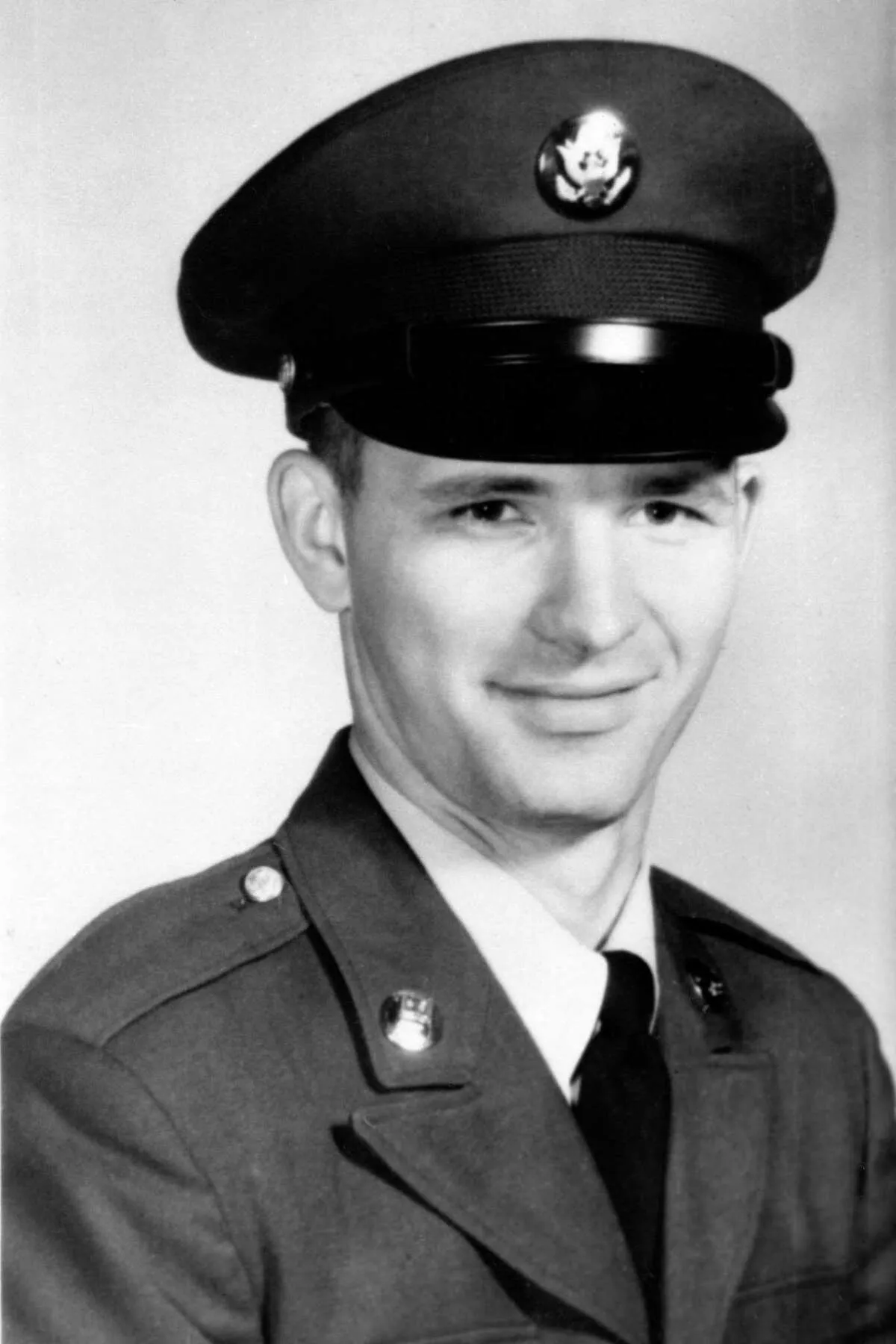
Dean Corll in US Army uniform
Dean Corll in a portrait from his service in the US Army.
14 / 16 / Open questions

What is still missing

  • Who the unidentified victim ML73-3356 is, and how many other victims remain undiscovered on the beach near High Island, in the boat shed or elsewhere.
  • Which 6 murders made up Henley’s indictment. The NYT states that they were victims from his written confession; on that basis, 7 named victims come into question (Cobble, Jones, Lawrence, Delone, Billy and Michael Baulch, Aguirre) and one victim named by a single source.
  • How many bodies lay in the boat shed: 17 according to most sources, 16 or 15 according to others. For High Island the sources give 6, 5 or 7 bodies.
  • The total number of victims: 27, 28, 29 or at least 30. Henley, from Corll’s words, gave 24, Brooks 25 to 30.
  • Corll’s middle name: in August 1973 the press wrote Dean Allen Corll; since the 1974 trial the name given has been Dean Arnold Corll.
  • The weapon Henley used to shoot Corll: a .22 pistol according to most sources, a .25 revolver according to the NYT in 1973. The sources also differ on the number of shots (5 or 6).
  • The time of the phone call on 8 Aug 1973: about 8:15 according to the 1982 decision, 8:24 according to an officer’s testimony at the 1974 trial.
  • The name of the last victim: his full name is James Stanton Dreymala; the court and the AP write James, the family used Stanton.
  • The victims’ ages: Haney 19 or 17, Delone (Delome) 18 or 16, Bunton 17 to 19, Branch 18 or 19; Tim Kerley 19 or 20.
  • Dates of disappearance: Hilligiest and Winkle 29 May or 5 May 1971, Jones and Cobble 25 or 26 Jul 1973.
  • When and where Corll served in the army: about 10 months in 1964, or 1954 to 1955 at Fort Hood.
  • How much Corll paid his accomplices: $200 per boy according to Henley, $5 to $10 according to police in 1973.
  • Whether Corll killed before 1970, and who the first victims were, whom Brooks did not know by name.
  • Why police stopped digging in August 1973 even though Henley claimed bodies remained.

You can help

Add a source, a photo or a correction. We check every submission and credit your nickname on approved ones.

Send a tipCase discussion
15 / 16 / Citations

Sources

A number in square brackets next to a claim refers to an item in this list. A claim without a number has no source assigned yet. Details may vary between sources; disputed and theoretical items are marked.

77Sources in total
  • Primary5
  • Secondary7
  • Media65
Checked: 17 Nov 2026. Research in two rounds: round 1 (55 sources, including the full texts of three court decisions from 1978, 1979 and 1982) and round 2 on the victims (22 sources, among them contemporary NYT articles from 1973 and 1974 and a facsimile of the Houston Chronicle of 11 Aug 1973); after merging, 77 sources, all read during research. Facts have at least two independent sources; Houston Chronicle articles count as one publisher, as do syndicated AP reports. Information from a single source, even from a court decision, is marked in the text or left out. Wikipedia serves only as a guide; Find a Grave was not used as a source. Not available: Texas Monthly, Portal to Texas History, newspapers.com, NamUs, Harris County autopsy reports. Before publication, verify the names of the seven victims listed by description, the ages and disappearance dates of victims with a single source, and the exact six murders in Henley’s indictment.
16 / 16 / Revision history

Revision history

Every edit to this page is logged. Corrections sent in by readers are applied only after the editors check them against sources.

Published
Updated
Edits
1
  1. Page published
    OverviewEditors

Share this page

https://www.killeratlas.com/en/killers/dean-corll/profile

How to cite

Killer Atlas. Dean Corll (1970-1973): case profile [online]. https://www.killeratlas.com/en/killers/dean-corll/profile [accessed 15 Nov 2026]. Checked 15 Nov 2026.