Skip to content
Content warningReal violent crimes; victims are named. Help: findahelpline.com. More

This page describes real violent crimes and names the victims. Victims come first; we leave out details that serve only sensationalism. Help: free helplines in your country at findahelpline.com; in an emergency call 112 (EU) or 911 (US).

Executed 6 Oct 1927Czechoslovakia / 1927Revision history

Martin Lecián

born 31 Oct 1900, Předměstí (today part of Uherský Ostroh)

A safecracker and army deserter from Uherský Ostroh whom the press called the “Terror of Moravia”. From the autumn of 1926 he shot at anyone who disturbed him during a break-in or tried to detain him. In February 1927 he shot dead a night watchman in Jihlava, in March a gendarmerie sergeant near Kvačice, and he wounded others. He was arrested on 23 April 1927 in Nový Bohumín, and on 3 September the Divisional Court in Olomouc sentenced him to death. During an attempt to escape from prison he then fatally wounded the guard Ferencz Kiss. President Masaryk refused clemency, and on 6 October 1927 Lecián was hanged in Olomouc. This is a borderline case: he killed as a robber to escape arrest, not out of an inner need to kill.

3
men killed on duty: a night watchman, a gendarme and a prison guard
● Fact
134
days on the run from December 1926 to his arrest in April 1927
● Fact
351 755 Kč
damage according to the indictment; other sources give 351 775 Kč
◐ Disputed
6 Oct 1927
execution in Olomouc, the last of executioner Wohlschläger’s career
● Fact
5Fact
12Disputed
1Theory
77 of 77claims have a source
26sources, 2 of them primary
Ratings and discussion →
How to read labels and source numbers
● Factestablished by a court, authority, witnesses or confession
◐ Disputedsources disagree
○ Theoryassumption, unverified
A number in square brackets [n] next to a claim opens a preview of the source. A claim without a number has no source assigned yet.
02 / 15 / Timeline

From birth to execution

Events: 47 / 1900–2022

  1. 01

    Life

    1900–26
    1900
    31 Oct

    Birth

    Life

    He was born in Předměstí near Uherský Ostroh in house no. 87, the seventh of ten children of Antonín and Viktorie Lecián. [4] [6] [11]

  2. 1905
    10 Oct

    Death of his mother

    Life

    His mother Viktorie died, according to several sources in a mental asylum. The children then begged and stole. [4] [5] [6] [9]

  3. 1907
    1 Sep

    Primary school

    Life

    He started primary school in Uherský Ostroh. Teachers complained about him from the second year. [4] [6]

  4. 1910
    summer

    “Sold to travelling showmen”

    Life

    According to the files, his father sold or hired him out to travelling showmen for a few crowns. The version that he lost him at cards is a later tradition. [4] [6] [9]

  5. 1914

    First sentences

    Life

    The district courts in Kyjov and Uherské Hradiště punished him for theft. Only Urbášek states this. [4]

  6. 1915
    5 May

    Reformatory

    Life

    He was placed in the Moravian Provincial Reformatory in Nový Jičín. He later said he learned to steal there. [4] [6] [9]

  7. 1918
    10 May

    Release from the reformatory

    Life

    After his release he went to his father in Vienna, then worked as a farmhand for farmers in southern Moravia. [4] [7]

  8. 1922
    1 Oct

    Enlistment

    Life

    He joined the border guard battalion in Fryštát. [4] [6] [9]

  9. 1923
    12 Jan

    First desertion

    Life

    After three weeks he was caught in Kyjov. Further desertions from his unit and military sentences followed. [4] [6]

  10. 1924
    6 Mar

    Theft in Kojetín

    Life

    He robbed Josef Holub’s butcher’s shop in Kojetín and received eight months. [4] [7]

  11. 1925
    25 Feb

    Terezín

    Life

    For another desertion and thefts the Divisional Court gave him 16 months of hard prison, which he served in the Small Fortress. Only Urbášek states this. [4]

  12. 19 Apr

    Police photograph

    Life

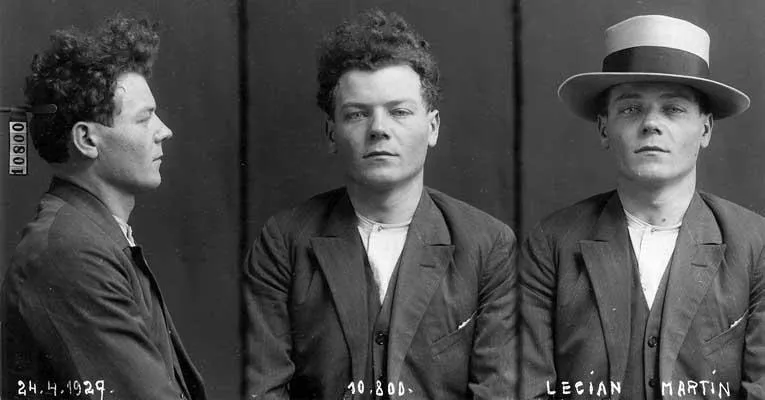
    The well-known prison photograph was taken, which later appeared on wanted posters and in the press. [4] [5]

  13. 1926
    11 Sep

    Escape from Hradisko

    Life

    He escaped from the infectious diseases pavilion of the divisional hospital in Olomouc. Only Urbášek states this. [4]

  14. 02

    Crimes

    1926
    1926
    6 Oct

    First shooting

    Crimes

    In Vyškov he fired at a shopkeeper and a municipal police officer, hitting no one. Only Urbášek states this. [4]

  15. 22 Oct

    Kojetín, police officer Pivný

    Crimes

    He shot the municipal police officer František Pivný in the leg. Pivný survived after treatment and protected the cash in the cooperative. [4] [7]

  16. 03

    Capture, trial, execution

    1926
    1926
    1 Nov

    Arrest in Přerov

    Capture, trial, execution

    Gendarmes arrested him together with Marie Křenovská. Only the regional court established who he was. Only Urbášek states this. [4]

  17. 04

    Crimes

    1926–27
    1926
    10 Dec

    Escape with Béla Székely

    Crimes

    With his fellow prisoner Béla Székely he escaped from the closed ward of the divisional hospital. They injured guards during the escape. [1] [4] [8] [9]

  18. 14 Dec

    Weapons from Hranice

    Crimes

    He robbed a gun shop in Hranice and took pistols, a revolver and ammunition. [4] [5]

  19. 21 Dec

    Parting with Székely

    Crimes

    After robbing a clothing shop in Bučovice, he and Székely parted ways. [1] [4] [8]

  20. 1927
    18 Jan

    Slavkov u Brna

    Crimes

    After breaking into a cooperative he shot at the caretaker and then at police officer Eduard Hanák. Hanák was shot through the abdomen and survived after an operation. [4] [9]

  21. 3 Feb

    Murder of a watchman in Jihlava

    Crimes

    Night watchman František Marčík disturbed him during a break-in at Alois Med’s shop. Lecián hit him with five shots, and Marčík died in hospital in the morning. [4] [9]

  22. 5 Feb

    Kroměříž

    Crimes

    He fired nine shots at the municipal police officers Alois Poledňák and Kučera, missing. Only Urbášek states this; Wikipedia has him as a gendarme. [4]

  23. 10 Feb

    Kojetín, photographer Plíhal

    Crimes

    He hit the photographer Karel Plíhal below the right shoulder blade; the bullet remained in his lung. [4] [7]

  24. 13 Feb

    Eight break-ins in one night

    Crimes

    In a single night he broke in eight times in Uherské Hradiště and Staré Město. [4] [6] [9]

  25. 14 Feb

    Kunovice

    Crimes

    Gendarmerie sergeant František Šilhavý recognised him on a train. Lecián fired twice and fled; Šilhavý was not hit. [4] [9]

  26. 8 Mar

    Murder of a gendarme near Kvačice

    Crimes

    At around 6 pm, beyond Kvačice, he was stopped by gendarmerie sergeant Antonín Stuchlý from Uherský Ostroh. During the check of his papers Lecián shot him dead. The murder of a gendarme turned public opinion against him. [4] [8] [9]

  27. 8 Mar

    Bzenec and Polešovice

    Crimes

    The same evening he wounded a sergeant major on the road near Bzenec, and before midnight he exchanged fire with a gendarmerie patrol near the railway station in Polešovice. He himself was wounded. [4] [1] [8] [9]

  28. 20 Mar

    Krnov

    Crimes

    He robbed a branch of the Baťa company. [4] [11]

  29. 22 to 23 Apr

    Nový Jičín

    Crimes

    With Emanuel Dedek he robbed the safe of the J. & S. Grün shop. He wounded the watchman Ondřej Olbrich, and the robbers left fingerprints at the scene. [4] [6] [9] [19]

  30. 05

    Capture, trial, execution

    1927
    1927
    23 Apr

    Arrest in Nový Bohumín

    Capture, trial, execution

    Plain-clothes police officers detained him with Dedek in Hanke’s inn. At first they thought they had caught Kašpařík; an interrogation the next day confirmed his identity. [4] [5]

  31. 25 to 26 Apr

    Transfer to Olomouc

    Capture, trial, execution

    Crowds came to the railway stations to see him; the transfer was a sensation. [4] [6] [9]

  32. April to June

    Investigation

    Capture, trial, execution

    The investigation was conducted by the Divisional Court in Olomouc. Ballistic and fingerprint examinations made him confess to the shootings. [4] [6]

  33. 29 Aug

    Start of the trial

    Capture, trial, execution

    The main trial began before the Divisional Court in Olomouc, followed by the whole country. [4] [5] [6] [9]

  34. 3 Sep

    Death sentence

    Capture, trial, execution

    The court sentenced him to death by hanging. The tribunal, except for the prosecutor, recommended clemency. [3] [4] [5] [6]

  35. 25 Sep

    Escape attempt

    Capture, trial, execution

    In the evening he tried to escape from the Divisional Court prison with Ladislav Kašpařík. Kašpařík stabbed the guard Kiss with a bayonet and Lecián shot him in the abdomen. An exchange of fire followed. [4] [5] [9]

  36. 06

    Crimes

    1927
    1927
    26 Sep

    Death of the guard Kiss

    Crimes

    The guard, Private Ferencz Kiss, died in the morning in the divisional hospital at Hradisko. [4] [5] [9]

  37. 07

    Capture, trial, execution

    1927–22
    1927
    30 Sep

    Supreme Military Court

    Capture, trial, execution

    The Supreme Military Court declined to recommend clemency. [4] [6] [9]

  38. 3 Oct

    Masaryk refuses clemency

    Capture, trial, execution

    President T. G. Masaryk rejected the plea for clemency. [3] [4] [5]

  39. 6 Oct

    Execution

    Capture, trial, execution

    At around six in the morning the executioner Leopold Wohlschläger hanged him in the courtyard of the military prison. He was secretly buried in Černovír during the night. [4] [5] [6]

  40. 1928
    4 Jan

    Trial of the guard Tomica

    Capture, trial, execution

    The Divisional Court sentenced the guard Jan Tomica to death for helping with the escape. By clemency he received 18 years. Urbášek considers the case a miscarriage of justice. Only Urbášek states this. [4]

  41. 1933

    Imitator Ondráš

    Capture, trial, execution

    An imitator, František Ondráš, shot two gendarmes near Salaš and was himself killed. [1] [23]

  42. 1964

    Hrabal

    Capture, trial, execution

    Bohumil Hrabal mentioned Lecián’s arrest and execution in the book Taneční hodiny pro starší a pokročilé (Dancing Lessons for the Advanced in Age). [5] [11]

  43. 1992

    Kelenberger’s book

    Capture, trial, execution

    Jiří Kelenberger’s book Martine, rosteš pro šibenici! (Martin, You Are Growing Up for the Gallows!) was published. [1] [4]

  44. 1996

    Pavel Urbášek’s study

    Capture, trial, execution

    A four-part study based on the files of the Divisional Court appeared in Vlastivědný věstník moravský, still the most detailed work on the case. [4] [5]

  45. 2012

    Masarykovy oprátky

    Capture, trial, execution

    Jiří Plachý and Ivo Pejčoch devoted a chapter of their book on executions in the First Republic to Lecián. [5] [7] [9] [26]

  46. 2016
    14 Sep

    Radio: Postrach Moravy

    Capture, trial, execution

    Czech Radio broadcast an episode of the series Historie českého zločinu. It was repeated on 7 Mar 2018. [12] [24]

  47. 2022

    Novel Vrah Lecián

    Capture, trial, execution

    Jan Žáček published the novel Vrah Lecián (Lecián the Murderer). [9] [25]

03 / 15 / Victims first

Named victims

Named victims: 3 / Survivors: 9

The list contains the three men killed on duty. Lecián was sentenced for the first two murders; he killed the guard Kiss only after the verdict. The police officer in Slavkov u Brna, whom Wikipedia gives as the first victim, survived according to the files. Only Aktuálně.cz gives Stuchlý’s age; for Kiss the sources differ (20 or 22).

Showing 3 of 3
  • František Marčík
    Jihlava, Alois Med’s shop; died in Jihlava hospital, Jihlava
    3 Feb 1927
    age 43
  • Antonín Stuchlý
    road beyond Kvačice towards Předměstí (Uherský Ostroh), Uherské Hradiště area
    8 Mar 1927
    age 32
  • Ferencz Kiss
    Olomouc, Divisional Court prison; died in the divisional hospital at Hradisko, Olomouc
    26 Sep 1927
    age 20

By location

Jihlava1
Olomouc1
Uherské Hradiště area1

Victim profile

12 and under0
13–170
18–241
25 and over2
Women and girls: 0 / Men and boys: 3 (of 3 named)

Survivors

  • František Pivný
    municipal police officer; shot in the left shin in Kojetín on 22 Oct 1926, treated for two months
  • Miroslav Karlíček
    business academy teacher; shot in the wrist in Přerov on 24 Oct 1926. Only Urbášek states this
  • Guards at Hradisko hospital
    two guards injured during the escape on 10 Dec 1926. Urbášek names Private Marek Valenta, knocked out with a rifle butt
  • Eduard Hanák
    municipal police officer in Slavkov u Brna; shot through the abdomen and right arm on 18 Jan 1927, survived thanks to an operation. Wikipedia gives him as killed and names him Rudolf
  • Karel Plíhal
    photographer in Kojetín; hit below the right shoulder blade on 10 Feb 1927, the bullet remained in his lung
  • Alois Břečka
    sergeant major; hit in the forearm on the road near Bzenec on 8 Mar 1927, permanent consequences. Only Urbášek gives the name; Wikipedia writes about Sergeant Major Chvalovský
  • Ondřej (Andreas) Olbrich
    watchman of a security company; hit twice in Nový Jičín during the night of 22 to 23 Apr 1927
  • Jan Tomica
    guard, a private; hit in the leg by two ricocheting bullets in the exchange of fire on 25 Sep 1927, not necessarily by Lecián. Only Urbášek states this
  • Shot at, not hit
    according to Urbášek at least fifteen other people: a shopkeeper and a police officer in Vyškov, police officers in Kroměříž, a caretaker in Slavkov, the gendarme Šilhavý in Kunovice, passers-by in Kvačice, a gendarmerie patrol in Polešovice, police officers in Opava and soldiers and warders during the escape in Olomouc

Unconfirmed

Czech Radio gives the gendarme Šilhavý in Kunovice as a victim; according to Urbášek and Aktuálně.cz he was not hit. A Security Magazín headline speaks of a “killer of seven gendarmes”, Murderpedia of eleven victims and a contemporary AP report of six men and one woman; the sources document none of this. The figure of “10 murders” in popular sources also includes attempts. The press also attributed to him a bank robbery in Myjava in March 1927, which according to the file he had nothing to do with.

04 / 15 / Offender’s pattern

What recurred

Lecián was not a killer who killed for the sake of killing. His pattern consists of his way of opening safes, rapid movement around Moravia, escapes from custody and quick shooting at anyone who tried to detain him. Each item is marked as a documented fact, a disputed point or a theory.

Traits: 7

01

Safes opened “through the lock”

● Fact

First he tore off the fittings, widened the keyhole with the point of a pipe wrench and “cut open” the safe with the other end. He needed neither a drill nor to break the walls, so he avoided the dust that would irritate his diseased larynx. Police recognised his handiwork by this. [4] [8] [9]

He mainly targeted outdated safes from the second half of the 19th century.

02

Wet scarf at the safe

◐ Disputed

According to Kriminalistika.eu and Jinova, he wrapped a wet scarf around his mouth while working and then left it at the ripped-open safe. Aktuálně.cz repeats the same. [3] [11] [9] [4]

Urbášek did not find the scarf in the files; he mentions only a handkerchief left at the scene in Loštice.

03

Shooting when disturbed

● Fact

From October 1926 he shot at anyone who disturbed him or wanted to check his papers. In court he claimed he had only wanted to frighten his pursuers. Experts said he had acted deliberately, with the aim of getting rid of them. [4] [8] [9]

Only Urbášek states that he also fired through his coat pocket and kept shooting at a man lying on the ground.

04

Trains, taxis, a stolen car

● Fact

He travelled by train, taxi and stolen car and managed several towns in one night. On 13 Feb 1927 he broke in eight times in Uherské Hradiště and Staré Město. [4] [6] [9]

05

Disguises and false names

◐ Disputed

He took lodgings under false names, for example František Navrátil or Jaroslav Doležal. He took care over his clothes and stole suits. The museum in Nový Jičín also writes about wigs and disguises as a monk, a student or an officer. [4] [6] [19] [9]

Urbášek finds no evidence of wigs and disguises in the files.

06

The password “Jedna růže červená” (One red rose)

○ Theory

The password and the marks on beer mats by which underworld figures were supposed to recognise him come from a single second-hand testimony in the press on 2 Sep 1927. Urbášek considers it journalistic licence, Aktuálně.cz probably invented. [4] [9] [3] [11]

Kriminalistika.eu and Jinova present it as fact. Urbášek does not dispute that he was supported by the Haná underworld.

07

Escapes from custody

● Fact

He escaped from cells, from an exercise yard and from a hospital. The best known is the escape from the closed ward of the divisional hospital at Hradisko on 10 Dec 1926. The last attempt, on 25 Sep 1927, ended with the death of a guard. [4] [1] [8] [9]

05 / 15 / Modus operandi

How the behaviour evolved

Phases: 3

1900-1926

Before the murders

A childhood in poverty, a reformatory, civilian sentences for theft and repeated desertions from the army. In 1926 he began shooting during break-ins.

  • 1905: death of his mother
  • 1915 to 1918: reformatory in Nový Jičín
  • 1922: enlistment in the army, then desertion
  • 6 Oct 1926: first shooting in Vyškov
  • 22 Oct 1926: police officer Pivný wounded in Kojetín
December 1926 to April 1927 / Moravia

On the run

After escaping from the hospital he robbed safes all over Moravia. He shot at police officers, watchmen and gendarmes and killed two men.

  • 10 Dec 1926: escape from Hradisko
  • 18 Jan 1927: police officer Hanák wounded in Slavkov, survived
  • 3 Feb 1927: murder of the watchman Marčík in Jihlava
  • 8 Mar 1927: murder of the gendarme Stuchlý near Kvačice
  • 23 Apr 1927: arrest in Nový Bohumín
April to October 1927 / Olomouc

Trial, escape, execution

Investigation and trial before the Divisional Court. After the death sentence he tried to escape and killed a guard, and was then refused clemency.

  • 29 Aug to 3 Sep: trial and death sentence
  • 25 Sep: escape attempt, guard Kiss fatally wounded
  • 3 Oct: Masaryk refuses clemency
  • 6 Oct: execution
06 / 15 / Crime scenes

Where and in what order

Places: 11

  1. 01Uherský Ostroh (birth)1900
  2. 02Nový Jičín (reformatory)1915-1918
  3. 03Vyškov, Kojetín, Přerov1926
  4. 04Olomouc, Hradisko hospital1926
  5. 05Slavkov u Brna1927
  6. 06Jihlava1927
  7. 07Kroměříž, Kojetín, Kunovice1927
  8. 08Kvačice, Bzenec, Polešovice1927
  9. 09Krnov, Opava1927
  10. 10Nový Jičín, Nový Bohumín1927
  11. 11Olomouc (trial and execution)1927
07 / 15 / Investigation

How he was caught

Steps: 8

01 / 1923-1925

An old acquaintance of the military courts

The Divisional Court in Olomouc repeatedly punished him for desertion and theft. It had his service record, fingerprints and a police photograph from 1925. [4] [5]

02 / October 1926

The trail of the tools

Přerov gendarme Adolf Sobotka traced the origin of the tools and, from a mark on a drill, linked him to a break-in in Vyškov. Through the tool purchases he got to Křenovská. Only Urbášek states this. [4]

03 / December 1926

Nationwide search

After the escape from Hradisko the gendarmerie command in Vyškov announced a search in the Central Police Gazette, and a wanted circular was issued on 14 Dec 1926. [4] [8]

04 / January to March 1927

The safecracker’s handiwork

Police recognised his way of opening safes. His photographs hung in many towns, and the gendarmerie and the army were alerted. [4] [8] [9]

05 / 1927

Reward

A reward of 10,000 Kč was offered for his capture. The sources do not say who offered it, and Urbášek does not mention it. [11] [15] [16] [20]

06 / 22 to 23 Apr 1927

Fingerprints in Nový Jičín

When robbing the safe in Nový Jičín, both robbers left fingerprints. [6] [9]

07 / 23 Apr 1927

Arrest in an inn

Plain-clothes police officers detained him in Nový Bohumín. A day-long interrogation on 24 Apr established his identity. [4] [5]

08 / April to June 1927

Examinations and confession

Ballistic and fingerprint examinations made him confess to the shootings. According to Urbášek, psychiatrists found in him “severe moral degeneration”. The indictment ran to 76 pages. [4] [6]

What went wrong

  • Escape from Hradisko
    According to Urbášek, the warder knew about the planned escape from the hospital and did not even repair the cell lock. A guard let the prisoners into the corridor, and the standby unit did not respond to calls. The information comes from the investigation of the escape, which only Urbášek cites.
  • Unrecognised detainee
    In Prostějov in May 1926 police officers took his real name for an invention, and in Přerov in November 1926 the gendarmes did not know whom they had arrested. In Nový Bohumín the police at first thought they had caught Kašpařík. Only Urbášek states this.
  • The press confused the search
    Newspapers attributed to him even acts he could not have committed, for example the bank robbery in Myjava. According to authors, this made the authorities’ work harder.
  • Miscarriage of justice: Jan Tomica
    On 4 Jan 1928 the Divisional Court sentenced the guard Jan Tomica to death as an accessory to the escape. It relied on the testimony of Kašpařík, who withdrew it in court as an agreed lie. The court did not take the withdrawal into account. By clemency Tomica received 18 years, was released under an amnesty in 1938 and still sought a retrial in vain in 1952 and 1969. Urbášek describes the case as a miscarriage of justice. Novinky.cz, by contrast, writes about a bribed guard “Jan Toman”, apparently an error in the name.

Impact on forensics and law

  • No documented change in practice
    Gendarmerie historian Michal Dlouhý describes the creation of the central gendarmerie search department in 1928 and the register of safecrackers, but does not state a direct connection with Lecián. It cannot be claimed as an impact of the case.
  • Legend and imitators
    Broadside ballads, moritats and the press turned him into a folk figure. In 1933 he was imitated by František Ondráš, who shot two gendarmes.
08 / 15 / People in the case

Witnesses, investigators, relatives

People: 15

Father
Antonín Lecián
Sugar factory worker and smallholder, a drunkard and gambler.
Mother
Viktorie Leciánová
Née Zajíčková, died on 10 Oct 1905.
Lover
Marie Křenovská
Travelling saleswoman from Přerov who bought tools for him. Arrested with him on 1 Nov 1926.
Accomplice
Béla Székely
Hungarian private and deserter, escaped from the hospital with Lecián on 10 Dec 1926.
Accomplice
Emanuel Dedek
A thief from Ostrava who had been in the reformatory with him. Arrested with Lecián in Nový Bohumín.
Fellow prisoner
Ladislav Kašpařík
A robber with whom Lecián tried to escape on 25 Sep 1927. He stabbed the guard Kiss with a bayonet; his death sentence was commuted to life imprisonment.

Accomplices: Béla Székely in the break-ins of December 1926, Emanuel Dedek in April 1927, and Ladislav Kašpařík in the escape of 25 Sep 1927, who stabbed the guard Kiss with a bayonet. Lecián committed both murders of 1927 while on the run alone.

09 / 15 / Trial and sentence

From verdict to execution

Proceedings: 4

29 Aug to 3 Sep 1927 / Divisional Court in Olomouc

Main trial

The trial took place in the garrison prison building. Lecián defended himself by saying he had only wanted to frighten his pursuers. According to Urbášek, the indictment contained two murders, several injuries and 74 thefts. He did not appeal and asked for clemency. [3] [4] [5] [6]

Death sentence
3 Sep to 3 Oct 1927

Clemency

The tribunal, except for the prosecutor, recommended clemency, and according to sources the president considered life imprisonment because of Lecián’s tuberculosis. The escape of 25 Sep and the death of the guard Kiss decided it. The Supreme Military Court did not recommend clemency on 30 Sep, and Masaryk refused it on 3 Oct. [4] [5] [6] [9]

Rejected
6 Oct 1927 / Olomouc

Execution

Executed by hanging in the courtyard of the Divisional Court and military prison on a newly built gallows. A doctor pronounced him dead at around 6:10. After the autopsy the body was buried during the night in a corner of the military cemetery in Černovír. [4] [5] [6]

Executed
4 Jan 1928 / Divisional Court in Olomouc

Trial of the guard Tomica

The guard Jan Tomica was sentenced to death for helping with the escape; on 6 Jun 1928 his sentence was commuted to 18 years. Only Urbášek states this; according to him it was a miscarriage of justice. [4]

Death sentence, commuted

Unmarked grave

The burial was not recorded and the grave in the military cemetery in Olomouc-Černovír remained unmarked. People nevertheless brought flowers to it.
Grave of the guard Kiss

According to sources, the headstone of the murdered guard Ferencz Kiss was paid for by President T. G. Masaryk.

10 / 15 / Psychology and myths

What is documented and what is not

Items: 11 / each labelled Fact, Disputed or Theory

Four murders, the first in Slavkov

◐ Disputed

Wikipedia and articles derived from it give the police officer in Slavkov u Brna as the first victim. According to the files of the Divisional Court, police officer Eduard Hanák survived being shot through the abdomen; his statement from May 1927 is in the file. There were three murders: Marčík, Stuchlý and Kiss. [1] [2] [15] [20] [4] [9]

Sergeant Major Chvalovský

◐ Disputed

Wikipedia and derived articles write about a military sergeant major Chvalovský wounded at a railway station on 8 Mar 1927. According to the file, as quoted by Urbášek, it was Sergeant Major Alois Břečka on the road near Bzenec. Aktuálně.cz gives a sergeant major without a name. [1] [15] [20] [4] [9]

Gendarmerie sergeant Poledňák

◐ Disputed

Wikipedia and Historický kaleidoskop give Alois Poledňák as a gendarmerie sergeant at whom Lecián shot. According to Urbášek, he was a municipal police officer in Kroměříž and the shooting took place on 5 Feb 1927. He was not hit. [1] [8] [4]

Murder in Veselí nad Moravou

◐ Disputed

Wikipedia places the murder of the gendarme Stuchlý in Veselí nad Moravou. According to Urbášek and Historický kaleidoskop, it happened on the road beyond Kvačice near Uherský Ostroh; Lecián only walked to Veselí and took a taxi there. [1] [2] [15] [4] [8] [13]

He robbed the rich and gave to the poor

◐ Disputed

The press and songs made him a Jánošík figure and a gallant robber. But he robbed anyone and gave nothing to the poor. [1] [12] [14] [9] [10]

His father lost him at cards

◐ Disputed

The files state that his father sold him to travelling showmen for a few crowns. The version with cards is passed on by later articles. [4] [9] [10] [14]

“Však já si v pekle odpočinu dost” (I’ll get plenty of rest in hell)

◐ Disputed

The remark is reported by the contemporary press and repeated by Urbášek and the museum in Nový Jičín. Aktuálně.cz writes that official records do not document it. [4] [6] [17] [9]

Master safecracker

◐ Disputed

He boasted of his skill himself. But he mainly targeted outdated safes from the second half of the 19th century. [3] [9] [11]

Masaryk wanted to grant him clemency

● Fact

This is true. The tribunal recommended clemency and the president considered life imprisonment because of his tuberculosis. The escape and the death of the guard Kiss decided it. [4] [5] [9]

A gendarme shot dead in Kunovice

◐ Disputed

Czech Radio gives the gendarme Šilhavý as a victim. Urbášek and Aktuálně.cz write that he was not hit. [12] [4] [9]

104 offences

◐ Disputed

The museum in Nový Jičín and the media write about an indictment for 104 offences. From the file, Urbášek gives 9 crimes and 6 misdemeanours or minor offences, including 74 thefts. The difference is probably whether individual acts or legal classifications are counted. [6] [9] [10] [4]

11 / 15 / Books and films

Treatments of the case

The label is an editorial rating: Recommended means a balanced treatment with verifiable sources; With caution means the work gives the perpetrator a platform or opts for a simplified version.

Folk song / 1927Source
Když jsem já šel takhle zrána, potkal jsem vám Leciána
A ditty and broadside ballads that turned Lecián into a folk figure.
Prose / 1964With caution
Taneční hodiny pro starší a pokročilé
Bohumil Hrabal mentions Lecián’s arrest and execution.
Book / 1992With caution
Martine, rosteš pro šibenici!
Jiří Kelenberger, Centurion. The life of the robber and murderer Lecián.
Study / 1996Recommended
Martin Lecián, postrach Moravy. Pravda o jedné loupežnické legendě
Pavel Urbášek, Vlastivědný věstník moravský, four parts. The most detailed work based on the files of the Divisional Court, freely available in the MZK Digital Library.
12 / 15 Photos and documents

Photos and documents2

Photos and documents from readers. We publish them after review; you see your own uploads straight away, marked Pending review.

Martin Lecián, police photographs in profile and from the front
Martin Lecián, police identification photographs taken after his arrest in 1927.
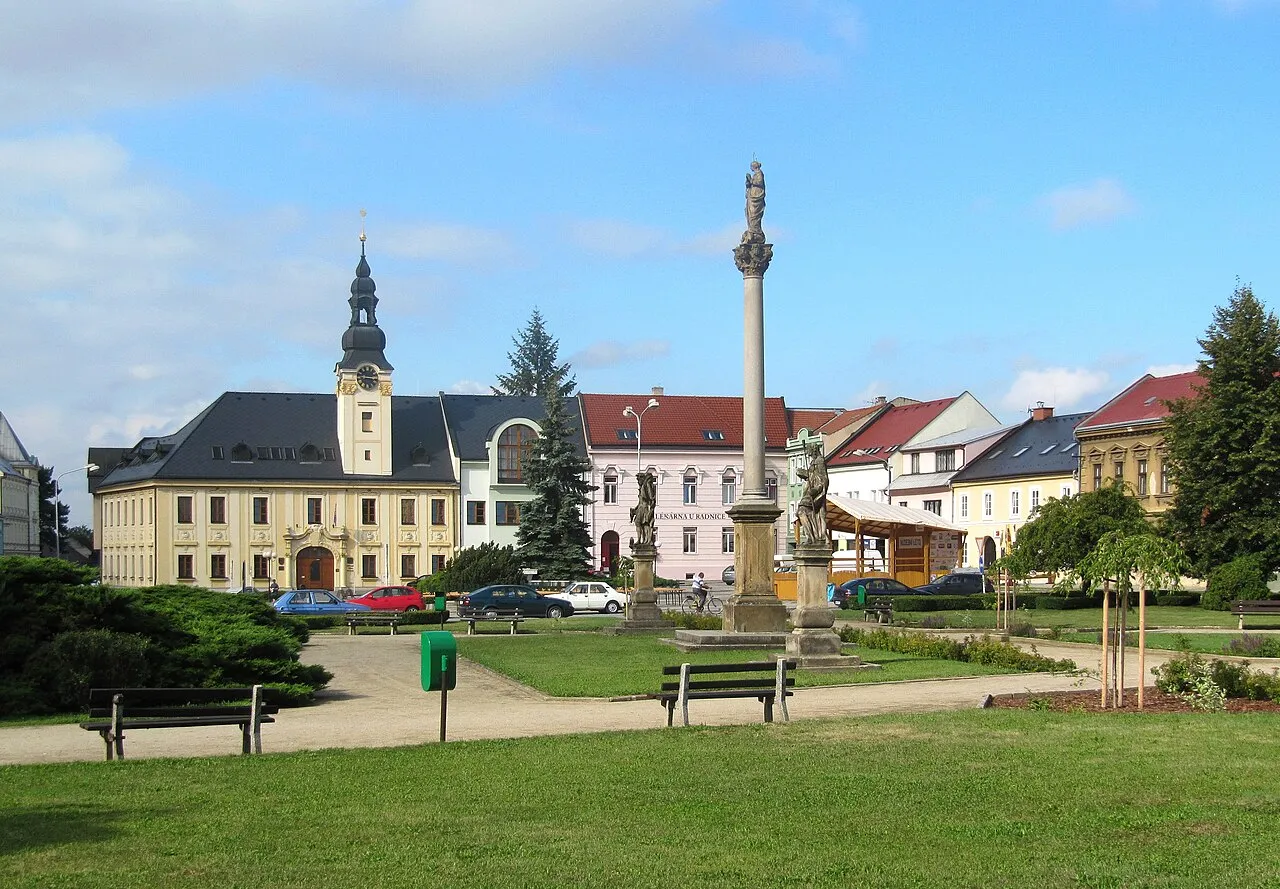
Masarykovo Square in Kojetín, town context of Martin Lecián's crimes.
Palickap; úpravy RomanM82 / CC BY-SA 3.0 / commons.wikimedia.org
13 / 15 / Open questions

What is still missing

  • Who really helped with the escape on 25 Sep 1927. Urbášek rejects Tomica’s guilt but has no other hypothesis.
  • Amount and origin of the reward: 10,000 Kč is given only by newspaper and blog sources; Urbášek does not mention a reward.
  • Age and name of the guard Kiss (20 or 22; Ferencz, Ferenc or František) and his home village.
  • Age of the gendarme Stuchlý (32 is given only by Aktuálně.cz) and the names of his wife and child.
  • Date of arrest: 23 Apr 1927 or 24 Apr 1927. According to Urbášek he was detained on 23 Apr and his identity was established on 24 Apr.
  • First names of the arresting police officers Halíř and Kaluža, and the number of Lecián’s desertions (four to six).
  • The fate of Marie Křenovská and Emanuel Dedek after 1927.
  • The files of the Military History Archive (Divisional Court Olomouc) are not online. The indictment and the verdict are known only through Urbášek and the museum in Nový Jičín.

Not yet covered: comparison.

You can help

Add a source, a photo or a correction. We check every submission and credit your nickname on approved ones.

Send a tipCase discussion
14 / 15 / Citations

Sources

A number in square brackets next to a claim refers to an item in this list. A claim without a number has no source assigned yet. Details may vary between sources; disputed and theoretical items are marked.

26Sources in total
  • Primary2
  • Secondary11
  • Media13
Checked: 15 Nov 2026. All 26 sources from the research were read; the key one is Pavel Urbášek’s four-part study (1996) based on the files of the Divisional Court in Olomouc. Information from only one source is marked in the text. The texts of Olomoucké archivy, Report and Hanácká Drbna are one museum text; Náš REGION, Security Magazín, Blesk and the Bohumín reprint largely take over Wikipedia. Check against the files of the Military History Archive (ref. Dtr 116/33) before publication.
15 / 15 / Revision history

Revision history

Every edit to this page is logged. Corrections sent in by readers are applied only after the editors check them against sources.

Published
Updated
Edits
1
  1. Page published
    OverviewEditors

Share this page

https://www.killeratlas.com/en/killers/martin-lecian/profile

How to cite

Killer Atlas. Martin Lecián (1927): case profile [online]. https://www.killeratlas.com/en/killers/martin-lecian/profile [accessed 15 Nov 2026]. Checked 15 Nov 2026.