01
Content warningReal violent crimes; victims are named. Help: findahelpline.com. More
This page describes real violent crimes and names the victims. Victims come first; we leave out details that serve only sensationalism. Help: free helplines in your country at findahelpline.com; in an emergency call 112 (EU) or 911 (US).
Martin Bryant
born in May 1967 in Tasmania; the exact day is given only by a psychiatrist’s report, and with the wrong year
A borderline case: not a serial killer, but a mass murder in a single attack. On 28 April 1996, 28-year-old Martin Bryant from Hobart first shot dead David and Noelene Martin, the owners of the Seascape guest house on the Tasman Peninsula. In the afternoon he opened fire without warning in the Broad Arrow Café at the site of the former Port Arthur penal settlement and continued in the car park, on the road to the exit, at the toll booth and at the service station. He took a hostage to Seascape and killed him there. 35 people died, the youngest aged 3, and according to the most frequently cited figure 23 were wounded. On the morning of 29 April he ran out of the burning guest house and was arrested. He pleaded guilty to all 72 counts of the indictment and received 35 life sentences without the possibility of release. Twelve days after the massacre the federal government and the states agreed on the National Firearms Agreement and a buyback in which more than 640,000 firearms were surrendered.
- 35
- murdered in a single day, aged from 3 to over 70● Fact
- 23
- wounded according to the most frequently cited figure; sources give 18 to 25◐ Disputed
- 72
- counts of the indictment, to all of which he pleaded guilty● Fact
- 643,726
- firearms bought back in 1996 and 1997 according to the study by Chapman and colleagues; with the amnesties more than 700,000, other sources 640,000 to 700,000◐ Disputed
6Fact
5Disputed
3Theory
75 of 75claims have a source
82sources, 10 of them primary
02 / 16 / Timeline
From birth to the thirtieth anniversary
Events: 49 / 1967–2026
- 01
Life
1967–96 - 1973September
First assessment
LifeAccording to Paul Mullen’s report, Friends’ School in Hobart sent him for assessment because of aggression and learning difficulties. Given only by this report. [42]
- 1977August
Expelled from school
LifeExpelled from New Town Primary School, then special classes. Given only by Paul Mullen’s report. [42]
- 1984February
Disability pension
LifeThe psychiatrist John Cunningham-Dax described an intellectual disability and a personality disorder; on the basis of his report Bryant received a disability pension. Given only by Paul Mullen’s report. [42]
- 1987
Warning from New South Wales
LifeAfter the failure of uniform laws, the Premier of New South Wales Barrie Unsworth said, according to SBS: “It will take a massacre in Tasmania before we get gun law reform”. Given only by SBS. [15]
- 02
Crime
1996 - 28 Apr around 13:30
- 03
Intervention, trial and aftermath
1996199628 Apr 13:38First emergency call
Intervention, trial and aftermathThe police operations centre received the first report of the shooting. The time is given only by the Port Macquarie News, citing The Examiner. [33]
- 04
Crime
1996 - 05
Intervention, trial and aftermath
1996–26 - 3 May
First funeral
Intervention, trial and aftermathThe bus driver Royce Thompson was buried. The date is given only by AP. [20]
- 7 May
Ban in Tasmania
Intervention, trial and aftermathTasmania banned military-style semi-automatic weapons. Given only by the SBS timeline. [9]
- 200028 Apr
Memorial Garden
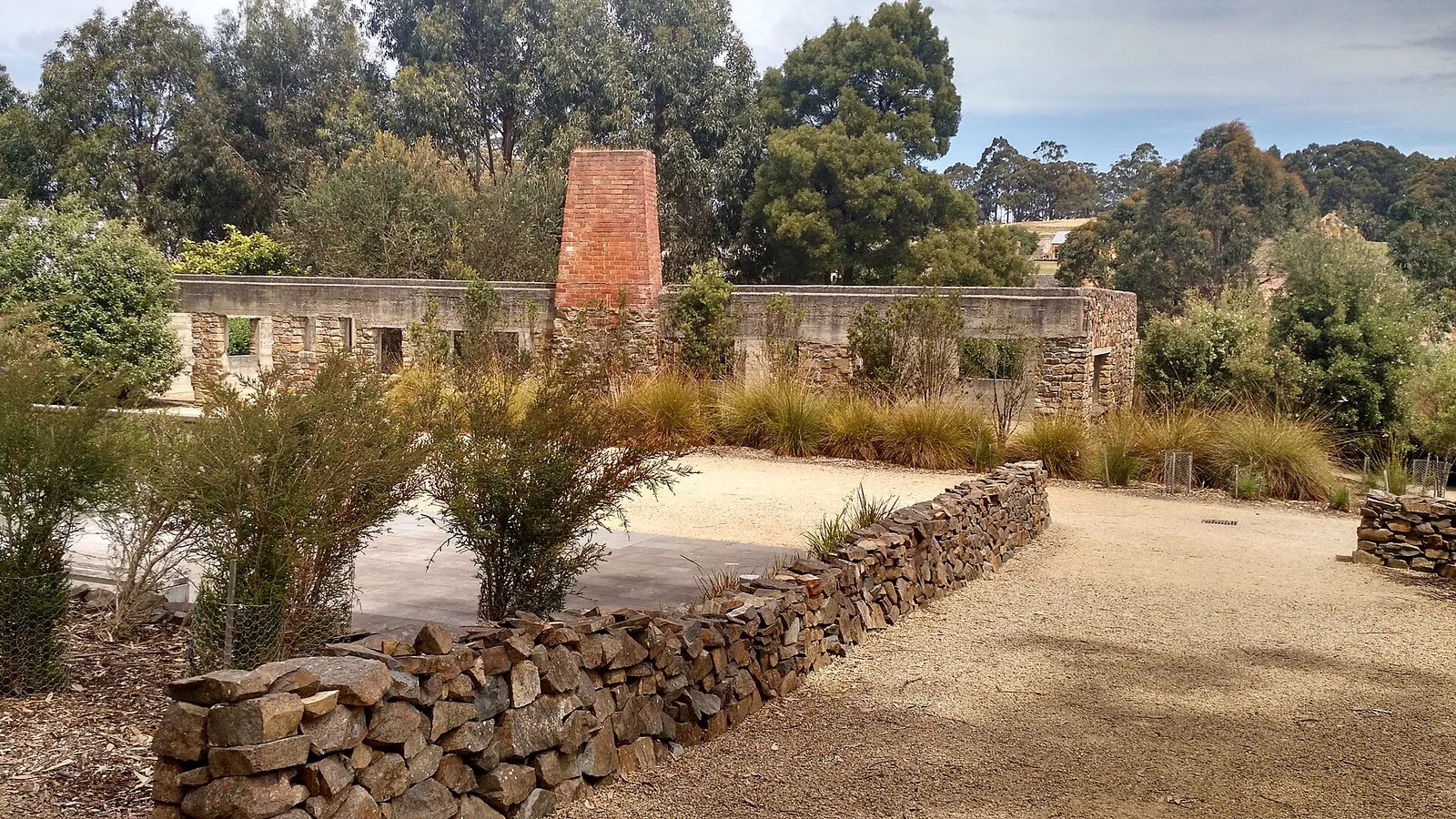
Intervention, trial and aftermathA memorial garden was created in the remains of the Broad Arrow Café. Given only by the site authority’s brochure. [1]
- 2011
His mother on television
Intervention, trial and aftermathCarleen Bryant defended her son on the Nine Network programme 60 Minutes. Given only by SBS. [12]
- June
Study in JAMA
Intervention, trial and aftermathChapman, Alpers and Jones: twenty years without a mass shooting, but a causal link cannot be proven. [48]
03 / 16 / Victims first
Named victims
Named victims: 35 / Survivors: 6
The list contains the 35 people of whose murders Bryant was convicted on 22 Nov 1996: 17 men and 18 women and girls. All names have two independent sources: the condolence list in the ACT Hansard of 14 May 1996 and the list in the indictment of July 1996 in The Advocate, and for 33 victims also the police list in The Examiner of 1 May 1996. We give the crime scene according to the indictment: 2 at Seascape, 20 in the Broad Arrow Café with its shop, 4 in the car park, 3 on the road to the toll booth, 4 at the toll booth, 1 at the service station and the hostage at Seascape. We give the age for only 23 victims, where two sources agree on it. The police list and the Hansard probably draw on the same material, so agreement with a profile in the press carries more weight. For the others the place field states whether the age is disputed, known only as a decade, or undocumented. The names are spelled differently in the sources: Noelene Martin as Sally, Janette Quin as Janet, Glenn Pears as Glen, Russell Pollard as Jim, Sou Leng Chung and Moh Yee William Ng in several transcriptions, Alannah Mikac also as Allanah or Alanna. Nicole Burgess is missing from the Hansard, which instead lists an unknown person from India, matching AP’s preliminary report of 29 Apr 1996.
Showing 12 of 35
- David Martinthe Seascape guest house near Port Arthur, which he owned; from Tasmania. Sources give his age only approximately (both sixties and fifties), Tasman Peninsula, Tasmania28 Apr 1996age unknown
- Noelene Joyce Martinthe Seascape guest house near Port Arthur, owner; from Tasmania. The police list gives her as Sally, her age only as sixties, Tasman Peninsula, Tasmania28 Apr 1996age unknown
- Moh Yee William NgBroad Arrow Café with the adjoining souvenir shop, Port Arthur Historic Site; a tourist from Kuala Lumpur (Malaysia). Age not documented by two sources, Tasman Peninsula, Tasmania28 Apr 1996age unknown
- Sou Leng ChungBroad Arrow Café with the adjoining souvenir shop, Port Arthur Historic Site; a tourist from Kuala Lumpur (Malaysia), Tasman Peninsula, Tasmania28 Apr 1996age 32
- Kate Elizabeth ScottBroad Arrow Café with the adjoining souvenir shop, Port Arthur Historic Site; from Balga (Western Australia), Tasman Peninsula, Tasmania28 Apr 1996age 21
- Anthony NightingaleBroad Arrow Café with the adjoining souvenir shop, Port Arthur Historic Site; from Victoria. Age not documented by two sources, Tasman Peninsula, Tasmania28 Apr 1996age unknown
- Kevin Vincent SharpBroad Arrow Café with the adjoining souvenir shop, Port Arthur Historic Site; from Kilmore (Victoria), Tasman Peninsula, Tasmania28 Apr 1996age 69
- Raymond John SharpBroad Arrow Café with the adjoining souvenir shop, Port Arthur Historic Site; from Kilmore (Victoria), Tasman Peninsula, Tasmania28 Apr 1996age 67
- Walter John BennettBroad Arrow Café with the adjoining souvenir shop, Port Arthur Historic Site; from Victoria, a member of the golf club in Kilmore, Tasman Peninsula, Tasmania28 Apr 1996age 66
- Tony Vadivelu KistanBroad Arrow Café with the adjoining souvenir shop, Port Arthur Historic Site; from Summer Hill in Sydney (New South Wales). The police list gives his age as 51, Tasman Peninsula, Tasmania28 Apr 1996age 48
- Andrew Bruce MillsBroad Arrow Café with the adjoining souvenir shop, Port Arthur Historic Site; from Tasmania, Tasman Peninsula, Tasmania28 Apr 1996age 39
- Sarah Kate LoughtonBroad Arrow Café with the adjoining souvenir shop, Port Arthur Historic Site; from Ferntree Gully (Victoria), Tasman Peninsula, Tasmania28 Apr 1996age 15
By location
Tasman Peninsula, Tasmania35
Victim profile
12 and under2
13–171
18–241
25 and over19
Women and girls: 18 / Men and boys: 17 (of 35 named)
Survivors
- Carolyn Loughtonshe was wounded in the café, where her fifteen-year-old daughter Sarah died. After the sentencing she said: “He can rot in hell”. In 2026 she attended the commemoration
- Jane Scholefieldsurvived the attack at the site; at the 30th anniversary in 2026 she spoke at the ceremony
- Justin Woolleyhe was 12 and had been in the café with his family shortly before the shooting. He later sharply criticised the film Nitram
- Robyn Blackmoresurvived with her parents on the café terrace; she spoke about it publicly for the first time in 2016
- Gaye and John Fidlersurvivors from the café, listed by the indictment among those attacked. That they were involved in founding the Alannah & Madeline Foundation and lobbied for gun control is given only by the foundation
- Other wounded18 to 25 were wounded depending on the source, most often 23; the difference is probably between the seriously wounded and all the wounded. A list by name of the attempted murders and woundings by place exists only in the transcript of the indictment
Unconfirmed
Bryant was never charged with or tried for any other murders. Helen Harvey died in October 1992 in a car accident in which he was travelling as a passenger, and she left him her estate. That neighbours claim he had a habit of grabbing the steering wheel from her, and that the programme Spotlight (Seven Network, 2021) suggests an inheritance motive, is given only by the NZ Herald. That police did not investigate the possibility of foul play is given only by the Irish Times. The authorities closed the death of his father Maurice in 1993 as suicide; here too an inheritance motive is suggested only by the programme Spotlight, according to the NZ Herald. Both deaths are officially an accident and a suicide; no court or coronial documents are available online.
04 / 16 / Offender’s pattern
What recurred
Bryant is not a serial killer. He killed 35 people in the course of one afternoon and evening, so the profile belongs among the borderline cases. His pattern is the act itself: first people he knew, then an attack without warning on a crowded tourist site, moving from place to place, a hostage and a siege. Each item states whether it is a documented fact, a disputed point or a theory.
Traits: 8
02
First people he knew
● Fact03
Attack without warning in a full café
● Fact04
From place to place
● Fact05
Weapons without a licence
● Fact06
Hostage and siege
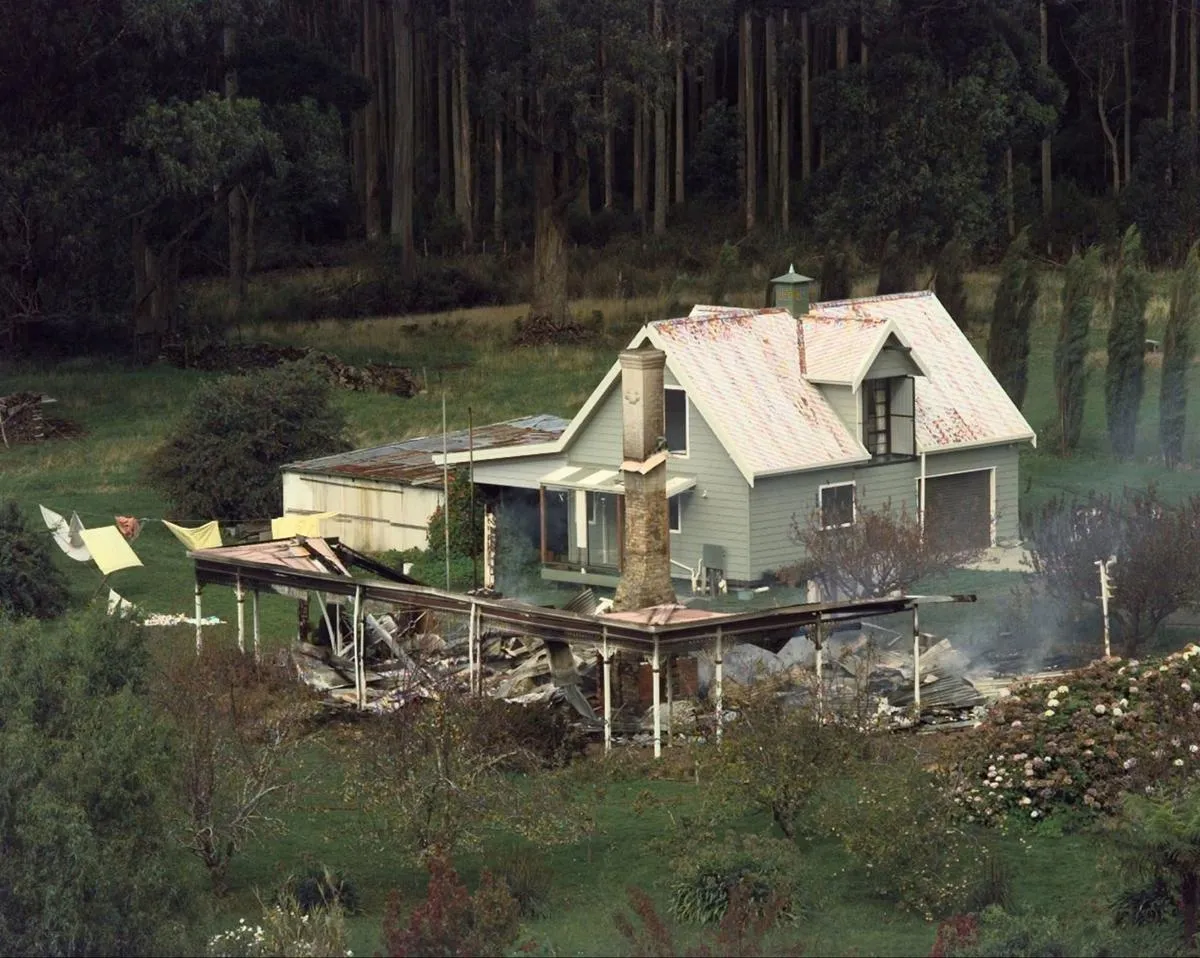
● FactHe abducted Glenn Pears, took him to Seascape and killed him there. For about 18 hours he held out against police; in the morning he ran out of the burning house, which he had set on fire himself. [1] [9] [22] [33] [64]
The first reports assumed that the Martins were the hostages. They were already dead.
07
Resentment over Seascape
◐ DisputedAccording to the notes of the psychiatrist Paul Mullen, he blamed the Martins for refusing to sell Seascape to his father. The dispute over the guest house is also mentioned by HISTORY and the NZ Herald. [41] [42] [44] [38] [11] [21]
He himself never publicly explained his reasons. His defence lawyer told the court that Bryant would not say why.
08
Influence of Dunblane
○ Theory05 / 16 / Modus operandi
How the behaviour evolved
Phases: 3
1967-1996
Before the attack
Difficulties from his school years, a disability pension, the inheritance from Helen Harvey and the death of his father. Then isolation and the purchase of weapons without a licence.
- 1977: expelled from school (only Mullen)
- 1984: disability pension (only Mullen)
- October 1992: death of Helen Harvey
- 1993: death of his father
- 13 Mar 1996: Dunblane
28 and 29 Apr 1996 / Tasman Peninsula
Attack and siege
From the morning until the morning of the next day, six crime scenes.
- morning: Seascape, 2 dead
- around 13:30: café and shop, 20 dead
- car park: 4 dead
- road to the toll booth: 3 dead
- at the toll booth: 4 dead
- service station: 1 dead, hostage taken
- Seascape: hostage killed, siege
- 29 Apr morning: arrest
From 30 Apr 1996
Trial and aftermath
Charge, guilty plea and life imprisonment. At the same time a nationwide firearms reform and buyback.
- 30 Apr: charged at his bedside
- 10 May: National Firearms Agreement
- 7 Nov: guilty plea
- 22 Nov: 35 life sentences
- 1997: Alannah & Madeline Foundation
- 2021: the film Nitram
- 2026: 30th anniversary
06 / 16 / Crime scenes
Where and in what order
Places: 6
map of crime scenes (points by date and place) / add from coordinates
- 01Hobart, Tasmania1967-1996
- 02Copping, the family farm1992-1993
- 03Seascape guest house, Tasman Peninsula1996
- 04Broad Arrow Café, Port Arthur Historic Site1996
- 05Car park, road to the toll booth and service station, Port Arthur1996
- 06Seascape guest house, siege and arrest1996
07 / 16 / Investigation
How the police proceeded
Steps: 8
01 / 28 Apr 1996
Report and response
Police reached the peninsula when the perpetrator had barricaded himself in Seascape with the hostage. The first call at 13:38 is given only by the Port Macquarie News, and about 690 responders from the police and emergency services only by the AIDR. [9] [22] [33] [8]
02 / 28 and 29 Apr 1996
Siege
About 18 hours of negotiation and encirclement by the Special Operations Group. In the morning the guest house was on fire and the perpetrator ran out. [9] [10] [22] [33]
04 / 29 and 30 Apr 1996
Crime scene examination
That detectives documented the café for several days is given only by the Port Macquarie News. That police removed boxes of ammunition from his house in Hobart is given only by the Irish Times. [34] [23]
05 / 30 Apr 1996
Charge
The first charge, for the murder of Kate Scott, at a bedside hearing in hospital. [9] [23]
06 / 1996
Interviews
In the interviews he denied guilt. The Seven Network broadcast the recording in 2016. [10] [42] [11]
What went wrong
- Complaints not investigatedNeighbours in Copping complained about threats with a firearm. According to contemporary reporting, police did not investigate them.
- Weapons without a licenceWithout a firearms licence he obtained military-style semi-automatic weapons. Tasmania had the weakest laws in the country.
- No link between recordsNeither his disability pension nor the management of his estate because of low intelligence was in any way linked with access to firearms.
- Dispute over the siegePart of the public criticised the fact that the snipers were not given permission to shoot. Police reply that their task was to apprehend the perpetrator, not to kill him.
- The mediaThat The Australian newspaper retouched the eyes in Bryant’s photograph is given only by Simon Chapman’s book.
Impact on forensics and law
- National Firearms AgreementOn 10 May 1996 the police ministers of the Commonwealth, the states and the territories agreed on uniform rules. They banned semi-automatic and pump-action rifles and shotguns. They introduced mandatory licensing with a background check and proof of a genuine reason, storage rules and registration. The states introduced the rules from June 1996 to August 1998.
- Firearms buybackIn the 1996-1997 programme the state bought back banned firearms at market price. The study by Chapman and colleagues gives 643,726 firearms and, with the amnesties, more than 700,000. The press writes of more than 640,000, the Parliamentary Education Office of more than 650,000, the SBS timeline of 700,000. Costs of about AUD 304 million are given only by the Parliamentary Education Office. That more than a million firearms have been destroyed since 1996 is given only by the University of Sydney.
- Research findingsIn the 18 years before the reform there were 13 mass shootings in Australia, in the following ten and a half years none. Firearm deaths, both suicides and homicides, fell faster. A 2016 study in JAMA confirmed twenty years without a mass shooting, but according to the authors a causal link cannot be proven.
- Handguns and registerIn 2002 and 2003 tighter rules for handguns and a handgun buyback followed. A national firearms register, recommended as early as 1996, was approved by the National Cabinet only in 2023, according to the Parliamentary Education Office.
- Weakening of the agreementThat in 2017 no state or territory fully complied with the agreement is given only by the University of Sydney. After the shooting at Bondi in December 2025 the debate on firearms returned. A proposal to limit the number of firearms per person is given only by the Canberra Times.
- FoundationIn 1997 Walter Mikac founded the Alannah & Madeline Foundation, named after his daughters; it was launched by Prime Minister Howard.
08 / 16 / People in the case
Witnesses, investigators, relatives
People: 19
Chief Justice of Tasmania
William Cox
Passed sentence on 22 Nov 1996 and called Bryant a “pathetic social misfit”.
Prosecutor
Damian Bugg QC
Director of Public Prosecutions of Tasmania, described the course of the attack at the sentencing hearing.
Defence lawyer
John Avery
Persuaded Bryant to plead guilty. That he was later himself convicted of misappropriating clients’ money is given only by SBS.
Defence psychiatrist
Paul Mullen
Professor of forensic psychiatry at Monash University. According to his report Bryant was neither mentally ill nor insane.
Psychologist
Ian Joblin
Forensic psychologist; an IQ of 66 is given by Paul Mullen’s report and by The Nightly, which draws on it.
Court-appointed psychiatrist
Ian Sale
That he described a conduct disorder and possible Asperger syndrome is given only by Paul Mullen’s report.
Accomplices: none. He acted alone and pleaded guilty to all counts of the indictment.
09 / 16 / Trial and sentence
From the bedside charge to life imprisonment
Proceedings: 4
30 Apr 1996 / Royal Hobart Hospital
Charge
At a hearing at his hospital bedside he was charged with the murder of Kate Scott. [9] [23]
Charged
30 Sep 1996 / Supreme Court of Tasmania
Plea of not guilty
He pleaded not guilty to all 72 counts of the indictment. [9] [10]
Not guilty
7 Nov 1996 / Supreme Court of Tasmania
Guilty plea
According to SBS he at first wanted to plead guilty only to the murders, then he pleaded guilty to all 72 counts. A trial with testimony from survivors did not take place. AP dates the change to October. [9] [10] [21] [19]
Guilty on all counts
19 to 22 Nov 1996 / Supreme Court of Tasmania
Hearing and sentence
Justice William Cox heard the prosecutor Damian Bugg QC, the defence lawyer John Avery and the psychiatric reports. He imposed 35 life sentences for the murders and 37 sentences of 21 years for the other offences, ordering that he never be released. No appeal could be traced. [9] [19] [21] [25] [64]
35 life sentences
Serving the sentence
According to reporting from 2026 he is alive and serving life without the possibility of release. For security reasons we do not give the place where he is held or other details of his present life.
Assets
That on 21 Nov 1996 the Tasmanian parliament passed a law confiscating his assets for the victims’ families and the survivors is given only by AP.
The crime scene
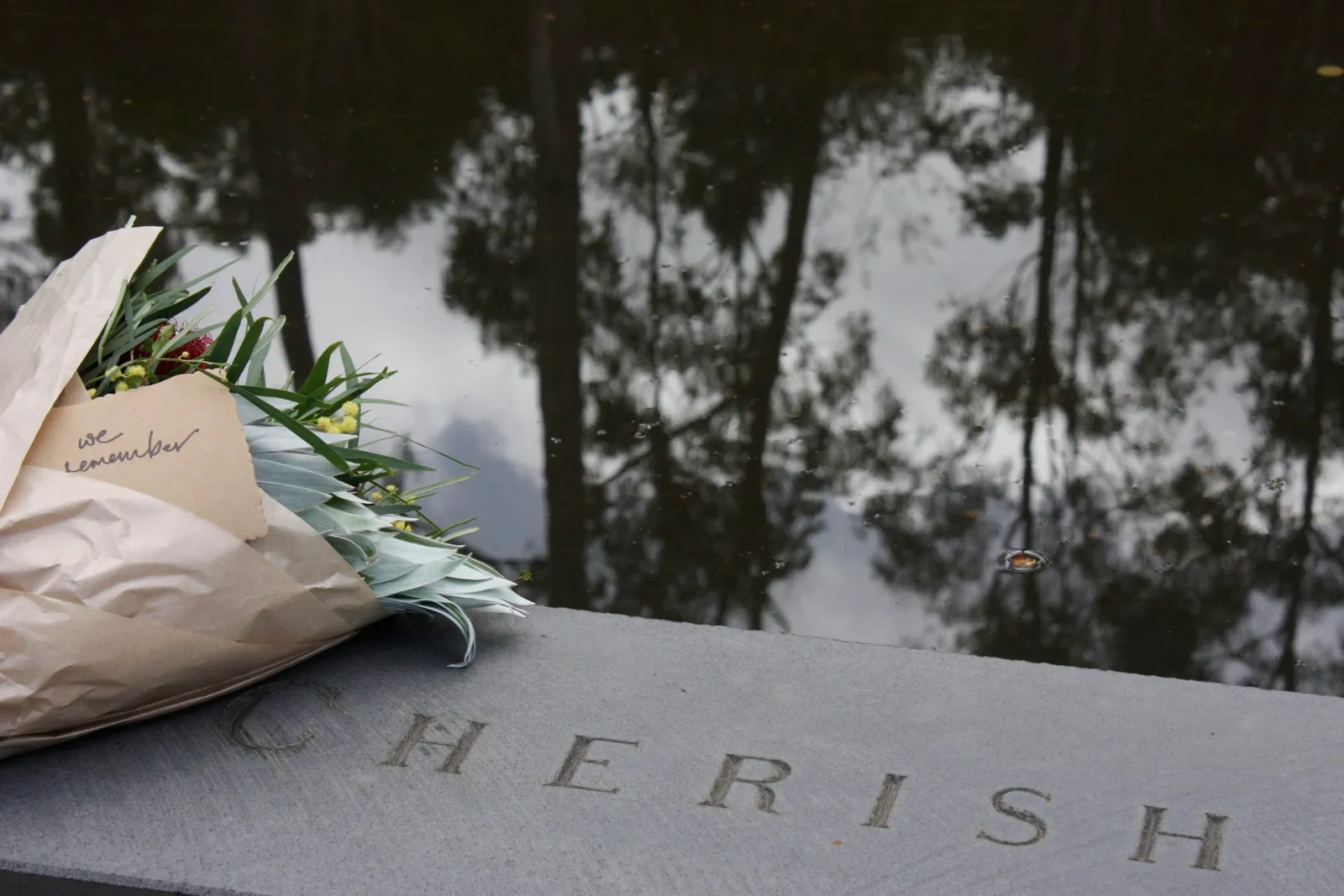
At commemorations at the site a minute’s silence is held at 13:30. The memorial garden in the remains of the Broad Arrow Café is mentioned in the site authority’s brochure.
10 / 16 / Psychology and myths
What is documented and what is not
Items: 6 / each labelled Fact, Disputed or Theory
He was a schizophrenic
◐ DisputedThe press claimed this from 1996. According to Mullen, the diagnosis in the records arose from a misunderstanding. The psychiatrists found no schizophrenia, and he was neither mentally ill nor insane. [50] [42] [25] [19]
A conspiracy, Bryant is innocent
○ TheoryThis is spread by conspiracy literature, and in 2019 Pauline Hanson also cast doubt on the massacre. Bryant pleaded guilty to all counts, the Prime Minister and the Premier of Tasmania condemned the claims, and police officers from the case reject them. [39] [46] [9] [18] [33]
He had already killed Harvey and his father
○ TheoryThis is claimed by neighbours and the programme Spotlight. He was never charged, and both deaths are officially an accident and a suicide. [38] [23] [24]
12, 20 or 22 people died in the café
◐ DisputedThe figures differ depending on what they count: 12 in the first moments, 20 in the café with its shop according to the indictment and the court, 22 in the summaries by UPI and HISTORY. [1] [21] [36] [57] [64]
He bought the weapons legally
◐ DisputedSources differ on how he obtained the weapons. They agree only that he never had a firearms licence. [43] [23] [45] [42]
No mass shooting since Port Arthur
◐ DisputedThis held for the periods covered by the studies, that is up to 2006 and 2016. In 2026 the press describes the shooting at Bondi in December 2025, with 15 dead, as comparable. [47] [48] [34] [36]
11 / 16 / Comparison
Related cases
12 / 16 / Books and films
Treatments of the case
The label is an editorial rating: Recommended means a balanced treatment with verifiable sources; With caution means the work gives the perpetrator a platform or opts for a simplified version.
Book / 1996Recommended
Suddenly One Sunday
Mike Bingham, HarperCollins. Recommended by the Port Arthur Historic Site authority’s brochure.
Book / 1997Recommended
Port Arthur: A Story of Strength and Courage
Margaret Scott, Random House. Recommended by the Port Arthur Historic Site authority’s brochure.
Book / Recommended
Over Our Dead Bodies: Port Arthur and Australia's Fight for Gun Control
Simon Chapman, Sydney University Press. The media debate and the path to reform, open access.
Book / 2009With caution
Born or Bred? Martin Bryant: The Making of a Mass Murderer
Robert Wainwright and Paola Totaro. It led to a dispute with Bryant’s mother.
13 / 16 Photos and documents
Photos and documents18
Photos and documents from readers. We publish them after review; you see your own uploads straight away, marked Pending review.
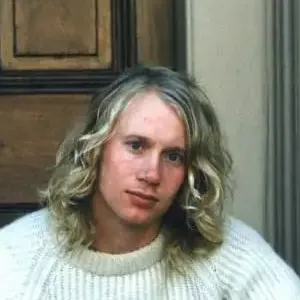
About this image
- Original title
- martin-bryant-1996-domovni-portret-vyrez.jpg
- Author
- News Ltd / AFP Files / AFP / Getty Images
- Source
- gettyimages.com.au
- Licence
- © All rights reserved
- Changes
- cropped, resized, converted to AVIF and WebP, metadata removed
Martin Bryant: sitting at the entrance to a house in Hobart (cropped)
News Ltd / AFP Files / AFP / Getty Images / © All rights reserved / gettyimages.com.au
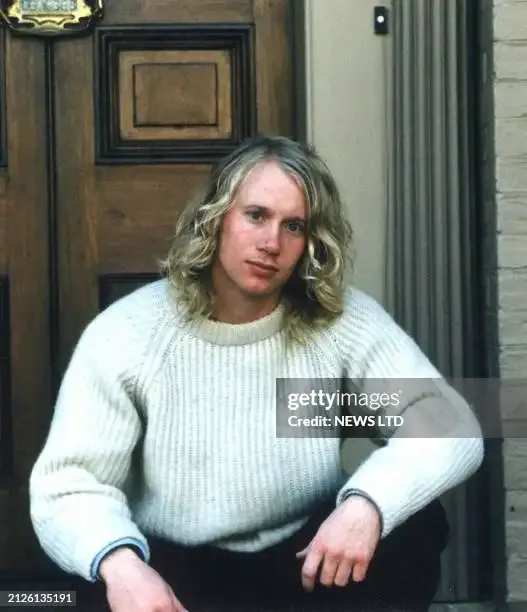
About this image
- Original title
- martin-bryant-1996-domovni-portret.webp
- Author
- News Ltd / AFP Files / AFP / Getty Images
- Source
- gettyimages.com.au
- Licence
- © All rights reserved
- Changes
- resized, converted to AVIF and WebP, metadata removed
Martin Bryant: sitting at the entrance to a house in Hobart
News Ltd / AFP Files / AFP / Getty Images / © All rights reserved / gettyimages.com.au
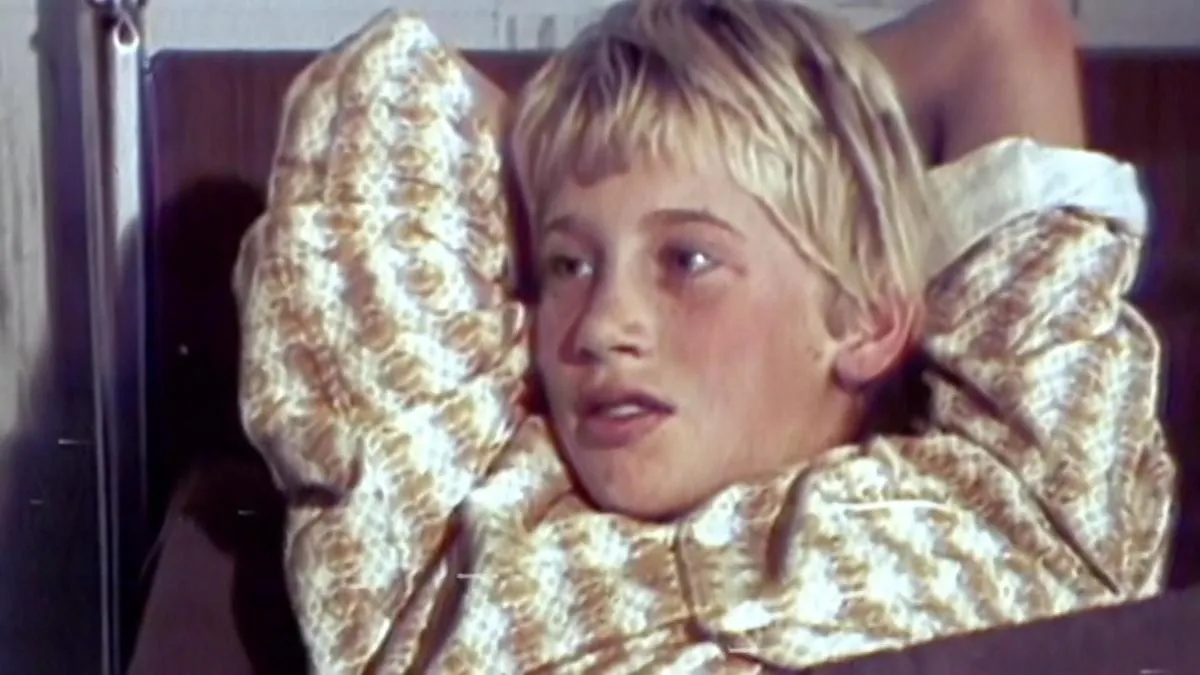
About this image
- Original title
- martin-bryant-detstvi-televizni-zaber.jpg
- Author
- Archivní záběr dodaný redakci 7NEWS
- Source
- 7news.com.au
- Licence
- © All rights reserved
- Changes
- resized, converted to AVIF and WebP, metadata removed
Martin Bryant: archival television footage from his childhood
Archivní záběr dodaný redakci 7NEWS / © All rights reserved / 7news.com.au
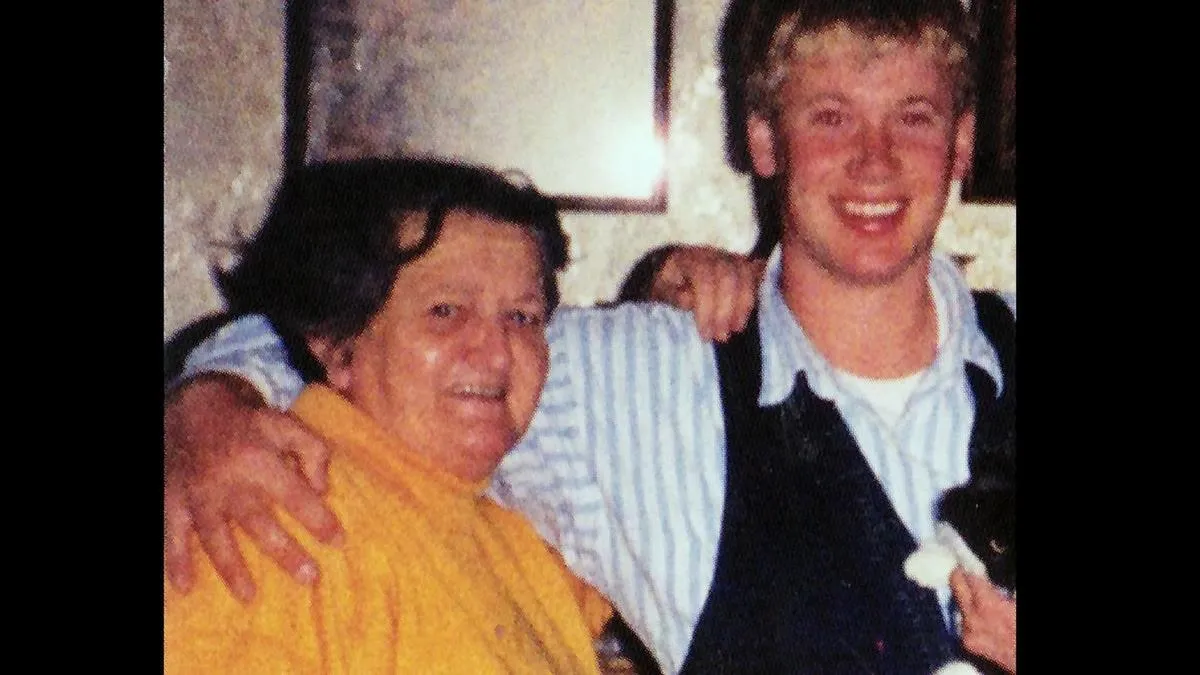
About this image
- Original title
- martin-bryant-s-helen-harvie.jpg
- Author
- Archivní fotografie dodaná redakci 7NEWS
- Source
- 7news.com.au
- Licence
- © All rights reserved
- Changes
- resized, converted to AVIF and WebP, metadata removed
Martin Bryant: on the right in an archival photograph with Helen Harvie
Archivní fotografie dodaná redakci 7NEWS / © All rights reserved / 7news.com.au
About this image
- Original title
- martin-bryant-detska-rodinna-fotografie.jpg
- Author
- Archivní fotografie dodaná redakci 7NEWS
- Source
- 7news.com.au
- Licence
- © All rights reserved
- Changes
- resized, converted to AVIF and WebP, metadata removed
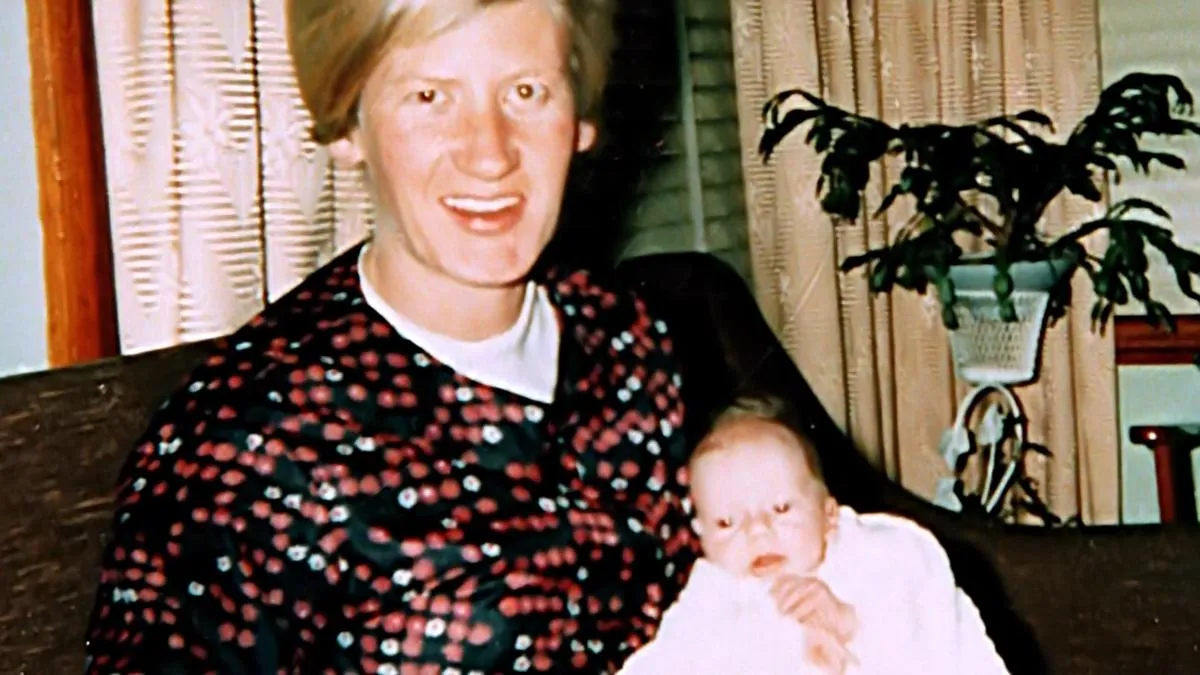
Martin Bryant: as a child in the arms of his father, Maurice Bryant
Archivní fotografie dodaná redakci 7NEWS / © All rights reserved / 7news.com.au
About this image
- Original title
- martin-bryant-1996-policejni-vyslech.jpg
- Author
- Policejní video, Sunday Night / 7NEWS
- Source
- 7news.com.au
- Licence
- © All rights reserved
- Changes
- resized, converted to AVIF and WebP, metadata removed
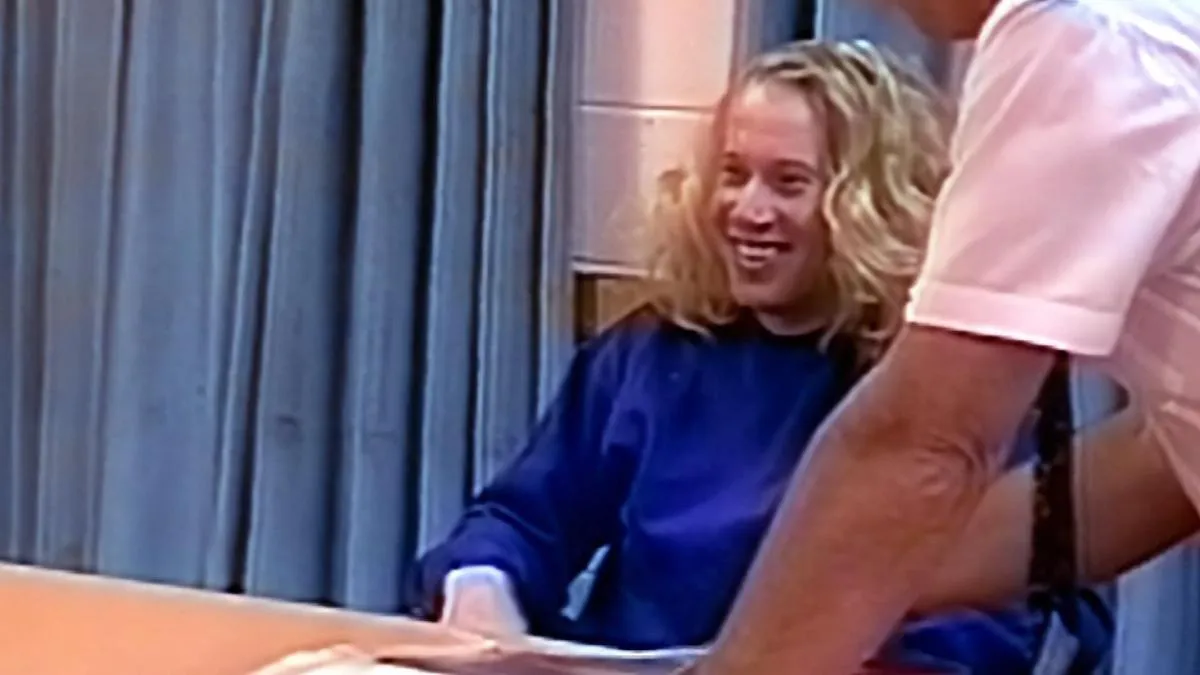
Martin Bryant: archival footage from a police interview
Policejní video, Sunday Night / 7NEWS / © All rights reserved / 7news.com.au
About this image
- Original title
- martin-bryant-1996-risdon-eskorta.webp
- Author
- Pool / AFP / Getty Images
- Source
- gettyimages.com.au
- Licence
- © All rights reserved
- Changes
- resized, converted to AVIF and WebP, metadata removed
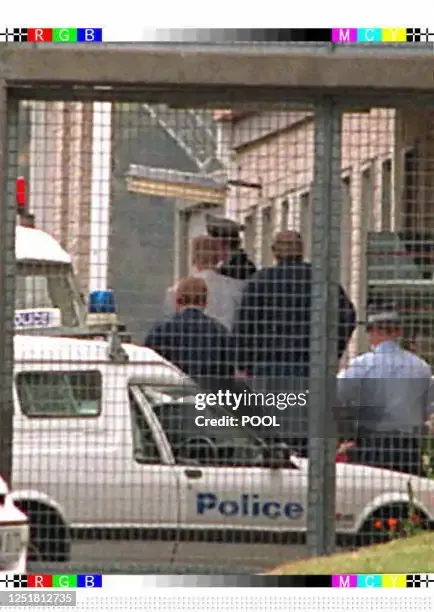
Martin Bryant: as the escort arrives at Risdon Prison after the sentence
Pool / AFP / Getty Images / © All rights reserved / gettyimages.com.au
About this image
- Original title
- martin-bryant-2016-vezensky-zaber.jpg
- Author
- Archivní záběr dodaný redakci 7NEWS
- Source
- 7news.com.au
- Licence
- © All rights reserved
- Changes
- resized, converted to AVIF and WebP, metadata removed
Martin Bryant: prison image released in 2016
Archivní záběr dodaný redakci 7NEWS / © All rights reserved / 7news.com.au
About this image
- Original title
- martin-bryant-hobart-dum-1996.jpg
- Author
- Steve Holland / AP, zveřejnila 7NEWS
- Source
- 7news.com.au
- Licence
- © All rights reserved
- Changes
- resized, converted to AVIF and WebP, metadata removed
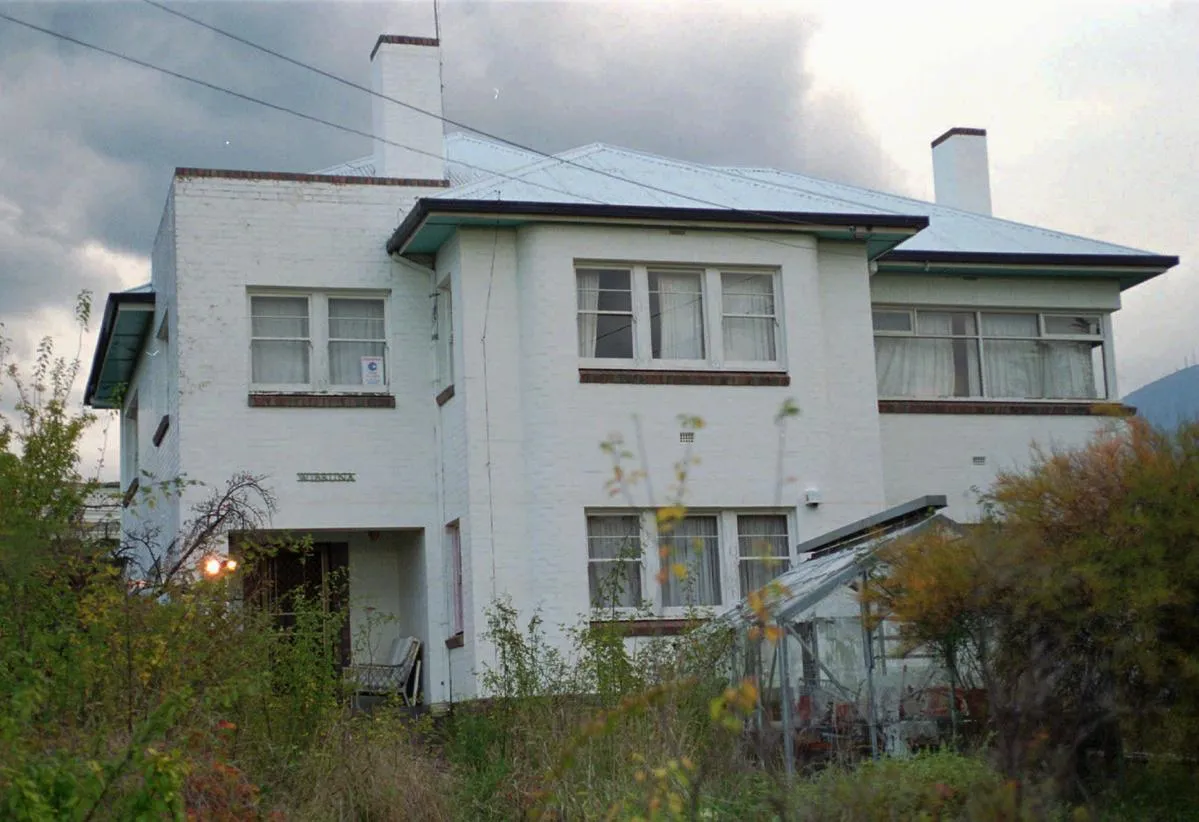
House in Hobart associated with Martin Bryant, photograph from 1996
Steve Holland / AP, zveřejnila 7NEWS / © All rights reserved / 7news.com.au
About this image
- Original title
- martin-bryant-seascape-dobova-fotografie.jpg
- Author
- Rick Rycroft / AP, zveřejnila 7NEWS
- Source
- 7news.com.au
- Licence
- © All rights reserved
- Changes
- resized, converted to AVIF and WebP, metadata removed
Seascape Cottage in a period photograph from 29 April 1996
Rick Rycroft / AP, zveřejnila 7NEWS / © All rights reserved / 7news.com.au
About this image
- Original title
- martin-bryant-port-arthur-oficialni-pamatnik.jpg
- Author
- Port Arthur Historic Site Management Authority, fotograf neuveden
- Source
- portarthur.org.au
- Licence
- © All rights reserved
- Changes
- resized, converted to AVIF and WebP, metadata removed
Detail of the memorial site at Port Arthur
Port Arthur Historic Site Management Authority, fotograf neuveden / © All rights reserved / portarthur.org.au
About this image
- Original title
- Port Arthur site frontal panorama.jpg
- Author
- Thennicke
- Source
- commons.wikimedia.org
- Licence
- CC BY-SA 4.0
- Changes
- resized, converted to AVIF and WebP, metadata removed
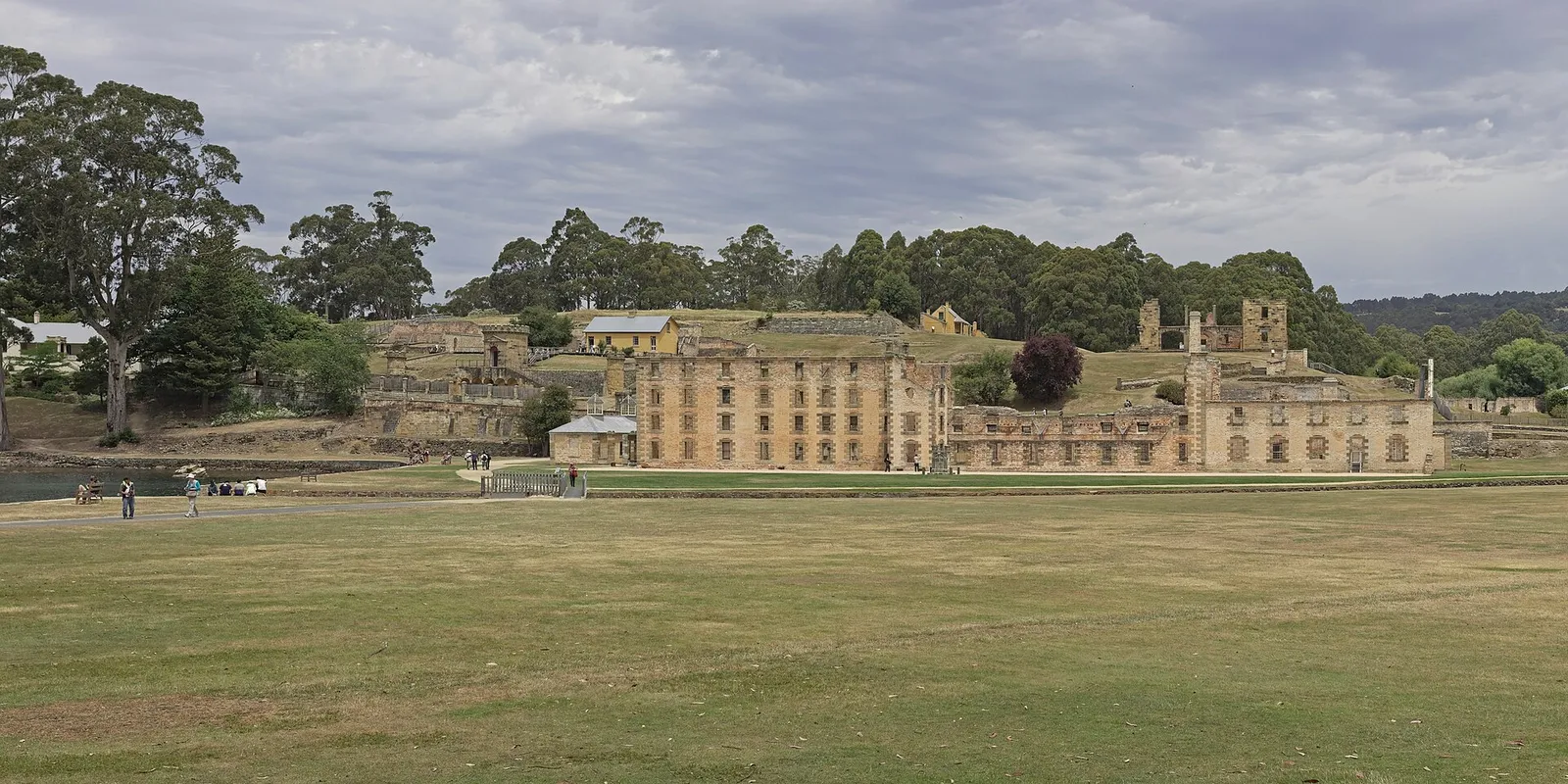
The Port Arthur historic site in a panoramic photograph
Thennicke / CC BY-SA 4.0 / commons.wikimedia.org
About this image
- Original title
- Port Arthur Memorial Garden.jpg
- Author
- Elzbenz
- Source
- commons.wikimedia.org
- Licence
- CC BY-SA 4.0
- Changes
- resized, converted to AVIF and WebP, metadata removed
Memorial garden by the former Broad Arrow Café at Port Arthur
Elzbenz / CC BY-SA 4.0 / commons.wikimedia.org
About this image
- Original title
- Lascar Monument to Port Arthur massacre (4551992467).jpg
- Author
- Jorge Láscar
- Source
- commons.wikimedia.org
- Licence
- CC BY 2.0
- Changes
- resized, converted to AVIF and WebP, metadata removed
Memorial to the victims at Port Arthur, photograph from 2008
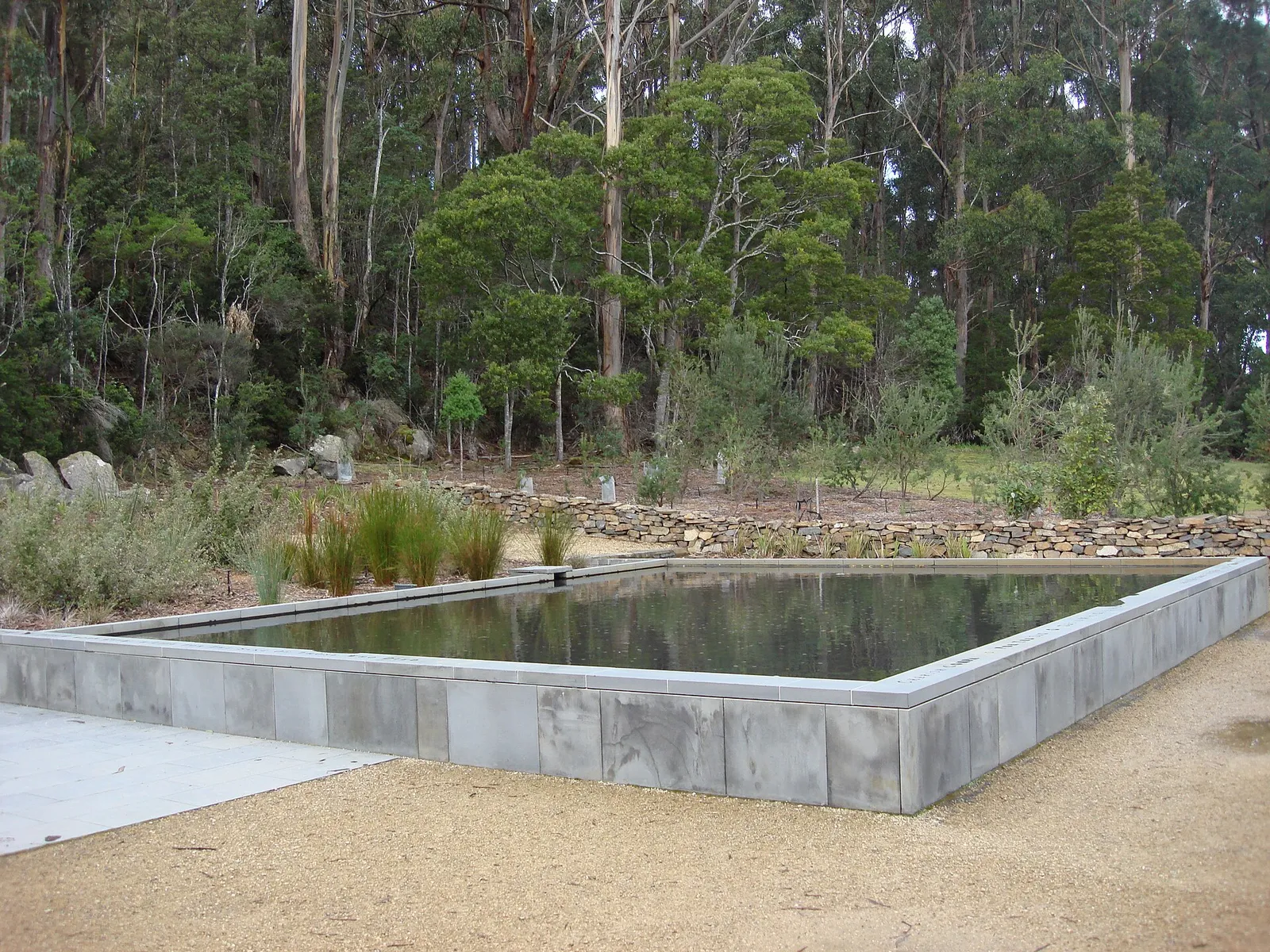
Jorge Láscar / CC BY 2.0 / commons.wikimedia.org
About this image
- Original title
- martin-bryant-hobart-magistrates-court-1996.jpg
- Author
- Fairfax Media / Getty Images
- Source
- gettyimages.co.nz
- Licence
- © All rights reserved
- Changes
- resized, converted to AVIF and WebP, metadata removed
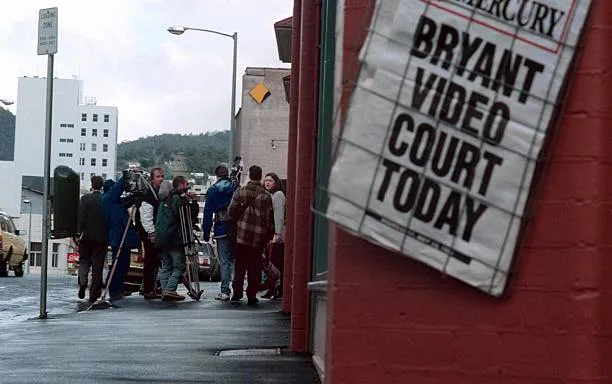
Journalists outside the court in Hobart before a preliminary hearing in the Martin Bryant case
Fairfax Media / Getty Images / © All rights reserved / gettyimages.co.nz
About this image
- Original title
- martin-bryant-port-arthur-broad-arrow-dobovy-zaber.jpg
- Author
- Fairfax Media / Getty Images
- Source
- gettyimages.co.nz
- Licence
- © All rights reserved
- Changes
- resized, converted to AVIF and WebP, metadata removed
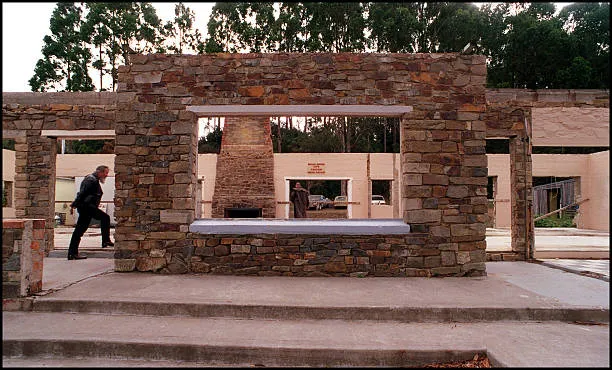
Surviving masonry of the former Broad Arrow Café at Port Arthur
Fairfax Media / Getty Images / © All rights reserved / gettyimages.co.nz
About this image
- Original title
- martin-bryant-seascape-dobovy-pohled-na-objekt.jpg
- Author
- Fairfax Media / Getty Images
- Source
- gettyimages.co.nz
- Licence
- © All rights reserved
- Changes
- resized, converted to AVIF and WebP, metadata removed
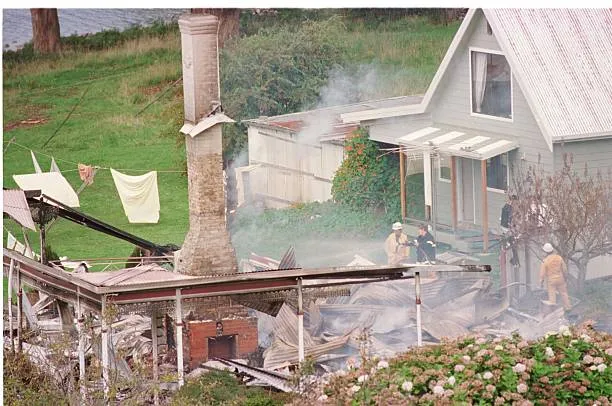
Period view of the Seascape Guesthouse after the events of April 1996
Fairfax Media / Getty Images / © All rights reserved / gettyimages.co.nz
About this image
- Original title
- martin-bryant-veznice-risdon-dobovy-zaber.jpg
- Author
- Fairfax Media / Getty Images
- Source
- gettyimages.co.nz
- Licence
- © All rights reserved
- Changes
- resized, converted to AVIF and WebP, metadata removed
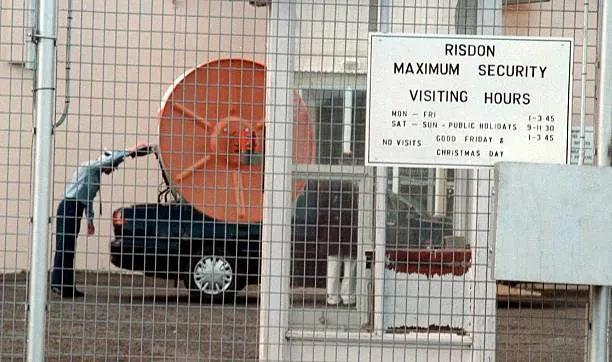
Period view of Risdon Prison in Tasmania
Fairfax Media / Getty Images / © All rights reserved / gettyimages.co.nz
14 / 16 / Open questions
What is still missing
- The official text of Justice Cox’s remarks and of the judgment in R v Bryant; only a private transcript is available online.
- When exactly the hostage Glenn Pears died, whether before the siege or during it.
- The ages of Jason Winter (29 or 39), Elizabeth Howard (26 or 28) and Glenn Pears (30 or 35); the ages of Moh Yee William Ng, Anthony Nightingale, Nicole Burgess and Russell Pollard.
- The exact number of wounded (18 to 25 depending on the source).
- The circumstances of Helen Harvey’s accident and of his father’s death; no court or coronial documents are available online.
- Whether coronial proceedings were held into the 35 deaths.
- Why he chose Port Arthur; he never publicly explained it.
15 / 16 / Citations
Sources
A number in square brackets next to a claim refers to an item in this list. A claim without a number has no source assigned yet. Details may vary between sources; disputed and theoretical items are marked.
82Sources in total
- Primary10
- Secondary10
- Media62
Checked: 22 Nov 2026. Research in two rounds, 82 sources read: the brochure of the Port Arthur Historic Site authority, the ACT Hansard, the Parliamentary Education Office, statements by prime ministers, a transcript of Justice Cox’s remarks, contemporary reporting from 1996 (AP, UPI, the Irish Times) and later AAP reporting, and the studies by Chapman and colleagues. The contemporary articles of the second round are transcripts from a single private archive website (geniac.net), including the police list of victims and the list in the indictment. The police list and the ACT Hansard probably share the same material, so for the victims we rely, where possible, on agreement with an independent profile in the press. Information from only one source is marked in the text with “given only by”. Wikipedia served only as a guide and is not among the sources. The perpetrator is alive; we do not give his present place of imprisonment. Before publication, check the disputed ages of victims against the memorial plaque and the official text of the judgment.
- [1]Port Arthur Historic Site Management Authority, Memorial Garden brochure, Sunday 28 April 1996. A brief outline. portarthur.org.au / cited 14×primary
- [2]Port Arthur Historic Site, 30th Anniversary of the events of 1996. portarthur.org.au / cited 3×primary
- [3]Legislative Assembly for the ACT, Hansard (14 May 1996, p. 1155, condolence motion with the list of victims), Hansard - ACT Legislative Assembly. hansard.act.gov.au / cited 1×primary
- [4]Legislative Assembly for the ACT, Hansard (14 May 1996, p. 1156), Hansard - ACT Legislative Assembly. hansard.act.gov.au / cited 1×primary
- [5]Parliamentary Education Office, Parliament of Australia, National Firearms Agreement. peo.gov.au / cited 1×primary
- [6]Prime Minister of Australia (Anthony Albanese, 28 Apr 2026), 30th anniversary of the Port Arthur massacre. pm.gov.au / cited 1×primary
- [7]PM Transcripts, Department of the Prime Minister and Cabinet (Scott Morrison, 28 Apr 2021), Transcript 44056. pmtranscripts.pmc.gov.au / cited 1×primary
- [8]Australian Institute for Disaster Resilience, Port Arthur Massacre, 1996, TAS. knowledge.aidr.org.au / cited 1×primary
16 / 16 / Revision history
Revision history
Every edit to this page is logged. Corrections sent in by readers are applied only after the editors check them against sources.
- Published
- Updated
- Edits
- 1
- Page published