01
Content warningReal violent crimes; victims are named. Help: findahelpline.com. More
This page describes real violent crimes and names the victims. Victims come first; we leave out details that serve only sensationalism. Help: free helplines in your country at findahelpline.com; in an emergency call 112 (EU) or 911 (US).
Josef Englich
born 5 Oct 1858, Staročernsko near Pardubice
A state railway labourer from Staročernsko near Pardubice who in November 1884 married into the farmstead No. 30 in Komárov. Between January and July 1885 he poisoned five of his wife’s relatives with arsenic: his mother-in-law, his wife’s grandfather and grandmother, her six-year-old daughter and finally his father-in-law. Together with the farmstead he had taken on two retirement settlements and a transfer price of 1,500 zl. (gulden). Suspicion was only raised by a doctor at the bedside of the dying father-in-law. On 21 November 1885 the jury of the Regional Court in Chrudim unanimously found him guilty and acquitted his wife, whom he himself had accused. He was hanged on 13 February 1886 in the courtyard of the Chrudim prison. He denied his guilt to the end.
- 5
- people poisoned in one household, three generations from a six-year-old girl to an 82-year-old grandmother● Fact
- 169
- days between the first (15 Jan 1885) and the last death (3 Jul 1885)● Fact
- 1 500 zl.
- transfer price for the farmstead, with which he also took on two retirement settlements● Fact
- 84
- days from the jury verdict (21 Nov 1885) to the execution (13 Feb 1886)● Fact
6Fact
5Disputed
2Theory
69 of 69claims have a source
26sources, 13 of them primary
02 / 15 / Timeline
From birth to execution
Events: 44 / 1858–2026
- 01
Life
1858–84 - 22 Nov
Takeover of the farmstead No. 30
LifeThe Mareš family transferred the farmstead No. 30 in Komárov to the couple. Englich took on the obligation to support two retirement settlements, his parents-in-law and his wife’s grandparents, to care for the illegitimate child and to pay a transfer price of 1,500 zl. The parents reserved the right to run the farm until 1 Jul 1885. [1] [4] [8] [14]
- 02
Crimes
18851885JanuaryMother-in-law’s illness
CrimesTerezie Marešová vomited for three days. According to the indictment, her husband brought her about 15 powders from Dr Josef Pych of Dašice. [1]
- 03
Capture, trial, execution
1885 - 04
Crimes
1885 - 05
Capture, trial, execution
1885–26 - 22 Nov
Plea for clemency
Capture, trial, executionAccording to Národní politika, the day after the verdict he called his defence lawyer and asked him to file a plea for clemency to the Emperor. [5]
- 13 Feb
Account of the crime
Capture, trial, executionThe court handed out to the spectators a printed “Account of the crime of fivefold premeditated murder” (Vylíčení zločinu pateré úkladné vraždy) signed by the president of the Regional Court, Radl. The text was printed by Národní politika and Národní listy. [6] [7] [8]
- May to July
Auction of the farmstead
Capture, trial, executionThe widow had to pay the costs of the proceedings, and half of the farmstead went to auction. According to a notice in Národní politika, the district court in Holice auctioned half of Josef Englich’s farmstead No. 30 in Komárov for 1,863 zl. [10] [14] [17]
- 202226 Oct
Badatelé.net
Capture, trial, executionJaroslav Mareš published an article about the case with photographs of the files from the State Regional Archives in Zámrsk. [17]
- 202325 Mar
Aha!
Capture, trial, executionThe tabloid daily wrote about the farm as a “house of horror”. [19]
03 / 15 / Victims first
Named victims
Named victims: 5 / Survivors: 2
The list contains the five people murdered for whose murder Englich was sentenced in November 1885. All of them lived with him on the farmstead No. 30 in Komárov and in all of them the experts proved arsenic. The victims’ ages are given only by modern articles; for Václav Mareš Deník writes 55, Aha! 56.
Showing 5 of 5
- Terezie Marešováfarmstead No. 30, Komárov, Pardubice area15 Jan 1885age 58
- Josef Marešfarmstead No. 30, Komárov, Pardubice area12 Mar 1885age 80
- Anna Marešová (elder)farmstead No. 30, Komárov, Pardubice area16 Mar 1885age 82
- Anna Marešová (younger)farmstead No. 30, Komárov, Pardubice area8 May 1885age 6
- Václav Marešshed in the yard of the farmstead No. 30, Komárov, Pardubice area3 Jul 1885age 55
By location
Pardubice area5
Victim profile
12 and under1
13–170
18–240
25 and over4
Women and girls: 3 / Men and boys: 2 (of 5 named)
Survivors
- Marie Englichováwife; accused on the basis of his denunciation, taken into custody, acquitted by the jury. The contemporary press believed she could have been another victim; this is not documented
- The couple’s childabout a year and a half old in January 1887; survived, the sources do not give the name
Unconfirmed
No other victims are attributed to him. Under interrogation he claimed that Marie had once thrown her three-year-old child into a well; according to the indictment, people said the child had fallen in by accident, and this is not documented anywhere else. In 1898 Lidové noviny and Právo lidu wrote that he had poisoned his own parents and his wife’s parents. That is an error: his parents were alive in February 1886.
04 / 15 / Offender’s pattern
What recurred
Englich did not kill strangers. He poisoned those he was obliged by contract to support, and gave them the poison in food and in the medicines he brought them himself. When he was found out, he blamed his wife and the doctor. Each item is marked as a documented fact, a disputed point or a theory.
Traits: 7
02
Slow, repeated doses
● Fact03
Poison in medicinal powders
● FactSergeant Škoda found two overfilled medicinal powders in the house. Besides the original medicine they contained a white shiny powder with a large amount of arsenic. Englich admitted that he had given the powders to the old retired couple and to the girl. [1] [4] [17]
Badatelé.net writes about a “hiding place with arsenic”; the contemporary indictment speaks only of two powders on a cupboard or behind a beam.
04
A slice of bread and butter
● Fact05
Victims from his own household
● Fact06
Shifting blame and manipulation
● FactHe accused his wife and Dr Pych. In custody he forged three smuggled notes with her supposed confession and tried to bribe the court with 500 zl. After the verdict he sent letters through his fellow prisoner Hájek, urging his wife to take the blame and poison herself, and her parents to poison her. [1] [4] [5] [8] [17]
The division of the bribe (150 zl. to the president, 150 to the public prosecutor, 100 to the investigating judge) is given by the contemporary indictment.
07
He was also planning to murder his wife
○ Theory05 / 15 / Modus operandi
How the behaviour evolved
Phases: 3
1858-1884
Before the murders
The penniless son of a railway labourer, working on the railway from childhood. Through marriage he gained a farmstead along with obligations towards his wife’s family.
- 1858: born in Staročernsko
- until 13: primary school in Veska
- from 14: state railway labourer, later track watchman
- 22 Nov 1884: wedding with Marie Marešová and takeover of the farmstead No. 30
January to July 1885 / Komárov
Murders
In less than six months five people died in the house, all of them vomiting. The examiners of the dead recorded natural causes.
- 15 Jan: mother-in-law Terezie Marešová
- 12 Mar: wife’s grandfather Josef Mareš
- 16 Mar: wife’s grandmother Anna Marešová
- 8 May: six-year-old Anna Marešová
- 3 Jul: father-in-law Václav Mareš
July 1885 to 1887
Capture, trial, execution
A doctor reported his suspicion, and the exhumation proved arsenic in all the victims. The jury convicted him and he was not granted clemency.
- 3 Jul 1885: arrest
- 26 Aug 1885: exhumation of four bodies
- 20 and 21 Nov 1885: jury in Chrudim
- 13 Feb 1886: execution
- 1886: auction of half of the farmstead, the farm was bought by the Novotný couple
06 / 15 / Crime scenes
Where and in what order
Places: 5
map of crime scenes (points by date and place) / add from coordinates
- 01Staročernsko near Pardubice1858
- 02Dašice and Moravany (state railway)1872-1884
- 03Komárov, farmstead No. 301884-1885
- 04Holice, custody at the district court1885
- 05Chrudim, regional court and prison1885-1886
07 / 15 / Investigation
How he was found out
Steps: 8
01 / January to May 1885
Four deaths without suspicion
The examiners of the dead recorded natural causes: paralysis of the stomach, catarrh of the lungs, old age and smallpox. Nobody noticed that all of them had vomited before dying. [1] [8] [14]
02 / 2 Jul 1885
A doctor at the deathbed
Dr Josef Pych recognised in Václav Mareš the same symptoms as in the previous dead and alerted the district court in Holice by letter. [1] [14]
03 / 2 to 3 Jul 1885
The victim’s statement
The dying Václav Mareš stated that his son-in-law had given him bread and butter, after which he began to vomit. According to Deník, he also signed the statement. [1] [14]
04 / 3 Jul 1885
Arrest and search
Sergeant Škoda arrested Englich and found two medicinal powders with arsenic in the house. [1] [4] [14]
05 / 5 Jul 1885
Autopsy and chemistry
The autopsy of the father-in-law showed inflammation of the stomach and intestines, and the experts Jahn and Tůma proved arsenic. [1] [4]
06 / 26 Aug 1885
Exhumation
Four bodies were exhumed from the Komárov cemetery. Arsenic was found in all of them. [1] [4] [14]
What went wrong
- Overlooked deathsNobody examined four deaths with the same symptoms within half a year. The examiners of the dead recorded natural causes, and Národní listy explicitly criticised them in 1886.
- A prosecuted wifeThe innocent Marie was prosecuted, held in custody and tried on the basis of her husband’s denunciation. After her acquittal she bore the costs of the proceedings and lost the farm.
Impact on forensics and law
- No documented impactNo source states that the case changed the practice of the examiners of the dead or the law.
- Execution behind the court wallsAccording to Národní listy, it was the first execution in Chrudim inside the court building; the last public one there took place on 16 Mar 1866. Only Národní listy states this.
- The house of two poisonersWhen František Novotný committed murders on the same farm, the press in 1898 recalled Englich and the “curse” on the house. Modern media write about the farm as the house of two serial killers.
08 / 15 / People in the case
Witnesses, investigators, relatives
People: 21
Wife, co-defendant
Marie Englichová née Marešová
Six years older, 33 in November 1885. Prosecuted only on the basis of her husband’s denunciation, acquitted by the jury. She had to pay the costs of the proceedings and lost the farm.
Sister-in-law, witness
Anna Trlová
Marie’s sister and wife of František Trla, the main witness.
Brother-in-law
František Trla
Father of the illegitimate Anna Marešová the younger.
Perpetrator’s parents
Čeněk and Kateřina Englich
From Staročernsko, the father a state railway labourer. They did not come to the execution.
Doctor, informant
Dr Josef Pych
Doctor from Dašice. He treated Terezie and Václav Mareš, reported his suspicion to the court on 2 Jul 1885 and performed the autopsy of the father-in-law. Englich also tried to shift the blame onto him.
Court physician
Dr Václav Bauer
Performed the autopsies of Václav Mareš and of the exhumed bodies.
Accomplices: none. His wife Marie was charged with complicity only on the basis of his denunciation, and the jury acquitted her.
09 / 15 / Trial and sentence
From indictment to execution
Proceedings: 4
3 Jul to 30 Sep 1885 / district court in Holice
Preliminary proceedings
The investigation was led by judge Josef Weisser. The indictment was filed by the public prosecutor at the Regional Court in Chrudim. [14] [15] [17]
Indictment
20 and 21 Nov 1885 / Regional Court in Chrudim
Jury trial
Josef was charged with the premeditated murder of five people, Marie with complicity. The prosecution was led by Grehs, and Josef was defended by Dr Sachsl. Sources differ on who presided: the indictment in Národní listy gives President Radl, Národní listy from February 1886 and Deník give Provincial Councillor Vondráček. The jury unanimously found Josef guilty and acquitted Marie. [1] [2] [7] [8] [15]
Death by hanging
1885-1886 / Court of Cassation and the Emperor
Plea of nullity and clemency
The Court of Cassation upheld the verdict. The plea for clemency to the Emperor was rejected; Englich was informed on 12 Feb 1886. [4] [5] [17]
Rejected
13 Feb 1886 / Chrudim
Execution
Hanged at 7 a.m. in the courtyard of the Regional Court prison by the executioner Jan Křtitel Piperger. According to the papers he was dead “within two seconds”, but the doctor only pronounced death after about 10 to 12 minutes. [5] [6] [7] [8]
Executed
No grave
The body was placed in a black coffin with a white cross and taken away. No contemporary source states where he is buried. Modern articles write about an unmarked mass grave; primary evidence is lacking.
The farm after Englich
The widow had to pay the costs of the proceedings, and in 1886 half of the farmstead went to auction in Holice. The farm was bought by František Novotný, who later poisoned seven of his children there.
10 / 15 / Psychology and myths
What is documented and what is not
Items: 6 / each labelled Fact, Disputed or Theory
Executed on 12 or 18 February
◐ DisputedAha! gives 18 Feb, Médium.cz and Badatelé.net 12 February. The court’s official account and all contemporary papers consistently give 13 Feb 1886 at 7 a.m. 12 Feb is the day he was informed that clemency had been rejected. [19] [20] [17] [5] [6] [7] [8] [9]
Sentenced in December 1885
◐ DisputedDeník gives the jury trial as 20 and 21 December 1885. The contemporary press and the official court text: 20 and 21 November 1885. [14] [1] [2] [7] [8]
He poisoned his own parents
◐ DisputedIn 1898 Lidové noviny and Právo lidu wrote that he had poisoned his own parents and his wife’s parents. His parents were still alive in February 1886. The victims were his father-in-law, his mother-in-law, his wife’s grandfather and grandmother, and her daughter. [11] [12] [7] [1]
He died repentant
◐ DisputedThe priest announced that he had died “repentant and reconciled with God”. But he never admitted his guilt, and his last words, confirmed by several papers, were “I die innocent”. The words to the executioner “Just quickly, please” are given only by Národní listy. [5] [6] [7] [9]
A shared grave with Novotný
○ TheoryBadatelé.net and Kroniqa write that both killers ended up in the same mass grave. Primary evidence is lacking; the 1886 press mentions only the coffin and the removal of the body. [17] [18] [21] [6] [7]
A house with 11 dead
◐ DisputedThe headlines of Badatelé.net and Médium.cz give 11 murdered. Englich killed five people and Novotný seven, so 12 in total, as the press already counted in 1898. [17] [20] [11] [12]
11 / 15 / Books and films
Treatments of the case
The label is an editorial rating: Recommended means a balanced treatment with verifiable sources; With caution means the work gives the perpetrator a platform or opts for a simplified version.
Contemporary press / 1885-1886Recommended
Národní listy, Národní politika, Čech
Detailed reports on the indictment, the verdict and the execution, available in the Kramerius digital library.
Leaflet / 1886Recommended
Vylíčení zločinu pateré úkladné vraždy
Official print of the Regional Court in Chrudim handed out to the spectators of the execution, printed in Národní politika and Národní listy.
Article / 2022Recommended
Badatelé.net: Zapomenutý příběh děsivého stavení
Two articles by Jaroslav Mareš with photographs of the files from the State Regional Archives in Zámrsk.
Article / 2023With caution
Aha!: Dva vrazi a 12 mrtvých
Tabloid article, contains an incorrect date of execution.
12 / 15 Photos and documents
Photos and documents20
Photos and documents from readers. We publish them after review; you see your own uploads straight away, marked Pending review.
About this image
- Original title
- Komárov u Dolní Rovně - ulice Hlavní.jpg
- Author
- Petr1888
- Source
- commons.wikimedia.org
- Licence
- CC BY-SA 4.0
- Changes
- resized, converted to AVIF and WebP, metadata removed
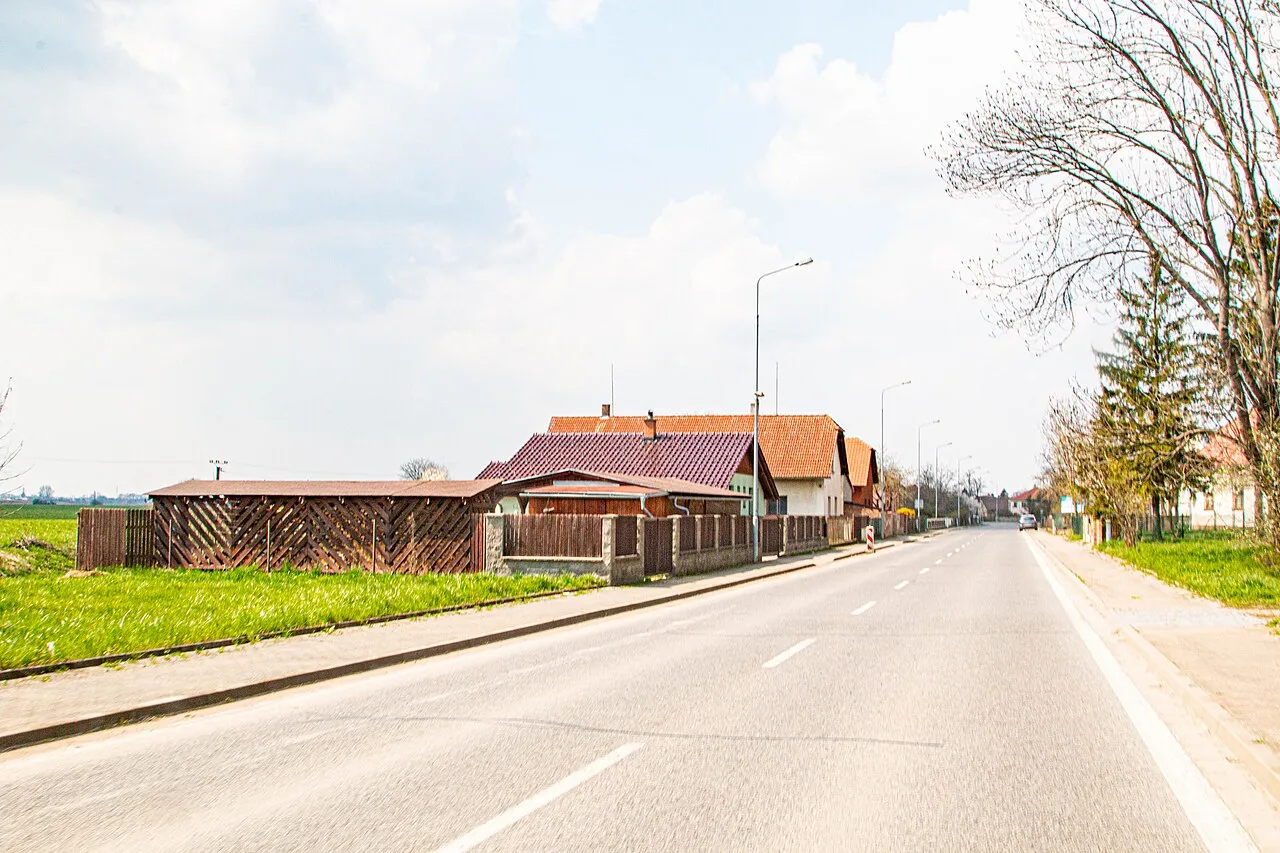
Hlavní Street in Komárov near Dolní Roveň, topographical context of the Josef Englich case.
Petr1888 / CC BY-SA 4.0 / commons.wikimedia.org
About this image
- Original title
- josef-englich-trestni-spis.webp
- Author
- Jiří Nováček / Deník, reprodukce archivních materiálů
- Source
- denik.cz
- Licence
- © All rights reserved
- Changes
- resized, converted to AVIF and WebP, metadata removed
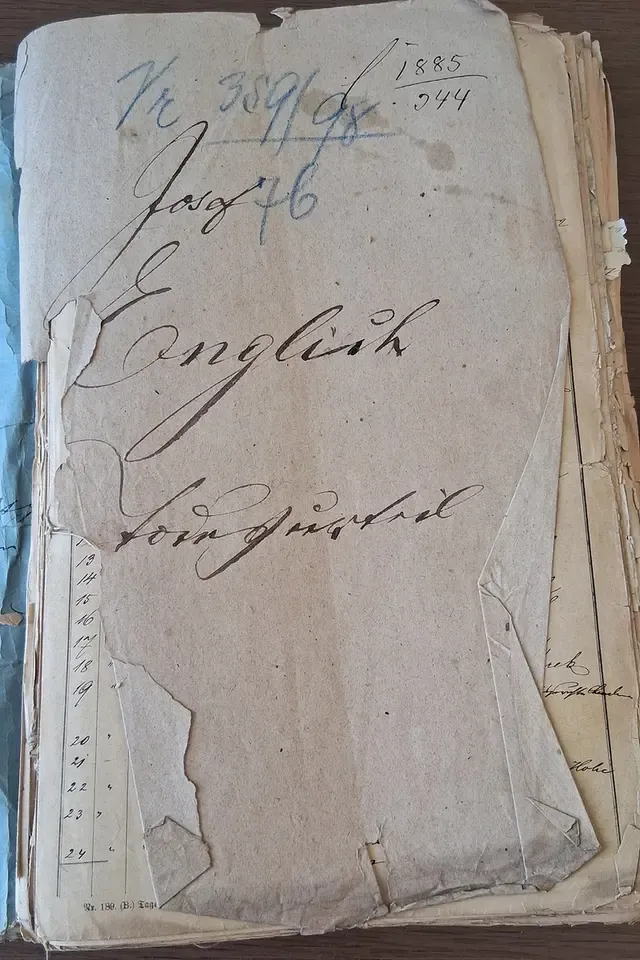
Cover of Josef Englich's criminal file
Jiří Nováček / Deník, reprodukce archivních materiálů / © All rights reserved / denik.cz
About this image
- Original title
- josef-englich-protokol-o-vyslechu.webp
- Author
- Jiří Nováček / Deník, reprodukce archivních materiálů
- Source
- denik.cz
- Licence
- © All rights reserved
- Changes
- resized, converted to AVIF and WebP, metadata removed
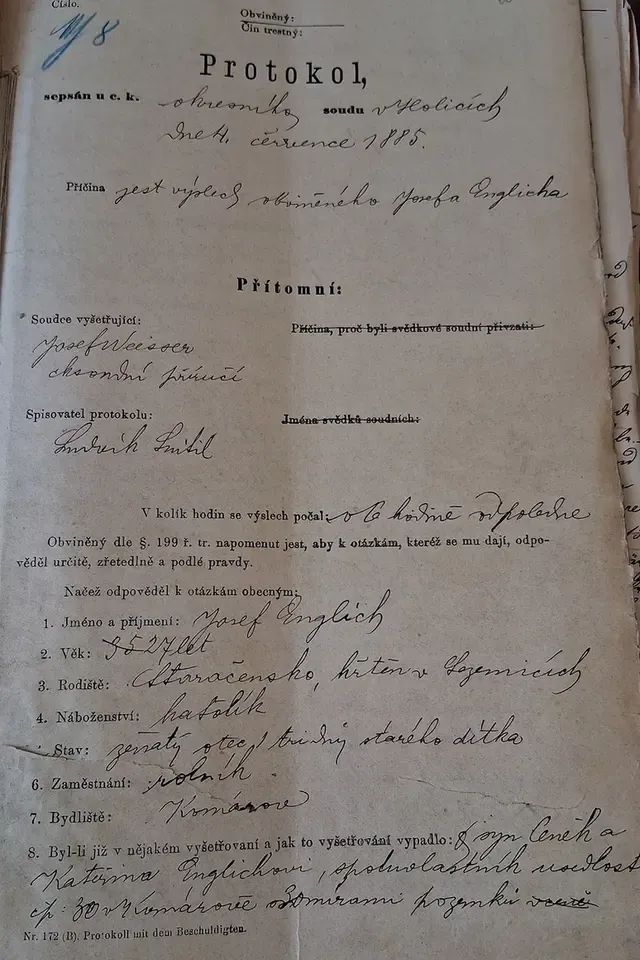
First page of the record of Josef Englich's interrogation
Jiří Nováček / Deník, reprodukce archivních materiálů / © All rights reserved / denik.cz
About this image
- Original title
- josef-englich-podpis-josefa-englicha.webp
- Author
- Jiří Nováček / Deník, reprodukce archivních materiálů
- Source
- denik.cz
- Licence
- © All rights reserved
- Changes
- resized, converted to AVIF and WebP, metadata removed
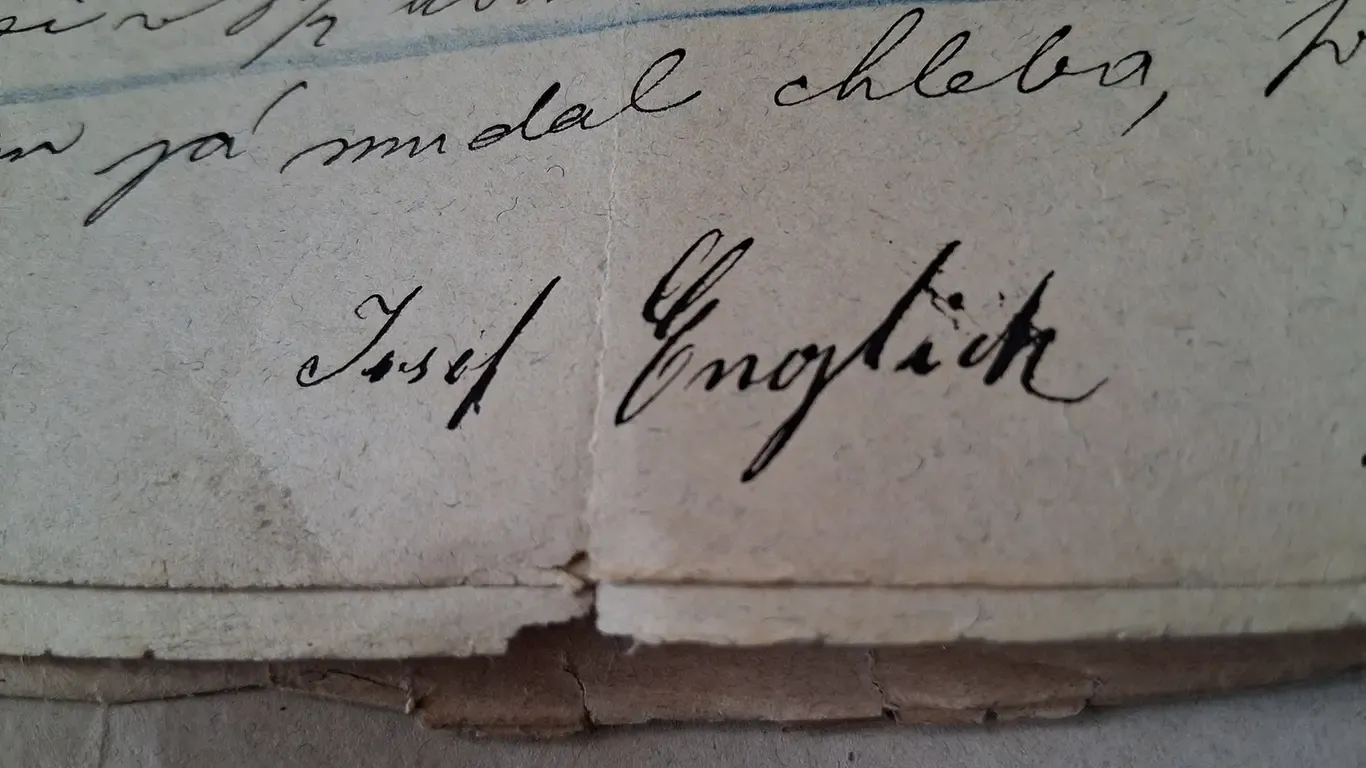
Josef Englich's signature in the record
Jiří Nováček / Deník, reprodukce archivních materiálů / © All rights reserved / denik.cz
About this image
- Original title
- josef-englich-krestni-list.webp
- Author
- Jiří Nováček / Deník, reprodukce archivních materiálů
- Source
- denik.cz
- Licence
- © All rights reserved
- Changes
- resized, converted to AVIF and WebP, metadata removed
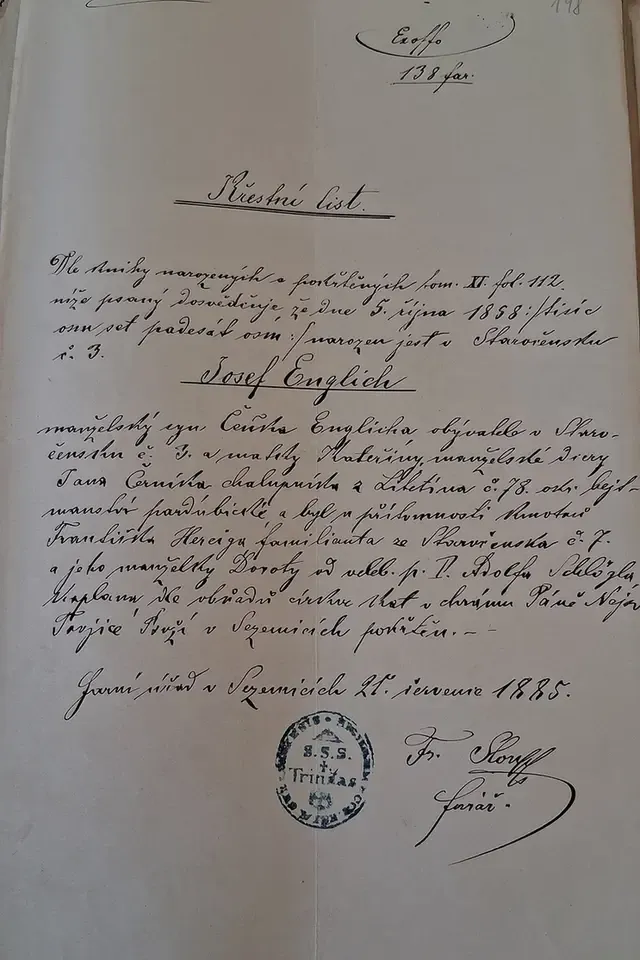
Josef Englich's baptismal certificate
Jiří Nováček / Deník, reprodukce archivních materiálů / © All rights reserved / denik.cz
About this image
- Original title
- josef-englich-obzaloba.webp
- Author
- Jiří Nováček / Deník, reprodukce archivních materiálů
- Source
- denik.cz
- Licence
- © All rights reserved
- Changes
- resized, converted to AVIF and WebP, metadata removed
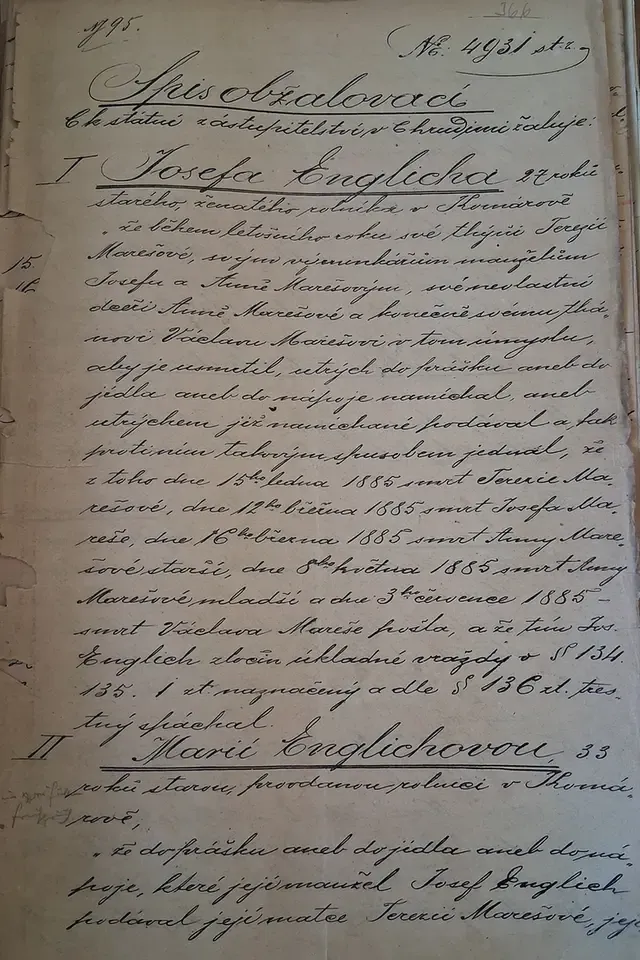
Indictment of Josef Englich
Jiří Nováček / Deník, reprodukce archivních materiálů / © All rights reserved / denik.cz
About this image
- Original title
- josef-englich-rozsudek-detail.webp
- Author
- Jiří Nováček / Deník, reprodukce archivních materiálů
- Source
- denik.cz
- Licence
- © All rights reserved
- Changes
- resized, converted to AVIF and WebP, metadata removed
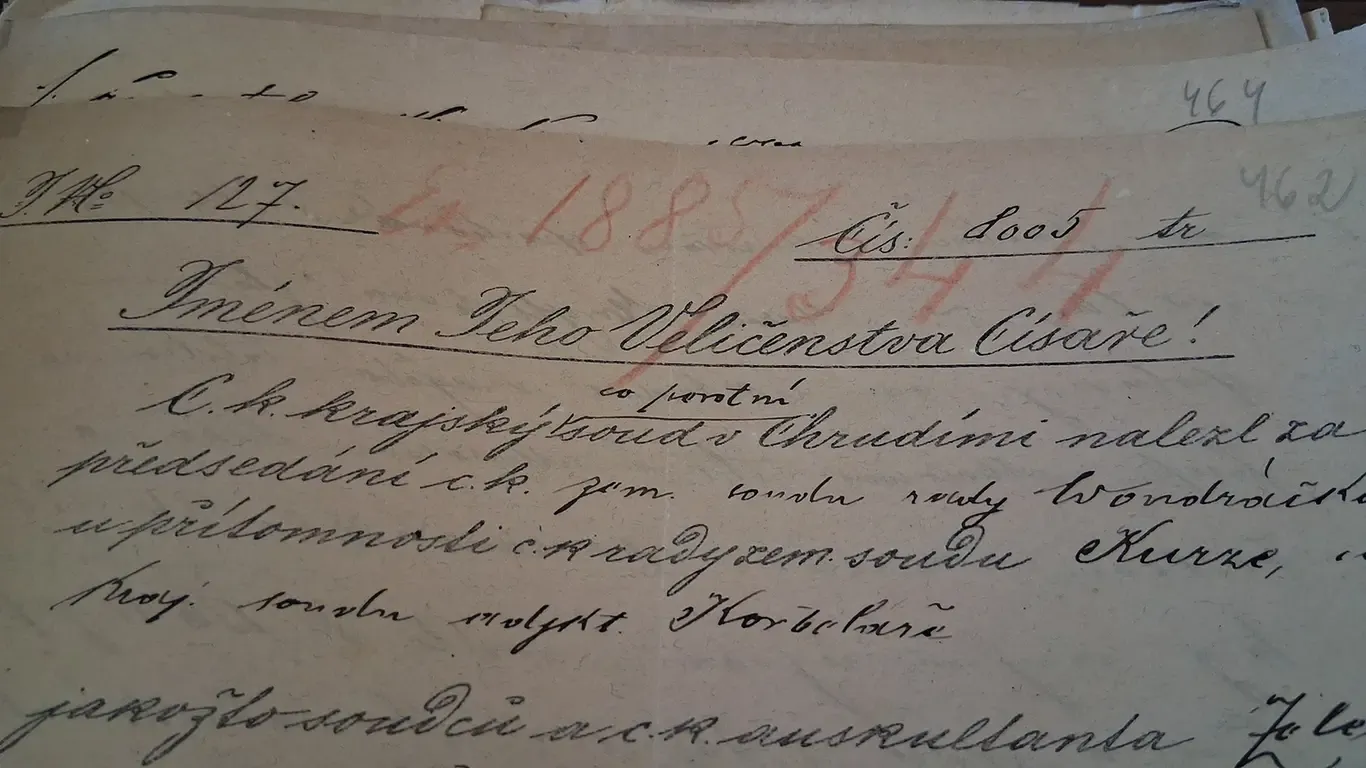
Heading of the judgment against Josef Englich
Jiří Nováček / Deník, reprodukce archivních materiálů / © All rights reserved / denik.cz
About this image
- Original title
- josef-englich-rozsudek-strana.webp
- Author
- Jiří Nováček / Deník, reprodukce archivních materiálů
- Source
- denik.cz
- Licence
- © All rights reserved
- Changes
- resized, converted to AVIF and WebP, metadata removed
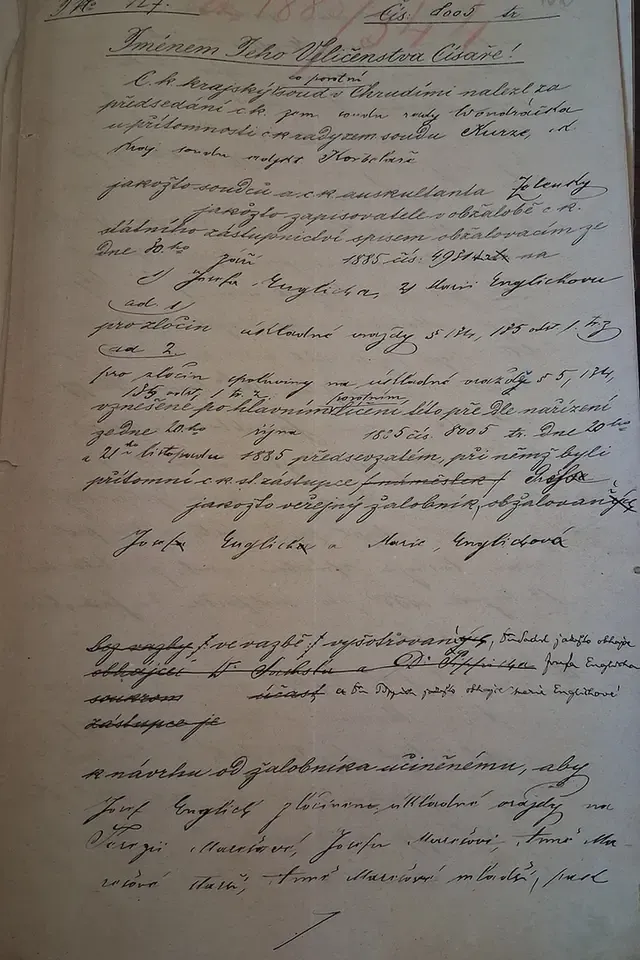
Archival sheet of the judgment against Josef Englich
Jiří Nováček / Deník, reprodukce archivních materiálů / © All rights reserved / denik.cz
About this image
- Original title
- josef-englich-motak-z-veznice.jpg
- Author
- Státní oblastní archiv v Hradci Králové, reprodukce Badatelé.net
- Source
- badatele.net
- Licence
- © All rights reserved
- Changes
- resized, converted to AVIF and WebP, metadata removed
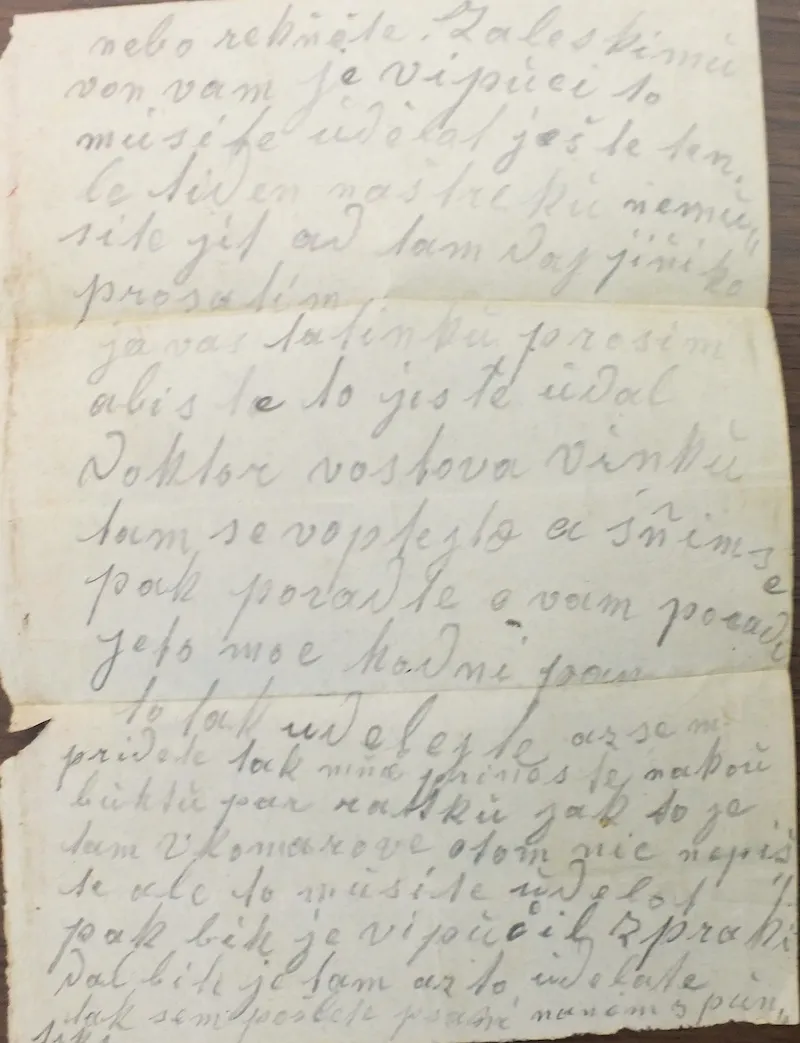
Surviving letter from Josef Englich written in prison
Státní oblastní archiv v Hradci Králové, reprodukce Badatelé.net / © All rights reserved / badatele.net
About this image
- Original title
- josef-englich-dvur-soudu-v-chrudimi.webp
- Author
- Jiří Nováček / Deník
- Source
- denik.cz
- Licence
- © All rights reserved
- Changes
- resized, converted to AVIF and WebP, metadata removed
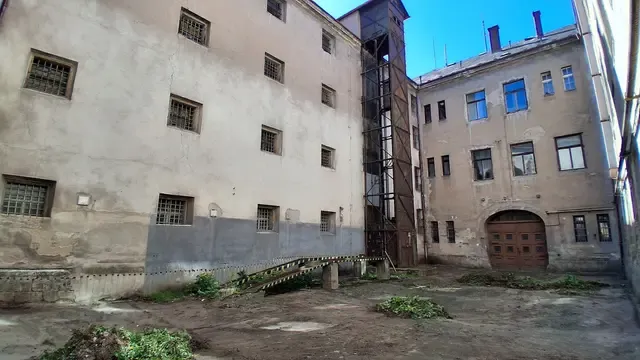
Surviving courtyard of the original Regional Court in Chrudim
Jiří Nováček / Deník / © All rights reserved / denik.cz
About this image
- Original title
- josef-englich-usedlost-v-komarove.webp
- Author
- Jiří Nováček / Deník
- Source
- denik.cz
- Licence
- © All rights reserved
- Changes
- resized, converted to AVIF and WebP, metadata removed
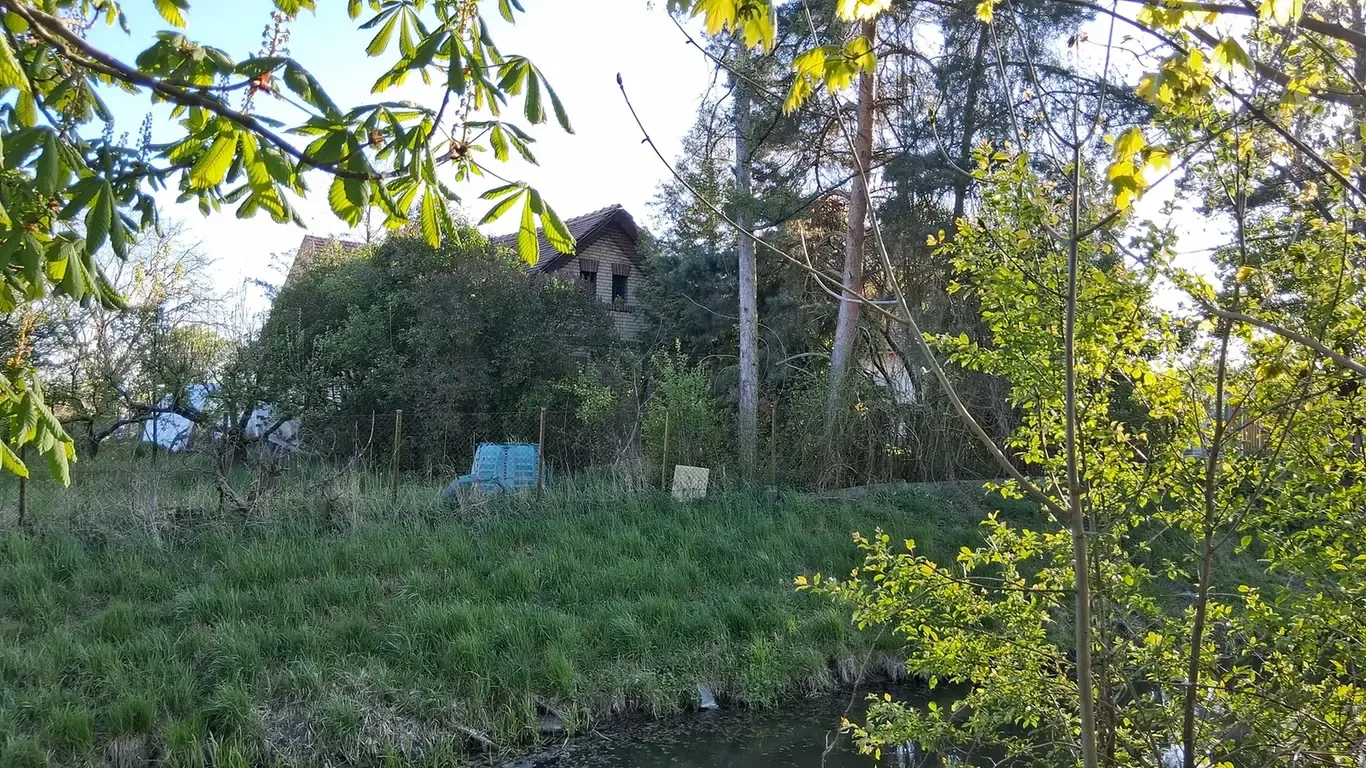
Present-day view of the farmstead in Komárov from period sources
Jiří Nováček / Deník / © All rights reserved / denik.cz
About this image
- Original title
- josef-englich-tisk-01.jpg
- Author
- Národní listy / Moravská zemská knihovna
- Source
- digitalniknihovna.cz
- Licence
- Public domain
- Changes
- resized, converted to AVIF and WebP, metadata removed
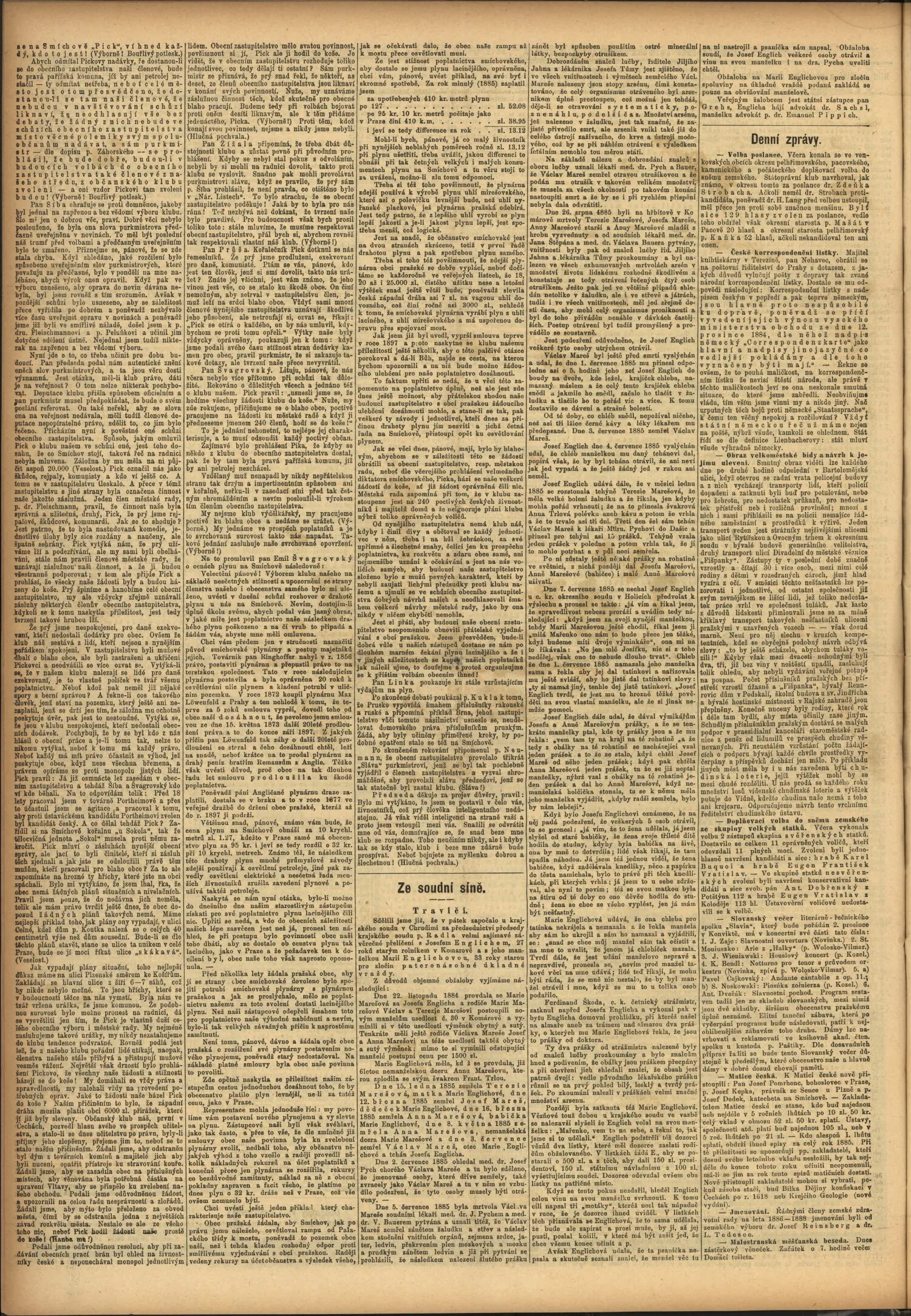
Report on the main trial in the case of Josef Englich
Národní listy / Moravská zemská knihovna / Public domain / digitalniknihovna.cz
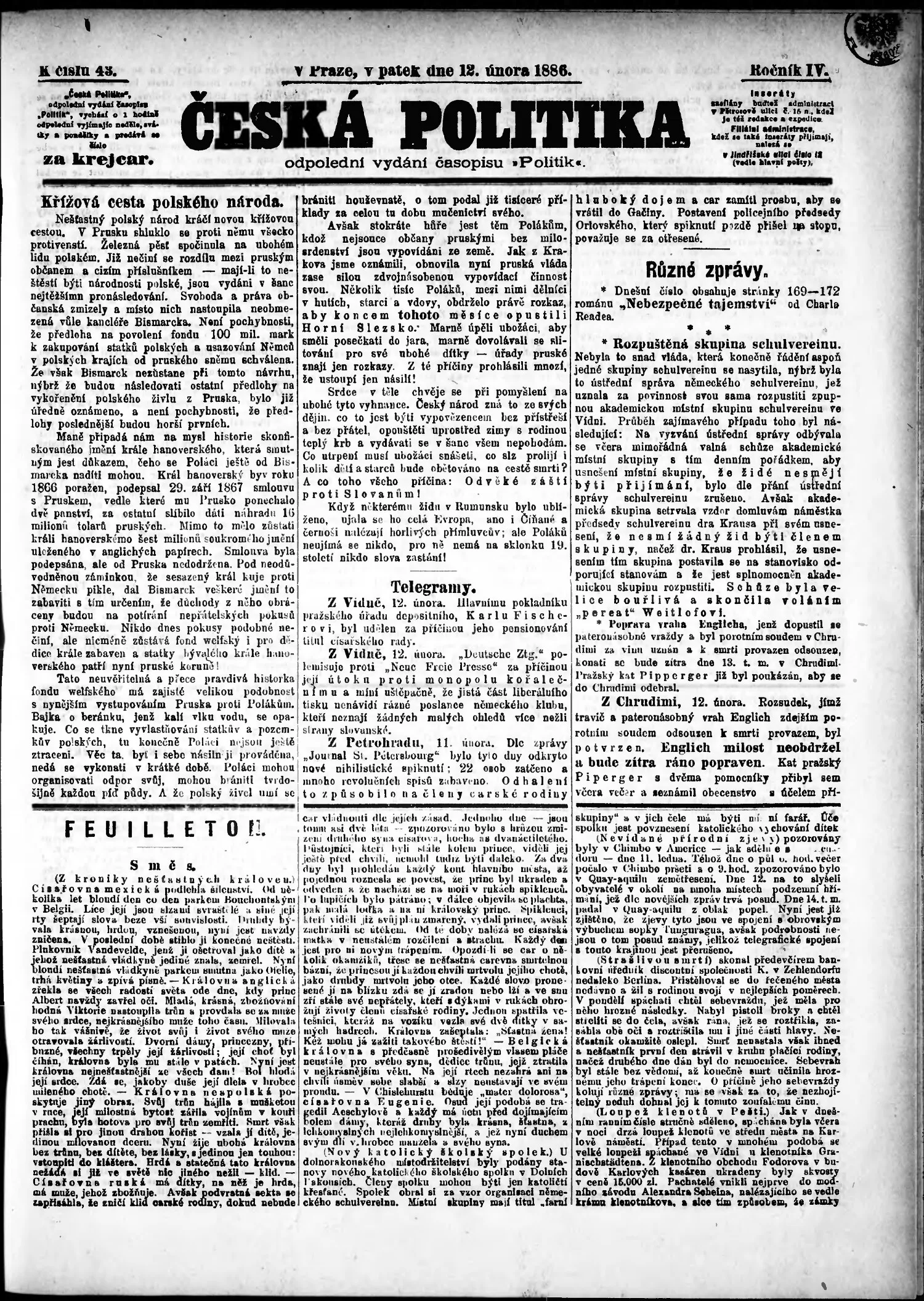
About this image
- Original title
- josef-englich-tisk-03.jpg
- Author
- Národní politika / Moravská zemská knihovna
- Source
- digitalniknihovna.cz
- Licence
- Public domain
- Changes
- resized, converted to AVIF and WebP, metadata removed
Contemporary newspaper report on the upheld judgment in the case of Josef Englich
Národní politika / Moravská zemská knihovna / Public domain / digitalniknihovna.cz
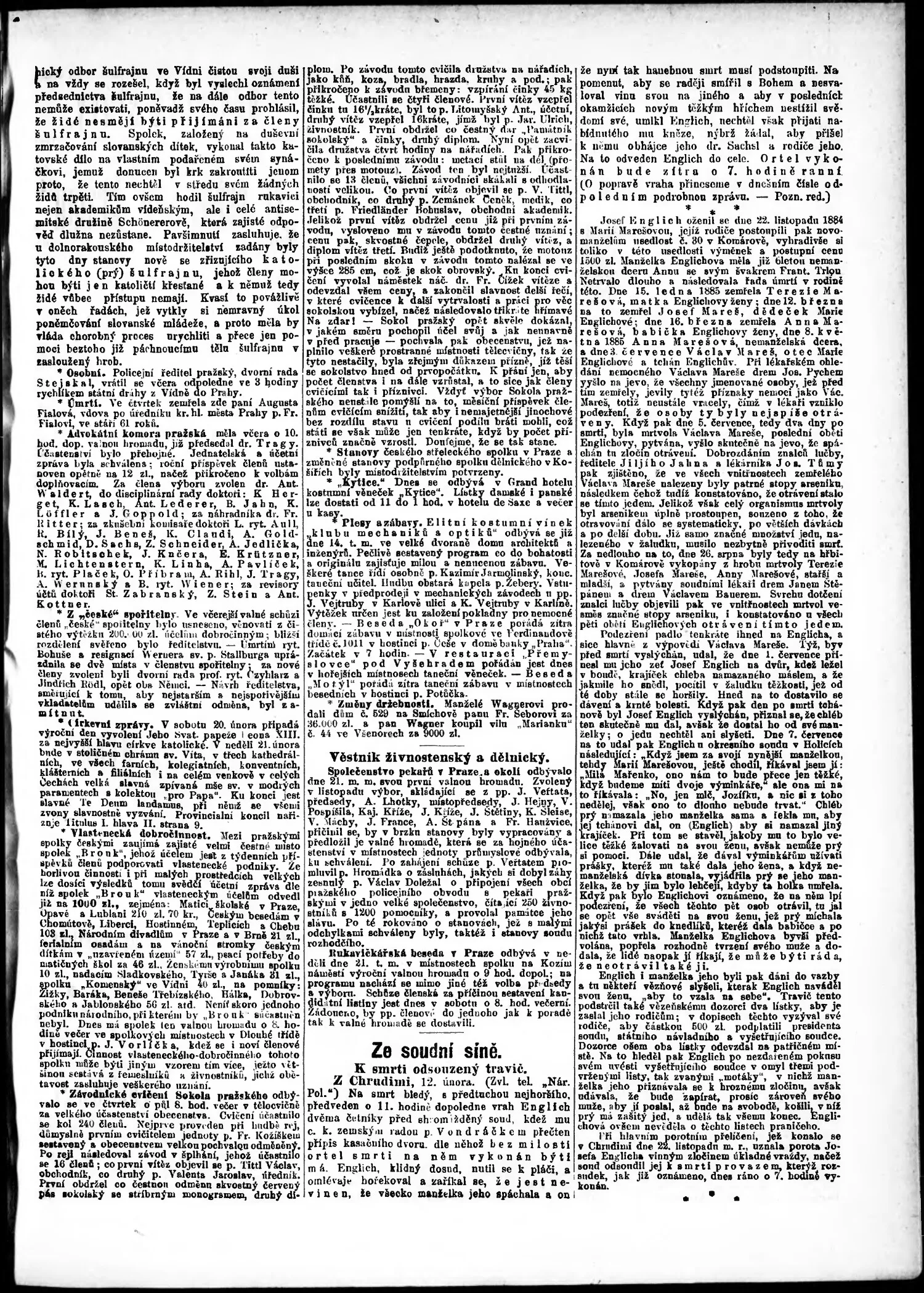
About this image
- Original title
- josef-englich-tisk-04.jpg
- Author
- Národní politika, ranní vydání / Moravská zemská knihovna
- Source
- digitalniknihovna.cz
- Licence
- Public domain
- Changes
- resized, converted to AVIF and WebP, metadata removed
Morning report on the verdict in Chrudim in the case of Josef Englich
Národní politika, ranní vydání / Moravská zemská knihovna / Public domain / digitalniknihovna.cz
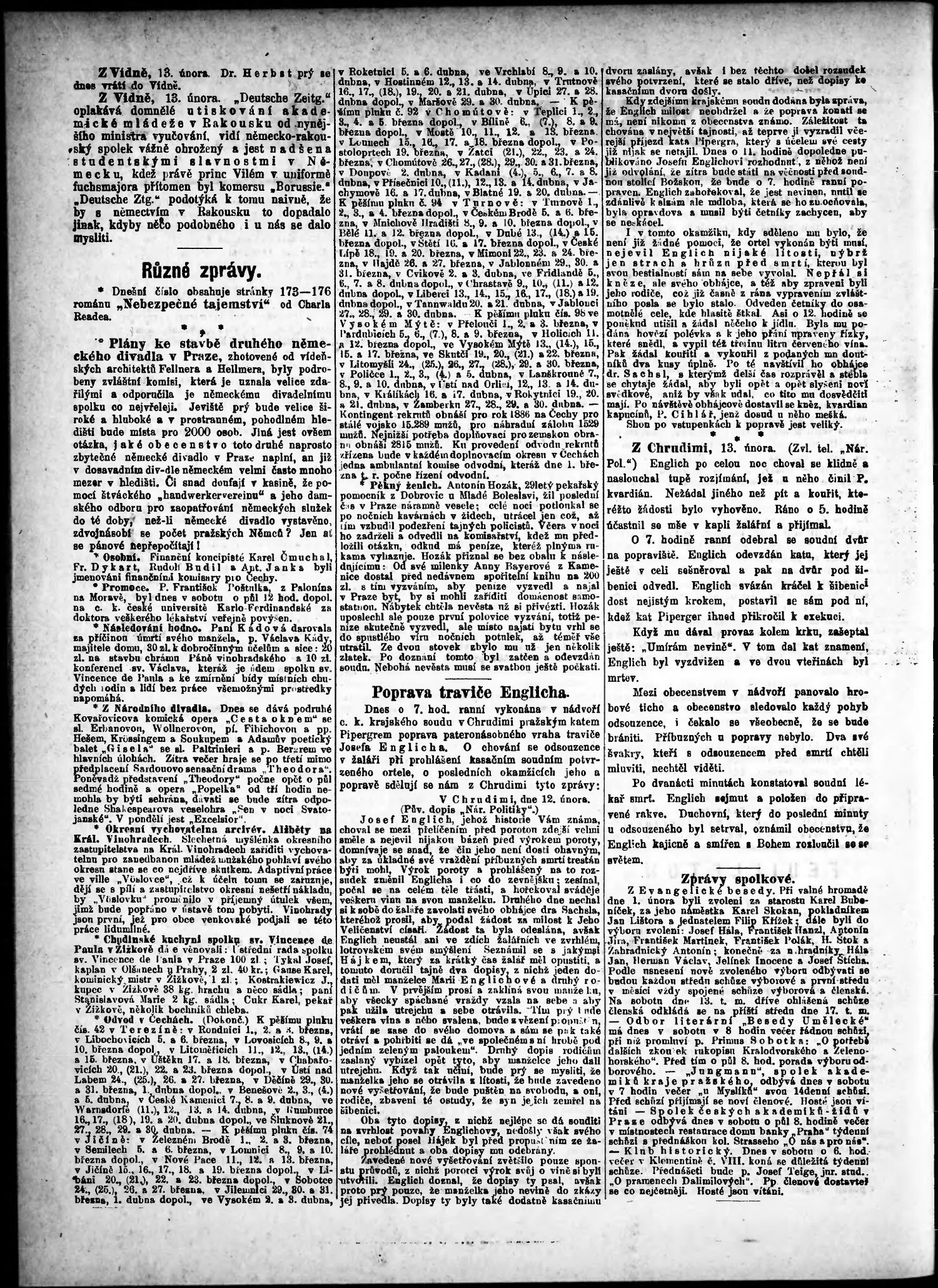
About this image
- Original title
- josef-englich-tisk-05.jpg
- Author
- Národní politika, odpolední vydání / Moravská zemská knihovna
- Source
- digitalniknihovna.cz
- Licence
- Public domain
- Changes
- resized, converted to AVIF and WebP, metadata removed
Afternoon report from Chrudim on the case of Josef Englich
Národní politika, odpolední vydání / Moravská zemská knihovna / Public domain / digitalniknihovna.cz
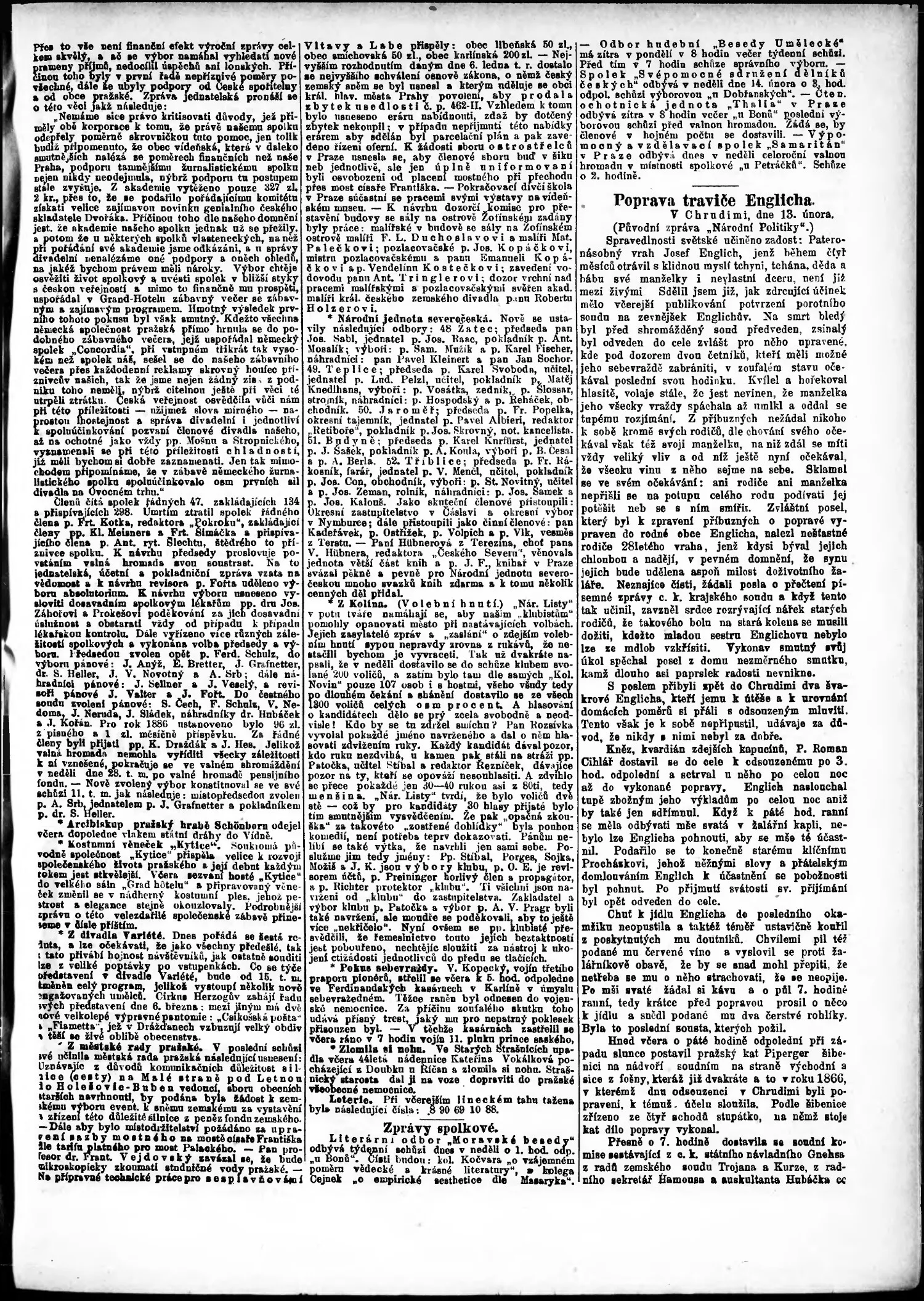
About this image
- Original title
- josef-englich-tisk-07.jpg
- Author
- Národní politika / Moravská zemská knihovna
- Source
- digitalniknihovna.cz
- Licence
- Public domain
- Changes
- resized, converted to AVIF and WebP, metadata removed
The following day in the contemporary press on the case of Josef Englich
Národní politika / Moravská zemská knihovna / Public domain / digitalniknihovna.cz
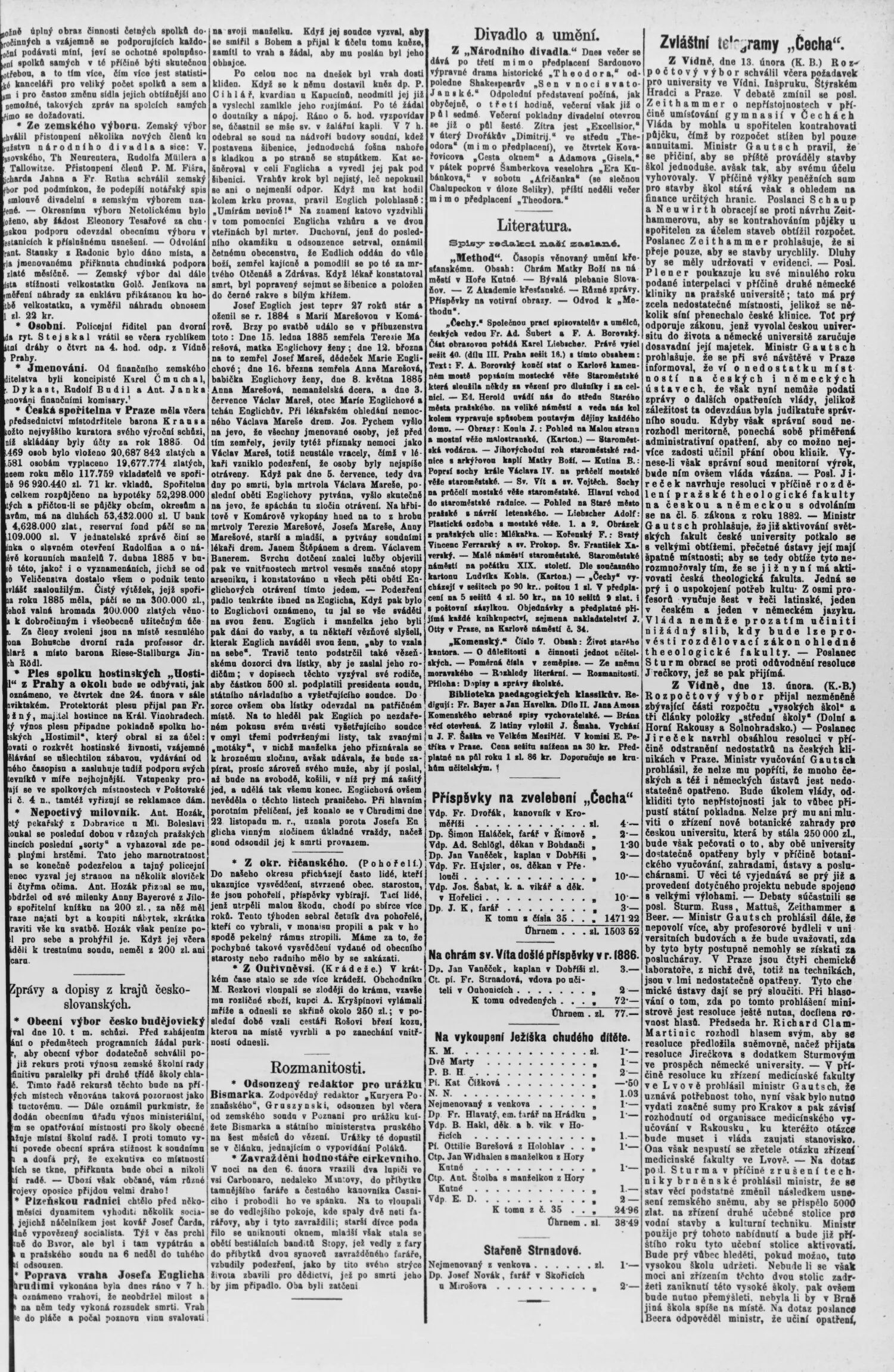
About this image
- Original title
- josef-englich-tisk-09.jpg
- Author
- Čech, politický týdenník katolický / Moravská zemská knihovna
- Source
- digitalniknihovna.cz
- Licence
- Public domain
- Changes
- resized, converted to AVIF and WebP, metadata removed
Contemporary report in a political weekly on the case of Josef Englich
Čech, politický týdenník katolický / Moravská zemská knihovna / Public domain / digitalniknihovna.cz
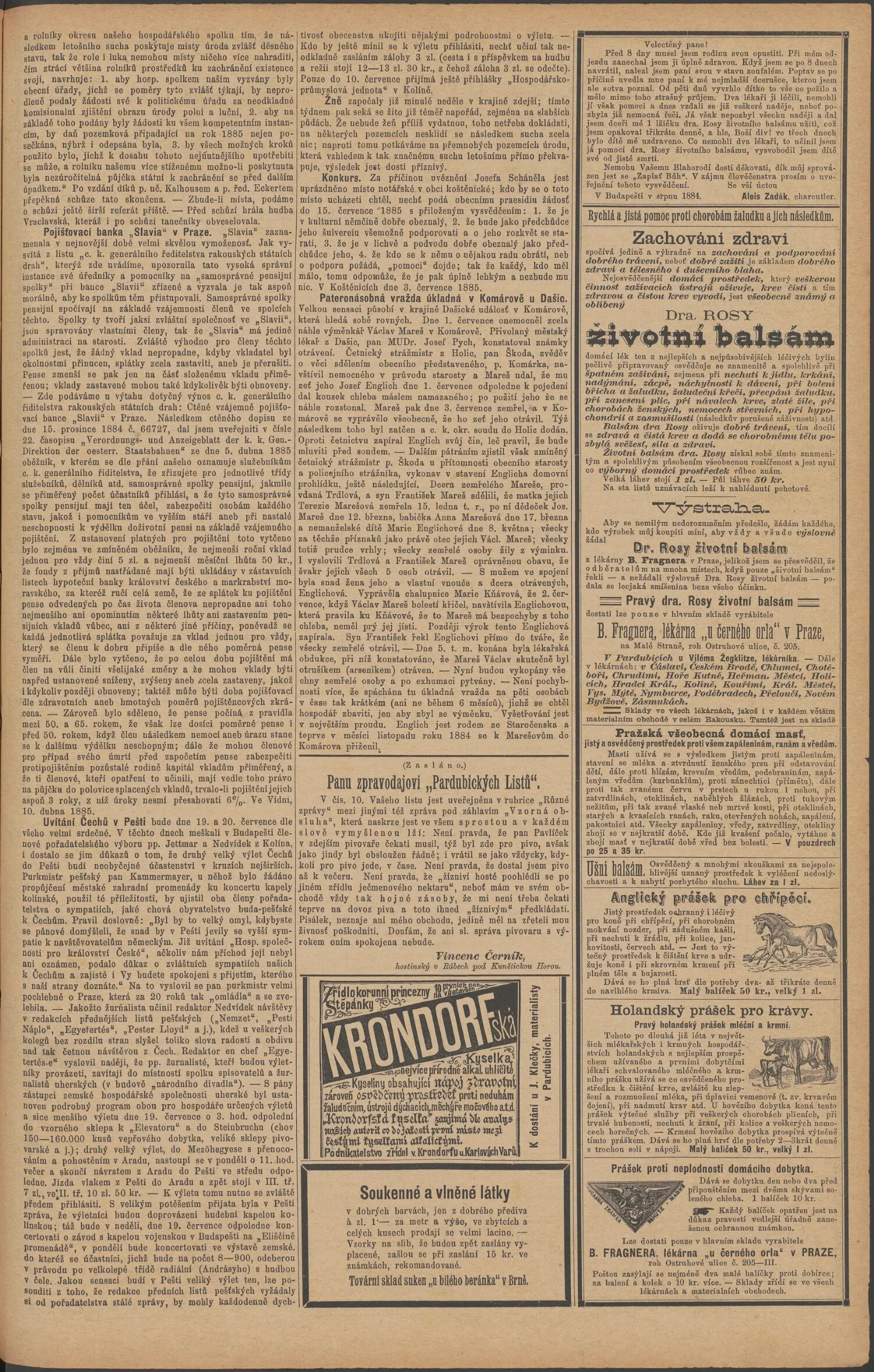
About this image
- Original title
- josef-englich-pernstyn-prvni-zprava-1885.jpg
- Author
- Pernštýn, digitalizace České digitální knihovny
- Source
- ceskadigitalniknihovna.cz
- Licence
- Public domain
- Changes
- resized, converted to AVIF and WebP, metadata removed
Pernštýn on the case of Josef Englich in Komárov
Pernštýn, digitalizace České digitální knihovny / Public domain / ceskadigitalniknihovna.cz
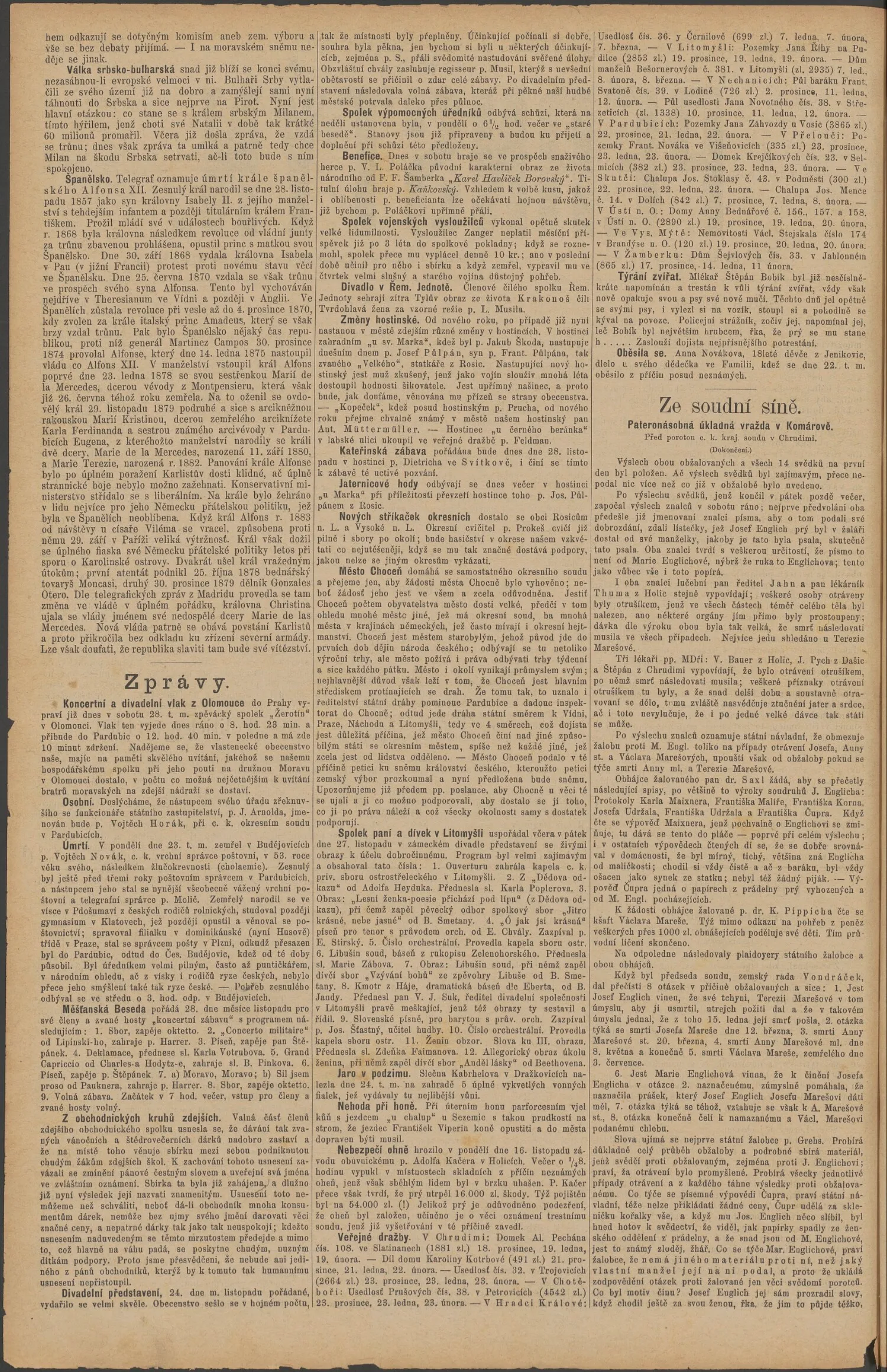
About this image
- Original title
- josef-englich-pernstyn-hlavni-liceni-1885.jpg
- Author
- Pernštýn, digitalizace České digitální knihovny
- Source
- ceskadigitalniknihovna.cz
- Licence
- Public domain
- Changes
- resized, converted to AVIF and WebP, metadata removed
Pernštýn on the trial of Josef Englich
Pernštýn, digitalizace České digitální knihovny / Public domain / ceskadigitalniknihovna.cz
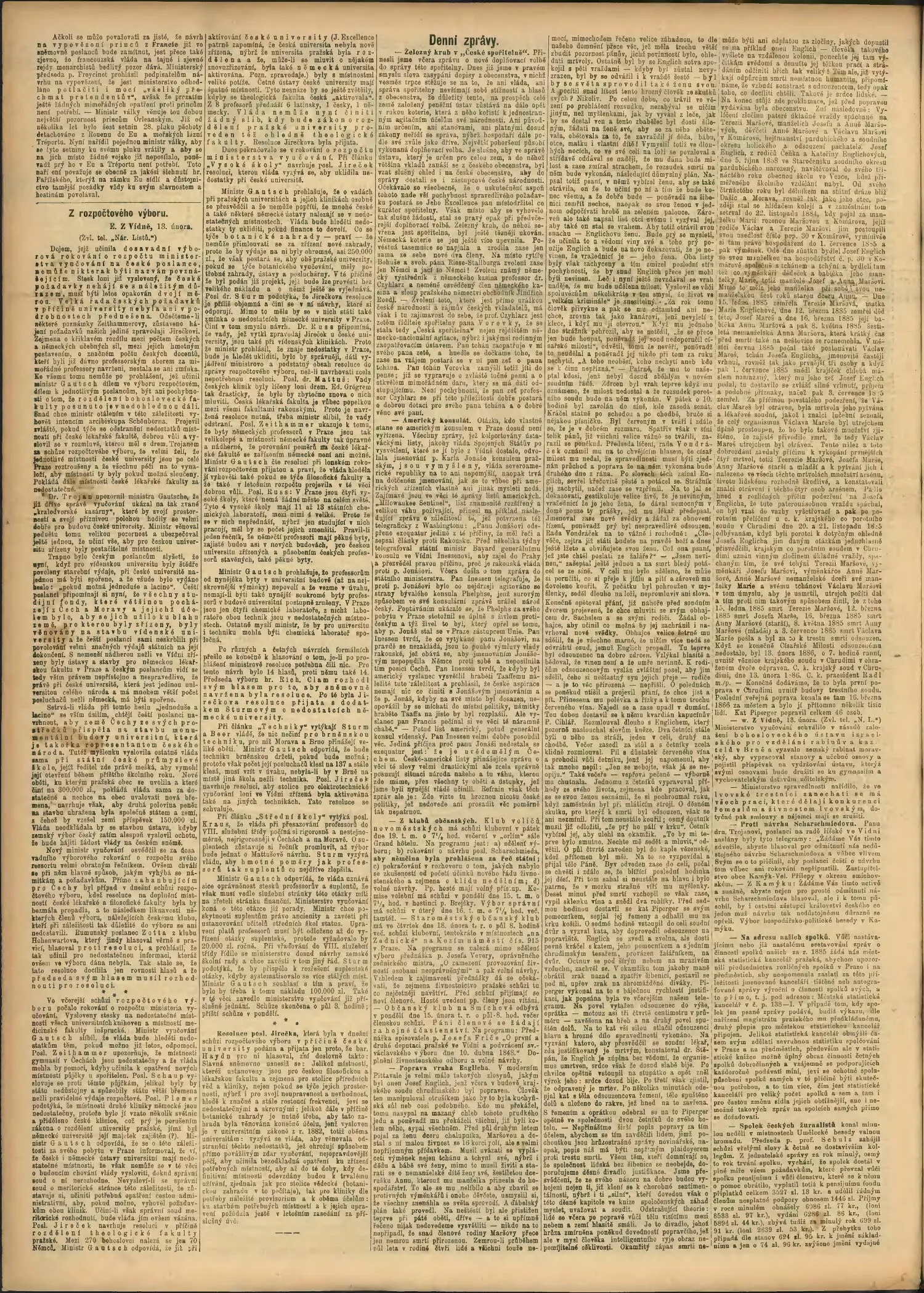
About this image
- Original title
- josef-englich-narodni-listy-1886.jpg
- Author
- Národní listy, digitalizace České digitální knihovny
- Source
- ceskadigitalniknihovna.cz
- Licence
- Public domain
- Changes
- resized, converted to AVIF and WebP, metadata removed
Národní listy on the case of Josef Englich
Národní listy, digitalizace České digitální knihovny / Public domain / ceskadigitalniknihovna.cz
13 / 15 / Open questions
What is still missing
- Who presided over the jury court: the president of the regional court Radl, or Provincial Councillor Vondráček.
- Where and how he obtained the arsenic. Novotný later found a packet in the attic labelled “at the Black Dog in Prague”; a connection with Englich has not been proven.
- The origin of the couple’s child: Deník writes that Marie was breastfeeding in July 1885, Badatelé.net that Englich “brought the child into the marriage”.
- Where he is buried and whether it is a mass grave.
- The victims’ ages: given only by modern articles, 55 or 56 for Václav Mareš. The Komárov parish registers have not been searched.
- The year the Novotný couple bought the farm (1886 or 1887) and the price.
- The file of the Regional Court in Chrudim in the State Regional Archives in Zámrsk is not online. The books by V. Šindelář (Zločiny za časů c. k. monarchie, 2014), M. Dlouhý (Za císaře pána, 2011) and the Encyklopedie českých právních dějin (2017) mention the case, but their text was not available.
- Witness statements from the jury trial are not in the issues of the contemporary press found, only the indictment and the verdict.
Not yet covered: comparison.
14 / 15 / Citations
Sources
A number in square brackets next to a claim refers to an item in this list. A claim without a number has no source assigned yet. Details may vary between sources; disputed and theoretical items are marked.
26Sources in total
- Primary13
- Secondary7
- Media6
Checked: 15 Nov 2026. The research rests mainly on the contemporary press from 1885 and 1886 in the Kramerius digital library (automatic OCR), including the official account of the crime printed in two papers. The contemporary papers draw partly on the same indictment and account, the modern articles on the State Regional Archives in Zámrsk and on the press. Information from a single source is marked in the text. Check against the file in the State Regional Archives in Zámrsk and the parish registers (births, deaths of the victims) before publication.
- [1]Národní listy (22 Nov 1885), Ze soudní síně: Traviči. digitalniknihovna.cz / cited 37×primary
- [2]Národní listy (23 Nov 1885), Traviči. V Chrudimi, 22. listopadu. digitalniknihovna.cz / cited 3×primary
- [3]Národní politika (12 Feb 1886), Poprava vraha Englicha. digitalniknihovna.cz / cited 1×primary
- [4]Národní politika (13 Feb 1886, morning edition), K smrti odsouzený travič. Z Chrudimi, 12. února. digitalniknihovna.cz / cited 22×primary
- [5]Národní politika (13 Feb 1886, afternoon edition), Poprava traviče Englicha. digitalniknihovna.cz / cited 14×primary
- [6]Národní listy (13 Feb 1886), Poprava traviče Josefa Englicha. Z Chrudimi, 13. února. digitalniknihovna.cz / cited 6×primary
- [7]Národní politika (14 Feb 1886), Poprava traviče Englicha. V Chrudimi, dne 13. února, with the text of Vylíčení zločinu pateré úkladné vraždy. digitalniknihovna.cz / cited 28×primary
- [8]Národní listy (14 Feb 1886), Poprava vraha Englicha. digitalniknihovna.cz / cited 23×primary
15 / 15 / Revision history
Revision history
Every edit to this page is logged. Corrections sent in by readers are applied only after the editors check them against sources.
- Published
- Updated
- Edits
- 1
- Page published