01
Content warningReal violent crimes; victims are named. Help: findahelpline.com. More
This page describes real violent crimes and names the victims. Victims come first; we leave out details that serve only sensationalism. Help: free helplines in your country at findahelpline.com; in an emergency call 112 (EU) or 911 (US).
Jack the Ripper
unidentified perpetrator; name, age and origin unknown
An unknown perpetrator known as Jack the Ripper murdered five women in and around Whitechapel in the East End of London between 31 Aug and 9 Nov 1888. They are called the canonical five: Mary Ann Nichols, Annie Chapman, Elizabeth Stride, Catherine Eddowes and Mary Jane Kelly. He cut the throats of all of them with a knife, mutilated four of the bodies and took away parts of organs from three. He killed Stride and Eddowes in a single night, 30 Sep 1888. Police and the press received hundreds of letters signed “Jack the Ripper”, but according to the UK National Archives there is no conclusive evidence that any of them was written by the murderer. The police file on the Whitechapel murders covers 11 victims from 1888 to 1891; for six of them, a link to the Ripper is only speculation. No one was charged or tried, and the perpetrator was never identified.
- 5
- victims of the canonical five between 31 Aug and 9 Nov 1888● Fact
- 11
- victims in the police file on the Whitechapel murders from 1888 to 1891● Fact
- 2
- women murdered in a single night, 30 Sep 1888● Fact
- 0
- people charged; no one was tried for the murders● Fact
5Fact
7Disputed
1Theory
90 of 90claims have a source
69sources, 39 of them primary
02 / 17 / Timeline
From the first murders in the file to the dispute over DNA
Events: 63 / 1888–2025
- 01
Context and other murders
188818883 AprAttack on Emma Smith
Context and other murdersEmma Elizabeth Smith was assaulted and robbed in Osborn Street in Whitechapel and died of her injuries. The police file on the Whitechapel murders lists her as the first victim. According to History by the Yard, she was attacked by three young men. [33] [32] [38] [3]
- 02
Murders and letters
1888 - 03
Investigation and aftermath
1888 - 04
Murders and letters
1888 - 05
Investigation and aftermath
1888188810 SepCriticism of the police in the press
Investigation and aftermathThe Manchester Guardian wrote that as long as the murderer was not caught, the police themselves were on trial. This is a contemporary article; no other source quotes it. [37]
- 11 to 13 Sep
Joseph Isenschmid
Investigation and aftermathPolice arrested and detained Joseph Isenschmid as a suspect. Only the National Archives catalogue gives this. [5]
- 14 Sep
Questioning around Chapman
Investigation and aftermathPolice questioned Edward Stanley, Chapman’s companion, and detained Edward McKenna for identification. Only the National Archives catalogue gives this. [6]
- 06
Murders and letters
1888 - 07
Investigation and aftermath
1888 - 08
Murders and letters
1888 - 30 Sep
Murder of Catherine Eddowes
Murders and lettersAbout three quarters of an hour later Catherine Eddowes died in Mitre Square in Aldgate, already within the City of London. The murderer opened her abdomen and took away her left kidney. The City of London Police joined the investigation. [33] [50] [60] [12]
- 09
Investigation and aftermath
1888 - 30 Sep
Police handbill
Investigation and aftermathPolice issued a handbill requesting information on any person “to whom suspicion is attached”. Only the National Archives catalogue gives this. [24]
- 10
Murders and letters
1888 - 11
Context and other murders
188818882 OctTorso in Whitehall
Context and other murdersA female torso was found in the cellar of the building site of the new police headquarters in Whitehall. It is not attributed to the Ripper. Only History by the Yard gives this. [33]
- 12
Investigation and aftermath
188818884 OctWitness Matthew Packer
Investigation and aftermathA police report on the witness Matthew Packer and on the identification of Stride’s body. Only the National Archives catalogue gives this. [8]
- October
Traders’ petition
Investigation and aftermathWhitechapel traders asked the Home Secretary to strengthen the police. Only the National Archives catalogue gives this. [25]
- 13
Murders and letters
1888 - 14
Investigation and aftermath
1888188822 OctInquiry about brothels
Investigation and aftermathGodfrey Lushington of the Home Office asked the police for the numbers of brothels and prostitutes in Whitechapel. Only the National Archives catalogue gives this. [26]
- 15
Murders and letters
1888 - 16
Investigation and aftermath
1888 - 8 Nov
Warren’s dispute with the Home Office
Investigation and aftermathThe Home Office wrote to Commissioner Warren about his article in Murray's Magazine. Warren offered his resignation. Only Hansard gives this. [39]
- 17
Murders and letters
1888 - 18
Investigation and aftermath
1888188810 NovThomas Bond’s report
Investigation and aftermathDoctor Thomas Bond compared the murder of Kelly with the four previous ones and described the perpetrator he assumed. Only the National Archives catalogue gives this. [11]
- 20 Nov
Dispute over the correspondence
Investigation and aftermathMPs demanded publication of Warren’s correspondence with the Home Office; Matthews refused. Only Hansard gives this. [40]
- 19
Context and other murders
1888 - 20
Investigation and aftermath
18891889early in the yearAbberline leaves
Investigation and aftermathInspector Abberline left the case and Inspector Henry Moore took over the investigation. Only History by the Yard gives this. [33]
- 21
Context and other murders
1889 - 22
Investigation and aftermath
1889188918 JulMore detectives
Investigation and aftermathIn Parliament the Home Secretary again refused a reward but approved more detectives for Whitechapel. Only Hansard gives this. [42]
- 23
Context and other murders
1889–91 - 24
Investigation and aftermath
1891–25 - 1896
The last report
Investigation and aftermathInspector Henry Moore wrote the last surviving report on the murders, after another letter signed “Jack the Ripper”. Only History by the Yard gives this. [33]
- 191323 Sep
Littlechild’s letter
Investigation and aftermathJohn Littlechild, the former head of Special Branch, described Tumblety in a letter as a very likely suspect. Only History by the Yard gives this. [33]
- 198719 Oct
Swanson’s notes made public
Investigation and aftermathThe Daily Telegraph reported that Swanson’s notes in the memoirs existed. Only the Psychiatric Bulletin gives this. [51]
- November
The Dear Boss letter returns
Investigation and aftermathThe file with the Dear Boss letter arrived anonymously by post at New Scotland Yard. Only the National Archives catalogue gives this. [2]
03 / 17 / Victims first
Named victims
Named victims: 5 / Survivors: 0
The list contains the five women of the so-called canonical five, whom sources consistently attribute to the Ripper. Ages differ between sources. Nichols was 42 according to EBSCO and Rossmo, 43 according to the date of birth at Crime+Investigation. Eddowes was 43 according to the same two sources, 46 according to the date of birth. For Chapman sources differ between 47 and 45, for Stride between 45 and 44, so we do not give their ages. Kelly was about 25; Rossmo gives 24. The National Archives catalogue dates the murders of Stride and Eddowes to 29 Sep 1888; it was the night of 29 to 30 September. Whether Stride was killed by the same perpetrator is open. Police and the press considered all the victims prostitutes; according to the National Archives, none of them was known to the police as a prostitute. The six other victims from the Whitechapel murders file are among the unconfirmed.
Showing 5 of 5
- Mary Ann NicholsBuck's Row, Whitechapel, East End, London31 Aug 1888age 42
- Annie Chapmanyard behind 29 Hanbury Street, Spitalfields, East End, London8 Sep 1888age unknown
- Elizabeth Strideyard by 40 Berner Street (Dutfield's Yard), St George in the East, East End, London30 Sep 1888 (night of 29 to 30 Sep)age unknown
- Catherine EddowesMitre Square, Aldgate, City of London, London30 Sep 1888 (night of 29 to 30 Sep)age 43
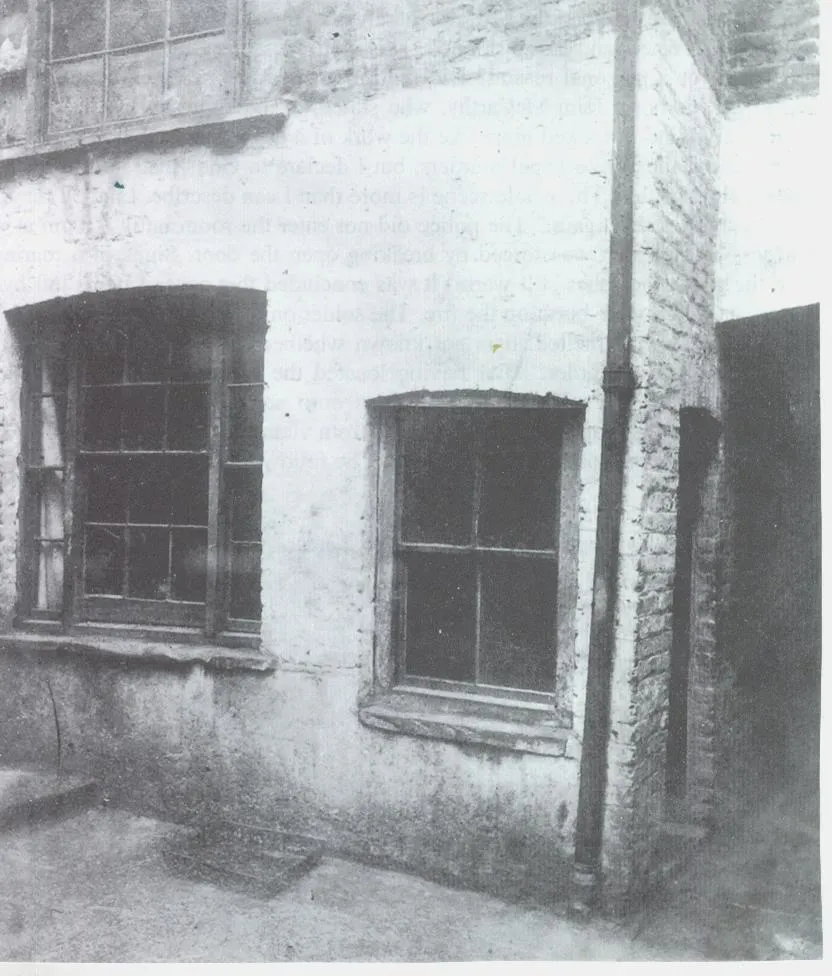
- Mary Jane Kellyher room in Miller's Court off Dorset Street, Spitalfields, East End, London9 Nov 1888age 25
By location
East End, London4
City of London, London1
Victim profile
12 and under0
13–170
18–240
25 and over3
Women and girls: 5 / Men and boys: 0 (of 5 named)
Unconfirmed
Besides the canonical five, the police file on the Whitechapel murders lists six further victims from 1888 to 1891. Sources do not attribute them to the Ripper, or only as speculation. Emma Elizabeth Smith was assaulted and robbed on 3 Apr 1888 in Osborn Street in Whitechapel and stated before her death that there had been several attackers. Martha Tabram, alias Turner, was murdered on 7 Aug 1888 in George Yard Buildings in Whitechapel; police looked into soldiers, and some historians consider her a possible sixth victim. Rose Mylett, alias Lizzie Davis, died in Clarke's Yard in Poplar, on 20 Dec 1888 according to History by the Yard, on 26 Dec 1888 according to the National Archives catalogue; that according to Robert Anderson it was not murder is stated only by History by the Yard. Alice McKenzie was murdered on 17 Jul 1889 in Castle Alley in Whitechapel; William Brodie confessed to the murder and was released. The torso of an unknown woman was found on 10 Sep 1889 under the railway arches in Pinchin Street and was never identified. Frances Coles was murdered on 13 Feb 1891 under a railway arch in Swallow Gardens; James Thomas Sadler, who was arrested, was released. According to the National Archives, at least three murders of women before and after the canonical five were so brutal that there is speculation about the same perpetrator. From one source each: a female torso in the cellar of the building site of the new police headquarters in Whitehall on 2 Oct 1888 (given only by History by the Yard, not attributed to the Ripper) and an attempted murder of a woman at Spitalfields Market on the morning of 8 Sep 1888 (given only by the Manchester Guardian, without a name). Sources do not document survivors of direct attacks.
04 / 17 / Offender’s pattern
What recurred
The perpetrator was never identified, so the description rests only on the crime scenes, police files, examinations of the bodies and the letters. Each item is marked as a documented fact, a disputed point or a theory.
Traits: 7
02
Mutilation after death
● Fact03
Organs taken
● FactHe took away parts of organs from three victims: the uterus from Chapman, the left kidney from Eddowes and the heart from Kelly. [33] [34] [58] [60]
That he also took Eddowes’s uterus is stated only by History by the Yard. For Chapman, EBSCO writes of the sexual organs and part of the bladder, Rossmo of the vagina and bladder.
04
Night and the end of the week
● Fact05
Outdoors and without noise
◐ DisputedHe killed four women outdoors, in a street, a yard or a square, and Kelly in her room. Hallie Rubenhold points out that there were no signs of a struggle at the scenes and nobody heard screams. [33] [36] [56] [53] [55]
Rubenhold concludes from this that the women were killed lying down, perhaps asleep. This is the author’s theory.
06
A small area
● FactThe victims lived in lodging houses in Thrawl Street, Flower and Dean Street and Dorset Street. All the murder sites lie in neighbouring districts of the East End. [50] [57] [58] [59]
D. K. Rossmo’s 1998 geographic profile places the perpetrator’s most probable residence around Flower and Dean Street and Thrawl Street. This is a theory, given only by Rossmo.
07
Letters and the writing
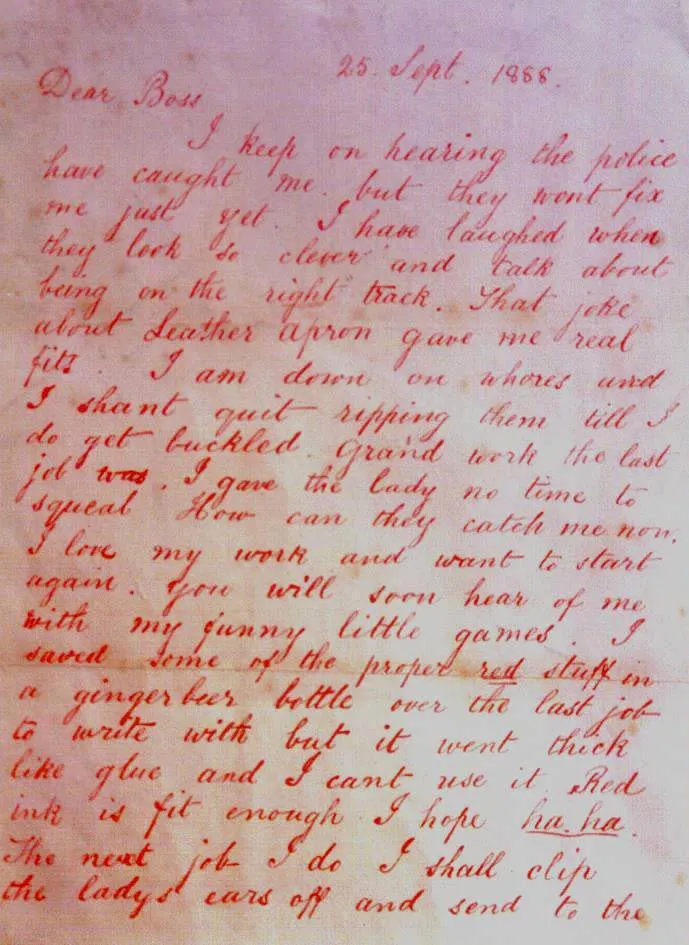
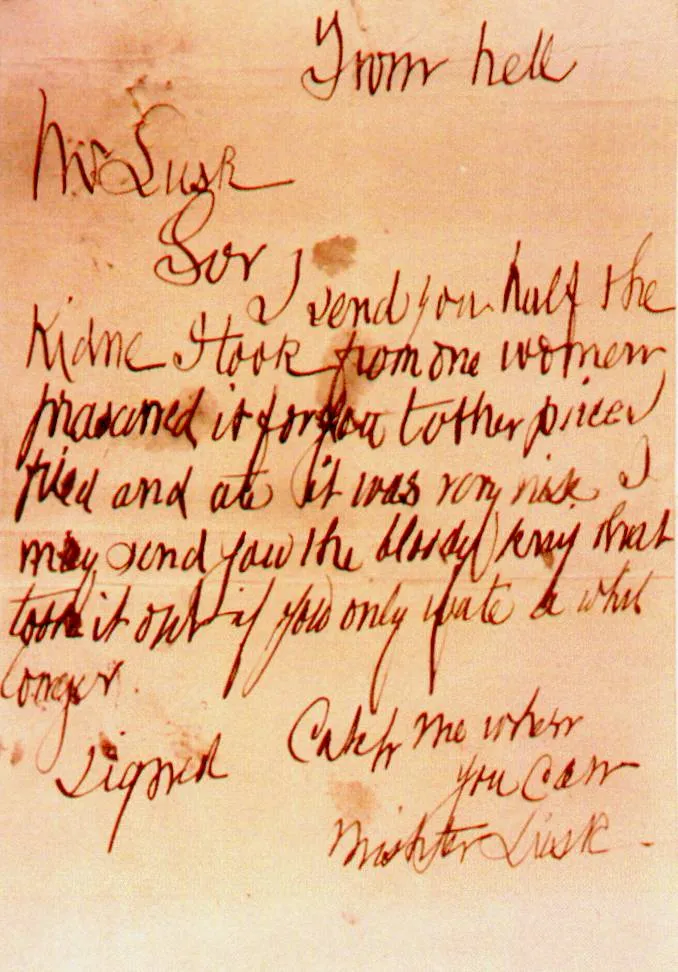
◐ DisputedThe nickname comes from the “Dear Boss” letter. The “From Hell” letter arrived with half a human kidney. Above a piece of Eddowes’s apron in Goulston Street there was a chalk inscription. For none of them is it proven that it came from the murderer. [1] [33] [34] [61]
The wording of the inscription differs between sources because it was wiped off before dawn.
05 / 17 / Modus operandi
How the behaviour evolved
Phases: 3
Until 31 Aug 1888 / Whitechapel
Before the canonical five
Whitechapel was among the poorest areas of the country, and violence against women was common there. The police file on the Whitechapel murders begins with two attacks from the spring and summer of 1888.
- 3 Apr 1888: attack on Emma Elizabeth Smith in Osborn Street
- 7 Aug 1888: murder of Martha Tabram in George Yard Buildings
31 Aug to 9 Nov 1888 / Whitechapel, Spitalfields, St George in the East, City of London
The canonical five
Five murders in ten weeks, two of them in a single night. Scotland Yard joined the investigation, and after the murder in Mitre Square the City of London Police as well.
- 31 Aug: Mary Ann Nichols, Buck's Row
- 8 Sep: Annie Chapman, Hanbury Street
- 25 Sep: the “Dear Boss” letter
- 30 Sep: Elizabeth Stride and Catherine Eddowes
- October: the “From Hell” letter with half a kidney
- 9 Nov: Mary Jane Kelly, Miller's Court
From 10 Nov 1888
A file without a perpetrator
Police placed further murders of women from 1888 to 1891 in the same file; their link to the Ripper is only speculation. Police officers later named suspects; no one was charged.
- November 1888: Commissioner Warren leaves
- 1888 to 1891: Mylett, McKenzie, the Pinchin Street torso, Coles
- 1894: Macnaghten memorandum with three suspects
- 1988: FBI profile for the centenary
- 2014 to 2025: disputed claim about DNA from a shawl
- 2019: Hallie Rubenhold’s book on the victims’ lives
06 / 17 / Crime scenes
Where and in what order
Places: 5
map of crime scenes (points by date and place) / add from coordinates
- 01Buck's Row, Whitechapel8/1888
- 02Hanbury Street, Spitalfields9/1888
- 03Berner Street, St George in the East9/1888
- 04Mitre Square, Aldgate (City of London)9/1888
- 05Miller's Court off Dorset Street, Spitalfields11/1888
07 / 17 / Investigation
Why he was never identified
Steps: 11
01 / 1888
H Division and Scotland Yard
The local detectives of H Division could not cope with the case; after the murder of Nichols, reinforcements came from Scotland Yard. [33] [56] [50]
02 / 1888
The search for Leather Apron
After the murders of Nichols and Chapman, police searched for a man nicknamed “Leather Apron”. They soon released John Pizer. [4] [33] [61]
03 / 1888
Arrests on suspicion
Police detained Joseph Isenschmid, Edward McKenna and dozens of other men on suspicion. No arrest led to a charge. [5] [6] [33]
04 / 1888
Two police forces
The murder of Eddowes in Mitre Square fell to the City of London Police, the others to the Metropolitan Police. [33] [50]
05 / 1888
House searches and handbills
Police searched houses and distributed handbills, and traders asked for more officers. The citizens’ Whitechapel Vigilance Committee was formed. The Home Office also recorded suggestions from the public, for example to use dogs to track the perpetrator. [33] [24] [25] [31]
06 / 1888
Thousands of interviews
According to an excerpt from Hallie Rubenhold’s book, police interviewed over 2,000 people and investigated over 300 suspects. Only this source gives this. [56]
07 / 1888
A doctor’s report
After the murder of Kelly, Thomas Bond compared the five murders and described the presumed perpetrator. Only the National Archives catalogue gives this. [11]
08 / 1888-1891
No reward, but reinforcements
The government refused a reward. But it strengthened the police in Whitechapel and approved more detectives in July 1889. [38] [30] [42] [25]
09 / 1894
The memorandum
Melville Macnaghten named Kosminski, Druitt and Ostrog. The memorandum offers no evidence from the time of the murders. [33] [51] [27]
What went wrong
- The wiped-off inscriptionCommissioner Warren had the inscription in Goulston Street wiped off before dawn because he feared anti-Jewish riots. Its exact wording therefore cannot be verified.
- No rewardThe Home Office had not offered rewards since 1884 and also refused offers from the public.
- Two forcesEddowes was murdered in the City of London, outside the Metropolitan Police district. Two police forces therefore investigated.
- A flood of lettersHundreds of letters signed “Jack the Ripper” and false leads kept the police busy.
- The assumption of prostitutionPolice and the press considered all the victims prostitutes. According to the National Archives, none was known to the police as a prostitute. Hallie Rubenhold argues that the assumption distorted the investigation; this is her interpretation.
- Losses from the fileAccording to the National Archives catalogue, some documents have been missing since 19 Dec 1983, among them the record of Emma Smith. The Dear Boss letter was returned anonymously only in November 1987.
- Innocent suspectsJohn Pizer was briefly a suspect, Joseph Isenschmid was detained, William Brodie and James Sadler were charged and released.
Impact on forensics and law
- Dispute over the control of the policeCommissioner Warren’s departure in November 1888 opened a dispute in Parliament over who controls the police and whether police officers may publish.
- Offender profilingThe case served the FBI in 1988 for an offender profile and D. K. Rossmo as a demonstration of geographic profiling.
- Attention to the victimsHallie Rubenhold’s book The Five (2019) turned attention from the murderer to the lives of the five women.
- Popular cultureThe case inspired the films The Lodger (1927), Murder by Decree (1979) and From Hell (2001) and the miniseries Jack the Ripper (1988). That it is the National Archives’ most requested file is stated only by the Literary Review.
08 / 17 / People in the case
Witnesses, investigators, relatives
People: 29
Home Secretary
Henry Matthews
Refused to offer a reward and accepted Commissioner Warren’s resignation.
Commissioner of the Metropolitan Police
Sir Charles Warren
Had the inscription in Goulston Street wiped off. He left in November 1888 after a dispute with the Home Office.
Warren’s successor
James Monro
Previously head of CID, Commissioner after Warren.
Head of CID
Robert Anderson
Considered Kosminski the perpetrator. He wrote that the Ripper was safely confined in an asylum.
Head of the investigation
Donald Swanson
Chief Inspector. He wrote notes naming Kosminski in his copy of Anderson’s memoirs; his family later gave them to the Metropolitan Police museum.
Scotland Yard inspector
Frederick George Abberline
Sent to Whitechapel after the murder of Nichols, left the case in 1889.
Accomplices: none known. In November 1888 the Home Secretary offered a pardon to any accomplice only for the murder of Kelly, where the circumstances suggested a helper; only Hansard gives this.
09 / 17 / Trial and sentence
Inquests and police courts, no trial
Proceedings: 3
1888 / Whitechapel and City of London
Inquests into the victims
For each murder a public inquest was held before a coroner and jury. On 12 Nov 1888 police reported on the verdict in Kelly’s case. The wording of the verdicts could not be traced. [56] [33] [10]
Perpetrator not determined
1889 / Thames Police Court
William Wallace Brodie
Charged with the murder of Alice McKenzie on the basis of his own confession. Released and rearrested for fraud. [18] [43]
Released
February to 3 Mar 1891 / police court
James Thomas Sadler
Charged in connection with the murder of Frances Coles. MPs asked about his treatment. Released on 3 Mar 1891. [21] [22] [44]
Released
No charge and no trial
No one was charged or tried for the murders of the canonical five. The perpetrator’s identity, fate and grave are unknown.
State of the file
The last surviving report by an investigator, Inspector Henry Moore, dates from 1896; only History by the Yard gives this. A claim that the file was closed in 1892 could not be verified.
The victims’ graves
Mary Jane Kelly is buried in St Patrick's Cemetery in Leytonstone; the exact location of the grave is not known. The graves of the other victims could not be verified from two sources.
10 / 17 / Unidentified perpetrator
Suspects and identity claims
None of these names has been confirmed by a court. We list them only to make clear what was claimed and what the authorities said.
Aaron Kosminski
◐ DisputedA Polish Jew, a barber in Whitechapel, born in 1865. In his 1894 memorandum Macnaghten named him among three suspects. Robert Anderson and Donald Swanson considered him the perpetrator. From 1891 he was in asylums; he died in 1919. He was never charged. Experts have disputed the claim that DNA from the shawl proves him guilty, see myths. [33] [51] [52] [35]
Montague John Druitt
◐ DisputedBarrister and teacher, aged 31. He took his own life in December 1888. Named in the Macnaghten memorandum. There is no evidence against him. [33] [34]
Michael Ostrog
◐ DisputedRussian con man, repeatedly in asylums. Named in the Macnaghten memorandum; at the time it was written he was in prison. There is no evidence against him. [33] [34]
Francis Tumblety
◐ DisputedAn American who passed himself off as a doctor, aged 56. Arrested in November 1888 for an offence against public morals, he fled the country after release on bail. John Littlechild called him a very likely suspect in a 1913 letter; only History by the Yard gives this. [33] [34]
John Pizer
● FactThe man nicknamed “Leather Apron”, briefly a suspect after the murders of Nichols and Chapman. That he had to go into hiding is stated only by Sky HISTORY. [4] [33] [61]
Joseph Isenschmid
● FactArrested and investigated as a suspect in September 1888. Only the National Archives catalogue gives this. [5]
William Wallace Brodie
● FactIn July 1889 he confessed to the murders of his own accord and was charged with the murder of McKenzie. Released and rearrested for fraud. [18] [43]
James Thomas Sadler
● FactA sailor, arrested after the murder of Frances Coles in February 1891, released on 3 Mar 1891. [21] [22] [33]
Prince Albert Victor and Sir William Gull
○ TheoryThe royal conspiracy theory. EBSCO calls it far-fetched and states that the prince had an alibi. It was taken up by the film Murder by Decree and the 1988 miniseries. [34] [69] [68]
11 / 17 / Psychology and myths
What is documented and what is not
Items: 6 / each labelled Fact, Disputed or Theory
He killed prostitutes
◐ DisputedA traditional description, repeated by EBSCO and the Psychiatric Bulletin. According to the National Archives, none of the victims was known to the police as a prostitute. Hallie Rubenhold writes that evidence is lacking for Nichols, Chapman and Eddowes, but exists for Stride and Kelly. [1] [34] [51] [36] [53]
The murderer had medical knowledge
◐ DisputedA widespread speculation. The 1988 FBI profile, on the contrary, assumed a perpetrator without medical knowledge. It has not been settled. [34] [33] [50]
The murderer wrote the letters
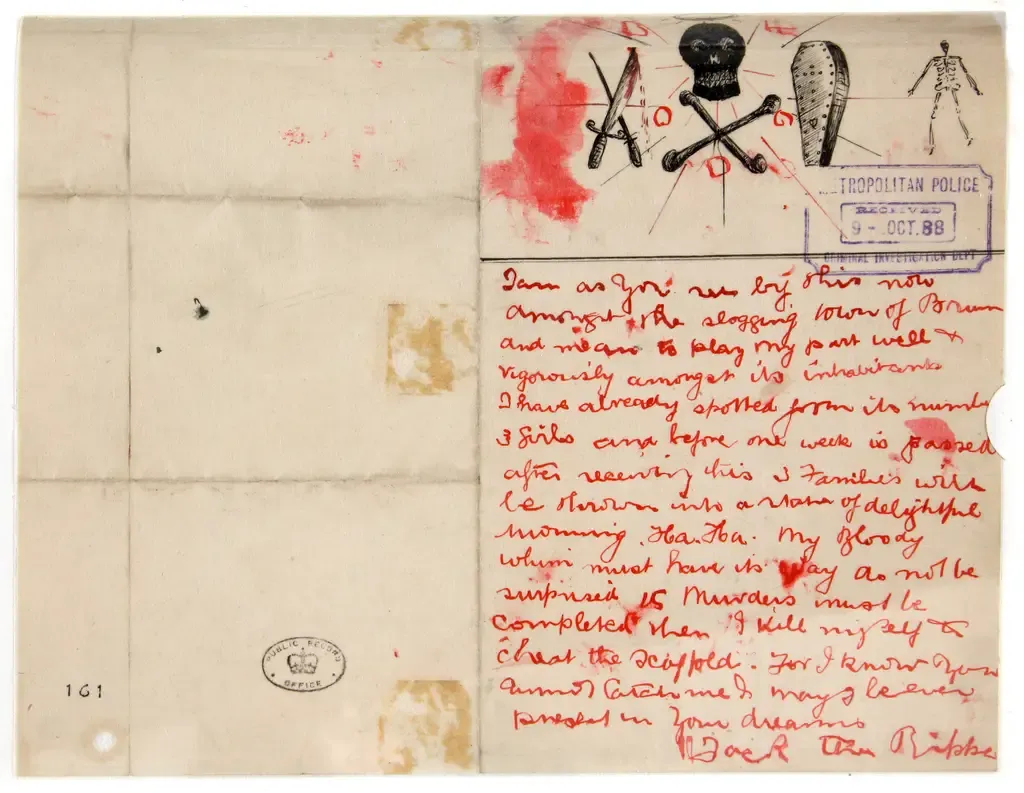
◐ DisputedAccording to the National Archives, there is no conclusive evidence for any of the letters. According to EBSCO, police considered the “From Hell” letter possibly genuine; according to History by the Yard, the police and the police surgeon took it for a hoax by a medical student. [1] [34] [33]
DNA from the shawl convicted Kosminski
◐ DisputedRussell Edwards claimed this in 2014, and an article on mitochondrial DNA appeared in 2019. Critics pointed out that the provenance of the shawl is not documented, that according to the police inventory Eddowes did not have it with her, and that mitochondrial DNA can exclude a suspect but not convict one. In August 2024 the journal issued an expression of concern. [35] [45] [50] [46] [47] [48] [67]
A royal conspiracy
○ TheoryAccording to the theory, Prince Albert Victor and Sir William Gull were behind the murders. EBSCO dismisses it as far-fetched; the prince had an alibi. [34] [69] [68]
The diary of Jack the Ripper
◐ DisputedThe alleged diary appeared in 1992; forensic tests soon cast doubt on it. New claims about its authenticity appeared in 2017. [50] [65]
12 / 17 / Comparison
Related cases
1968-1969 / USA
Zodiac
5 confirmed victims / Unidentified
In common
The perpetrator was never identified, and the number of victims that can be attributed to him is disputed.
Difference
Zodiac attacked in 1968 and 1969 in the US. The Ripper murdered in 1888 in the East End of London.
13 / 17 / Books and films
Treatments of the case
The label is an editorial rating: Recommended means a balanced treatment with verifiable sources; With caution means the work gives the perpetrator a platform or opts for a simplified version.
Film / 1927With caution
The Lodger: A Story of the London Fog
Directed by Alfred Hitchcock, fiction inspired by the case.
Film / 1979With caution
Murder by Decree
Sherlock Holmes hunts the Ripper; the film adopts the royal conspiracy theory.
Miniseries / 1988With caution
Jack the Ripper
Directed by David Wickes, Michael Caine as Inspector Abberline.
Film / 2001With caution
From Hell
Johnny Depp as Inspector Abberline, fiction.
14 / 17 Photos and documents
Photos and documents14
Photos and documents from readers. We publish them after review; you see your own uploads straight away, marked Pending review.
About this image
- Original title
- JacktheRipper1888.jpg
- Author
- R. Taylor
- Source
- commons.wikimedia.org
- Licence
- Public domain
- Changes
- cropped, resized, converted to AVIF and WebP, metadata removed
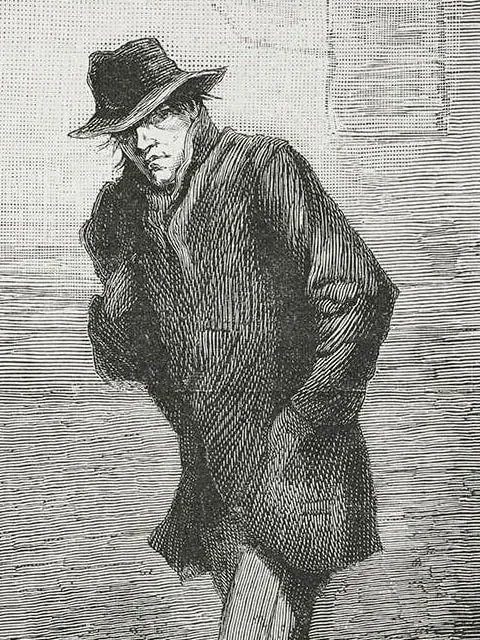
Contemporary illustration A Suspicious Character from Whitechapel, October 1888 (cropped).
R. Taylor / Public domain / commons.wikimedia.org
About this image
- Original title
- JacktheRipper1888.jpg
- Author
- R. Taylor
- Source
- commons.wikimedia.org
- Licence
- Public domain
- Changes
- resized, converted to AVIF and WebP, metadata removed
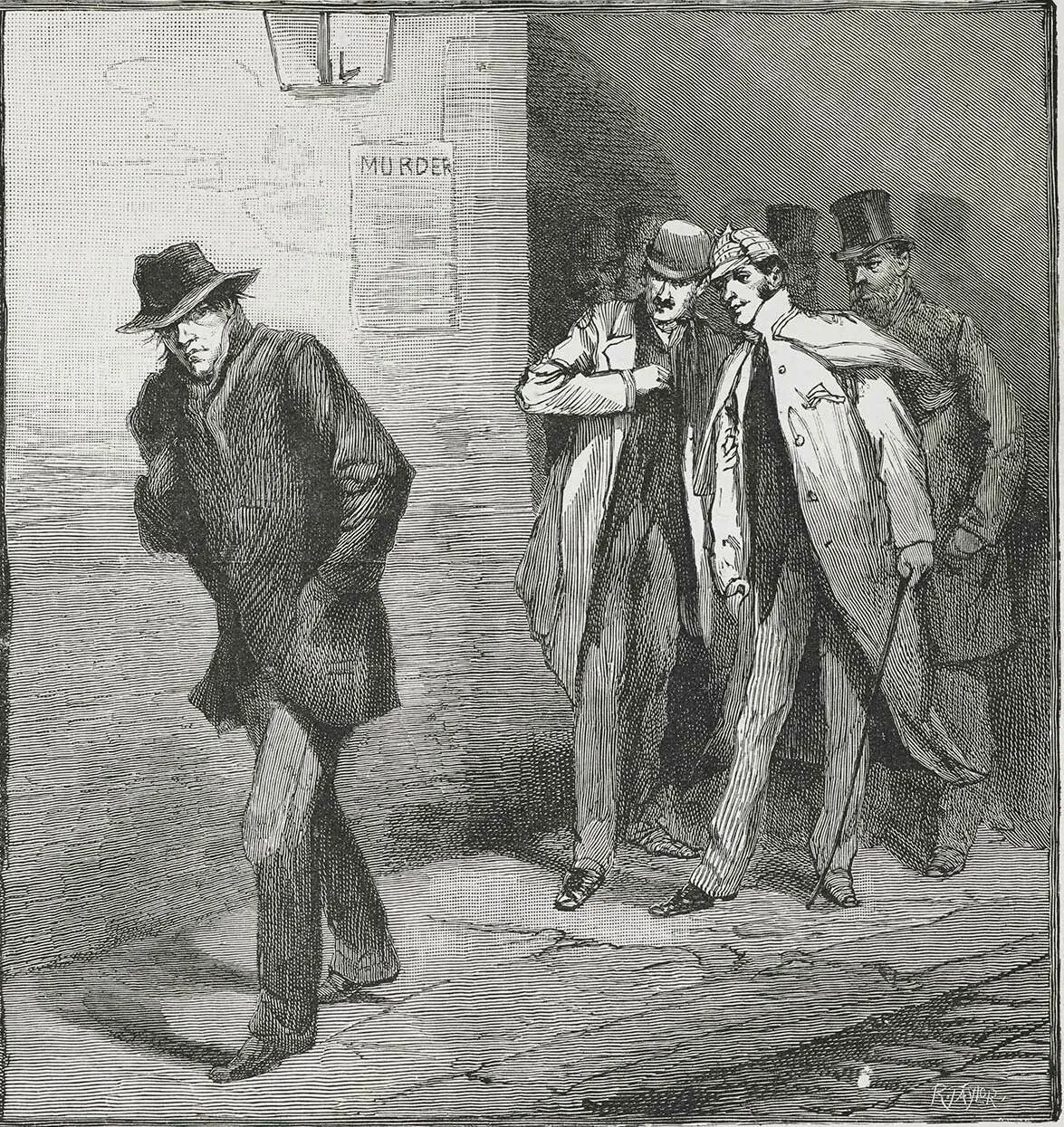
Contemporary illustration A Suspicious Character from Whitechapel, October 1888.
R. Taylor / Public domain / commons.wikimedia.org
About this image
- Original title
- John Tenniel - Punch - The Nemesis of Neglect.jpg
- Author
- John Tenniel
- Source
- commons.wikimedia.org
- Licence
- Public domain
- Changes
- resized, converted to AVIF and WebP, metadata removed
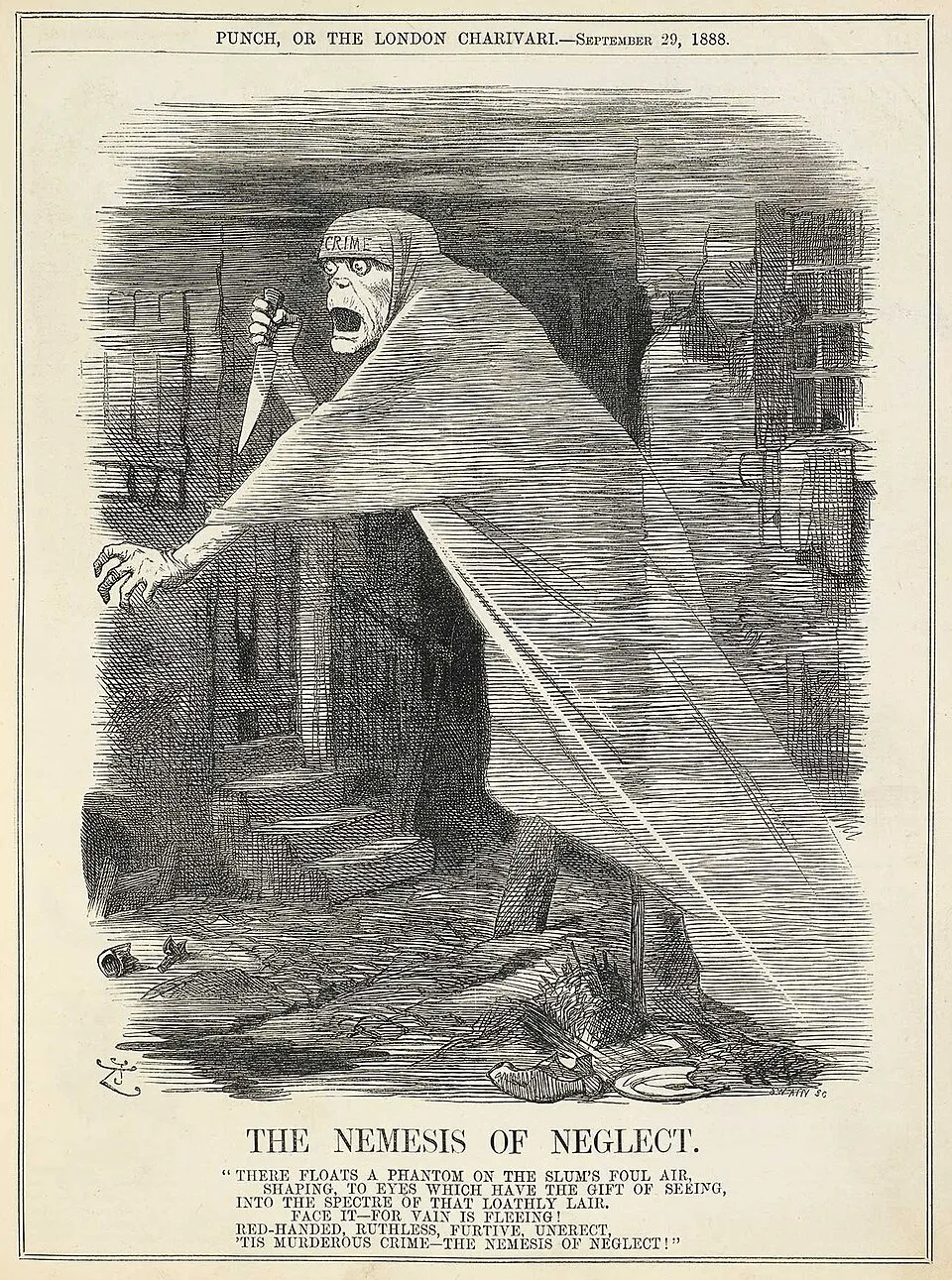
Contemporary cartoon The Nemesis of Neglect on conditions in London's East End.
John Tenniel / Public domain / commons.wikimedia.org
About this image
- Original title
- Blind-man's buff - Punch (22 September 1888), 139 - BL.jpg
- Author
- John Tenniel
- Source
- commons.wikimedia.org
- Licence
- CC0
- Changes
- resized, converted to AVIF and WebP, metadata removed
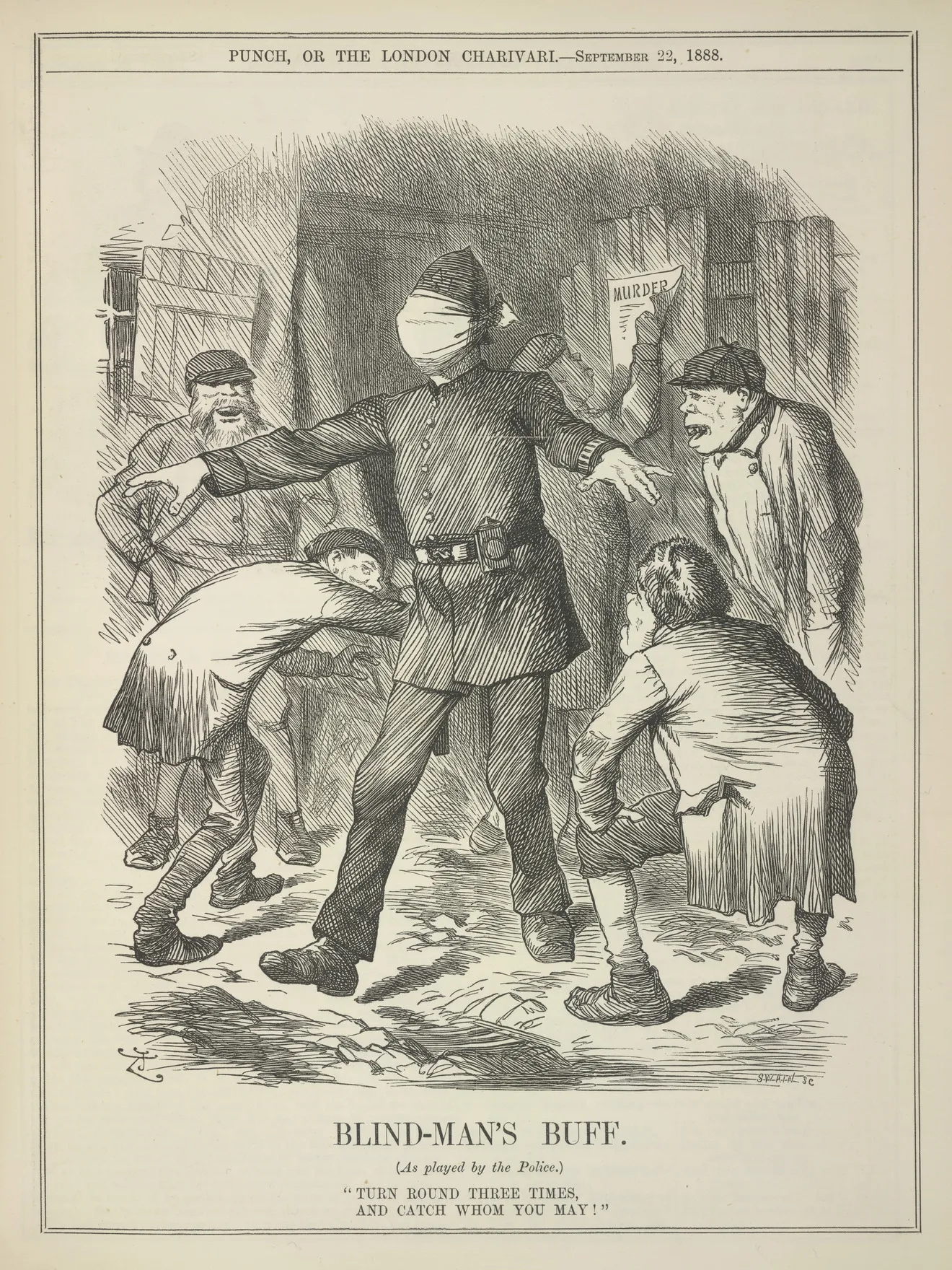
Contemporary cartoon Blind-man’s Buff criticising the investigation in London's East End.
John Tenniel / CC0 / commons.wikimedia.org
About this image
- Original title
- JacktheRipperPuck.jpg
- Author
- Tom Merry (William Mecham)
- Source
- commons.wikimedia.org
- Licence
- Public domain
- Changes
- resized, converted to AVIF and WebP, metadata removed
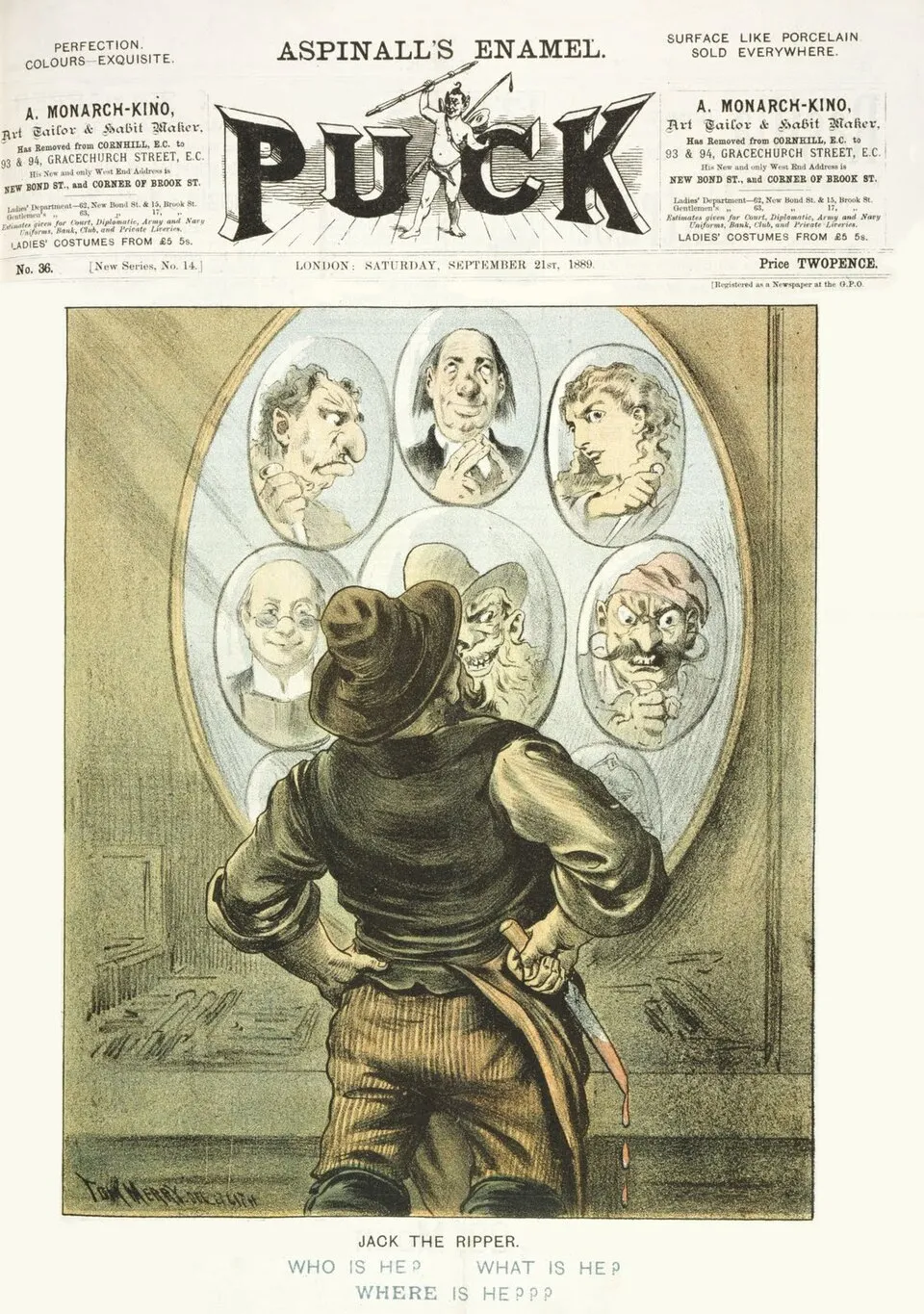
Contemporary Puck cover with an artistic speculation on the identity of Jack the Ripper.
Tom Merry (William Mecham) / Public domain / commons.wikimedia.org
About this image
- Original title
- Dorset-street-1902.jpg
- Author
- Jack London
- Source
- commons.wikimedia.org
- Licence
- Public domain
- Changes
- resized, converted to AVIF and WebP, metadata removed
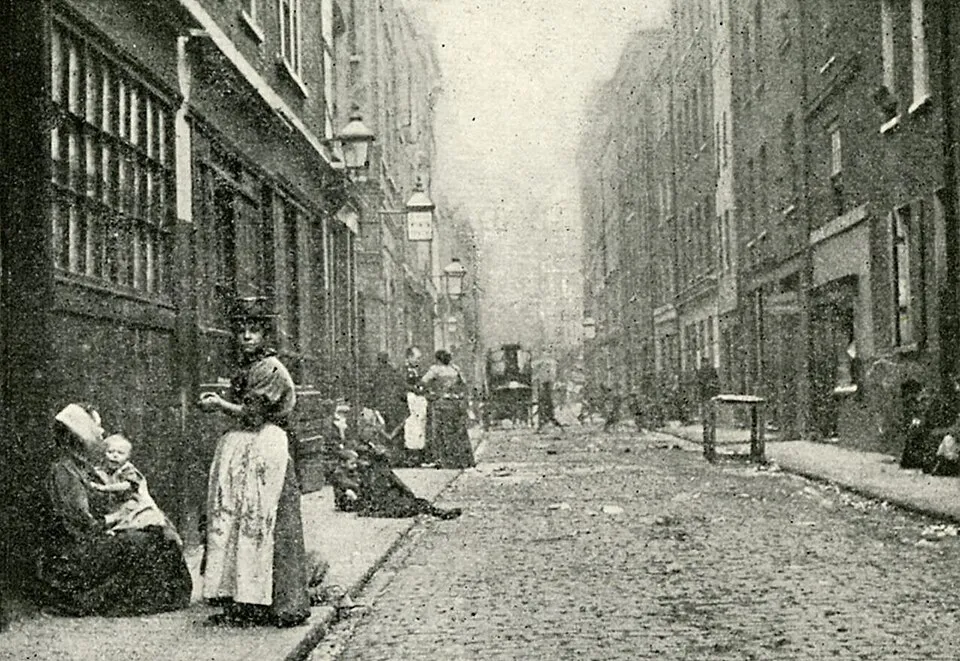
Dorset Street in Spitalfields in a photograph from 1902.
Jack London / Public domain / commons.wikimedia.org
About this image
- Original title
- jack-the-ripper-millers-court-vnejsi-pohled.jpg
- Author
- Archiv City of London Police / Wikimedia Commons
- Source
- commons.wikimedia.org
- Licence
- © All rights reserved
- Changes
- resized, converted to AVIF and WebP, metadata removed
Contemporary exterior view into Miller’s Court in Spitalfields.
Archiv City of London Police / Wikimedia Commons / © All rights reserved / commons.wikimedia.org
About this image
- Original title
- DearBossletterJacktheRipper.jpg
- Author
- The National Archives, MEPO 3/142
- Source
- commons.wikimedia.org
- Licence
- Public domain
- Changes
- resized, converted to AVIF and WebP, metadata removed
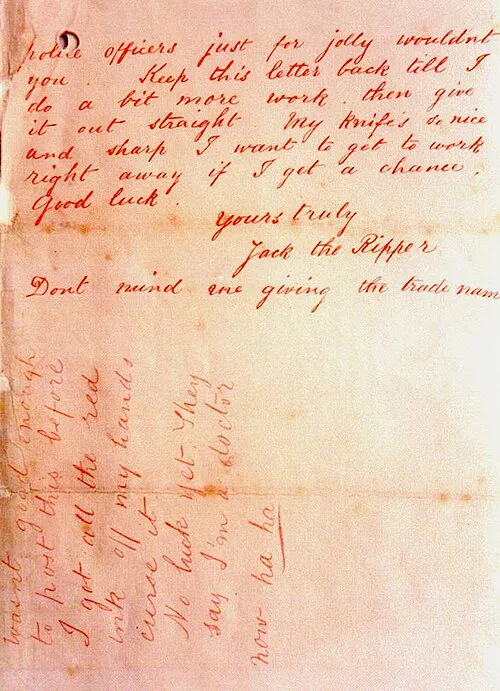
First page of the Dear Boss letter of 25 September 1888.
The National Archives, MEPO 3/142 / Public domain / commons.wikimedia.org
About this image
- Original title
- Dear Boss pt2.jpg
- Author
- The National Archives, MEPO 3/142
- Source
- commons.wikimedia.org
- Licence
- Public domain
- Changes
- resized, converted to AVIF and WebP, metadata removed
Second page of the Dear Boss letter with the signature and a postscript.
The National Archives, MEPO 3/142 / Public domain / commons.wikimedia.org
About this image
- Original title
- jack-the-ripper-from-hell-dopis.jpg
- Author
- Neznámý pisatel / Casebook / Wikimedia Commons
- Source
- commons.wikimedia.org
- Licence
- © All rights reserved
- Changes
- resized, converted to AVIF and WebP, metadata removed
Photographic copy of the letter known as From Hell.
Neznámý pisatel / Casebook / Wikimedia Commons / © All rights reserved / commons.wikimedia.org
About this image
- Original title
- jack-the-ripper-podvrzeny-list-scotland-yard.webp
- Author
- The National Archives, MEPO 3/142, str. 160
- Source
- nationalarchives.gov.uk
- Licence
- © All rights reserved
- Changes
- resized, converted to AVIF and WebP, metadata removed
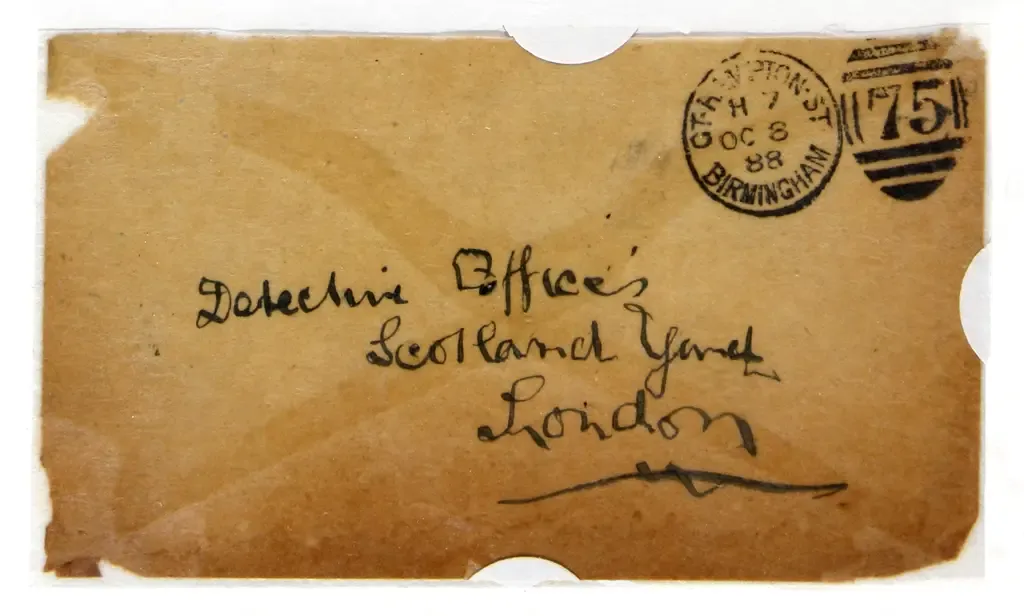
A letter classified by the UK National Archives as a hoax.
The National Archives, MEPO 3/142, str. 160 / © All rights reserved / nationalarchives.gov.uk
About this image
- Original title
- jack-the-ripper-obalka-podvrzeneho-dopisu.webp
- Author
- The National Archives, MEPO 3/142
- Source
- nationalarchives.gov.uk
- Licence
- © All rights reserved
- Changes
- resized, converted to AVIF and WebP, metadata removed
The envelope in which the hoax letter archived under MEPO 3/142 arrived.
The National Archives, MEPO 3/142 / © All rights reserved / nationalarchives.gov.uk
About this image
- Original title
- jack-the-ripper-hanbury-street-historicky-pohled.jpg
- Author
- Casebook: Jack the Ripper Wiki (reprodukce)
- Source
- wiki.casebook.org
- Licence
- © All rights reserved
- Changes
- resized, converted to AVIF and WebP, metadata removed
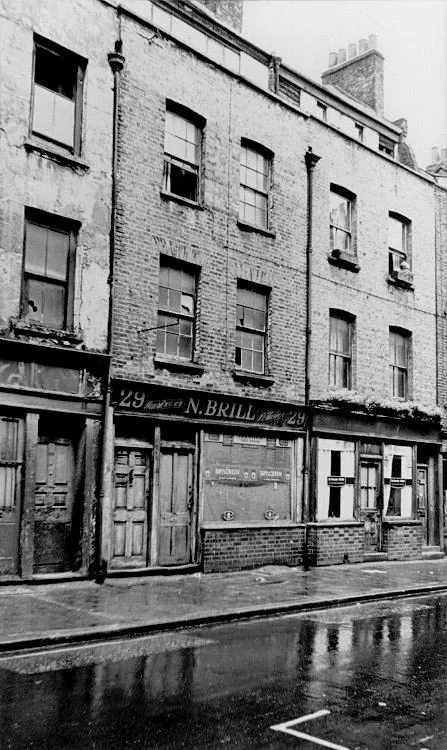
Archive photograph of a building in Whitechapel, listed on Casebook as 29 Hanbury Street.
Casebook: Jack the Ripper Wiki (reprodukce) / © All rights reserved / wiki.casebook.org
About this image
- Original title
- jack-the-ripper-saucy-jacky-pohlednice.jpg
- Author
- Neznámý pisatel / Casebook: Jack the Ripper
- Source
- casebook.org
- Licence
- © All rights reserved
- Changes
- resized, converted to AVIF and WebP, metadata removed
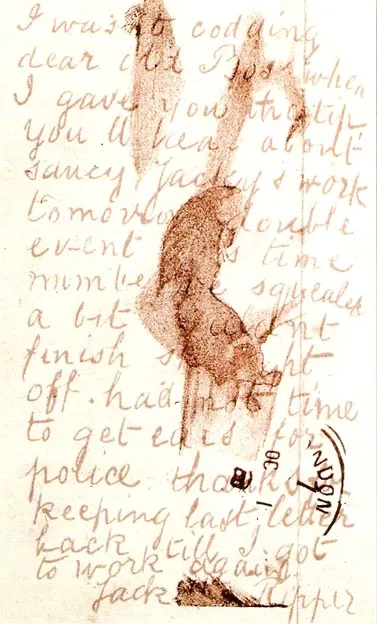
Text side of the postcard known as Saucy Jacky, delivered on 1 October 1888.
Neznámý pisatel / Casebook: Jack the Ripper / © All rights reserved / casebook.org
15 / 17 / Open questions
What is still missing
- Who the perpetrator was and why the murders stopped after November 1888.
- Whether Stride was killed by the same perpetrator or by another attacker.
- How many victims he really had: five, six with Martha Tabram, or more from the Whitechapel murders file.
- Whether the inscription in Goulston Street was connected with the murder at all and what exactly it said.
- Where the kidney sent to George Lusk came from.
- The true identity of Mary Jane Kelly.
- When exactly the Macnaghten memorandum was written: History by the Yard gives 23 Feb 1894, the National Archives catalogue 23 Sep 1894.
- Differences between sources: the ages of Nichols, Chapman, Stride and Eddowes, the date of Rose Mylett’s murder (20 or 26 Dec 1888) and the organs taken from Chapman.
16 / 17 / Citations
Sources
A number in square brackets next to a claim refers to an item in this list. A claim without a number has no source assigned yet. Details may vary between sources; disputed and theoretical items are marked.
69Sources in total
- Primary39
- Secondary20
- Media10
Checked: 17 Nov 2026. Profile written from the research content/research/ripper.md (69 sources, all read); Wikipedia, Casebook and fan websites only as a guide. Facts have at least two independent sources. National Archives catalogue entries count as one institution, as do Hansard, Crime+Investigation together with Sky HISTORY (Hearst) and texts relaying Hallie Rubenhold’s findings; information from a single origin is marked “given only by”. Victims’ ages only where two sources agree (Nichols, Eddowes, Kelly); discrepancies are in victimsLead. Case unsolved: suspects appear only in suspects, investigation and myths. Code UK-1888-JR: country UK according to the card, year 1888, initials of the nickname Jack the Ripper, because the perpetrator’s name is unknown (similarly Zodiac USA-1968-ZK). The claim that the file was closed in 1892 (only HISTORY.com, outside the research) is left out. Not available: Britannica, BBC History, full texts of the MEPO 3/140 documents, the full text of the Journal of Forensic Sciences article and the wording of the expression of concern, contemporary press other than the Manchester Guardian. Before publication, check the victims’ ages against death certificates, the date of the Macnaghten memorandum and the victims’ graves.
- [1]The National Archives, Hoax letter signed by ‘Jack the Ripper’. nationalarchives.gov.uk / cited 4×primary
- [2]The National Archives (catalogue, MEPO 3/3153), The Whitechapel Murders: 'Jack the Ripper'. Letter signed 'Jack the Ripper', dated... beta.nationalarchives.gov.uk / cited 2×primary
- [3]The National Archives (catalogue, MEPO 3/140), Case papers of eleven victims. With photographs. Described at item level. beta.nationalarchives.gov.uk / cited 1×primary
- [4]The National Archives (catalogue, MEPO 3/140, 7 Sep 1888), Mary Ann Nichols (31 Aug 1888): Police report: identification and personal details... beta.nationalarchives.gov.uk / cited 4×primary
- [5]The National Archives (catalogue, MEPO 3/140, 13 Sep 1888), Annie Chapman alias Siffey (8 Sept 1888): Police report: arrest and detention of... beta.nationalarchives.gov.uk / cited 3×primary
- [6]The National Archives (catalogue, MEPO 3/140, 14 Sep 1888), Annie Chapman alias Siffey (8 Sept 1888): Police report: questioning of [Edward]... beta.nationalarchives.gov.uk / cited 2×primary
- [7]The National Archives (catalogue, MEPO 3/140, 1 Nov 1888), Elizabeth Stride (29 Sept 1888): Police report: questioning of Israel Schwartz. beta.nationalarchives.gov.uk / cited 1×primary
- [8]The National Archives (catalogue, MEPO 3/140, 4 Oct 1888), Elizabeth Stride (29 Sept 1888): Police report: concerning Matthew Packer, and statement... beta.nationalarchives.gov.uk / cited 1×primary
17 / 17 / Revision history
Revision history
Every edit to this page is logged. Corrections sent in by readers are applied only after the editors check them against sources.
- Published
- Updated
- Edits
- 1
- Page published