Skip to content
Content warningReal violent crimes; victims are named. Help: findahelpline.com. More

This page describes real violent crimes and names the victims. Victims come first; we leave out details that serve only sensationalism. Help: free helplines in your country at findahelpline.com; in an emergency call 112 (EU) or 911 (US).

Executed 25 Feb 1899Austria-Hungary / 1888-1898Revision history

František Novotný

born 10 May 1863, Chvojenec near Holice

A farmer and former dragoon from Komárov near Dašice who bought the farm of the executed poisoner Josef Englich. Between 1888 and 1896 all six children borne to him by his wife Anastazie died; none of them lived to be a month old. The deaths were recorded as illnesses. In March 1898 his five-month-old illegitimate son also died, with burns from a corrosive substance in his mouth. The doctor refused to issue a death certificate, and the exhumation proved arsenic in the older children. He was charged with seven murders; contemporary reports differ on how many the jury found him guilty of. On 30 November 1898 the jury court in Chrudim sentenced him to death; he was hanged on 25 February 1899 and buried in Englich’s grave.

7
children died between 1888 and 1898, he was charged with all seven
● Fact
5
murders the jury found him guilty of according to Plzeňské listy; other reports write of four or seven
◐ Disputed
11
minutes after he was hoisted on the gallows the doctor pronounced cardiac arrest
● Fact
60
tickets or so were handed out for the execution in the court courtyard
● Fact
6Fact
6Disputed
1Theory
67 of 67claims have a source
37sources, 21 of them primary
Ratings and discussion →
How to read labels and source numbers
● Factestablished by a court, authority, witnesses or confession
◐ Disputedsources disagree
○ Theoryassumption, unverified
A number in square brackets [n] next to a claim opens a preview of the source. A claim without a number has no source assigned yet.
02 / 15 / Timeline

From birth to execution

Events: 42 / 1863–2026

  1. 01

    Life

    1863–88
    1863
    10 May

    Birth in Chvojenec

    Life

    He was born in Chvojenec near Holice, the son of a smallholder. [2] [33]

  2. 1885
    December

    Conviction of Josef Englich

    Life

    The jury in Chrudim found Josef Englich of Komárov guilty of five murders by arsenic. He was the previous owner of the farmstead No. 30. [5] [19]

  3. 1886
    13 Feb

    Execution of Englich

    Life

    Englich was hanged in the courtyard of the Regional Court in Chrudim by the executioner Jan Křtitel Piperger. Aha! gives 18 Feb. [5] [19] [24] [7]

  4. Marriage

    Life

    He married Anastazie. According to the court, he was kind to her at the beginning of the marriage. [1] [2] [21] [33]

  5. Purchase of Englich’s farm

    Life

    The Novotný couple bought Englich’s farmstead No. 30 at a forced auction. Deník gives the year 1887, the contemporary press 1886. [1] [2] [19] [20]

  6. 1888
    24 Jun

    A new executioner for Bohemia

    Life

    Leopold Wohlschläger, stepson of the executioner Piperger, was appointed executioner for Bohemia. Eleven years later he executed Novotný. [13] [34] [35]

  7. 02

    Crimes

    1888–92
    1888
    6 Aug

    Death of his son František

    Crimes

    The firstborn son died 18 days after birth; the parish register recorded pneumonia. The list of murders in Obnova gives 9 Aug. [1] [6] [33]

  8. 1889
    1 Jul

    Death of his daughter Julie

    Crimes

    She died four days after birth; the register gave cerebral palsy. [1] [6] [33]

  9. 1891
    17 Sep

    Death of his daughter Marie

    Crimes

    She died five days after birth, ten days according to Dr Pych’s list. The register gives paralysis of the lungs. [1] [6] [33]

  10. 1892
    27 Sep

    Death of his daughter Emilie

    Crimes

    She died on the day of her birth; the register recorded intestinal catarrh. [1] [6] [33]

  11. 03

    Life

    1893
    1893
    1 Mar

    Sentence for mocking the church

    Life

    The Regional Court in Chrudim sent him to prison for eight days. He had put up a cross with an inscription for his dead bitch. [33] [10]

  12. 04

    Crimes

    1894–96
    1894
    19 Jun

    Death of his daughter Františka

    Crimes

    She died 17 days after birth, after about twenty days according to the doctor. The register gave gastric catarrh with the note “was not treated”. Obnova gives 18 Jun. [1] [6] [33]

  13. 1896
    9 Feb

    Death of the second Emilie

    Crimes

    She died five days after birth; the register gave inflammation of the mouth. According to the list of murders, her poisoning was proven. [1] [6] [33]

  14. 05

    Life

    1896
    1896
    5 Sep

    Two months in prison

    Life

    The Regional Court in Chrudim sentenced him to two months of hard prison for dangerous threats against his wife. [1] [19] [33]

  15. Leaving his wife

    Life

    He moved in with the widow Marie Půverlová at Komárov No. 57. He transferred his half of the farmstead No. 30 to his wife. [1] [6] [20] [33]

  16. 06

    Crimes

    1897
    1897

    Pressure for an abortion

    Crimes

    He wanted Půverlová to end the pregnancy and offered to bring a midwife. She refused. This later became a separate count of the indictment. [1] [19] [21] [33]

  17. 07

    Life

    1897
    1897
    13 Oct

    Birth of a son

    Life

    Půverlová gave birth to a son, František, registered as František Karas. [1] [6] [15]

  18. 08

    Crimes

    1898
    1898
    28 Mar

    Corrosive attack

    Crimes

    While alone with the infant, he put a corrosive liquid into his mouth. The child had burnt lips, mouth and chin. [19] [33] [6]

  19. 30 Mar

    Death of his son František

    Crimes

    The five-month-old boy died at around 6 p.m. of pneumonia. [1] [6] [15] [19]

  20. 09

    Capture, trial, execution

    1898–26
    1898
    31 Mar

    The doctor did not issue a death certificate

    Capture, trial, execution

    Dr Josef Pych of Dašice reported a suspicion of poisoning to the court and refused to issue the death certificate. [1] [6] [19]

  21. 1 Apr

    Autopsy and interrogation

    Capture, trial, execution

    Court physicians from Holice found third-degree burns from a corrosive substance. Novotný was questioned at the municipal office in Komárov. [1] [6] [21]

  22. April

    Arrest

    Capture, trial, execution

    Gendarmes arrested him and took him to the district court in Holice. [2] [15] [16]

  23. 20 Apr

    Custody in Chrudim

    Capture, trial, execution

    He was taken in shackles to remand custody at the Regional Court in Chrudim. [15] [16] [17] [18]

  24. 25 to 28 Apr

    First reports in the press

    Capture, trial, execution

    The report “Travič dětí” (Poisoner of children) from Neodvislé listy was taken over by Národní listy, Právo lidu, Katolické listy and the Olomouc paper Pozor. [15] [16] [17] [18]

  25. 4 May

    Exhumation

    Capture, trial, execution

    Six small coffins lay in a shared grave by the wall of the Komárov cemetery, the son separately. Arsenic was found in the remains. [1] [6] [19] [32]

  26. 21 Oct

    Indictment

    Capture, trial, execution

    The indictment was for the premeditated murder of four children from the marriage and a fifth, illegitimate child, and for inciting the procurement of an abortion. [1] [6] [19]

  27. 28 Nov

    Start of the jury trial

    Capture, trial, execution

    Jury court at the Regional Court in Chrudim, presided over by Provincial Councillor Ctibor. The reading of the indictment took over two hours. [19] [21] [23] [36]

  28. 29 Nov

    Witness statements

    Capture, trial, execution

    Půverlová, eight-year-old Adélka and his wife Anastazie, who said nothing against her husband, gave evidence. Národní listy mentions about 36 witnesses and the public being excluded twice. [1] [21] [33]

  29. 30 Nov

    Death sentence

    Capture, trial, execution

    The jurors answered “yes” unanimously to all questions. At 5 p.m. the court sentenced him to death by hanging. [21] [22] [33]

  30. November

    Plea for clemency

    Capture, trial, execution

    According to Deník, a plea for clemency was filed. [1] [3]

  31. 1899
    February

    Clemency rejected

    Capture, trial, execution

    The Supreme Court rejected the plea of nullity and the Emperor did not grant clemency. [14] [24] [33]

  32. 24 Feb

    Arrival of the executioner

    Capture, trial, execution

    Leopold Wohlschläger arrived in Chrudim with his assistants. In the afternoon the gallows were erected in the court courtyard. [14] [24] [26]

  33. 24 Feb

    Announcement of the execution

    Capture, trial, execution

    In the morning the court informed him that he would be executed the next day. He was unable to sign the official record. [14] [24] [27] [33]

  34. 24 to 25 Feb

    Last night

    Capture, trial, execution

    He spent the night in his cell with chaplain Zuzánek and the Capuchin Father Richard. His mother came to see him. [14] [27] [28] [33]

  35. 25 Feb

    Execution

    Capture, trial, execution

    In the morning the executioner Wohlschläger hanged him in the courtyard of the Regional Court in front of about sixty spectators. The doctor pronounced death after 11 minutes. [14] [27] [28] [32] [33]

  36. 25 Feb

    Burial in Englich’s grave

    Capture, trial, execution

    In the evening he was taken to the cemetery beyond the New Town in Chrudim and buried in Josef Englich’s grave. [1] [33] [9]

  37. 26 Feb

    Report from the place of execution

    Capture, trial, execution

    Národní politika printed an extensive report by its special correspondent. Today it is transcribed on Wikisource. [14] [3]

  38. 3 Mar

    List of murders in Obnova

    Capture, trial, execution

    The Hradec Králové paper Obnova reprinted the printed “account of the murders” handed out at the execution. [33]

  39. 2021
    21 Mar

    Konzervativní noviny

    Capture, trial, execution

    Description of the execution based on the recollections of the executioner Wohlschläger. [10]

  40. 2022
    29 Oct

    badatele.net

    Capture, trial, execution

    Jaroslav Mareš published an article with documents from the file in the archives in Zámrsk. [6] [12]

  41. 2026
    22 May to 1 Jul

    Příběhy zla

    Capture, trial, execution

    Deník devoted a series by Jiří Nováček to the farm in Komárov, first to Englich, then to Novotný. [1] [2] [3] [4] [5]

  42. 6 Nov

    Centrum.cz

    Capture, trial, execution

    An article by kroniQa linked both cases from the farm in the Pardubice area. [37] [1]

03 / 15 / Victims first

Named victims

Named victims: 7 / Survivors: 2

The list contains all seven dead children with whose deaths Novotný was charged: six children from his marriage to Anastazie and an illegitimate son with Marie Půverlová. None was older than five months, so the age is given as 0. Sources differ on how many of them were included in the verdict; the remains of two children in the shared grave could not be identified. The dates of death follow the parish register as given by Deník and badatele.net; Obnova has dates one day different for František and Františka.

Showing 7 of 7

By location

Pardubice area7

Victim profile

12 and under7
13–170
18–240
25 and over0
Women and girls: 5 / Men and boys: 2 (of 7 named)

Survivors

  • Anastazie Novotná
    wife, mother of the six dead children; he abused and threatened her, with a pitchfork according to Deník, with a scythe according to badatele.net. For the threats he received two months of hard prison on 5 Sep 1896
  • Marie Půverlová
    widow from Komárov No. 57, mother of his son František; in 1897 he urged her to have an abortion, she refused and reported him. The jury found him guilty of inciting the procurement of an abortion

Unconfirmed

Tabloids and blogs count eleven or twelve dead in house No. 30, that is five victims of Englich and six or seven of Novotný’s children. But his son František did not die in No. 30, but in Půverlová’s house No. 57. No source attributes any other victims to Novotný apart from his own children. Novotný himself could not say under interrogation how many of his children had died, and claimed it was from diphtheria.

04 / 15 / Offender’s pattern

What recurred

Novotný left no traces that would worry anyone. The children died at home, shortly after birth, and the parish register recorded an illness. His pattern consists of the poison he had to hand as a horse dealer, moments without witnesses and the fear he spread around him. Each item is marked as a documented fact, a disputed point or a theory.

Traits: 7

01

Arsenic for newborns

● Fact

Six children from the marriage died in the first days or weeks after birth, always with similar symptoms. The exhumation on 4 May 1898 and chemical analysis proved arsenic in the remains. The experts stated that there had been more of it than the test detected, because it had seeped into the coffins. [1] [19] [21] [32]

Only Národní listy gives the exact amounts of arsenic.

02

A corrosive substance in the infant’s mouth

● Fact

On 28 Mar 1898, while alone with him, he put a corrosive liquid into the mouth of his five-month-old son František. The autopsy found third-degree burns on the lips, in the mouth and on the chin. The child died on 30 Mar 1898 of pneumonia. [6] [19] [21]

The substance was not clearly identified. The doctor thought of nitric acid; the experts at the jury trial of a corrosive or a boiling decoction of poppy heads. Only the modern Deník and Blesk mention arsenic in the son’s case.

03

Where the poison came from

◐ Disputed

According to the indictment, he kept arsenic at home as a horse dealer, using it to improve the animals’ appearance. He himself admitted only to a “powder for horses”. He also claimed that he had found a packet left by Englich behind a beam in the attic and thrown it onto the dung heap. [1] [6] [19] [21]

The court did not determine the origin of the poison. That it came from Englich rests only on the statements of Novotný and the witness Kolář.

04

At home and without witnesses

● Fact

On the day of the attack on his son he sent the boy’s mother to the field and eight-year-old Adélka to fetch milk, and stayed at home alone. When the girl came back, he was soothing the child, would not let her call the mother and said the child had been “struck by the wind”. Then he went off to plough. [6] [19] [21]

05

Covering his tracks

● Fact

He had the stained little shirt washed at once. On the morning of the day of death he himself ran to the doctor in Holice, because he feared suspicion, and begged him to note that the child had not been poisoned. [1] [6] [19]

The description is based on the indictment.

06

Fear in the village

● Fact

The neighbours had suspected him for years but were afraid to report him because of his rough nature. He heard reproaches even in public and sued nobody. From custody he wrote letters in which he blamed his wife and threatened the female witnesses. [3] [19] [21]

Only Deník gives the names of the neighbours he threatened.

07

Denial and feigned insanity

● Fact

He denied his guilt to the end. In custody and on the night before his execution, according to doctors and the press, he feigned insanity. The experts declared his mental state normal. [1] [3] [14] [21] [33]

05 / 15 / Modus operandi

How the behaviour evolved

Phases: 3

1863-1888

Before the murders

The son of a smallholder, a dragoon and then a farmer on the farm where Josef Englich had committed murders before him. Quarrelsome and stubborn, in disputes with his neighbours.

  • 1863: born in Chvojenec near Holice
  • military service with the dragoons
  • 1886: marriage to Anastazie
  • 1886 or 1887: purchase of Englich’s farmstead No. 30 at auction
1888-1898 / Komárov

Murders

Six children from the marriage, none lived to be a month old. Then the move to the widow Půverlová and the death of their son.

  • 1888 to 1896: six dead newborns
  • 1893 and 1896: two sentences, for mocking the church and threatening his wife
  • 1897: pressure for an abortion, birth of his son František
  • 28 to 30 Mar 1898: corrosive attack and death of his son
From 31 Mar 1898

Discovery, jury, gallows

The doctor refused to sign the death certificate. The exhumation proved arsenic, and the jury sent him to his death.

  • 31 Mar: doctor’s report
  • 20 Apr: custody in Chrudim
  • 4 May: exhumation
  • 28 to 30 Nov: jury and death sentence
  • 25 Feb 1899: execution and burial in Englich’s grave
06 / 15 / Crime scenes

Where and in what order

Places: 5

  1. 01Chvojenec near Holice1863
  2. 02Komárov, farmstead No. 301886-1896
  3. 03Komárov No. 57, at Půverlová’s1896-1898
  4. 04Holice, district court1898
  5. 05Chrudim, regional court1898-1899
07 / 15 / Investigation

How he was found out

Steps: 7

01 / 1888-1896

Deaths without investigation

The parish register recorded six newborn deaths as illnesses; according to the entries the children “were not treated”. The village kept silent out of fear. [1] [6] [19]

02 / 30 to 31 Mar 1898

The doctor did not issue a death certificate

Dr Josef Pych suspected a corrosive substance, most likely nitric acid, and requested a criminal investigation. [1] [6] [19]

03 / 1 Apr 1898

Court autopsy and interrogation

The autopsy in Komárov confirmed burns from a corrosive substance. Under questioning Novotný admitted that he had found some chemicals in the attic. [1] [6]

04 / April 1898

Arrest and custody

Arrested by gendarmes, taken to the district court in Holice, transferred to Chrudim on 20 Apr. [2] [15] [16]

05 / 4 May 1898

Exhumation and chemistry

The gravedigger and witnesses determined the position of the small coffins in the Komárov cemetery. Chemical analysis found arsenic in the remains. [19] [21] [32]

06 / 1898

Assessment of his mental state

Doctors found him mentally and physically healthy and described his insanity as feigned. [1] [3] [21]

07 / 21 Oct 1898

Indictment

The almost hundred-page indictment covered four children from the marriage, the illegitimate son and the incitement to procure an abortion. [1] [19]

What went wrong

  • Ten years without questions
    Nobody examined the series of newborn deaths in a house where a poisoner had already killed once. The examination of the dead and the parish register accepted “illness”.
  • The neighbours’ silence
    The neighbours voiced their suspicion even in public, and one neighbour said it to his face. But nobody dared to report him.
  • Unidentified remains
    The remains of two or three children in the shared grave could not be identified. The indictment and the verdict therefore covered only some of the deaths.
  • Uncovered by one doctor
    The case was only opened because Dr Pych refused to sign the death certificate of the seventh child.

Impact on forensics and law

  • No documented change
    No source links the case to a change in the rules for examining the dead or keeping parish registers.
  • The house of two killers
    Modern media tell the case together with Englich’s as the story of one farm on which two poisoners committed murders. As early as 1898 Národní listy wrote about an “instinct to imitate the crime”, but only that paper gives this interpretation.
08 / 15 / People in the case

Witnesses, investigators, relatives

People: 18

Wife
Anastazie Novotná
Married 1886, mother of six children. In court she said nothing against her husband and did not come to the execution. Badatele.net and Médium.cz call her Antonie.
Partner
Marie Půverlová
Widow from Komárov No. 57, mother of František Karas. She refused an abortion and reported him. The press also spells it Puvrlová or Puberlová.
Witness
Adéla Půverlová
Půverlová’s eight-year-old daughter, who found her injured brother. She testified before the jury without fear.
Mother
name unverified
She visited him the evening before the execution and in the morning. Deník gives the name Františka; it is the only source.
Doctor, informant
Dr Josef Pych
Doctor from Dašice. He treated the infant, reported his suspicion on 31 Mar 1898 and compiled a list of the dead children with the registrar.
Doctor
Dr Miroslav Bauer
Doctor from Holice to whom Novotný ran on the morning of 30 Mar 1898, fearing suspicion.

Accomplices: none. No source states that anyone knew about the poisonings or helped him.

09 / 15 / Trial and sentence

From the first sentences to execution

Proceedings: 5

1 Mar 1893 / Regional Court in Chrudim

Mocking the church

He put up a cross with an inscription for his dead bitch. Konzervativní noviny writes about blasphemy. [33] [10]

8 days in prison
5 Sep 1896 / Regional Court in Chrudim

Threats against his wife

Sentenced under § 100 of the Criminal Code for dangerous threats against his wife. Konzervativní noviny gives two years, the other sources two months. [1] [19] [33] [10]

2 months of hard prison
28 to 30 Nov 1898 / Jury court in Chrudim

Jury trial

The twelve jurors were given four questions: three on premeditated murder and one on unsuccessful incitement to procure an abortion. They answered “yes” unanimously to all of them. According to the press, he received the verdict with resignation. Reports differ on how many murders he was convicted of: Plzeňské listy write of five, Národní politika of a “fivefold” murderer, Národní listy, Plzeňské listy of 25 Feb and the Olomouc Pozor of a fourfold murder, Katolické listy, Moravská orlice, Hlas and Právo lidu of seven. [3] [19] [21] [22] [24] [25] [26] [27] [29] [30] [31] [32]

Death sentence
December 1898 to February 1899

Appeal and clemency

The Supreme Court rejected the plea of nullity, and Emperor Franz Joseph I did not grant clemency. [1] [24] [33]

Rejected
25 Feb 1899 / Courtyard of the Regional Court in Chrudim

Execution

Hanged on the gallows on which Josef Englich had also died in 1886. Sources give the hour of the execution differently, most of them 7.30. The doctor pronounced death after 11 minutes. [14] [27] [28] [33]

Executed

Englich’s grave

On the evening after the execution he was quietly buried in the cemetery beyond the New Town in Chrudim, in the grave of Josef Englich, the previous owner of the farm. According to Deník, the grave is not marked today.

Family

No source states what happened to Anastazie Novotná and Marie Půverlová after 1899.

10 / 15 / Psychology and myths

What is documented and what is not

Items: 6 / each labelled Fact, Disputed or Theory

He poisoned seven children with arsenic

◐ Disputed

Arsenic was proven in the children from the marriage. In his son František the autopsy found burns from a corrosive substance, and the experts also allowed for a boiling decoction of poppy heads. Only the modern Deník and Blesk mention arsenic in the son’s case. [6] [19] [21] [2] [8]

Sentenced for seven murders

◐ Disputed

He was charged with seven. Plzeňské listy write that the jury convicted him of five; other papers wrote about a fourfold, fivefold and sevenfold murderer. The text of the verdict is not online. [24] [26] [27] [29]

Englich also poisoned his children

◐ Disputed

In 1899 Katolické listy and Moravská orlice wrote that Englich had poisoned his own children. But he poisoned his mother-in-law, his father-in-law, his wife’s grandparents and her illegitimate daughter. [26] [30] [4] [5] [11]

He found poison left by Englich

○ Theory

It is often said that he used Englich’s arsenic. This rests only on the statements of Novotný and the witness Kolář. The indictment referred to arsenic he had as a horse dealer. [1] [6] [19] [21]

11 or 12 people died in the house

◐ Disputed

The seventh child died in Půverlová’s house No. 57, not on the farmstead No. 30. The figures 11 and 12 differ depending on whether the son is counted. [1] [7] [9] [20]

A long death

◐ Disputed

According to the executioner’s recollections, he took longer to die because of his strong build. The contemporary press writes that his neck was broken and the doctor pronounced death after 11 minutes. [1] [6] [10] [14] [27]

11 / 15 / Books and films

Treatments of the case

The label is an editorial rating: Recommended means a balanced treatment with verifiable sources; With caution means the work gives the perpetrator a platform or opts for a simplified version.

Contemporary press / 1898-1899Recommended
Národní listy, Národní politika, Obnova and others
Reports on the arrest, the jury trial and the execution, digitised in the Czech Digital Library.
Transcript / 1899Recommended
Poprava traviče vlastních dětí v Chrudimi
Full transcript of the Národní politika report on Wikisource.
Article / 2021Source
Pražský kat, jeho syn a „klienti“ II.
Konzervativní noviny, the execution according to the executioner’s recollections.
Article / 2022Recommended
Dům dvou sériových vrahů: Děsivý příběh vraha Novotného
badatele.net, Jaroslav Mareš, with documents from the file.
12 / 15 Photos and documents

Photos and documents8

Photos and documents from readers. We publish them after review; you see your own uploads straight away, marked Pending review.

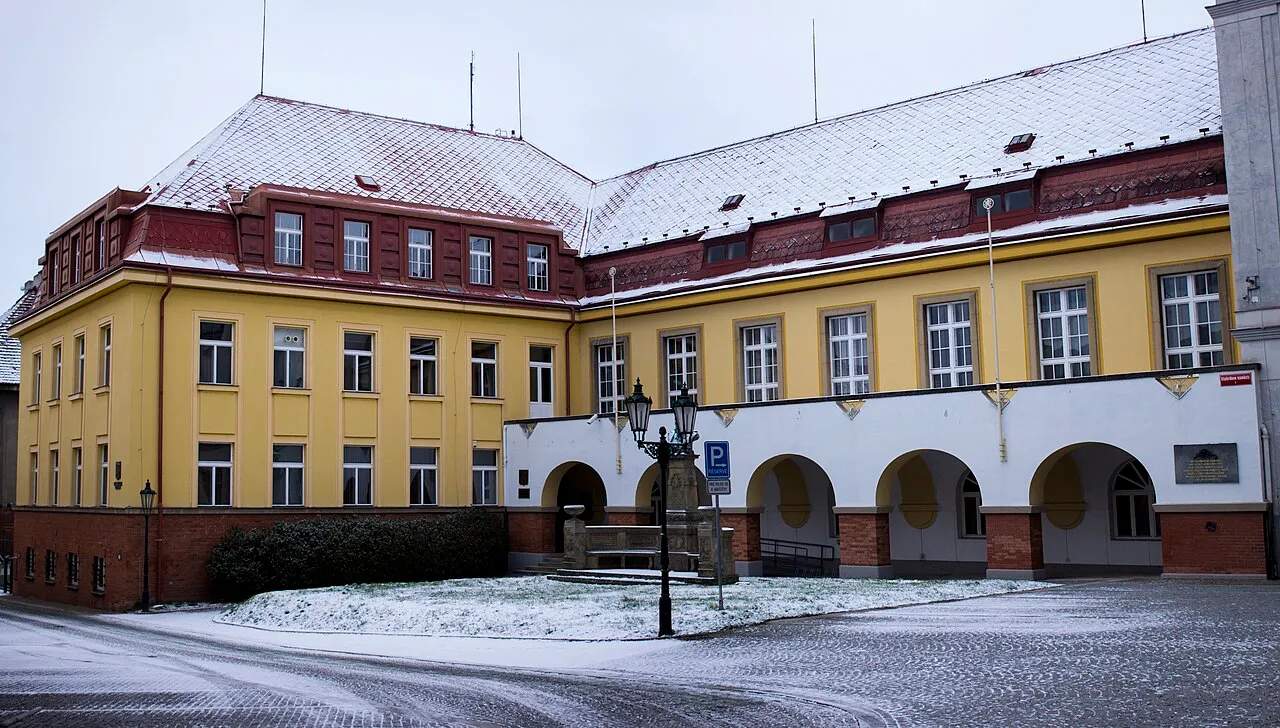
Court building on Všehrdovo Square in Chrudim (2016). Judicial connection to the František Novotný case; the photograph does not show the historical proceedings or the execution.
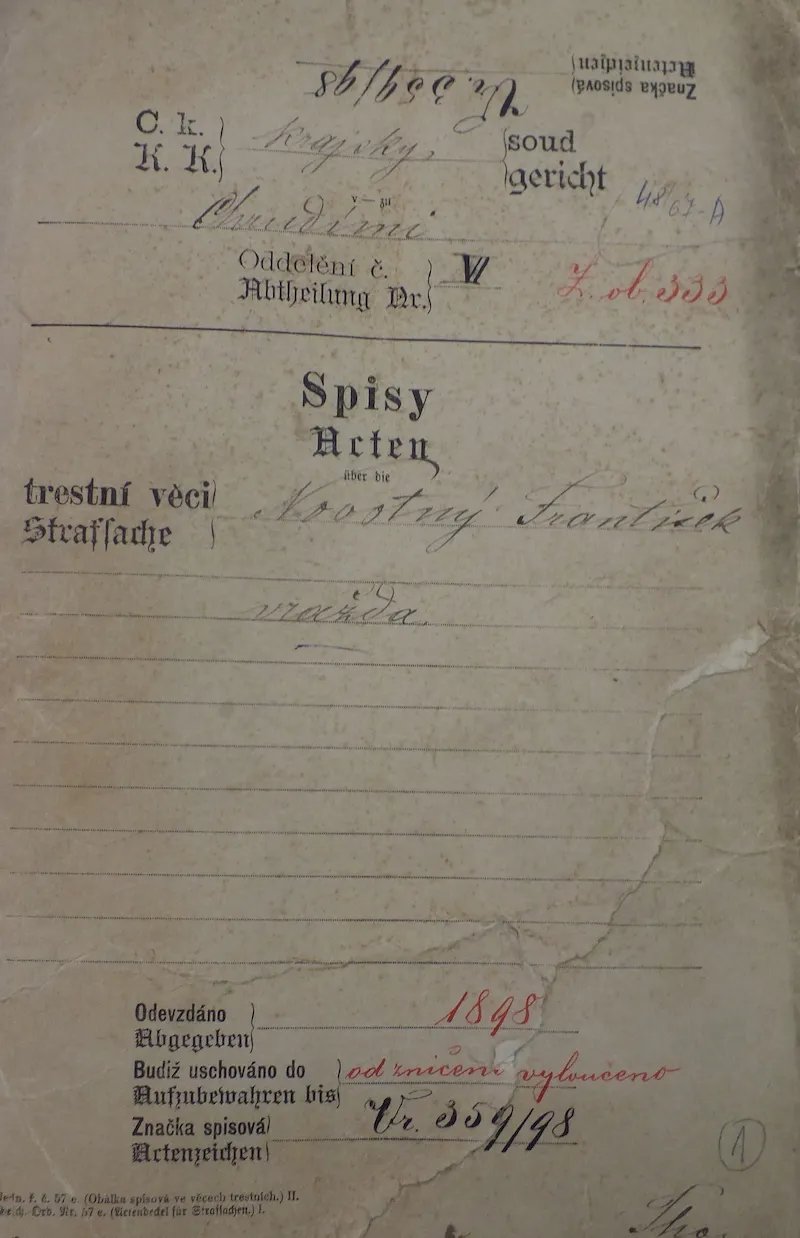
Title page of the criminal case file of František Novotný
Státní oblastní archiv v Hradci Králové, reprodukce Badatelé.net / © All rights reserved / badatele.net
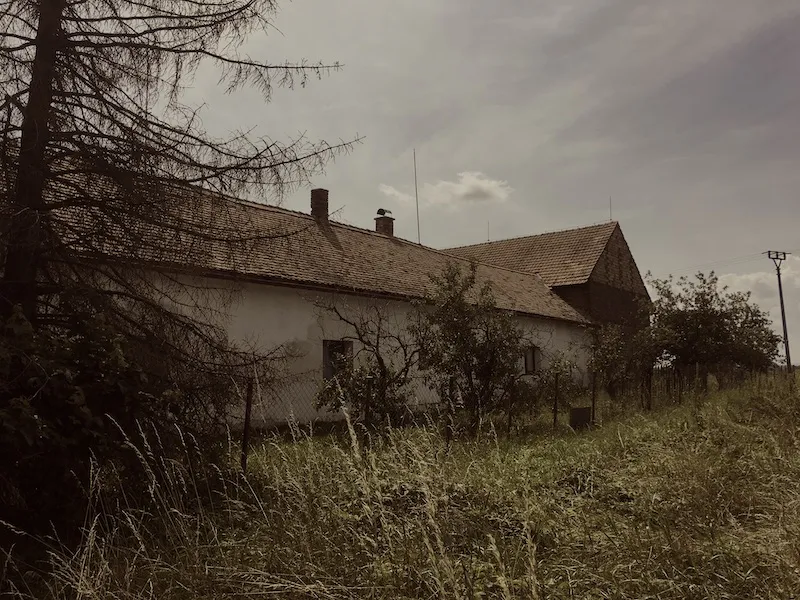
Present-day view of the farmstead in Komárov
Jaroslav Mareš / Badatelé.net / © All rights reserved / badatele.net
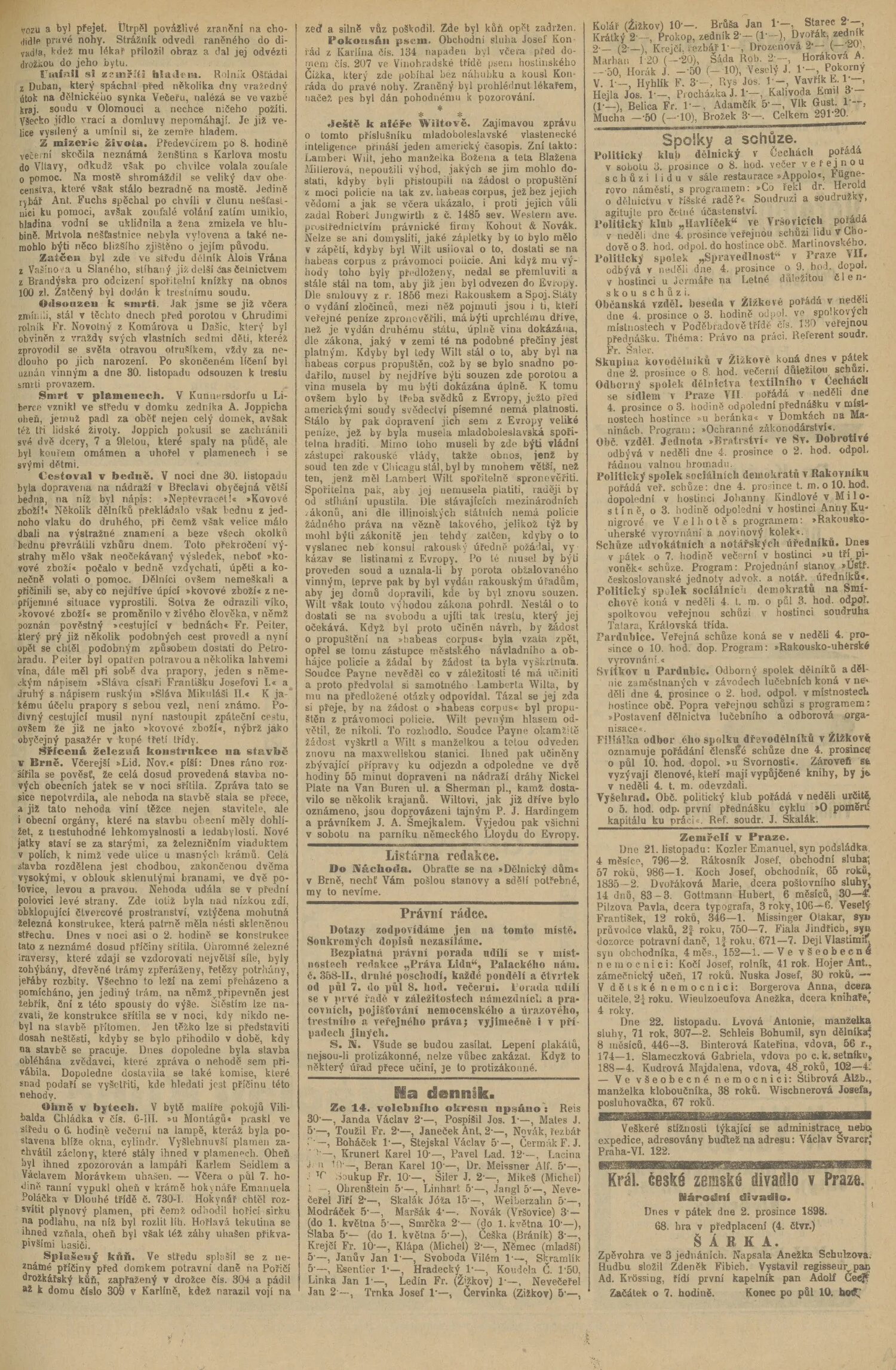
Právo lidu on the verdict against František Novotný
Právo lidu, digitalizace České digitální knihovny / Public domain / ceskadigitalniknihovna.cz
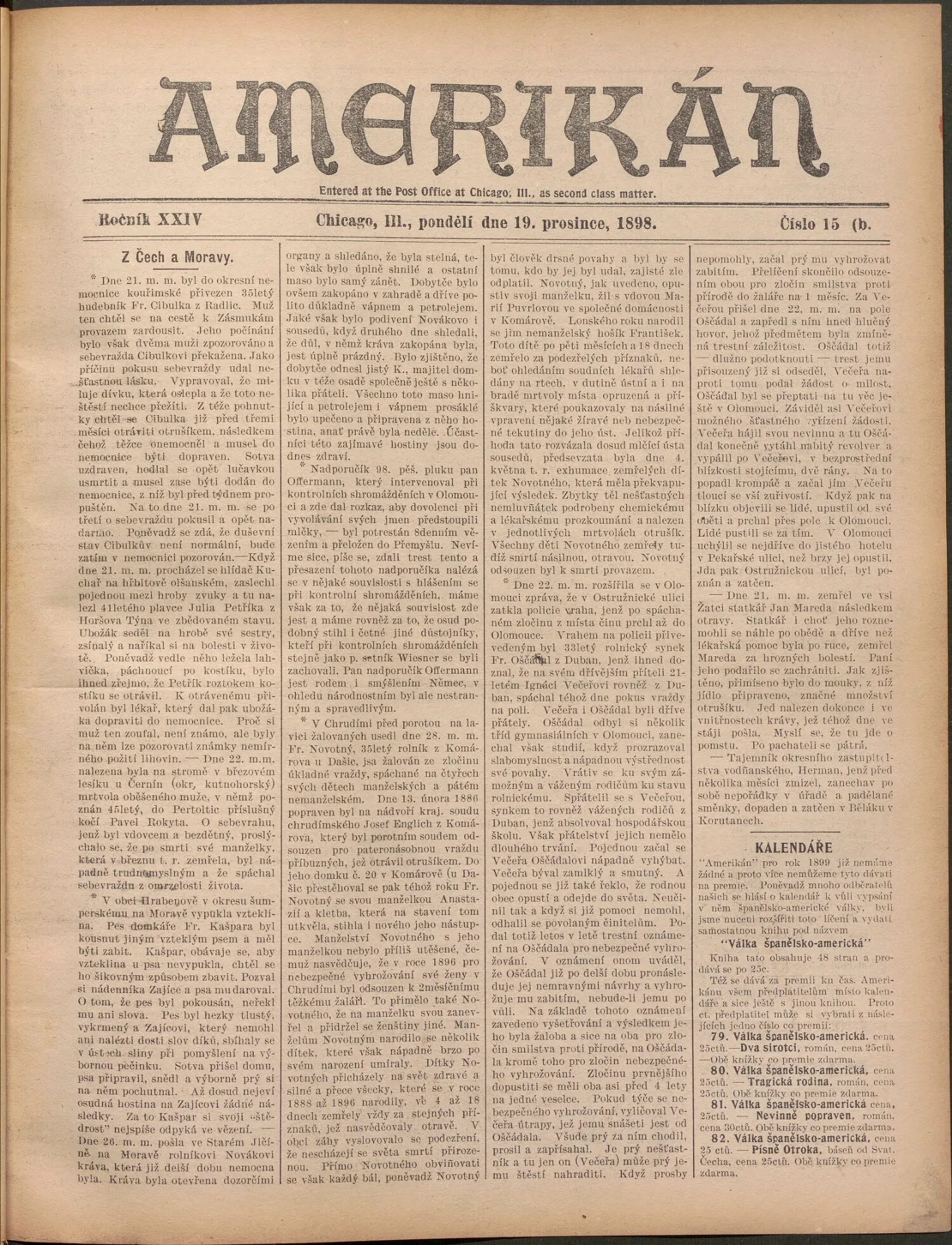
Amerikán of Chicago on the case of František Novotný
Amerikán, Chicago, digitalizace České digitální knihovny / Public domain / ceskadigitalniknihovna.cz
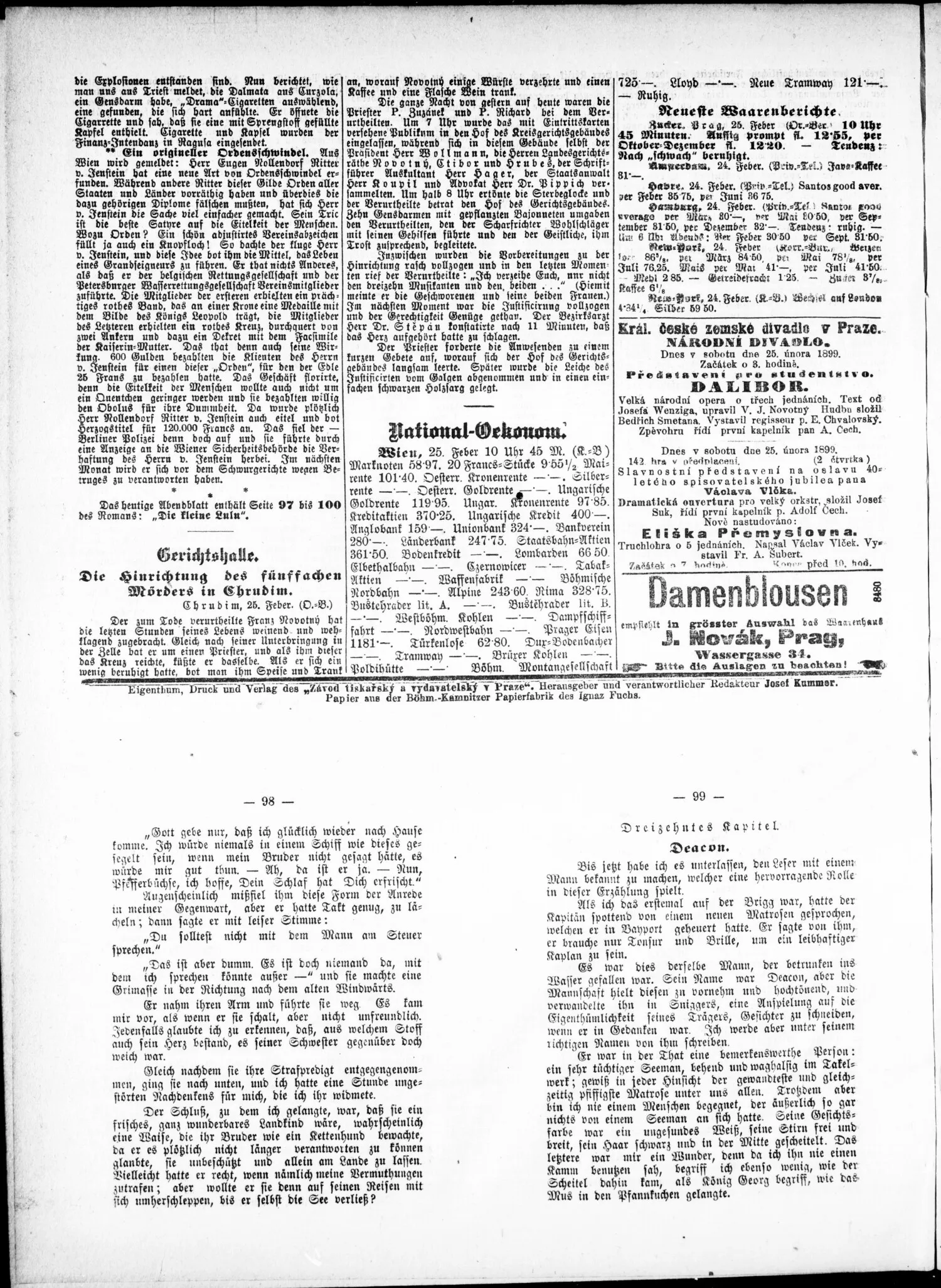
The German-language paper Politik on Franz Novotný
Politik, Praha, digitalizace České digitální knihovny / Public domain / ceskadigitalniknihovna.cz
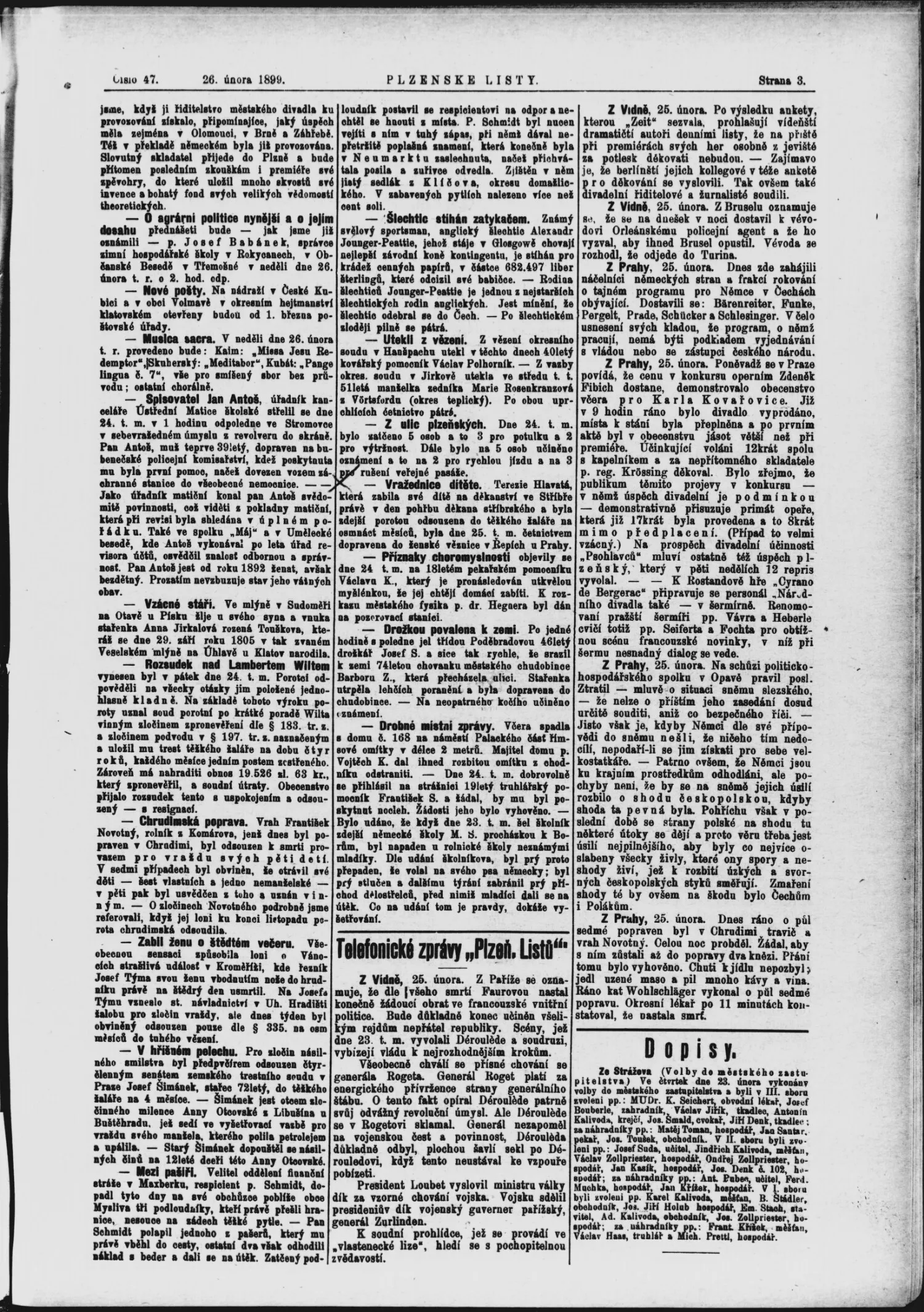
Plzeňské listy on František Novotný in Chrudim
Plzeňské listy, digitalizace České digitální knihovny / Public domain / ceskadigitalniknihovna.cz
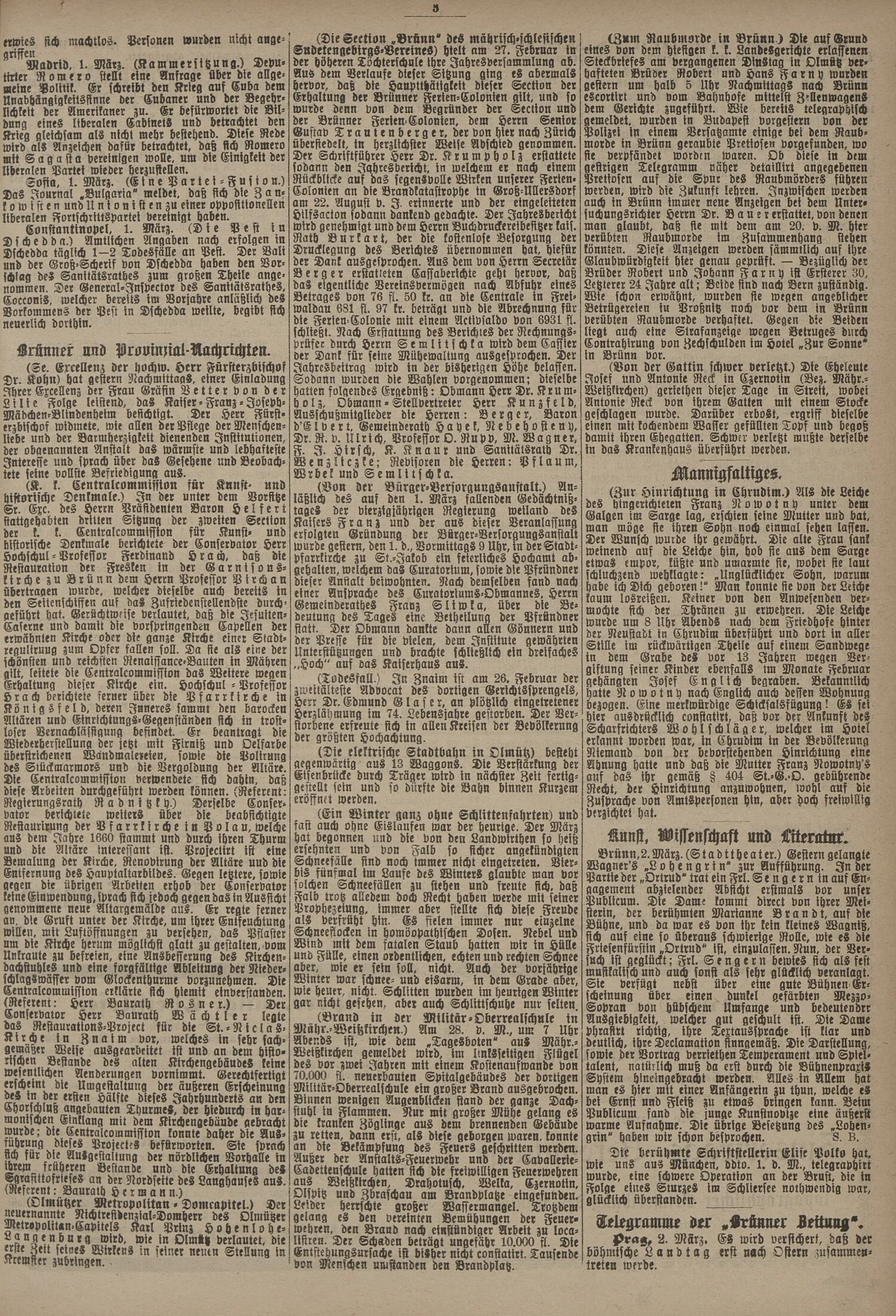
Brünner Zeitung on the case of František Novotný in Chrudim
Brünner Zeitung, digitalizace České digitální knihovny / Public domain / ceskadigitalniknihovna.cz
13 / 15 / Open questions

What is still missing

  • How many murders and which children the verdict included. The text of the verdict is only in the file of the Regional Court in Chrudim in the archives in Zámrsk.
  • Why the jurors were given only three questions on murder when the indictment covered four children from the marriage and one illegitimate child.
  • What substance killed his son František: nitric acid, another corrosive, or a boiling decoction of poppy heads.
  • Differences between sources: the year the farm was bought (1886 or 1887), the house number (No. 30, Národní listy “No. 20”), the date of the verdict (30 Nov, Moravská orlice 29 Nov), the hour of the execution, his age at the execution (35 or 36), his wife’s name (Anastazie or Antonie) and his partner’s surname.
  • Why the son bore the surname Karas and why Dr Pippich represented the condemned man at the execution instead of Dr Sýkora.
  • The exact date of the arrest between 1 and 20 Apr 1898. Neither the parish registers nor the file were directly checked during research.

Not yet covered: comparison.

You can help

Add a source, a photo or a correction. We check every submission and credit your nickname on approved ones.

Send a tipCase discussion
14 / 15 / Citations

Sources

A number in square brackets next to a claim refers to an item in this list. A claim without a number has no source assigned yet. Details may vary between sources; disputed and theoretical items are marked.

37Sources in total
  • Primary21
  • Secondary7
  • Media9
Checked: 15 Nov 2026. All 37 sources were read during research, including 21 contemporary newspaper reports from 1898 and 1899 (Czech Digital Library and a transcript on Wikisource); information from only one source is marked in the text or omitted. Many texts are not independent: the modern Deník and badatele.net draw on the same court file, and some of the contemporary reports take over a single agency report. The number of murders in the verdict and the substance used on the son remain disputed. Check against the file of the Regional Court in Chrudim in the archives in Zámrsk and against the parish registers before publication.
15 / 15 / Revision history

Revision history

Every edit to this page is logged. Corrections sent in by readers are applied only after the editors check them against sources.

Published
Updated
Edits
1
  1. Page published
    OverviewEditors

Share this page

https://www.killeratlas.com/en/killers/frantisek-novotny/profile

How to cite

Killer Atlas. František Novotný (1888-1898): case profile [online]. https://www.killeratlas.com/en/killers/frantisek-novotny/profile [accessed 15 Nov 2026]. Checked 15 Nov 2026.