01
Content warningReal violent crimes; victims are named. Help: findahelpline.com. More
This page describes real violent crimes and names the victims. Victims come first; we leave out details that serve only sensationalism. Help: free helplines in your country at findahelpline.com; in an emergency call 112 (EU) or 911 (US).
Andrei Chikatilo
Andrei Romanovich Chikatilo (Андрей Романович Чикатило, Ukrainian Андрій Романович Чикатило), born 16 Oct 1936, Yablochnoye, Ukrainian SSR
A former teacher and later supply clerk for enterprises in Shakhty and Rostov-on-Don who, according to the verdict, murdered 52 people between 1978 and 1990, mostly children and young women. He approached his victims at railway stations, at stops and on trains and led them into the forest belts along the railway lines. He committed most of the murders in Rostov Oblast, several on business trips in Russia, Ukraine and Uzbekistan. For his first murder an innocent man, Alexander Kravchenko, was executed. The militia detained him in 1984 and released him; the manhunt under the name “Lesopolosa” checked about half a million people. He was arrested on 20 November 1990, shortly after a militiaman checked his papers at the Leskhoz stop. The Rostov Regional Court sentenced him to death on 15 October 1992, and he was executed on 14 February 1994. According to later press reports, the Supreme Court of Russia left only 43 murders in the verdict, but the ruling itself has not been published.
- 52
- murders for which the Rostov Regional Court sentenced him in 1992● Fact
- 55
- murders to which he himself confessed; some sources give 56◐ Disputed
- 500,000
- people roughly were checked by the manhunt before he was caught● Fact
- 220
- volumes make up the criminal case file● Fact
5Fact
7Disputed
1Theory
75 of 75claims have a source
36sources, 1 of them primary
02 / 17 / Timeline
From birth to execution
Events: 46 / 1936–2004
- 01
Life
1936–78 - 02
Crimes
1978 - 03
Capture, trial, execution
1978–79 - 04
Life
1981 - 05
Crimes
1981–82 - 06
Capture, trial, execution
1983 - 07
Crimes
1983–84 - 08
Capture, trial, execution
1984 - 12 Dec
Sentence for theft
Capture, trial, executionAccording to the 1992 verdict, the People’s Court in Shakhty sentenced him to one year of corrective labour for stealing batteries and released him from the courtroom. The Moscow Times writes of three months in custody and release at the beginning of 1985. [1] [5]
- 09
Crimes
1985 - 10
Capture, trial, execution
1985–86 - 11
Crimes
1987–90 - 12
Capture, trial, execution
1990–04
03 / 17 / Victims first
Named victims
Named victims: 52 / Survivors: 3
The list contains the 52 murders for which the Rostov Regional Court convicted Chikatilo in October 1992, in the order of the episodes in the verdict. According to the verdict, the victims included 21 boys, 14 girls and 17 young women and women. We name 34 victims whose names are confirmed by the verdict and at least one other source. For 15 victims the name appears only in the verdict, so they are listed as placeholder entries with the date and place from the verdict. Three women remained unidentified. Dates and places follow the verdict. Age is given only where two sources agree on it; for Irina Karabelnikova (18 or 19), Sergei Kuzmin (13 or 15) and Igor Gudkov (6 or 7) the sources differ. For Marta Ryabenko the verdict writes “Рябенко”, E1 “Рябченко”. The date of Vera Shevkun’s murder is 27 Oct in the episode heading and 25 Oct 1983 in the text. According to later press reports, the Supreme Court of Russia left only 43 murders and struck out, among others, the murder of Yelena Zakotnova; which other episodes it struck out could not be established.
Showing 12 of 52
- Yelena ZakotnovaShakhty, hut near the Trampark tram stop, body in the Grushevka River; according to the press the Supreme Court later struck out the episode, Rostov Oblast22 Dec 1978age 9
- Larisa TkachenkoRostov-on-Don, left bank of the Don, Rostov Oblast3 Sep 1981age 17
- Lyubov Biryukforest belt by the road near the settlement of Donskoi, Oktyabrsky district, Rostov Oblast12 Jun 1982age 13
- Lyubov VolobuyevaKrasnodar, near the airport, Krasnodar Krai25 Jul 1982age 14
- Oleg Pozhidayevforest beyond the settlement of Enem, Adygea (then part of Krasnodar Krai); the body was never found, Krasnodar Krai13 Aug 1982age unknown
- Olga Kuprinaforest belt along the railway near the Kazachyi Lagerya stop, Oktyabrsky district, Rostov Oblastsecond half of August 1982age unknown
- Irina Karabelnikovaforest belt along the railway near Shakhty station, Rostov Oblastfirst half of September 1982age unknown
- Sergei Kuzminforest belt along the railway near Shakhty station, Rostov Oblastsecond half of September 1982age unknown
- Olga Stalmachenokfield near Novoshakhtinsk, near the DOSAAF stop; found 11 Apr 1983, Rostov Oblast11 Dec 1982age unknown
- Irina DudenkovaRostov-on-Don, Aviators’ Park near the Selmash platform, Rostov Oblastsecond half of July 1983age 13
- Igor GudkovRostov-on-Don, edge of Aviators’ Park near the suburban bus station, Rostov Oblast9 Aug 1983age unknown
- Valentina Chuchulinaforest belt along the railway near Shakhty station, Rostov OblastSeptember to October 1983age 22
By location
Donetsk Oblast, Ukraine1
Krasnodar Krai2
Leningrad Oblast1
Moscow Oblast1
Rostov Oblast42
Sverdlovsk Oblast1
Tashkent Oblast, Uzbekistan2
Vladimir Oblast1
Zaporizhzhia Oblast, Ukraine1
Victim profile
12 and under4
13–179
18–245
25 and over2
Women and girls: 31 / Men and boys: 21 (of 52 named)
Survivors
- Irina Belovafrom Shakhty; according to a RIA Novosti photo caption in Rossiyskaya Gazeta she nearly became another victim and testified at the trial. According to StarHit, Chikatilo walked her home and invited her to the cinema
- Women harassed on 13 Sep 1984women whom he harassed at night in Rostov before his first detention; the sources do not name them
- Children abused 1973 to 1980the verdict also found him guilty of sexually abusing children between 1973 and 1980, among them schoolgirls of the boarding school in Novoshakhtinsk. These are living people, and we do not give their names
Unconfirmed
The indictment also included sixteen-year-old Laura Sarkisyan, who disappeared in June 1983. Her body was never found and the court struck out this episode; according to the verdict Chikatilo did kill a roughly twenty-year-old Armenian woman at that time, it was only not proven that it was her. Crime+Investigation gives her age as 15. The prosecution for two murders of women from 1986 was dropped in April 1991; Chikatilo did not confess to them, and their names are given only in the verdict. During the trial he confessed to four more murders of women, which were not investigated. In total he confessed to 55 murders; Life.ru and Kommersant write of 56. Rossiyskaya Gazeta and Calend.ru, citing operational data, attribute over 65 murders to him. According to later press reports, on the other hand, the Supreme Court of Russia left only 43 murders in the verdict.
04 / 17 / Offender’s pattern
What recurred
Chikatilo wrote no letters and left no messages. His signature consists of the places where he looked for victims, the forest belts where he led them, the knife and the business trips. Each item states whether it is a documented fact, a disputed point or a theory. We deliberately leave out details of the victims’ injuries.
Traits: 7
02
Forest belts along the railway lines
● Fact03
Knife and rope
● Fact04
Mutilation of the bodies
● Fact05
Business trips
● Fact06
Blood group
◐ Disputed07
Victims from the margins of society
○ TheoryInvestigators estimated that a large share of the victims were homeless people, neglected children and people with intellectual disabilities. [5] [1]
The estimate of up to 70% is given only by the Moscow Times. The verdict, on the other hand, points out that Chikatilo himself portrayed the victims this way in his defence.
05 / 17 / Modus operandi
How the behaviour evolved
Phases: 3
1936-1978
Before the murders
Childhood during the war in Ukraine, studies, family and work at a school, which he left after molesting schoolgirls.
- 1936: born in Yablochnoye in Ukraine
- 1963: marriage, children 1965 and 1969
- 1970: graduated from university, teacher in Novoshakhtinsk
- 1973: molesting schoolgirls, departure from the school
- 1978: housemaster at a vocational school in Shakhty
1978-1990 / Rostov Oblast and business trips
Murders
In twelve years he killed 52 people according to the verdict. He committed the most murders in 1984, after that mainly while travelling.
- 22 Dec 1978: murder of Yelena Zakotnova in Shakhty
- 1981 to 1984: series near Shakhty, Novoshakhtinsk and Rostov
- 13 Sep 1984: detained and released
- 1985 to 1988: murders on business trips
- 1988 to 1990: murders near the Leskhoz stop and in Rostov
1990-1994
Capture, trial, execution
After the check of his papers he was put under surveillance and arrested; after ten days he confessed.
- 20 Nov 1990: arrest
- end of November 1990: confession
- 14 Apr to 15 Oct 1992: trial and death sentence
- 14 Feb 1994: execution
06 / 17 / Crime scenes
Where and in what order
Places: 11
map of crime scenes (points by date and place) / add from coordinates
- 01Shakhty and Novoshakhtinsk1978-1990
- 02Rostov-on-Don1981-1990
- 03Krasnodar and Adygea1982
- 04Tashkent Oblast, Uzbekistan1984
- 05Domodedovo district, Moscow Oblast1985
- 06Revda, Sverdlovsk Oblast1987
- 07Zaporizhzhia, Ukraine1987
- 08Leningrad Oblast1987
- 09Ilovaisk, Donetsk Oblast, Ukraine1988
- 10Krasny Sulin and the Leskhoz stop1988-1990
- 11Vladimir Oblast1989
07 / 17 / Investigation
How he was caught
Steps: 10
01 / 1978
An overlooked suspect
After the murder of Zakotnova the militia checked Chikatilo, but his wife gave him an alibi and Alexander Kravchenko was convicted of the murder. [1] [12] [29]
02 / 1982-1983
Fragmented cases
Local authorities investigated the individual murders separately. The Rostov Oblast Prosecutor’s Office did not merge the first six into one case until 6 Sep 1983, the verdict states. [1]
03 / 1983-1984
The “fools” case
Seven people with intellectual disabilities were charged and confessed under pressure. The prosecution lasted over two years. [1] [15] [22]
04 / 13 Sep 1984
Detained and released
The militia detained him with a knife and pieces of string in his briefcase. His blood group did not match the traces, so he was punished only for theft. [1] [5] [20]
05 / 8 Oct 1984
A single investigation team
The RSFSR Prosecutor’s Office merged 23 murders into one case and a joint investigation team was set up. [1] [12]
06 / 1985-1990
Operation “Lesopolosa”
The militia checked about half a million people, patrolled stations and trains and used policewomen as decoys. In the process it solved over a thousand other crimes. [1] [5] [10] [20]
07 / 1985
Psychological profile
Psychiatrist Alexander Bukhanovsky compiled a profile of the wanted perpetrator for the investigators. [12] [19] [20]
08 / 6 Nov 1990
Rybakov’s report
Militiaman Igor Rybakov checked Chikatilo’s papers at the Leskhoz stop. After Svetlana Korostik’s body was found, the report linked his name to the murder and surveillance began. [1] [4] [10]
What went wrong
- An innocent man executedAlexander Kravchenko was executed in 1983 for the murder of Yelena Zakotnova. Yet the militia had checked Chikatilo in 1978.
- Forced confessionsIn the “fools” case, people with intellectual disabilities confessed under pressure. According to the sources, investigators fed them details of the crimes.
- Blood group errorIn 1984 he was released because of a blood group mismatch. According to the Moscow Times, Bakin and RIA Novosti, he went on to kill about 21 more people.
- The hut was not searchedNobody searched the hut where he killed Zakotnova in 1978. This is stated only by Yandiyev in an interview with 161.RU.
- Errors in the filesAccording to the verdict, in 1986 investigators lost the file on the murder of Lyubov Volobuyeva, and they considered the remains of Sergei Kuzmin and another boy to be female.
- The missing were not searched forMissing children and young people were long recorded only as missing persons, not as possible murder victims.
Impact on forensics and law
- Investigating children’s disappearancesAccording to Bakin, after the case the Prosecutor General ordered that disappearances of children be investigated as murders. The creation of special units for serial crimes at the Ministry of Internal Affairs is mentioned only by Rossiyskaya Gazeta.
- Proceedings against investigatorsBecause of unlawful methods in the “fools” case, criminal proceedings were brought against investigators; in the end they were dropped.
08 / 17 / People in the case
Witnesses, investigators, relatives
People: 14
Judge
Leonid Akubzhanov
Presiding judge of the Rostov Regional Court panel that handed down the death sentence in October 1992.
Defence lawyer
Marat Khabibulin
Defence lawyer at the Rostov Regional Court. He criticised the psychiatric assessment.
Expert witness
Andrei Tkachenko
Psychiatrist of the Serbsky Institute who confirmed Chikatilo’s sanity in court.
Psychiatrist
Alexander Bukhanovsky
Compiled a psychological profile of the perpetrator. After a conversation with him, Chikatilo began to confess.
Investigator
Issa Kostoyev
RSFSR Prosecutor’s Office; from 1986 he led the investigation and interrogated Chikatilo after the arrest.
Investigator
Viktor Burakov
Ministry of Internal Affairs; he led the operational team and brought in Bukhanovsky.
Accomplices: none. He committed all the murders alone.
09 / 17 / Trial and sentence
From verdict to execution
Proceedings: 6
1979-1983 / trial of Kravchenko
An innocent man convicted
Alexander Kravchenko first received 15 years, after further investigations the death penalty. He was executed on 5 Jul 1983. The verdict was quashed and Kravchenko was posthumously rehabilitated. [14] [18] [22]
Innocent man executed
12 Dec 1984 / People’s Court in Shakhty
Sentence for theft
After his detention in Rostov he was tried only for stealing batteries. According to the 1992 verdict he received one year of corrective labour and was released from the courtroom. [1]
1 year of corrective labour
14 Apr to 15 Oct 1992 / Rostov Regional Court
Main trial
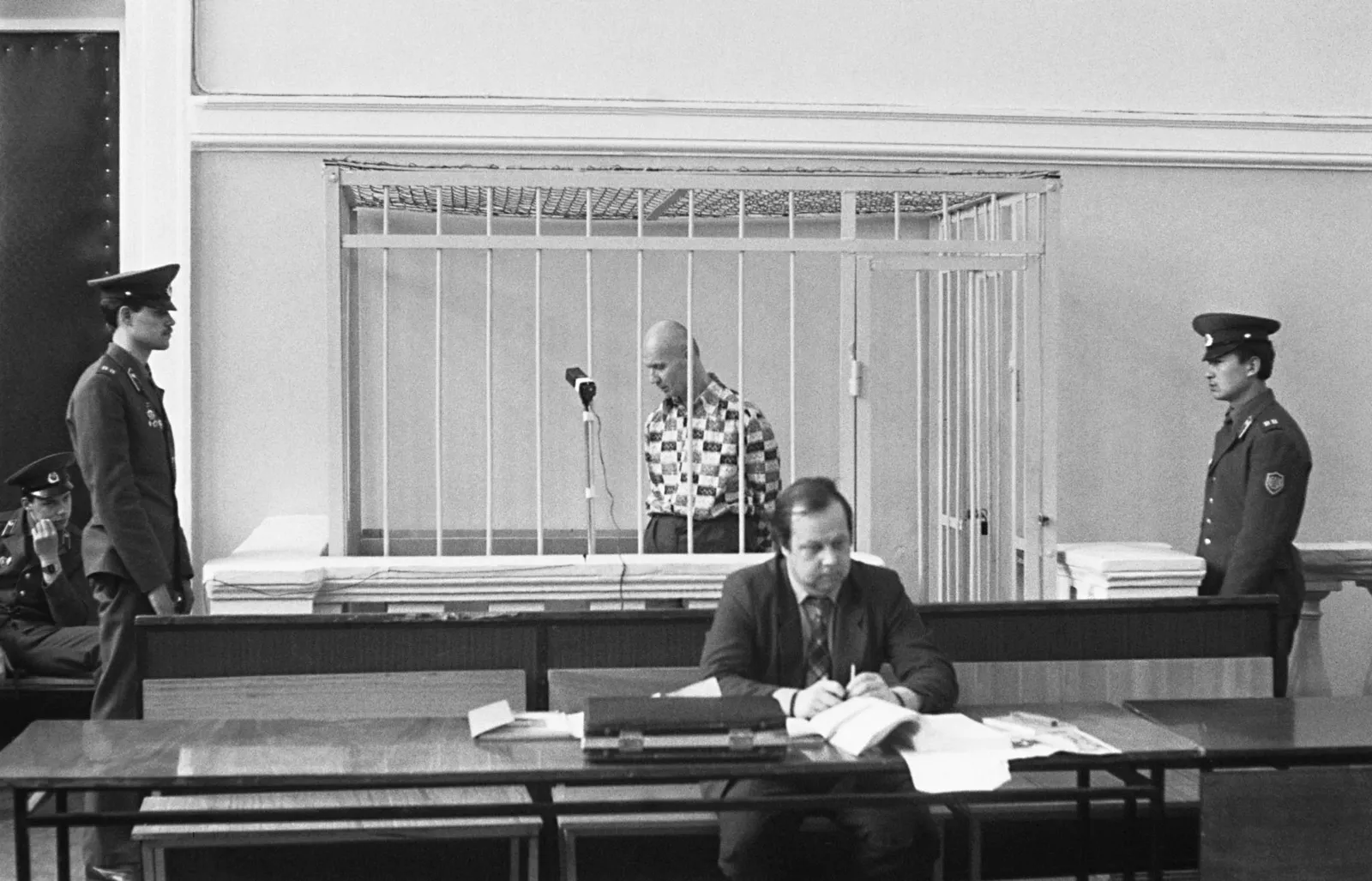
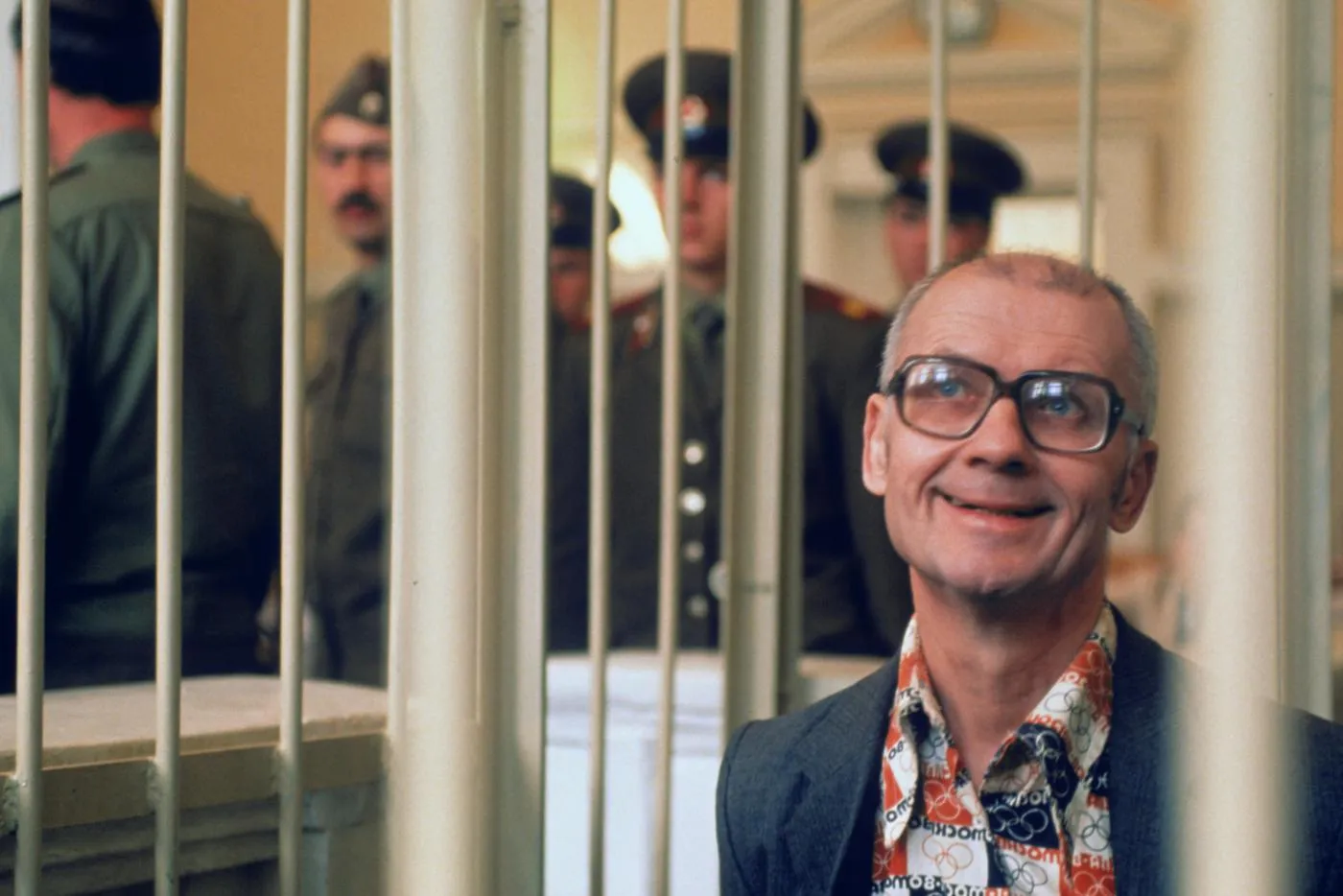
The indictment covered 53 murders. The court found him guilty of 52 and struck out the episode of Laura Sarkisyan. It sentenced him under the criminal codes of Russia, Ukraine and Uzbekistan. The defendant sat in an iron cage and disrupted the trial with outbursts. [1] [2] [6] [10] [5]
Death sentence
1993 / Supreme Court of Russia
Appeal
The Supreme Court upheld the death sentence. According to later press reports it also struck out 9 to 10 episodes, among them the murder of Zakotnova, and left 43 murders. Neither the text nor the date of the ruling could be traced. [3] [4] [10] [17]
Sentence upheld
1994 / presidential commission
Petition for clemency
Chikatilo petitioned President Yeltsin for clemency. The presidential commission rejected the petition. [3] [4] [10]
Rejected
14 Feb 1994
Execution
He was executed by shooting. Kommersant gives the Novocherkassk prison; Bakin writes that he had been flown to Moscow the day before. 161.ru gives the date as 13 Feb. [3] [4] [10] [31]
Executed
Grave
According to Kommersant he was buried in an unmarked grave in the cemetery of the Novocherkassk prison. No other source confirms this.
Family
After his arrest his wife and children changed their name and left for Ukraine.
Kravchenko
Alexander Kravchenko, executed for Chikatilo’s first murder, was posthumously rehabilitated.
10 / 17 / Unidentified perpetrator
Suspects and identity claims
None of these names has been confirmed by a court. We list them only to make clear what was claimed and what the authorities said.
Alexander Kravchenko
◐ DisputedConvicted and executed for the murder of Yelena Zakotnova, which the 1992 verdict attributes to Chikatilo. Operative Yevseyev still believes in Kravchenko’s guilt; Rambler points out that the biological traces did not match him either. [1] [13] [18] [22]
Residents of a boarding school for people with intellectual disabilities
● FactIn 1983 and 1984 they were charged and confessed under pressure. They had nothing to do with the murders. [1] [15] [22]
Anatoly Grigoryev
◐ DisputedA tram depot worker who boasted of the murder of Zakotnova. He committed suicide in 1979. [12] [15]
11 / 17 / Psychology and myths
What is documented and what is not
Items: 6 / each labelled Fact, Disputed or Theory
The eaten brother
◐ DisputedIt is said that his elder brother Stepan was eaten during the famine. No evidence has been found that the brother existed at all. [14] [17] [25]
Paradoxical secretion
◐ DisputedThe verdict takes the blood group mismatch as fact. Bakin and StarHit speak of a laboratory error and of a phenomenon that cannot be confirmed today. [1] [10] [15]
Cannibal
◐ DisputedThe press commonly calls him a cannibal, and the verdict mentions the eating of body parts. Chikatilo often denied later claims about it. [1] [8] [30]
He searched for himself
◐ DisputedAccording to Bakin and RIA Novosti he joined the manhunt as a volunteer. This could not be documented in the verdict. [10] [20] [19]
Confession thanks to the psychiatrist
◐ DisputedBurakov and Bakin attribute the confession to the conversation with Bukhanovsky. Kostoyev claims that Chikatilo signed a confession before the meeting. [10] [20] [4]
52 or 43 murders
◐ DisputedThe 1992 verdict gives 52 murders. According to later press reports the Supreme Court left 43. Rossiyskaya Gazeta still writes of 52 in 2026. [1] [4] [10] [19]
12 / 17 / Comparison
Related cases
1972-1978 / USA
John Wayne Gacy
33 victims / Executed 1994
In common
A long series of young victims and execution in 1994.
Difference
Gacy killed in the US from 1972 to 1978 and buried his victims at his house. Chikatilo murdered in the USSR in forest belts along the railway lines.
1974-1978 / USA
Ted Bundy
30 confessed murders / Executed 1989
In common
Both lured victims with a pretext and both were executed.
Difference
Bundy murdered in the US from 1974 to 1978 and was executed in 1989. Chikatilo was convicted of 52 murders in the USSR.
1888 / United Kingdom
Jack the Ripper
5 canonical victims / Unidentified
In common
The press called Chikatilo the “Rostov Ripper”, after Jack the Ripper.
Difference
Jack the Ripper was never identified. Chikatilo was caught, convicted and executed.
13 / 17 / Books and films
Treatments of the case
The label is an editorial rating: Recommended means a balanced treatment with verifiable sources; With caution means the work gives the perpetrator a platform or opts for a simplified version.
Book / 1992Recommended
The Red Ripper
Peter Conradi, Dell. The author wrote about the trial for The Moscow Times.
Book / 1993Recommended
The Killer Department
Robert Cullen, Pantheon Books. The manhunt from the perspective of investigator Viktor Burakov.
Book / 1993Source
Hunting the Devil
Richard Lourie, HarperCollins.
Book / 2018Source
Tovarishch Chikatilo (Товарищ Чикатило)
Mikhail Krivich and Olgert Olgin, documentary book; given only by StarHit.
14 / 17 Photos and documents
Photos and documents9
Photos and documents from readers. We publish them after review; you see your own uploads straight away, marked Pending review.
About this image
- Original title
- andrei-chikatilo-soudni-usmev-u-mrizi-vyrez.jpg
- Author
- Gazeta Metro (reprodukce)
- Source
- gazetametro.ru
- Licence
- © All rights reserved
- Changes
- cropped, resized, converted to AVIF and WebP, metadata removed
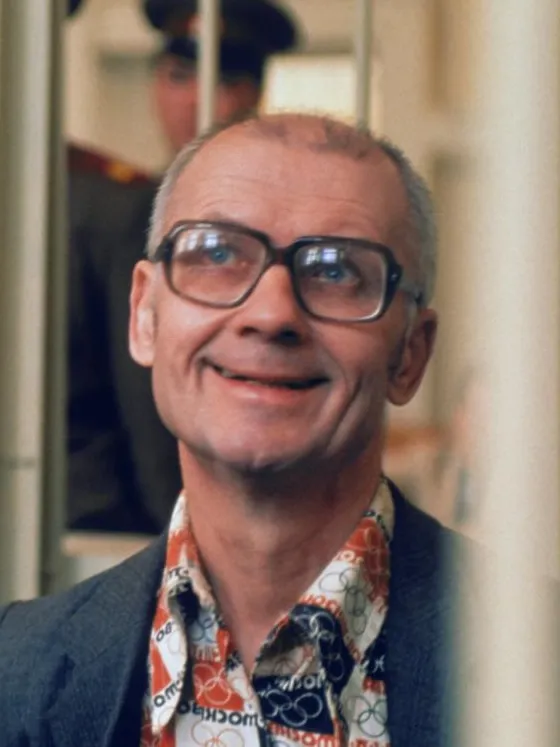
Andrei Chikatilo in glasses at the bars of the courtroom cage in Rostov (cropped).
Gazeta Metro (reprodukce) / © All rights reserved / gazetametro.ru
About this image
- Original title
- andrei-chikatilo-policejni-trojice-na-mape.jpg
- Author
- Vladimir Vjatkin / RIA Novosti / Metro
- Source
- gazetametro.ru
- Licence
- © All rights reserved
- Changes
- resized, converted to AVIF and WebP, metadata removed
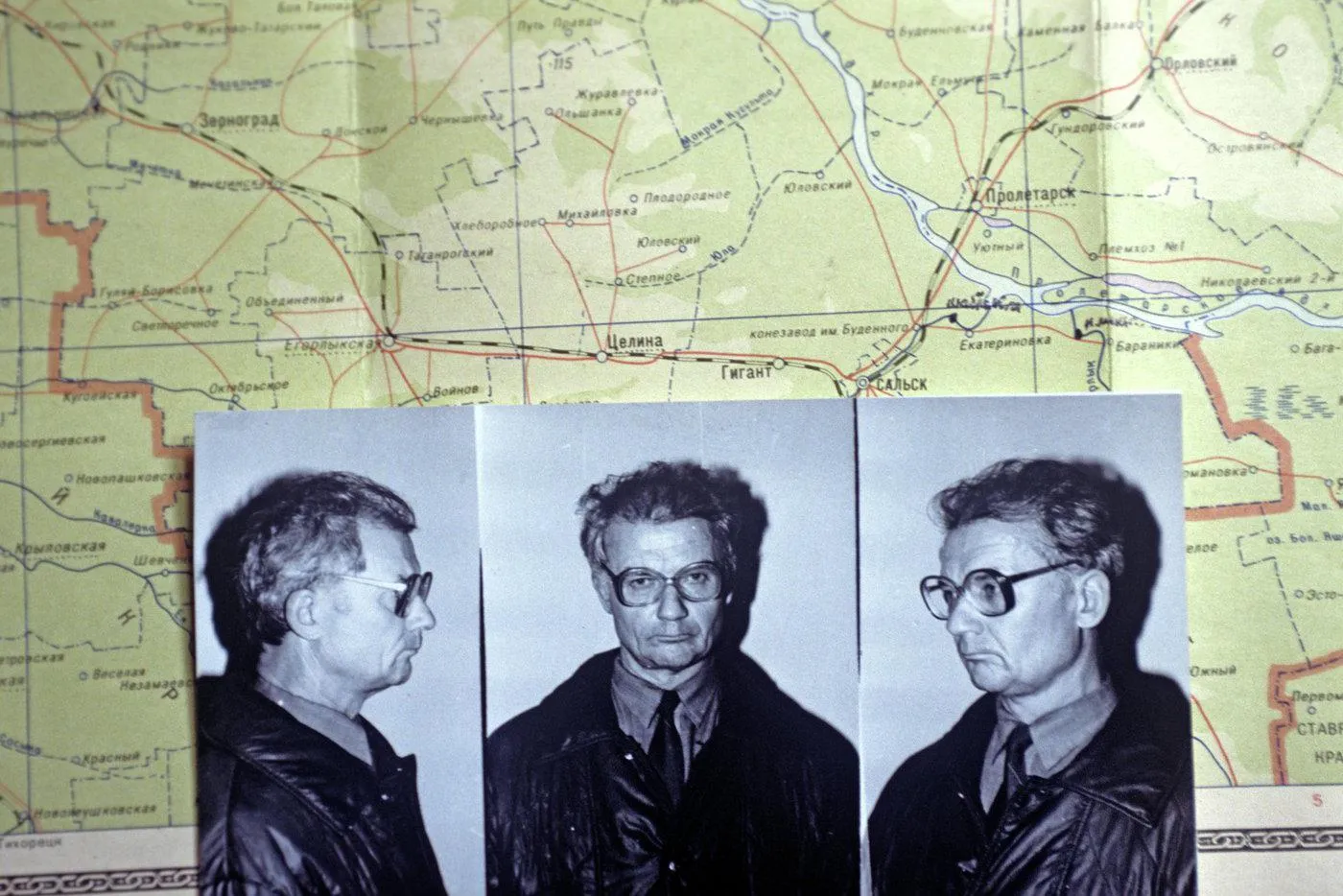
Three police photographs of Andrei Chikatilo placed on a map.
Vladimir Vjatkin / RIA Novosti / Metro / © All rights reserved / gazetametro.ru
About this image
- Original title
- andrei-chikatilo-soudni-portret-duben-1992.jpg
- Author
- Sergej Kuzněcov / AFP / Getty Images
- Source
- gettyimages.se
- Licence
- © All rights reserved
- Changes
- resized, converted to AVIF and WebP, metadata removed
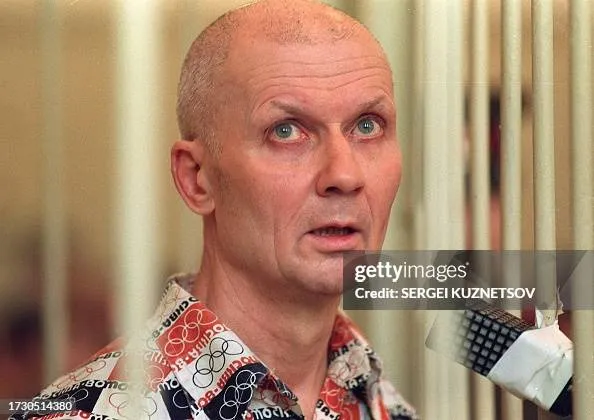
Andrei Chikatilo in court in Rostov on 21 April 1992.
Sergej Kuzněcov / AFP / Getty Images / © All rights reserved / gettyimages.se
About this image
- Original title
- andrei-chikatilo-soudni-portret-s-brylemi.webp
- Author
- Ruská Wikipedie (reprodukce)
- Source
- ru.wikipedia.org
- Licence
- © All rights reserved
- Changes
- resized, converted to AVIF and WebP, metadata removed
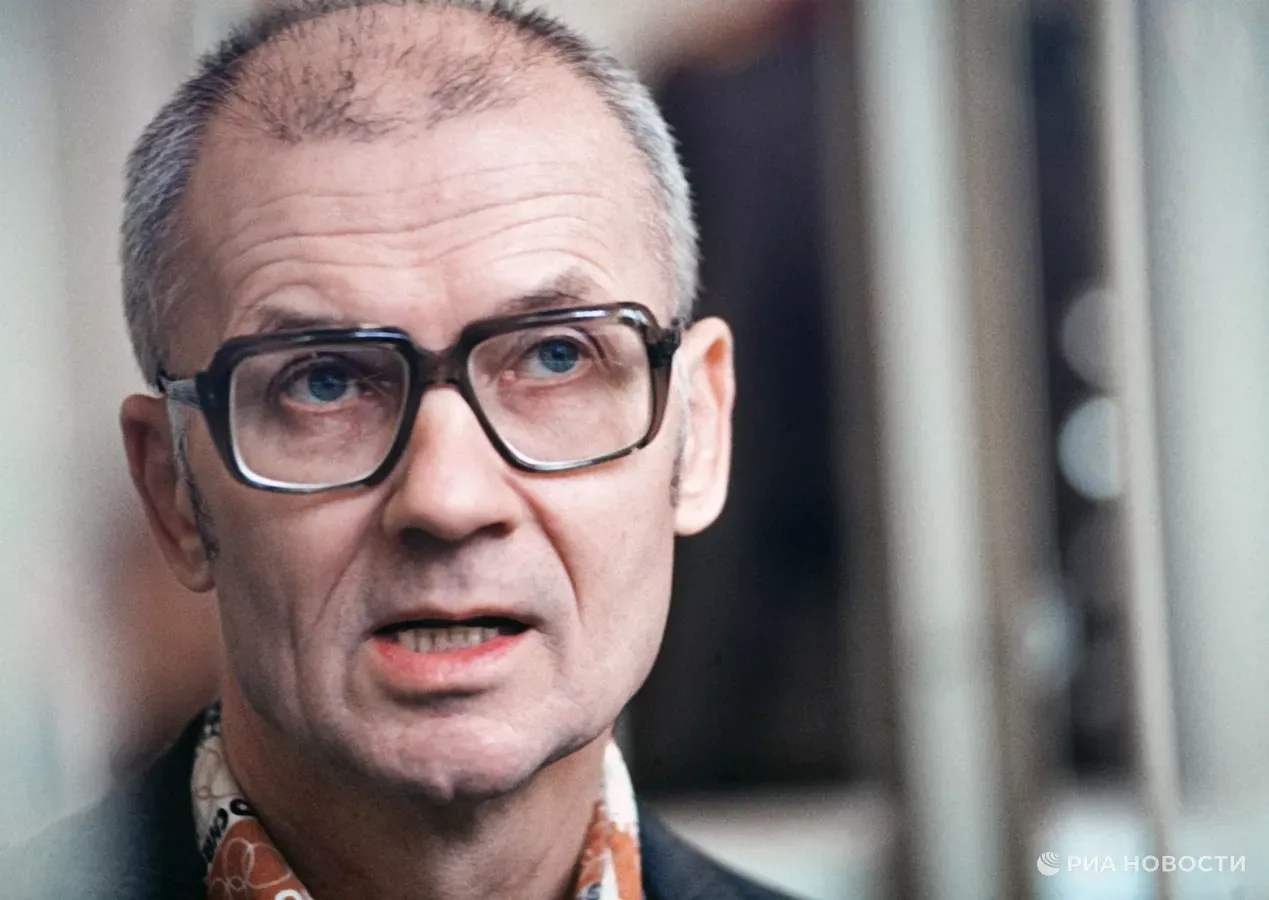
Andrei Chikatilo at one of the court hearings in 1992.
Ruská Wikipedie (reprodukce) / © All rights reserved / ru.wikipedia.org
About this image
- Original title
- andrei-chikatilo-soudni-sin-oleg-nederja.jpg
- Author
- Oleg Nederja / ITAR-TASS / Rodina
- Source
- rodina-history.ru
- Licence
- © All rights reserved
- Changes
- resized, converted to AVIF and WebP, metadata removed
The courtroom in Rostov during the trial of Andrei Chikatilo.
Oleg Nederja / ITAR-TASS / Rodina / © All rights reserved / rodina-history.ru
About this image
- Original title
- andrei-chikatilo-cela-odsouzeneho-1992.png
- Author
- Muzeum dějin donských orgánů veřejného pořádku / Rodina
- Source
- rodina-history.ru
- Licence
- © All rights reserved
- Changes
- resized, converted to AVIF and WebP, metadata removed
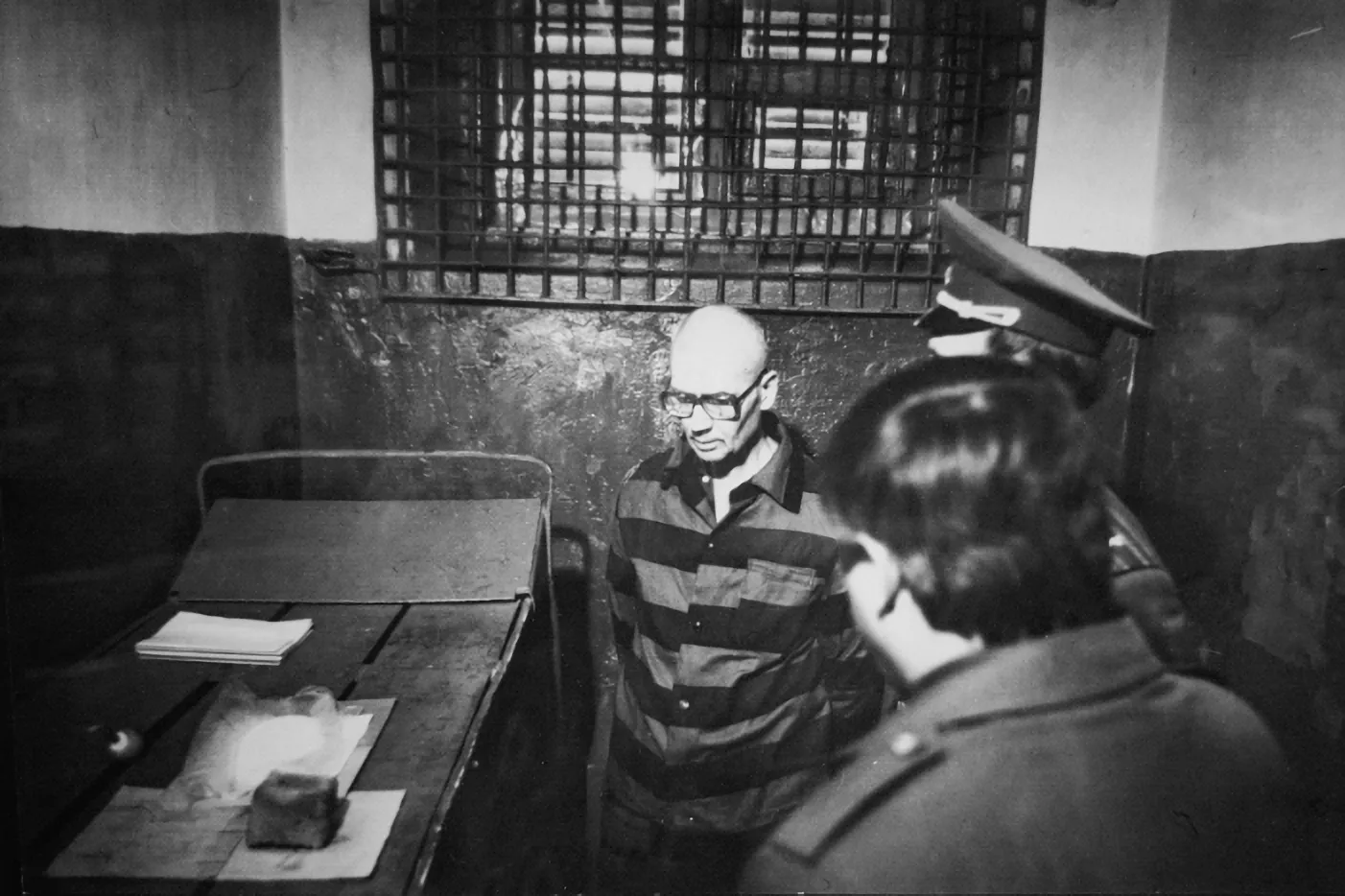
Andrei Chikatilo in a cell in 1992.
Muzeum dějin donských orgánů veřejného pořádku / Rodina / © All rights reserved / rodina-history.ru
About this image
- Original title
- andrei-chikatilo-policejni-dokumentace-v-terenu.png
- Author
- Muzeum dějin donských orgánů veřejného pořádku / Rodina
- Source
- rodina-history.ru
- Licence
- © All rights reserved
- Changes
- resized, converted to AVIF and WebP, metadata removed
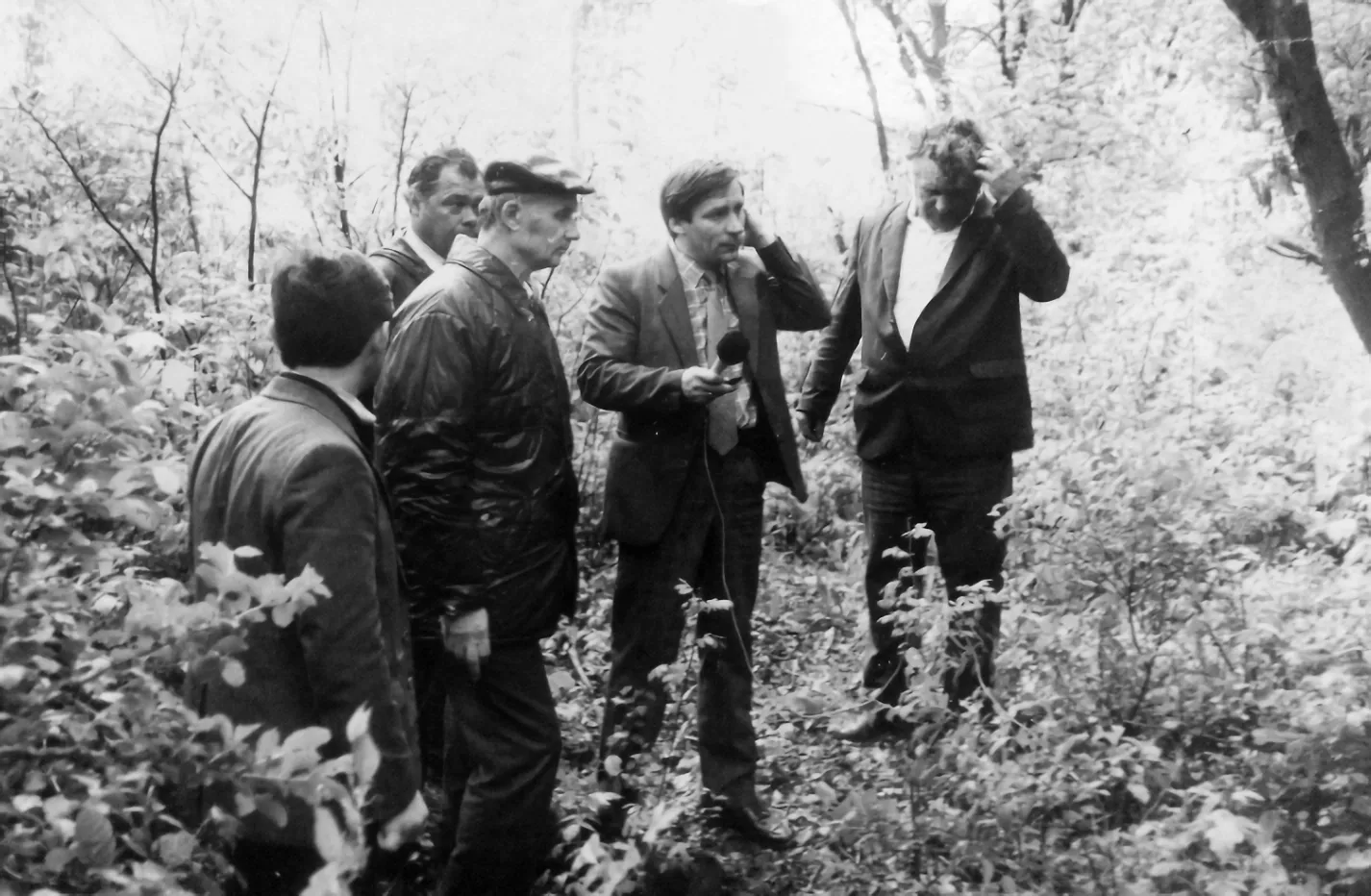
Andrei Chikatilo during police documentation in Rostov Oblast.
Muzeum dějin donských orgánů veřejného pořádku / Rodina / © All rights reserved / rodina-history.ru
About this image
- Original title
- Областной Суд Ростовской области (Социалистическая, 164).png
- Author
- Alexander Roumega
- Source
- commons.wikimedia.org
- Licence
- CC BY-SA 3.0
- Changes
- resized, converted to AVIF and WebP, metadata removed
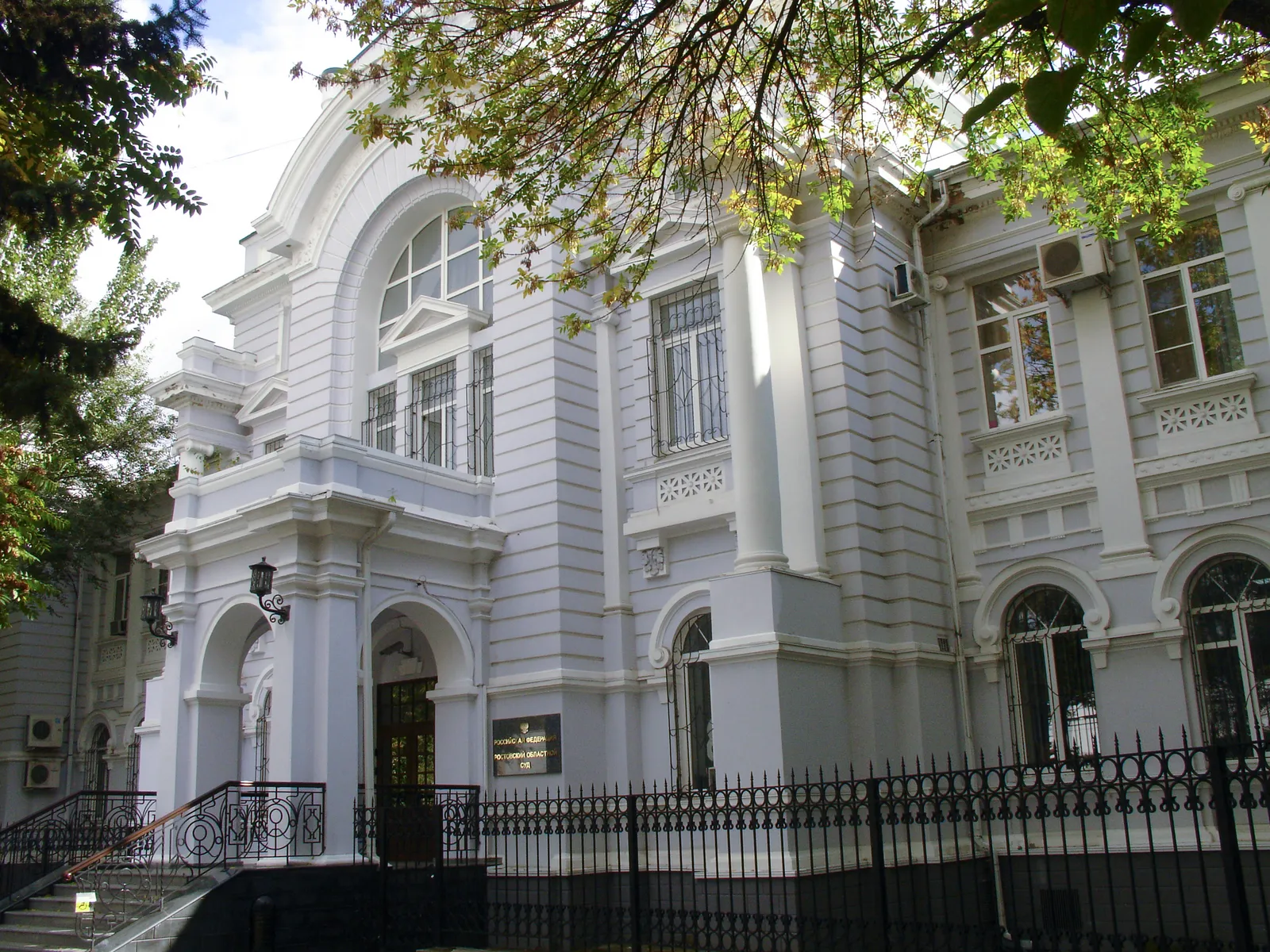
The Rostov Regional Court building in a photograph from 2013.
Alexander Roumega / CC BY-SA 3.0 / commons.wikimedia.org
About this image
- Original title
- andrei-chikatilo-soudni-usmev-u-mrizi.jpg
- Author
- Gazeta Metro (reprodukce)
- Source
- gazetametro.ru
- Licence
- © All rights reserved
- Changes
- resized, converted to AVIF and WebP, metadata removed
Andrei Chikatilo in glasses at the bars of the courtroom cage in Rostov.
Gazeta Metro (reprodukce) / © All rights reserved / gazetametro.ru
15 / 17 / Open questions
What is still missing
- The text and date of the 1993 ruling of the Supreme Court of Russia and exactly which episodes it struck out.
- Whether the murder of Yelena Zakotnova was committed by Chikatilo, as the verdict states, or by Kravchenko, as operative Yevseyev believes.
- The exact place of execution: the Novocherkassk prison or a transfer to Moscow, and the day, 13 or 14 Feb 1994.
- The date of disappearance of the victim in episode 45 (14 Jan 1990 or 14 Jan 1989).
- The identity of the three unidentified women (Novoshakhtinsk 1983, Tashkent Oblast 1984, Krasny Sulin 1988).
- A second independent source for the 15 victims’ names given only in the verdict.
- Whether he also killed between 1978 and 1981; he himself claimed that he committed his first murder in 1980.
16 / 17 / Citations
Sources
A number in square brackets next to a claim refers to an item in this list. A claim without a number has no source assigned yet. Details may vary between sources; disputed and theoretical items are marked.
36Sources in total
- Primary1
- Secondary6
- Media29
Checked: 17 Nov 2026. Research in one round, 36 sources read; the backbone is the transcript of the Rostov Regional Court verdict of 14 to 15 Oct 1992 on ru.wikisource.org, followed by Kommersant 1992, 1994 and 2025, The Moscow Times 1992 and 1993, AP and Reuters 1992, E1.ru and 161.ru, RIA Novosti, Rossiyskaya Gazeta, MK and AiF. Wikipedia is not among the sources. Facts have at least two sources; details from a single source are marked in the text or omitted. The number of victims is 52 according to the verdict (editorial decision); the reduction to 43 by the Supreme Court rests only on the press and is therefore treated as disputed. The names of 34 victims are confirmed by the verdict and another source; for Olga Stalmachenok, Lyudmila Alekseyeva, Tatyana Ryzhova, Yelena Varga, Viktor Petrov and Ivan Fomin the second source is only Crime+Investigation UK, a popular website with errors in dates, as is also the case for the ages of Vera Shevkun and Lyudmila Alekseyeva. Fifteen victims named only in the verdict and three unidentified women are placeholder entries so that the list matches the 52 murders. The names of the children abused in 1973 to 1980 are deliberately not given. In this English version Russian and Ukrainian names are given in the established English transliteration. Code SU-1978-AC: he committed the murders in three Union republics of the USSR (Russia, Ukraine, Uzbekistan), hence SU and not RU. Before publication verify the 1993 ruling of the Supreme Court of Russia, the second source for the names backed by Crime+Investigation UK and the date and place of execution.
- [1]Rostov Regional Court (verdict of 14 to 15 Oct 1992, transcript on Wikisource), Приговор по делу Андрея Чикатило. ru.wikisource.org / cited 57×primary
- [2]Kommersant (A. Bezmenov, 16 Oct 1992), Чикатило приговорен к смерти. kommersant.ru / cited 2×media
- [3]Kommersant (17 Feb 1994), Следствие/приговоры. kommersant.ru / cited 5×media
- [4]Kommersant, Ъ-Rostov (Tat Gasparyan, 21 Mar 2025), Чикатило: как поймали маньяка и детали суда. kommersant.ru / cited 13×media
- [5]The Moscow Times (Peter Conradi, 9 Oct 1992), Murder on the Don. themoscowtimes.com / cited 11×media
- [6]The Moscow Times (Robert Seely, 15 Oct 1992), Court Convicts Rostov Ripper'. themoscowtimes.com / cited 2×media
- [7]The Moscow Times (Peter Conradi, 26 May 1993), A Short Path to Murder. themoscowtimes.com / not cited in the textmedia
- [8]Deseret News (AP, 14 Oct 1992), RUSSIAN GRANDFATHER CONVICTED OF MURDERING, CANNIBALIZING 52. deseret.com / cited 1×media
17 / 17 / Revision history
Revision history
Every edit to this page is logged. Corrections sent in by readers are applied only after the editors check them against sources.
- Published
- Updated
- Edits
- 1
- Page published